
Table of Contents
Over 40 million american adults report feeling constant stress, yet many overlook nature as a genuine remedy. The concept of forest bathing, rooted in mindful sensory experiences, offers a refreshing alternative to fast-paced routines. By simply slowing down and connecting with natural surroundings, people can discover evidence-backed ways to calm their mind, feel rejuvenated, and strengthen their physical health without complicated steps or expensive tools.
Key Takeaways
| Point | Details |
|---|---|
| Forest Bathing Definition | Forest bathing, or shinrin-yoku, is a holistic wellness practice that involves mindful sensory engagement with nature to promote relaxation and mental restoration. |
| Diverse Experiences | Forest bathing experiences range from self-guided walks to structured therapeutic sessions, providing various pathways for individuals to connect with nature. |
| Health Benefits | Engaging in forest bathing can lead to significant mental and physical health improvements, including reduced stress, enhanced emotional resilience, and better sleep quality. |
| Common Misconceptions | Forest bathing is often mistaken for an intense physical activity; however, it focuses on gentle movement and deep sensory immersion rather than rigorous exercise. |
Defining Forest Bathing and Key Concepts
Forest bathing, originating from the Japanese practice of shinrin-yoku, is a holistic wellness approach that transforms simple forest exposure into a deliberate sensory experience. According to foresthistory.org, this practice involves immersing oneself mindfully in a forest environment to engage with nature through all five senses, ultimately promoting relaxation and mental restoration.
At its core, forest bathing is more than just a walk in the woods. outdoors.org describes it as a targeted relaxation practice involving sensory immersion in natural settings, often incorporating deep breathing techniques designed to reduce stress and enhance overall well-being. Unlike traditional hiking or exercise, forest bathing emphasizes passive observation and intentional sensory connection with the surrounding environment.
Key elements of forest bathing typically include:
- Slow, deliberate movement through natural settings
- Conscious sensory engagement with forest surroundings
- Intentional breathing and mindfulness practices
- Minimal technological interference
- Focusing on present moment experiences
Practitioners of forest bathing seek to create a profound connection with nature, recognizing that extended exposure to forest environments can provide significant mental and physiological benefits. By approaching nature with curiosity and openness, individuals can transform a simple walk into a deeply therapeutic experience that rejuvenates both mind and body.
Types of Forest Bathing Experiences
Forest bathing experiences are diverse, ranging from self-guided walks to structured therapeutic interventions. According to so04.tci-thaijo.org, these experiences can vary widely, encompassing individual self-guided walks and organized tourism activities that integrate safety management and professional facilitation to enhance the therapeutic potential of nature immersion.
mdpi.com highlights the nuanced approaches within forest bathing, distinguishing between different styles of engagement that promote mental and physical well-being. These approaches are not uniform but instead offer flexible pathways for individuals to connect with natural environments.
Types of forest bathing experiences include:
- Solo Exploration: Independent walks where individuals navigate forest environments independently
- Guided Group Sessions: Professionally led experiences with structured mindfulness activities
- Therapeutic Interventions: Targeted sessions designed for specific mental health or wellness goals
- Urban Forest Experiences: Nature immersion in city parks and green spaces
- Wilderness Retreats: Extended multi-day forest immersion programs
Each forest bathing experience offers unique opportunities for personal growth, stress reduction, and sensory reconnection with natural environments. The key is finding an approach that resonates with individual preferences and wellness objectives, allowing for a personalized journey of nature connection and healing.
How Forest Bathing Promotes Well-Being
Forest bathing offers profound mental health benefits that extend far beyond simple outdoor recreation. According to sciencedirect.com, engaging in forest bathing can significantly reduce self-criticism, foster self-compassion, and decrease rumination, ultimately contributing to improved mental wellness and emotional resilience.
arxiv.org research reveals that forest bathing works by systematically restoring mental resources through immersive sensory experiences. By engaging multiple senses simultaneously, individuals can experience deep relaxation, mental clarity, and stress reduction.
The natural environment acts as a comprehensive reset mechanism for our overwhelmed nervous systems.
Key mechanisms of well-being promotion include:
- Physiological stress reduction
- Improved emotional regulation
- Enhanced cognitive function
- Increased mindfulness and present-moment awareness
- Natural mood elevation
The transformative power of forest bathing lies in its holistic approach to wellness. By creating intentional connections with natural environments, individuals can access a profound source of healing, rejuvenation, and inner peace. Each forest experience becomes an opportunity for personal growth, emotional recalibration, and deep sensory restoration.
For those seeking to enhance their mental health through natural experiences, Understanding Gardening for Mental Health Benefits offers additional insights into the therapeutic potential of nature-based wellness practices.
Physical and Mental Health Benefits
Forest bathing delivers remarkable health benefits that span both physical and psychological domains. sciencedirect.com research reveals profound improvements, including lower blood pressure, reduced symptoms of depression and anxiety, and increased subjective happiness. These findings demonstrate the powerful therapeutic potential of intentional nature immersion.
mdpi.com highlights the comprehensive wellness benefits practitioners experience through forest bathing, emphasizing its holistic impact on mental, physical, and environmental well-being. The practice goes beyond simple outdoor recreation, offering a nuanced approach to health restoration and stress management.
Specific health benefits include:
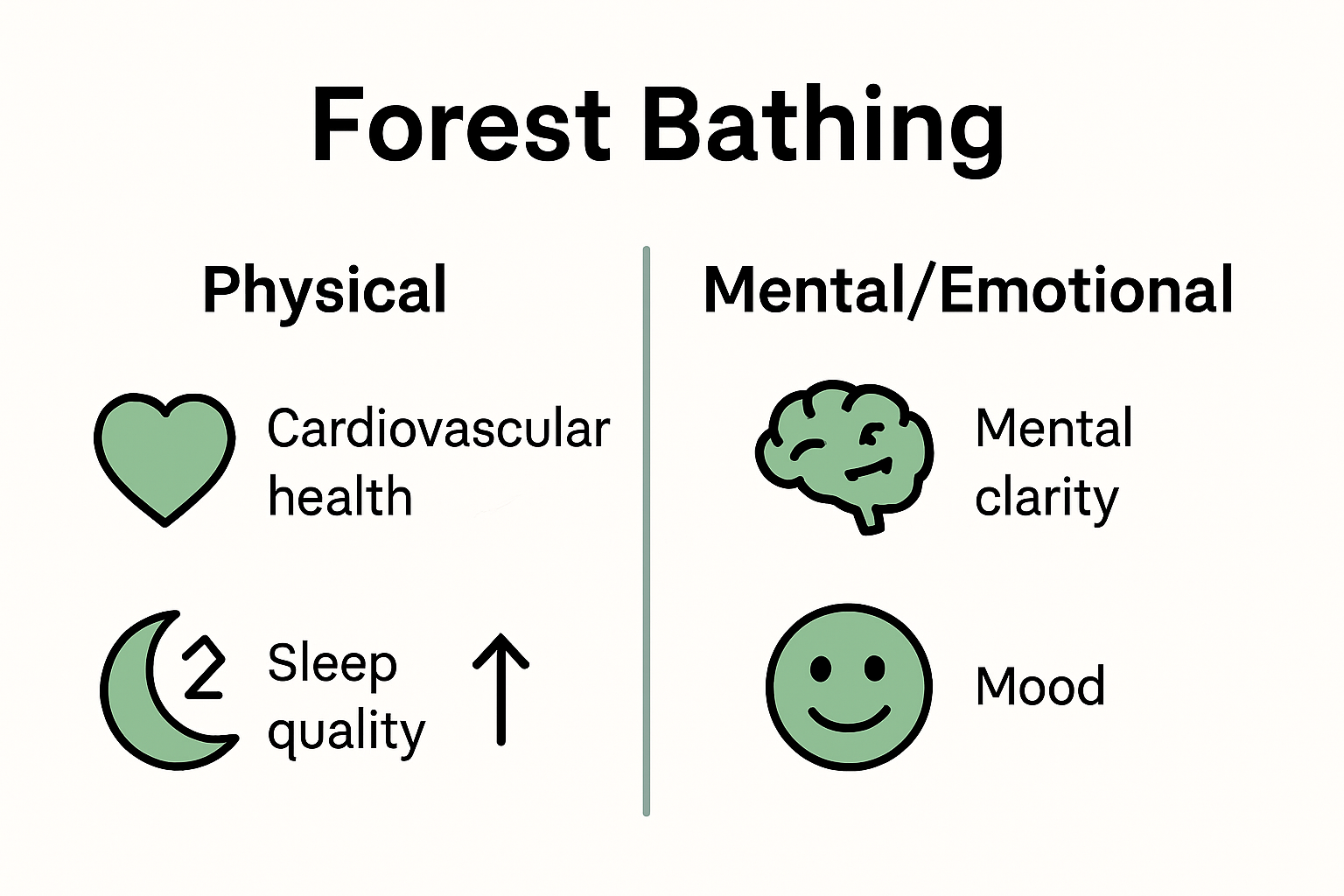
- Cardiovascular system optimization
- Immune system enhancement
- Cortisol level reduction
- Improved sleep quality
- Enhanced emotional resilience
- Increased cognitive clarity
While traditional medical interventions remain crucial, forest bathing offers a complementary approach to wellness that harnesses nature’s inherent healing potential. By creating intentional connections with natural environments, individuals can access a profound mechanism for physical recovery and mental rejuvenation.
For those interested in exploring additional nature-based wellness strategies, The Essential Guide to Benefits of Indoor Plants provides complementary insights into how plant interactions can support overall health and well-being.
Common Misconceptions and Practical Tips
Forest bathing is frequently misunderstood as an intense physical activity requiring extensive hiking or outdoor expertise. According to outdoors.org, a common misconception is that forest bathing demands rigorous movement, when in reality, it focuses on relaxation and sensory immersion, often involving minimal movement and intentional deep breathing exercises.
foresthistory.org emphasizes that forest bathing is fundamentally about presence, not performance. The practice aims to bridge the gap between individuals and the natural world through mindful sensory engagement, rather than treating nature as a fitness landscape or competitive environment.
Key misconceptions and practical tips include:
- Misconception: Forest bathing requires hiking skills
Reality: It involves gentle, intentional movement - Misconception: You need a large wilderness area
Reality: Urban parks and small green spaces work perfectly - Tip: Start with short 15-30 minute sessions
- Tip: Turn off digital devices during your experience
- Tip: Focus on sensory experiences like listening to bird sounds
Successful forest bathing is about creating a personal, meditative connection with nature. By approaching the practice with curiosity and openness, individuals can transform ordinary outdoor experiences into profound moments of healing and self-discovery.
For gardening enthusiasts seeking alternative wellness strategies, Gardening & Health offers additional insights into nature-based approaches for personal well-being.
Discover the Healing Power of Nature with Lushy Gardens
If you are drawn to forest bathing because of its deep connection to mental wellness and sensory restoration, you may also be seeking ways to bring that calming nature indoors or to your own garden. This article highlights the challenge many face in finding intentional, mindful experiences with nature that reduce stress and boost well-being. At Lushy Gardens, we understand your goal to create peaceful green spaces that nurture both mind and body. Our Gardening & Health – Lushy Gardens section is filled with practical tips and expert insights to help you cultivate environments that support relaxation and emotional balance.
Start transforming your daily routine today by learning simple ways to integrate plant care and gardening into your personal wellness journey. Explore our site at Lushy Gardens for comprehensive guides perfect for beginners and seasoned gardeners alike found in Gardening for Beginners – Lushy Gardens. Embrace the power of nature to heal and restore with every plant you nurture and every moment spent growing your green sanctuary.
Frequently Asked Questions
What is forest bathing?
Forest bathing, or shinrin-yoku, is a Japanese wellness practice that encourages immersion in a forest environment through mindful sensory engagement. It focuses on relaxation and deep connection with nature rather than physical activity like hiking.
How does forest bathing promote well-being?
Forest bathing promotes well-being by reducing stress, enhancing emotional regulation, and improving cognitive function. By engaging multiple senses in a natural setting, individuals experience mental clarity and relaxation, contributing to overall mental and physical health.
What are the key benefits of forest bathing?
Key benefits of forest bathing include lower blood pressure, reduced symptoms of anxiety and depression, improved sleep quality, increased happiness, and enhanced emotional and cognitive resilience.
Can you practice forest bathing in urban areas?
Yes, forest bathing can be practiced in urban settings. Urban parks and green spaces are ideal locations for this practice, allowing individuals to connect with nature even in a city environment.
Recommended
- Understanding Gardening for Mental Health Benefits – Lushy Gardens
- The Essential Guide to Benefits of Indoor Plants – Lushy Gardens
- Understanding Gardening as a Hobby: A Comprehensive Guide – Lushy Gardens
- Understanding Gardening for Seniors: A Comprehensive Guide – Lushy Gardens
- Understanding Hot Tub Relaxation: Benefits and Insights – ClearSpa™

I’m Eleanor, a seasoned gardener with over three decades of experience tending to Mother Nature’s creations. Through Lushy Gardens, I aim to share my wealth of knowledge and help fellow plant enthusiasts uncover the wonders of gardening. Let’s dive into this journey together, one leaf at a time.


