
Table of Contents
Spending all spring tending your tomato plants only to watch leaves yellow and fruit spoil can be discouraging for any American or Canadian gardener. The challenge is real because tomatoes face multiple threats such as diseases, pest attacks, and unpredictable weather, each capable of reducing your harvest. Recognizing tomato plants face multiple threats at once is the first step to protecting your crop. Find out how to spot issues early and use simple strategies that keep your tomatoes healthy and productive.
Key Takeaways
| Point | Details |
|---|---|
| Understanding Tomato Problems | Recognize that issues like wilting, leaf spots, and fruit rot often stem from diseases, pests, or environmental stressors. Identifying symptoms quickly can prevent further damage. |
| Monitoring for Pests | Regularly inspect plants for pests such as whiteflies, aphids, and spider mites. Early detection is crucial to mitigate their impact on yield. |
| Preventive Measures | Select disease-resistant varieties, practice crop rotation, and maintain proper spacing to improve air circulation. These actions significantly reduce the risk of problems. |
| Nutrient Management | Ensure adequate nutrition through soil testing and appropriate amendments. Correcting deficiencies can lead to rapid improvement in plant health. |
Identifying Common Tomato Problems
Walking through your garden and spotting yellow leaves or soft spots on your fruit can feel like you’ve lost half your harvest before it even started. The reality is that tomato plants face multiple threats at once: infectious diseases, pest damage, environmental stress, and physiological disorders all competing for a chance to ruin your season. But here’s the good news. Most tomato problems follow recognizable patterns, and once you learn to spot them, you can act fast.
The key to stopping problems before they spread is understanding the major categories of tomato issues. Wilting stands out as one of the most common signals that something’s wrong. This can come from simple water stress on a hot day, but it can also signal serious fungal diseases like Fusarium or Verticillium wilt that live in the soil and clog your plant’s water-conducting tissues. When you see wilting, check the soil first. If it’s dry, water deeply. If it’s moist and the plant still droops, you’re likely dealing with a fungal wilt disease that requires removing the plant to prevent spread. Similarly, leaf spots and blights develop from fungal or bacterial infections, usually starting as small brown or black marks and expanding into larger patches that eventually kill leaves from the bottom up. Fruit problems include rots that attack developing tomatoes, turning them mushy and unmarketable, while blossom-end rot creates a dark, sunken spot on the bottom of otherwise healthy-looking fruit.
Beyond disease, you’ll encounter physiological disorders that arise from growing conditions rather than pathogens. Fruit cracking happens when irregular watering causes the fruit to absorb water unevenly, splitting the skin. Uneven ripening leaves patches of green even on mature tomatoes, often from temperature extremes or nutrient imbalances. Poor fruit set means your flowers drop without forming tomatoes at all, usually from temperatures above 85°F or below 60°F, which disrupt pollination. The tricky part is that diagnosis requires recognizing symptom patterns because the same visible problem can stem from different causes. A wilting plant needs a completely different solution than a plant with leaf spots.
Look beyond the obvious visual symptoms when you’re investigating. Check where the damage appears first: at the bottom of the plant or the top. Examine both sides of leaves. Sniff the soil to confirm it’s dry or waterlogged. Take a close look at stems for discoloration or cankers. This detective work takes five minutes and saves weeks of guessing.
Here’s how common tomato symptoms can help you diagnose the problem:
| Symptom Location | Likely Issue Type | Initial Clues |
|---|---|---|
| Lower leaves only | Nutrient deficiency | Yellowing, older leaves fade |
| Entire plant | Water stress or wilt | Rapid wilting, soil check |
| Fruit bottom | Calcium deficiency | Dark sunken spots, healthy top |
| Leaf edges inward | Potassium deficiency | Yellowing, scorched margins |
| New growth, flower tips | Aphids or whiteflies | Sticky leaves, visible pests |
Pro tip: Take photos of any unusual symptoms on your phone at different angles and stages of development. These become your visual reference guide for future seasons and help you respond faster next time you spot trouble.
Tomato Pests and Their Impact
Insects and mites represent a silent drain on your tomato harvest. While diseases grab your attention with obvious wilting and spots, pests work quietly, piercing leaves and sucking out plant juices until your plants weaken and productivity crashes. The difference between a thriving garden and a disappointing one often comes down to pest pressure you didn’t catch early enough. The good news is that most tomato pests announce themselves with visible damage if you know what to look for.
Whiteflies rank among the most damaging tomato pests in North American gardens. These tiny white insects congregate on the undersides of leaves, draining sap and spreading viruses. When you brush a tomato plant and see a cloud of small white insects scatter, whiteflies have already established themselves. Aphids operate similarly but tend to cluster near new growth and flower clusters, turning leaves sticky with their honeydew secretions. Spider mites cause stippled, yellowing leaves that eventually turn brown and papery, often going unnoticed until significant damage occurs. These mites thrive in hot, dry conditions and multiply rapidly. Other destructive pests include leaf miners that create serpentine tunnels through foliage, borers that tunnel into stems and fruit rendering them unusable, and fruit flies that lay eggs in ripening tomatoes, creating soft spots and rot. Understanding integrated pest management for tomatoes helps you respond with multiple strategies rather than relying solely on chemical controls.
The impact of these pests varies by timing and severity. Early season pressure reduces plant vigor and slows growth, meaning later harvests even if plants survive. Mid-season infestations directly reduce fruit production by damaging developing tomatoes or preventing flowers from setting fruit. Late-season pests reduce your final yield by damaging nearly mature fruit. A single whitefly infestation can reduce yield by 30 percent or more if left unchecked. Beyond direct damage, many pests transmit viruses that cause permanent stunting and mosaic patterns on fruit and leaves. The key to controlling pests lies in catching them early through regular monitoring and using a combination of approaches including biological pest control methods, cultural practices like removing infested leaves, and selective pesticide applications when populations exceed manageable levels.
Monitoring works better than responding to crisis. Walk your garden two or three times weekly, looking at both leaf surfaces and inspecting new growth. Flip leaves to count spider mites. Check flower clusters for aphids. Look for the telltale white cloud of whiteflies. Catching a small population before it explodes saves you weeks of frustration and dramatically increases your final harvest.
Pro tip: Set yellow sticky traps around your tomato plants to monitor whitefly and aphid populations without pesticides, and replace them weekly to track pest pressure and timing of treatment.
Fungal and Bacterial Diseases to Watch
Fungal and bacterial diseases represent the most devastating threats to tomato production in North American gardens. Unlike pests that you can physically remove or spray away, these pathogens colonize your plants from within, spreading through soil, water, and air. Once established, they’re nearly impossible to eliminate. This is why prevention beats treatment every single time. The disease pressure you face depends on your climate, watering practices, and garden hygiene, but most North American gardeners will encounter at least one serious fungal or bacterial problem during a growing season.
Early blight and late blight dominate the fungal disease landscape. Early blight strikes first, typically in mid-summer when lower leaves develop brown spots with concentric ring patterns. These spots enlarge and spread upward, eventually defoliating entire plants and exposing fruit to sunscald. Late blight moves faster and feels more destructive, causing water-soaked spots on leaves that rapidly turn brown and slimy. Late blight thrives in cool, wet conditions and can devastate an entire planting in days. Powdery mildew coats leaves with white, dusty fungal growth, reducing the plant’s ability to photosynthesize and eventually weakening fruit development. Unlike the blights, powdery mildew management focuses on improving air circulation and selecting resistant varieties since it prefers dry conditions. Fusarium wilt and Verticillium wilt live in soil and clog the plant’s water-conducting tissues, causing wilting that doesn’t improve with watering. These soil-borne diseases persist for years and spread through contaminated tools and soil.
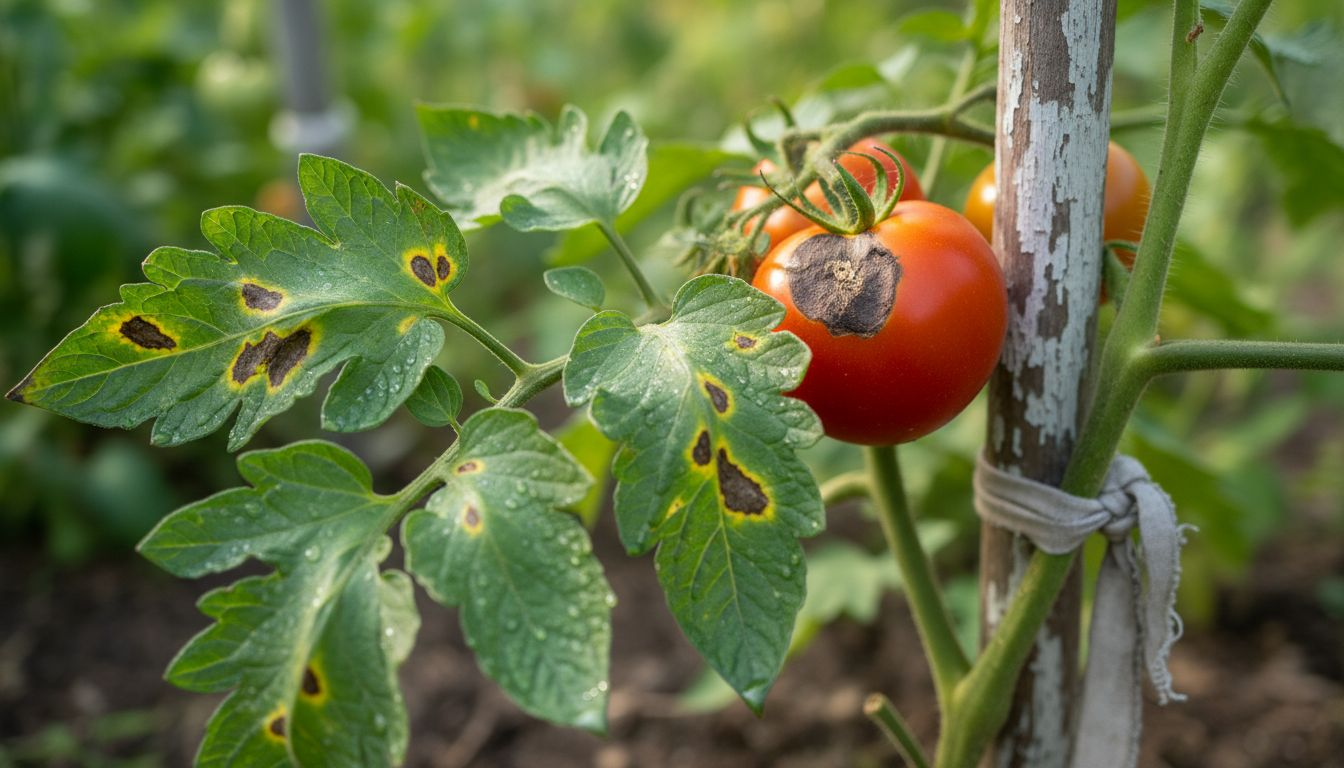
Bacterial diseases like bacterial canker, bacterial speck, and bacterial spot cause dark, sometimes oozing lesions on leaves, stems, and fruit. These bacteria spread through water splash during rain or overhead watering, making your irrigation method crucial. Bacterial diseases accelerate in warm, humid conditions and spread rapidly through dense plantings. The challenge with bacterial infections is that they offer fewer treatment options than fungal diseases. Once established, removing infected plants and practicing strict sanitation becomes your primary defense.
The management approach that works across all these fungal and bacterial tomato diseases involves multiple strategies working together. Choose disease-resistant tomato varieties whenever available. Improve air circulation by spacing plants properly and pruning lower branches. Water at soil level early in the morning to keep foliage dry. Remove infected leaves and stems immediately. Rotate crops yearly, never planting tomatoes in the same soil for at least three years. Disinfect tools between plants using a 10 percent bleach solution. These practices alone prevent 80 percent of disease problems most home gardeners face.
Pro tip: Scout your garden every three to four days starting in early summer, removing any spotted or yellowing leaves immediately before spores spread to healthy tissue, which stops disease progression at the source.
Nutrient Deficiencies and Environmental Stresses
Sometimes your tomato problems have nothing to do with pests or diseases. The real culprit might be invisible to the naked eye: missing nutrients or growing conditions that fall outside what tomatoes actually need. These stresses sneak up on gardeners because they mimic each other and overlap with disease symptoms. A yellowing leaf could mean nitrogen deficiency, overwatering, root disease, or early blight. This ambiguity makes diagnosing nutrient and environmental issues trickier than spotting a whitefly infestation. The payoff comes when you correct the actual problem and watch your plants bounce back within days.
Nitrogen deficiency shows up first as yellowing on older, lower leaves while new growth stays green. Plants slow their growth and produce fewer flowers. Potassium deficiency causes yellowing that starts at leaf edges and moves inward, eventually creating a scorched appearance. Calcium deficiency manifests as blossom-end rot, a dark, sunken spot that appears on the fruit bottom as it develops. This one stings because the fruit looks fine until harvest time. These nutrient problems develop when soil lacks minerals or when pH swings prevent nutrient absorption. Understanding plant nutrition basics helps you diagnose whether your issue stems from deficient soil or blocked uptake. The fix involves soil testing to identify what’s actually missing, then amending with appropriate fertilizers or adjusting pH through compost additions. Temperature extremes create their own cascade of problems. When nighttime temperatures drop below 55°F or daytime temperatures spike above 85°F, flower pollination fails and fruit won’t set, leaving you with flowers but no tomatoes. High heat also triggers blossom-end rot through erratic watering patterns, as inconsistent moisture prevents calcium transport to developing fruit.
Watering stress creates immediate problems. Drought slows fruit development and triggers sunscald when exposed fruit gets scorched. Overwatering waterloggs roots, suffocating them and creating conditions that favor root rot and fungal diseases. Your tomatoes need consistent, moderate moisture that keeps soil evenly damp but never soggy. Light availability matters more than many gardeners realize. Tomatoes need minimum six to eight hours of direct sunlight daily. Less than that produces leggy plants with poor fruit set and weak flavor. Poor air circulation compounds multiple problems by trapping humidity that promotes fungal diseases and reducing light penetration through dense foliage.
Addressing these stresses means looking at your entire growing environment holistically. Mulch around plants with two to three inches of organic material to regulate soil moisture and temperature. Water early morning at soil level to keep foliage dry and maintain consistent moisture. Space plants properly to ensure air movement and adequate light exposure. Test your soil yearly and amend based on results. Watch your weather and use shade cloth during extreme heat waves or create microclimates that moderate temperature swings.
Pro tip: Water tomatoes deeply two to three times weekly rather than daily shallow watering, which creates inconsistent moisture and triggers blossom-end rot and cracking regardless of nutrient levels.
Preventing and Treating Tomato Troubles
The best tomato harvest starts before problems appear. Prevention always beats treatment because once diseases establish or pests colonize your plants, you’re playing catch-up for the rest of the season. A few smart decisions made in spring pay dividends all summer long. The good news is that most prevention strategies are simple, cost nothing or very little, and require only consistency rather than specialized knowledge.
Start with variety selection. Choose tomato cultivars labeled disease-resistant. The letters after variety names matter: VFN means resistance to Verticillium wilt, Fusarium wilt, and nematodes. FF means resistance to early and late blight. Look for these designations when buying seedlings or seeds. Resistant varieties don’t guarantee immunity, but they dramatically reduce problem severity. Next comes crop rotation. Never plant tomatoes in the same soil two years running. Soil-borne pathogens and pests overwinter in soil and jump on returning hosts. Rotate tomatoes to a different bed location every three years minimum. Sanitation stops problems before they start. Remove lower leaves on plants weekly once they reach 12 inches tall, eliminating the lowest leaves where fungal spores land first. Clean tools with a 10 percent bleach solution between plants. Sterilize stakes and cages yearly. These practices prevent most fungal diseases from gaining a foothold.
Spacing and air circulation create an environment where diseases struggle. Plant tomatoes three to four feet apart rather than crowding them closer. Prune lower branches to improve airflow. Remove leaves that touch soil. Good air movement dries foliage quickly after rain or watering, preventing the wet conditions fungi need. Water at soil level early in morning rather than overhead, keeping leaves dry. When problems do appear despite prevention, integrated pest management strategies guide your response. Early detection matters enormously. Scout plants regularly, checking both leaf surfaces and looking for pest damage or disease symptoms. Catch problems when populations are small or disease covers just a few leaves. At this stage, removing affected foliage often stops spread completely. If treatment becomes necessary, start with the least toxic option first. Cultural controls and organic approaches like removing infested leaves or using beneficial insects work for many situations. Only escalate to pesticides if monitoring shows populations exceed treatment thresholds.
Compare these disease management strategies for effective tomato care:
| Strategy | Main Benefit | When to Use |
|---|---|---|
| Disease-resistant seeds | Reduces problem risk | Pre-season, all gardens |
| Crop rotation | Limits soil pathogens | Start of each new season |
| Sanitation | Stops disease spread | Ongoing, after every harvest |
| Spacing & pruning | Enhances air flow | At planting, throughout growth |
| Soil-level watering | Keeps foliage dry | Every watering session |
Pro tip: Keep a garden journal noting when problems appeared, which varieties stayed healthy, and what treatments worked or failed, creating a personalized playbook that guides your decisions and improves results every season.

Protect Your Tomato Harvest With Expert Guidance and Proven Solutions
Tomato plants face a range of problems from wilting due to fungal wilts to damage by pests like whiteflies and aphids. Understanding these challenges is essential to prevent losing your hard work and enjoy a bountiful harvest. Whether you’re dealing with nutrient deficiencies, fungal and bacterial diseases, or persistent pests, taking action early can make all the difference in saving your crop and maximizing yield.
At Lushy Gardens, we offer comprehensive resources tailored to your needs. Explore our Pest & Disease Management – Lushy Gardens section for practical advice on identifying and controlling common tomato pests and diseases. Learn more about maintaining healthy outdoor crops in our Outdoor Plants – Lushy Gardens category. Dive deeper into expert tips, timely strategies, and hands-on solutions designed to help you tackle tomato problems with confidence. Start transforming your garden today by visiting Lushy Gardens and take the first step toward thriving tomato plants and a rewarding harvest.
Frequently Asked Questions
What are the signs of wilting in tomato plants?
Wilting in tomato plants can appear as drooping leaves and stems, indicating possible water stress or more severe conditions like Fusarium or Verticillium wilt. Check the soil for moisture to assess the cause.
How can I prevent blossom-end rot on my tomatoes?
Blossom-end rot can be prevented by ensuring consistent watering, which maintains even moisture levels. Additionally, ensuring adequate calcium levels in the soil can help support healthy fruit development.
What pests should I watch for on my tomato plants?
Common pests include whiteflies, aphids, and spider mites, all of which cause visible damage. Regular monitoring of both leaf sides and new growth is important to catch infestations early.
How can I improve air circulation around my tomato plants?
Improving air circulation can be achieved by spacing plants three to four feet apart and regularly pruning lower leaves. This helps reduce humidity around the foliage, which minimizes the risk of fungal diseases.
Recommended
- Best Time to Plant Tomatoes: Expert Tips for a Lucrative Harvest – Lushy Gardens
- 7 Essential Tips for Growing Tomatoes Successfully – Lushy Gardens
- Master Fall Vegetable Gardening for a Bountiful Harvest – Lushy Gardens
- Understanding Common Vegetable Garden Pests – Lushy Gardens

I’m Eleanor, a seasoned gardener with over three decades of experience tending to Mother Nature’s creations. Through Lushy Gardens, I aim to share my wealth of knowledge and help fellow plant enthusiasts uncover the wonders of gardening. Let’s dive into this journey together, one leaf at a time.


