
Table of Contents
Finding space for lush greenery in a British flat can feel challenging, especially when every square foot counts. Propagating houseplants from cuttings offers a way to expand your indoor oasis without breaking the bank or buying new plants. This guide shows you how to start with healthy parent plants, prepare your cuttings with care, and create the best conditions for rooting—all tailored for urban settings with limited space.
Quick Summary
| Key Point | Explanation |
|---|---|
| 1. Select Healthy Cuttings | Choose vigorous stems from disease-free parent plants to maximize rooting success. |
| 2. Use Proper Growing Medium | Light, well-draining, and nutrient-rich mixtures like perlite and vermiculite are essential for healthy root growth. |
| 3. Ensure Optimal Planting Technique | Insert cuttings at a 45-degree angle and use rooting hormone to enhance root initiation. |
| 4. Control Moisture and Light | Maintain 70-80% humidity and provide indirect light to create an ideal environment for rooting. |
| 5. Monitor Root Growth Before Transplant | Check for root emergence and new leaf development before carefully moving cuttings to larger pots. |
Step 1: Choose and Prepare Healthy Cuttings
Successful plant propagation begins with selecting the right cuttings – a critical foundation that determines your rooting success. Understanding how to choose and prepare plant cuttings can transform your gardening experience from hit-or-miss to consistently thriving.
When selecting cuttings, focus on identifying healthy parent plants with vigorous growth. Look for stems that are disease-free, without spots, discoloration, or signs of stress. The optimal cutting selection process involves several key considerations:
- Choose stems from the current growing season
- Select branches with multiple leaf nodes
- Avoid woody or overly mature stems
- Pick stems that are flexible but not soft
Preparing your cuttings requires precision and clean tools. Use sharp, sterilized pruning shears to make clean cuts at a 45-degree angle, which maximizes the surface area for root development. Remove lower leaves to reduce moisture loss, leaving only 2-3 leaves at the top of the cutting. This approach helps the cutting focus its energy on root production rather than supporting excessive foliage.
A clean, precise cut is more important than a rough, jagged removal that can damage plant tissue and introduce potential infections.
Pro tip: Keep your cuttings in a humid environment immediately after taking them to prevent dehydration and improve rooting potential.
Step 2: Select and Set Up the Right Growing Medium
Creating the perfect environment for your plant cuttings starts with choosing an ideal growing medium – the foundation that will determine your propagation success. Your goal is to create a nurturing space that supports root development while preventing potential disease and stress.
When selecting a growing medium, prioritize materials that offer optimal rooting conditions, focusing on key characteristics that promote healthy root growth. Ideal mediums should be lightweight, well-draining, and rich in nutrients. Consider these recommended components:
- Perlite for increased aeration
- Vermiculite to retain moisture
- Coconut coir for sustainable water retention
- Sterile potting mix to prevent potential infections
Mixing your own rooting medium allows you to customize the blend precisely for your specific plant type. A standard recipe includes equal parts perlite, vermiculite, and sterile potting soil, which creates a balanced environment that supports root initiation. Ensure your mixture is loose enough to allow oxygen penetration while maintaining consistent moisture.
Here’s a quick reference comparing key growing medium components and their roles in plant propagation:
| Material | Main Benefit | Typical Use |
|---|---|---|
| Perlite | Enhances aeration | Prevents root rot |
| Vermiculite | Retains moisture | Reduces watering |
| Coconut coir | Sustainable water hold | Eco-friendly choice |
| Potting mix | Provides nutrients | Supports growth |
The quality of your growing medium directly impacts the success rate of your plant propagation efforts.
Pro tip: Sterilize your growing medium by baking it in the oven at 180 degrees for 30 minutes to eliminate potential pathogens and create a clean environment for root development.

Step 3: Plant Cuttings for Optimal Root Development
Successfully transforming plant cuttings into thriving new plants requires precision and understanding of the delicate rooting process. Your goal is to create the ideal conditions that encourage robust root development and give your cuttings the best chance of survival.
When planting your cuttings, focus on optimal rooting techniques that maximize root initiation potential. The placement and handling of your cuttings are critical to their success:
- Insert cuttings at a 45-degree angle
- Ensure basal end is 1-2 inches deep in medium
- Leave 2-3 leaf nodes above the growing medium
- Space cuttings to allow proper air circulation
Root hormone application can dramatically improve your success rates. Dip the base of each cutting into rooting hormone powder or gel before placement, which stimulates cell division and accelerates root formation. Gently tap off excess hormone to prevent oversaturation, which can inhibit root growth.
Precision in cutting placement and hormone treatment determines the difference between success and failure in plant propagation.
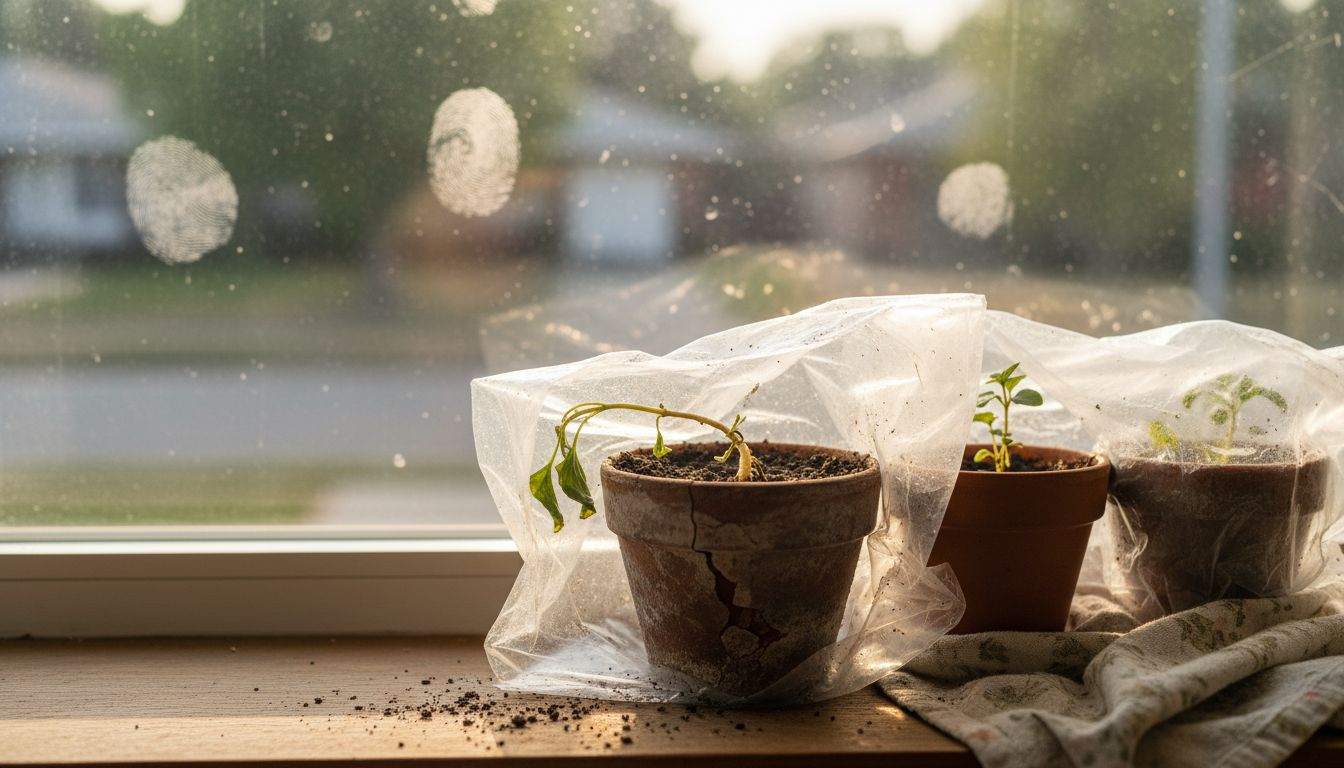
Pro tip: Create a miniature greenhouse effect by covering your planted cuttings with a clear plastic bag, maintaining humidity and temperature for optimal root development.
Step 4: Maintain Moisture and Light Conditions
Successful plant propagation hinges on creating the perfect microclimate for your delicate cuttings. Your mission is to balance moisture and light conditions that mimic the ideal natural environment for root development.
Carefully manage environmental conditions by following precise humidity and light strategies. Creating the right atmosphere involves several critical elements:
- Maintain 70-80% humidity around cuttings
- Use indirect, filtered light
- Keep temperature consistent between 65-75 degrees
- Monitor moisture without waterlogging
Humidity control is crucial during the rooting process. Place a clear plastic dome or bag over your planted cuttings to trap moisture and create a greenhouse-like environment. This technique helps prevent water loss and maintains the consistent moisture needed for successful root initiation. Position your cuttings in a location with bright, indirect light – think near a north-facing window or under grow lights set at a moderate intensity.
Consistent moisture and gentle light are the secret ingredients to transforming a simple cutting into a thriving new plant.
Pro tip: Use a spray bottle with filtered water to mist your cuttings daily, maintaining humidity without disturbing the delicate developing roots.
Here’s a summary of environmental factors crucial for rooting success:
| Factor | Ideal Range | Effect on Cuttings |
|---|---|---|
| Humidity | 70-80% | Reduces dehydration |
| Temperature | 65-75°F | Promotes steady root growth |
| Light | Indirect, filtered | Prevents leaf burn, optimizes energy |
| Moisture | Even, not waterlogged | Prevents rot while aiding rooting |
Step 5: Check Root Growth and Transplant Successfully
After weeks of careful nurturing, you’ll want to determine whether your plant cuttings have developed strong, healthy roots ready for their next growth stage. Root development marks a critical milestone in plant propagation that requires patience and careful observation.
Learn to assess root growth techniques with these strategic approaches:
- Gently tug on cutting to test root resistance
- Look for visible root emergence through container drainage holes
- Check for white, firm root tips indicating healthy growth
- Observe new leaf development as a sign of successful rooting
Transplant timing is crucial for your cutting’s survival. Wait until roots are at least 1-2 inches long and visibly branching. When ready, choose a pot slightly larger than your current container, using fresh potting mix that provides excellent drainage. Handle the young plant delicately, supporting the root ball and minimizing stress during the transition.
Successful transplanting is about creating a smooth, gentle transition that mimics the plant’s original growing conditions.
Pro tip: Allow transplanted cuttings to rest in a sheltered, indirect light environment for 1-2 weeks to help them acclimate to their new home.

Take Your Plant Propagation Success to the Next Level with Lushy Gardens
Growing plants from cuttings can be a fulfilling yet challenging journey. This article highlights how choosing healthy cuttings, preparing the right growing medium, and maintaining ideal moisture and light conditions are critical steps to nurturing strong roots. If you have struggled with cuttings drying out, poor root growth, or uncertain when to transplant your new plants, you are not alone. The detailed care tips and terminology like “root hormone application” and “humidity control” can feel overwhelming without ongoing support.
At Lushy Gardens, we understand these frustrations and are here to guide every step of your plant care adventure. Explore our Plant Care section for practical advice tailored to beginners and experienced gardeners alike. Whether you are propagating indoor beauties or outdoor favorites, our Indoor Plants and Outdoor Plants categories offer expert insights and solutions to common problems.
Ready to turn your cuttings into flourishing plants? Visit Lushy Gardens now for hands-on guides, product recommendations, and a supportive gardening community waiting to help you succeed. Start growing with confidence today.
Frequently Asked Questions
What is the best way to choose cuttings for propagation?
Select cuttings from healthy parent plants with vigorous growth. Look for stems that are flexible but not overly mature and free from disease, ensuring a strong foundation for successful rooting.
How should I prepare my cuttings before planting them?
Use sharp, sterilized pruning shears to take cuttings at a 45-degree angle for maximum surface area. Remove the lower leaves to reduce moisture loss, leaving 2-3 leaves at the top to support energy focus on root development.
What type of growing medium is best for rooting cuttings?
Use a lightweight and well-draining medium that includes components like perlite and vermiculite for aeration and moisture retention. Mixing equal parts of perlite, vermiculite, and sterile potting soil creates an ideal blend for root initiation.
How do I maintain optimal humidity and light conditions for my cuttings?
Cover your cuttings with a clear plastic dome or bag to maintain humidity levels of 70-80%. Position them in indirect, filtered light to prevent leaf burn while promoting healthy growth.
When is the right time to transplant my rooted cuttings?
Transplant your cuttings when roots are at least 1-2 inches long and visibly branching. Use a slightly larger pot with fresh potting mix, and allow the young plant to rest in a sheltered spot for 1-2 weeks to help it acclimate.
How can I tell if my cuttings have developed strong roots?
Gently tug on the cutting to check for resistance or look for visible roots emerging through drainage holes. Healthy roots will appear white and firm, coupled with new leaf growth indicating successful rooting.
Recommended
- Master Plant Propagation Methods for Thriving Gardens – Lushy Gardens
- Mastering Propagating Houseplants: A Complete Guide – Lushy Gardens
- Master Plant Propagation Techniques for Thriving Gardens – Lushy Gardens
- How to Propagate Snake Plant Successfully – Lushy Gardens

I’m Eleanor, a seasoned gardener with over three decades of experience tending to Mother Nature’s creations. Through Lushy Gardens, I aim to share my wealth of knowledge and help fellow plant enthusiasts uncover the wonders of gardening. Let’s dive into this journey together, one leaf at a time.


