
Table of Contents
TL;DR:
- Mulching garden beds conserves moisture, regulates soil temperature, and suppresses weeds, improving plant health. Organic mulches feed soil microbes and support soil structure, while improper application can hinder water absorption and plant growth. Regularly checking mulch depth and replacing it appropriately enhances its long-term benefits for garden productivity.
Mulching garden beds is the practice of covering soil with organic or inorganic materials to conserve moisture, regulate temperature, suppress weeds, and improve overall plant health. Whether you grow roses, tomatoes, or ornamental shrubs, mulch acts as a protective layer between your plants and the stresses of sun, wind, and temperature swings. Research published in 2026 confirms what experienced gardeners have long observed: the right mulch, applied correctly, delivers measurable gains in water efficiency, soil quality, and crop yield. Understanding why mulch garden beds matter gives you the foundation to make smarter decisions every season.
Why mulch garden beds: the core case for covering your soil
Mulch works by physically altering the environment directly above and within the topsoil. It blocks sunlight from reaching weed seeds, slows evaporation from the soil surface, and cushions roots from temperature extremes. These three functions alone justify making mulching a non-negotiable part of your garden routine. The role of mulch in gardens extends beyond convenience. It is a soil management tool that compounds its benefits over time, especially when you choose organic materials that break down and feed the soil.
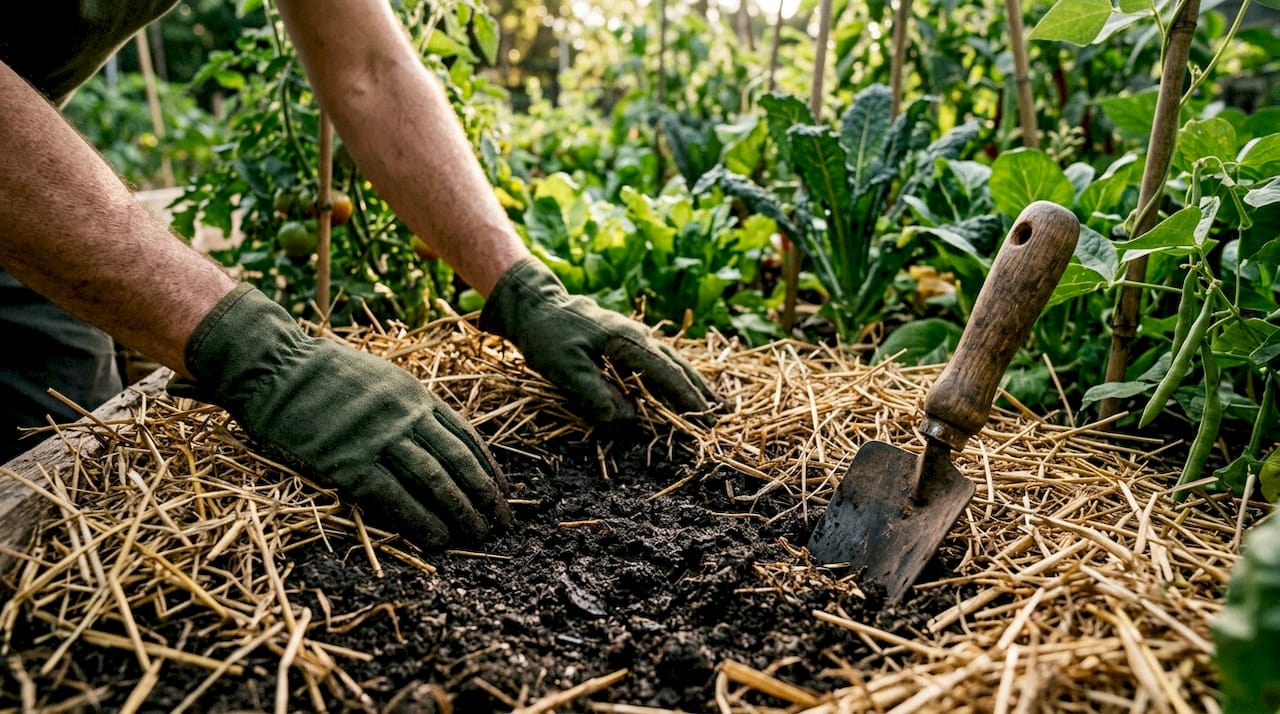
Mulch also reduces soil erosion and compaction. Rain droplets hit bare soil with enough force to break apart its surface structure, washing away nutrients and sealing the top layer against water infiltration. A 2-to-3-inch layer of woodchips or straw absorbs that impact, keeping your soil loose and permeable. That matters most in heavy rain events and on sloped beds where runoff is a real problem.
How does mulching conserve soil moisture and improve watering efficiency?
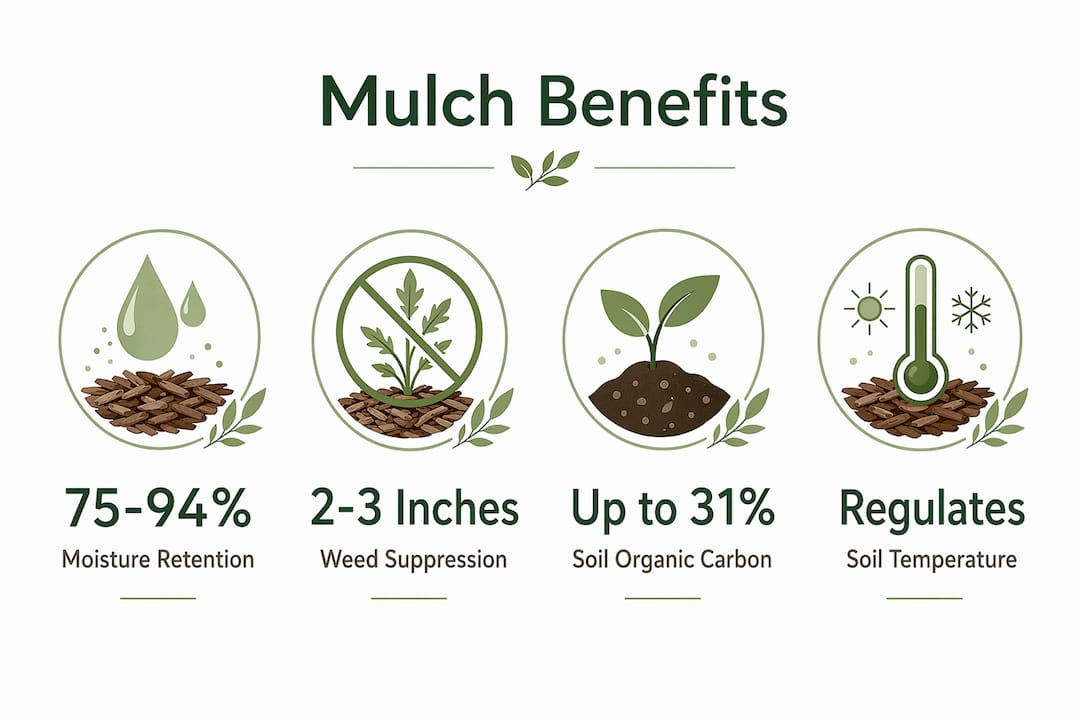
Soil moisture loss happens through two main routes: evaporation from the surface and transpiration through plant leaves. Mulch addresses the first route directly. By shading the soil and reducing air movement across its surface, mulch cuts the rate at which water escapes into the atmosphere. A 2026 study found that mulch increased soil moisture by 75 to 94% in the topsoil compared with bare ground. That is not a marginal improvement. It means your soil holds onto water far longer between rain events or irrigation cycles.
The type of mulch you use affects how much water actually reaches the roots. Coarse mulches like pine bark allow water to pass through more easily than finely shredded materials, which can mat together and shed water sideways. Plastic mulch conserves moisture well but blocks rainfall from entering the soil at all, making drip irrigation a requirement underneath it. Organic options like straw and woodchips strike the best balance for most home gardeners.
Research on spring maize found that paddy straw mulch with deficit irrigation saved roughly 20% of irrigation water without reducing yield. For a home gardener, that translates directly to lower water bills and less time at the hose.
- Apply mulch 2 to 3 inches deep for reliable moisture retention without risk of water repellency.
- Water the soil thoroughly before laying mulch so you are locking in moisture, not sealing out dry air.
- Avoid finely shredded mulch in areas prone to heavy rain, as it compacts and sheds water.
- Refresh mulch when it has decomposed below 1 inch, since thin layers lose their moisture-blocking effect quickly.
Pro Tip: Check soil moisture by pushing a finger 2 inches into the mulched bed. If it feels dry at that depth, your mulch layer is too thin or too compacted and needs refreshing.
What role does mulch play in regulating soil temperature and protecting plants?
Roots are far more sensitive to temperature than most gardeners realize. Soil that heats above 85°F stresses root systems, slows nutrient uptake, and can trigger early flowering in cool-season crops. Mulch acts as insulation in both directions. It keeps roots cooler in summer and warmer in winter, reducing the freeze-thaw cycles that heave shallow-rooted plants out of the ground.
A 2026 study on potatoes found that organic mulching increased yields by 10.5 to 34.2% in semi-arid regions by moderating heat and buffering drought stress. That range reflects how much the specific mulch type and local climate matter. Straw mulch performed particularly well in hot, dry conditions because it reflects some solar radiation while still allowing gas exchange in the soil.
The color and material of your mulch also influence thermal effects:
- Light-colored mulches (straw, light gravel) reflect heat and keep soil cooler in summer. Best for heat-sensitive plants like lettuce and spinach.
- Dark mulches (woodchips, black plastic) absorb heat and warm soil faster in spring. Useful for heat-loving crops like tomatoes and peppers.
- Plastic mulch creates the most dramatic temperature effect, raising soil temperature by several degrees. It is widely used in commercial vegetable production for this reason.
- Organic mulches moderate temperature more gradually, which suits perennial beds and mixed plantings where stability matters more than speed.
Research on spring maize confirms that mulch type affects root-zone temperature and evaporation rates simultaneously, so your choice of material shapes the entire soil microclimate, not just one variable.
How does mulching suppress weeds and improve soil health?
Mulch suppresses weeds through two mechanisms: physical blockage and light deprivation. A 2-to-3-inch layer prevents most weed seeds from making contact with soil, and the darkness underneath stops germinated seeds from establishing. This does not eliminate weeds entirely, but it dramatically reduces the time you spend pulling them. Perennial weeds with deep roots can still push through, so mulch works best as prevention rather than cure.
The soil health benefits of organic mulch build over months and years. As woodchips, straw, and shredded leaves decompose, they feed soil microbes and encourage earthworm activity, which improves aeration and nutrient cycling. Earthworms pull organic matter deeper into the soil profile, creating channels that improve drainage and root penetration. A bed that has been mulched with organic material for two or three seasons develops noticeably richer, looser soil than an unmulched bed nearby.
Woodchip mulch specifically has been shown to increase soil organic carbon by up to 31%. That carbon feeds the microbial community that makes nutrients available to plants. The tradeoff is that mulching can also reduce some microbial biomass measures and labile carbon pools in the short term, reflecting the complexity of soil biology. The long-term trajectory, however, favors organic mulch for soil health.
Here is a direct comparison of organic versus inorganic mulch on soil health outcomes:
| Factor | Organic mulch | Inorganic mulch |
|---|---|---|
| Weed suppression | Good, improves over time | Excellent, especially plastic |
| Moisture retention | High, varies by material | Very high with plastic |
| Soil carbon contribution | Significant over time | None |
| Earthworm activity | Increases | Neutral to negative |
| Decomposition and renewal | Needs annual top-up | Long-lasting, no renewal needed |
| Best use case | Perennial beds, vegetable gardens | Commercial crops, paths, slopes |
For most home gardeners focused on soil enrichment and plant health, organic mulches deliver the better long-term return.
What are the common mulching mistakes and how to avoid them?
The most frequent mulching error is applying too much. Mulch deeper than 4 inches can become hydrophobic, meaning water beads off the surface rather than soaking through. Research confirms that overly thick mulch repels water and dries out the soil beneath it, the opposite of what you want. If your beds feel dry despite regular watering, check the mulch depth before assuming the problem is irrigation.
- Too thick: Remove excess mulch above 4 inches. Rake it back and check soil moisture directly before reapplying.
- Too early in spring: Mulching before the soil has warmed delays the season for heat-loving plants. Wait until soil temperatures reach at least 60°F before mulching vegetable beds.
- Volcano mulching around trees: Piling mulch against tree trunks traps moisture against the bark, encouraging rot and pest damage. Keep mulch 3 to 4 inches away from any trunk or stem.
- Wrong mulch for the climate: Fine-textured mulches compact in wet climates and shed water. Coarse woodchips work better in high-rainfall areas.
- Automatic seasonal top-ups: Adding fresh mulch every spring without checking existing depth leads to compaction and water repellency over time. Assess mulch depth and condition before adding more.
Pro Tip: Pull back a section of mulch in late winter to check how much has decomposed. If more than an inch remains, skip the top-up and wait until the existing layer breaks down further.

Which mulch materials are best for garden beds and why?
The best mulch for your beds depends on your goals, climate, and the plants you are growing. No single material wins across all categories, but woodchips and straw consistently perform well for home gardeners because they balance moisture retention, soil feeding, and ease of application.
| Mulch type | Moisture retention | Soil benefit | Best for |
|---|---|---|---|
| Woodchips | High | High (carbon, microbes) | Trees, shrubs, perennial beds |
| Straw | High | Moderate | Vegetable gardens, pathways |
| Shredded leaves | Moderate | High (nutrients) | Flower beds, mixed borders |
| Pine bark | High | Moderate | Acid-loving plants like blueberries |
| Gravel | Moderate | None | Drought-tolerant plants, paths |
| Rubber mulch | Low | None | Playgrounds, decorative areas |
| Plastic mulch | Very high | None | Commercial vegetables, warm-season crops |
Woodchips stand out for long-term soil building. Research shows they increase soil organic carbon by up to 31%, making them the top choice for beds where soil improvement is the priority. Straw is the go-to for vegetable gardens because it is light, easy to move at planting time, and decomposes within a single season. Shredded leaves are free and nutrient-rich, though they can mat if applied too thickly. For mulching vegetable gardens specifically, straw and shredded leaves offer the best combination of practicality and soil benefit.
Gravel and rubber mulch last for years without renewal, but they contribute nothing to soil health and can make beds harder to replant. Use them where permanence matters more than fertility.
Key takeaways
Mulching garden beds works because it simultaneously conserves moisture, regulates soil temperature, suppresses weeds, and feeds soil biology, making it the single highest-return maintenance task in any garden.
| Point | Details |
|---|---|
| Moisture retention | Mulch increases topsoil water content by 75 to 94% compared with bare ground. |
| Temperature regulation | Organic mulch buffers root-zone heat, improving yields by 10.5 to 34.2% in stress conditions. |
| Weed suppression | A 2-to-3-inch layer blocks light and contact, reducing weed establishment without chemicals. |
| Soil health | Woodchip mulch increases soil organic carbon by up to 31% and supports earthworm activity. |
| Avoid over-mulching | Mulch deeper than 4 inches repels water. Check depth before every seasonal top-up. |
What I have learned from years of mulching garden beds
The gardeners who get the most from mulch are the ones who treat it as a living system, not a set-and-forget layer. I have seen beds where mulch was added faithfully every spring for five years straight, and by year three the soil underneath was bone dry in midsummer despite regular rain. The mulch had compacted into a mat that shed water like a roof. Pulling it back and letting the bed breathe for a few weeks fixed the problem faster than any irrigation adjustment would have.
The other thing most guides skip is that mulch type genuinely changes what grows well in a bed. I switched a struggling blueberry planting from shredded bark to pine needle mulch, and the plants responded within one season. Pine needles acidify the soil slightly as they decompose, which matched what those plants needed. That kind of specificity matters more than any general recommendation.
My honest advice: start with woodchips or straw, apply 2 to 3 inches, and resist the urge to add more every spring without checking what is already there. The watering efficiency gains alone will justify the effort, and the soil improvement compounds quietly in the background. Mulch is not glamorous, but it is the closest thing to a guaranteed return in gardening.
— Povilas
Explore more gardening guides at Lushygardens
Mulching is one of the most impactful habits you can build as a gardener, and Lushygardens has the resources to help you go deeper. The beginner gardening guide covers soil preparation, watering schedules, and seasonal timing so you can apply mulching within a complete care system. If you are managing multiple beds through the year, the seasonal maintenance guide walks through exactly when to refresh mulch, how to prepare beds for winter, and what to prioritize each quarter. Whether you are starting your first garden or refining an established one, Lushygardens gives you practical, research-backed guidance at every step.
FAQ
Why should you mulch garden beds every year?
Organic mulch decomposes over a single season, thinning the layer that suppresses weeds and retains moisture. Refreshing it annually maintains the 2-to-3-inch depth needed for consistent benefits, though you should check existing depth before adding more to avoid over-application.
Does mulch actually help with weeds?
Yes. A 2-to-3-inch mulch layer blocks light from reaching weed seeds and prevents most annual weeds from germinating. It will not stop established perennial weeds with deep roots, but it significantly reduces the overall weed pressure in a bed.
What is the best mulch for flower beds?
Shredded leaves and woodchips work well for most flower beds because they retain moisture, feed soil microbes as they decompose, and look tidy. Pine bark suits acid-loving plants like azaleas and rhododendrons. Avoid rubber mulch in beds where soil health matters.
Can you mulch too much?
Yes. Mulch deeper than 4 inches can become water-repellent, causing soil to dry out even after rain or irrigation. Research confirms that excess mulch above 4 inches should be removed, and mulching too early in spring can delay soil warming for heat-loving plants.
How does mulch protect plant roots in winter?
Mulch insulates the soil, slowing the freeze-thaw cycles that heave shallow roots out of the ground. A 3-inch layer applied before the first hard frost keeps soil temperatures more stable, reducing cold stress on perennials and bulbs through the winter months.
Recommended
- What Is Mulch Used For: Benefits for Urban Gardens – Lushy Gardens
- Complete Guide to the Benefits of Mulching – Lushy Gardens
- Understanding Mulching Vegetable Gardens for Healthier Growth – Lushy Gardens
- Benefits of Raised Beds: Complete Gardening Guide – Lushy Gardens

I’m Eleanor, a seasoned gardener with over three decades of experience tending to Mother Nature’s creations. Through Lushy Gardens, I aim to share my wealth of knowledge and help fellow plant enthusiasts uncover the wonders of gardening. Let’s dive into this journey together, one leaf at a time.


