
Table of Contents
TL;DR:
- Caring for flowering houseplants requires meeting their specific light, water, nutrient, humidity, and temperature needs. Providing adequate bright light and proper watering promotes consistent blooming, while high-phosphorus fertilizers and stable environmental conditions support flower production. Patience and understanding plant biology are essential for achieving year-round indoor blooms.
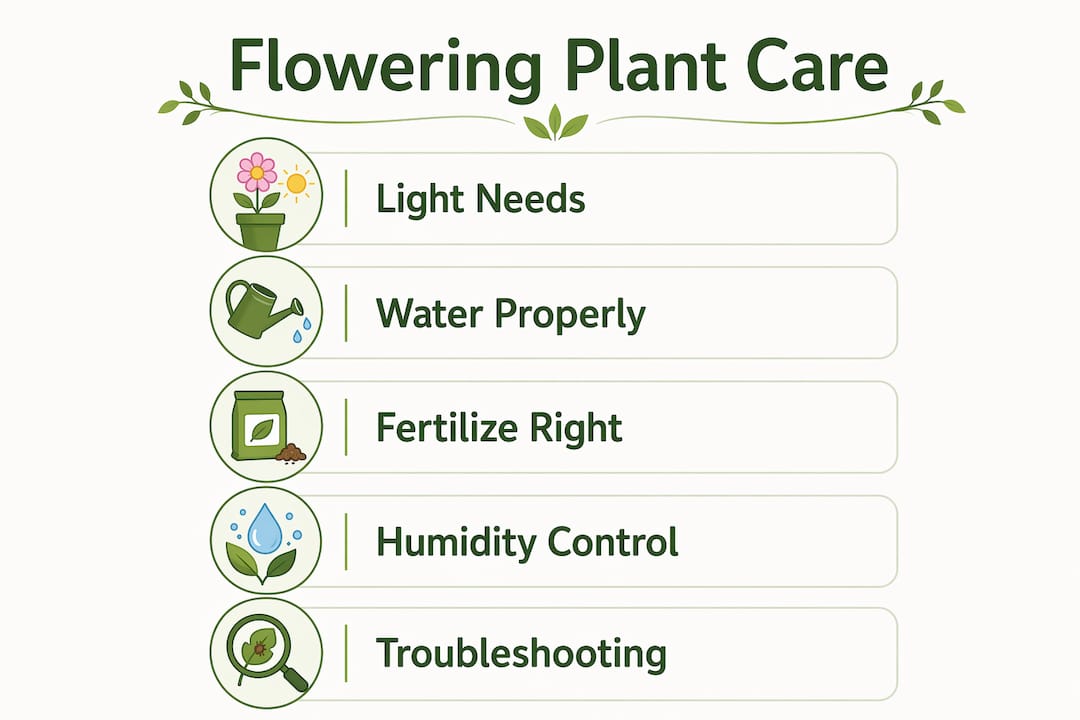
Caring for flowering houseplants is the practice of meeting each plant’s specific needs for light, water, nutrients, humidity, and temperature to produce reliable blooms indoors. Unlike foliage plants, flowering varieties demand more from their environment. Get the balance right, and plants like African Violets, Phalaenopsis orchids, and peace lilies reward you with weeks of color. Get it wrong, and you get green leaves and zero flowers. This guide covers every core element of flowering plant maintenance, from lighting and watering to fertilizing and troubleshooting, so you can keep your indoor plants blooming year-round.
How to provide the right light for flowering houseplants
Light is the single biggest factor separating a blooming plant from one that just survives. Flowering houseplants need higher light intensity than foliage plants. That distinction matters because most gardeners treat all houseplants the same when it comes to window placement.
The best natural light comes from south-facing or east-facing windows. South-facing windows deliver the longest daily exposure, while east-facing windows provide gentle morning sun that suits sensitive bloomers. West-facing windows work for many species but can run hot in summer. North-facing windows rarely provide enough intensity for sustained flowering.
When natural light falls short, especially in winter, full-spectrum LED grow lights fill the gap effectively. African Violets, for example, need 10–12 hours of light daily to bloom consistently. That requirement is nearly impossible to meet with a north-facing window in december or january.
Here is what to check when assessing your light setup:
- Hold your hand 12 inches above the plant at midday. A sharp shadow means bright light; a faint shadow means low light.
- Rotate plants a quarter turn each week so all sides receive even exposure.
- Keep leaves clean. Dust on leaves blocks light absorption and reduces photosynthesis.
- Move plants closer to windows in winter when sun angles drop.
- Avoid placing plants directly against cold glass in freezing temperatures.
Pro Tip: Position LED grow lights 6–12 inches above the plant canopy and run them on a timer set to 10–12 hours. Consistent daily cycles matter more than raw intensity for triggering blooms.
What are the best watering practices for flowering plants?
Overwatering is the leading cause of flowering houseplant failure. Check soil moisture 2 inches deep before adding any water. If the soil still feels damp at that depth, wait. Most flowering plants prefer a slight dry period between waterings rather than constantly wet roots.
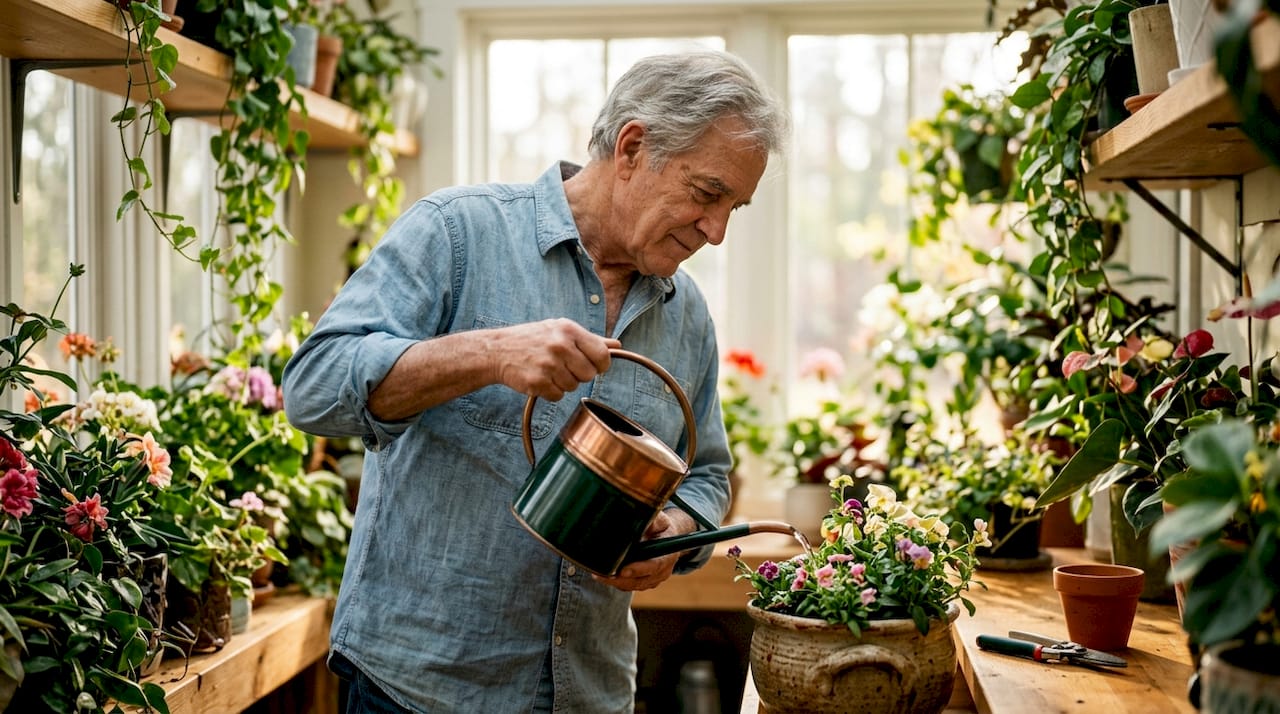
Drainage is non-negotiable. Every pot must have drainage holes, and saucers must be emptied within 30 minutes of watering. Water sitting in a saucer keeps roots wet and creates the conditions for root rot, which kills flowering potential faster than almost any other problem.
Watering needs also shift with the seasons. Plants drink more in spring and summer when they are actively growing and flowering. In fall and winter, growth slows and water needs drop significantly. Adjust your schedule rather than sticking to a fixed routine all year.
Watering do’s and don’ts:
- Do use room-temperature water. Cold water shocks roots and can cause leaf spotting on African Violets.
- Do water at the base of the plant, not over the foliage.
- Do use pots with drainage holes every time, without exception.
- Don’t water on a fixed schedule. Always check the soil first.
- Don’t let pots sit in standing water for more than 30 minutes.
- Don’t mist flowering plants as a substitute for proper watering.
Pro Tip: Water in the morning so excess moisture on leaves or soil surfaces dries before evening. Wet conditions overnight invite fungal problems that damage flowers and buds.
For more detail on safe watering techniques, Lushygardens covers the full range of methods for both flowering and foliage plants.
How do fertilizers affect blooming in indoor plants?
Fertilizer directly controls whether a flowering houseplant blooms or just grows leaves. The key is the NPK ratio, which stands for nitrogen, phosphorus, and potassium. Nitrogen drives leafy growth. Phosphorus and potassium support root development and flower production. A fertilizer labeled 5-10-10 or 10-30-20 puts more emphasis on the nutrients that trigger blooms.
Apply a high-phosphorus feed every 2–3 weeks from march through september. This covers the active growing season when plants can actually use the nutrients. Stop feeding from october through february. Feeding during dormancy pushes weak, leggy growth and wastes the plant’s energy reserves.
Always apply fertilizer at half the recommended label strength for the first few applications. Concentrated fertilizer burns roots and causes leaf scorch, which sets back flowering by weeks. When in doubt, feed less and observe the plant’s response before increasing.
| Fertilizer type | NPK emphasis | Best use case | Frequency |
|---|---|---|---|
| Balanced liquid feed | Equal NPK (e.g., 10-10-10) | Foliage and general growth | Every 2–4 weeks |
| High-phosphorus liquid | Low N, high P and K | Encouraging blooms | Every 2–3 weeks (March–September) |
| Slow-release granules | Varies by product | Low-maintenance feeding | Every 3–4 months |
| Orchid-specific feed | Low N, balanced P and K | Phalaenopsis and similar species | Every 2–3 weeks during growth |
Avoid switching fertilizer types mid-season. Pick one product and stick with it so you can accurately read how the plant responds.
Why do temperature and humidity affect flower drop?
Temperature and humidity are the two environmental factors most gardeners overlook until flowers start dropping. Drafts from heat vents or cold windows cause bud drop even when light and water are perfect. A plant placed near a radiator for visual effect will shed its buds within days.
Many flowering plants actually need a temperature drop to initiate blooming. Phalaenopsis orchids require a 5–8°C nighttime drop sustained over several weeks to trigger a new flower spike. Moving an orchid to a cooler room in september or october is not neglect. It is the correct technique.
Humidity matters most for tropical species. Most flowering houseplants prefer humidity levels between 40% and 60%. Standard home air, especially in winter with heating running, often drops well below that range. Low humidity causes buds to shrivel before they open.
The right way to raise humidity around plants:
- Place pots on a tray filled with pebbles and water, keeping the pot base above the waterline.
- Use a small room humidifier near your plant collection.
- Group plants together. They release moisture through transpiration, raising local humidity naturally.
Misting promotes fungal diseases on sensitive species like African Violets. Pebble trays and humidifiers are the better options. For a full breakdown of humidity management methods, Lushygardens has a dedicated practical guide.
Environmental do’s and don’ts:
- Do keep flowering plants away from heat vents, air conditioners, and drafty windows.
- Do use a thermometer to monitor nighttime temperatures if blooming stalls.
- Don’t mist African Violets or other fuzzy-leaved plants.
- Don’t move plants frequently. Stability in environment reduces stress and bud drop.

How do you troubleshoot a flowering plant that has stopped blooming?
A flowering pause after repotting or pruning is normal and expected. Plants stop blooming for 2–3 months after these stress events because energy shifts to root stabilization. Forcing blooms with extra fertilizer during this period causes further stress, not faster recovery.
Pot size also plays a role most gardeners miss. Overpotting, placing a plant in a container much larger than its root ball, encourages roots to spread rather than triggering flower development. Slightly rootbound conditions actually push some species, including peace lilies and Phalaenopsis orchids, toward blooming. Choose a pot only 1–2 inches wider than the current root ball when repotting.
Transparent pots for Phalaenopsis orchids let you monitor root color directly. Healthy roots are green or silver-green. Brown, mushy roots signal overwatering and explain a flowering pause better than any other symptom.
Troubleshooting steps when blooms stop:
- Check light levels first. Move the plant to a brighter spot and observe for two weeks.
- Inspect roots for rot if the plant was recently watered heavily.
- Review your fertilizer schedule. Confirm you are using a high-phosphorus formula during the growing season.
- Check for pests. Spider mites, mealybugs, and fungus gnats all stress plants and suppress flowering.
- Verify temperature. A plant that needs a cool trigger period will not bloom in a consistently warm room.
For a full indoor plant troubleshooting guide, Lushygardens covers the most common causes of flowering failure with step-by-step fixes.
Key Takeaways
Consistent flowering indoors requires matching light intensity, watering discipline, high-phosphorus feeding, stable humidity, and correct temperature cues to each plant’s specific needs.
| Point | Details |
|---|---|
| Light drives blooming | Flowering plants need 10–12 hours of bright light daily; supplement with LED grow lights in winter. |
| Soil moisture check | Test 2 inches deep before watering; never water on a fixed schedule regardless of season. |
| Feed for flowers | Use a high-phosphorus fertilizer every 2–3 weeks from march through september; stop feeding in winter. |
| Humidity without misting | Use pebble trays or a humidifier; misting causes fungal disease on sensitive species. |
| Pause after stress | Expect a 2–3 month flowering pause after repotting or pruning; avoid forcing blooms during recovery. |
What I have learned from years of watching plants refuse to bloom
The most common mistake I see is treating flowering houseplants like decoration first and living organisms second. Placement driven by aesthetics rather than plant needs is the fastest route to bud drop and frustration. A beautiful orchid on a dark bookshelf is a plant being set up to fail.
What actually works is building a routine around observation rather than a calendar. I check soil moisture by feel, not by day of the week. I watch leaf color and bud development as my real indicators of whether a plant is happy. When something looks off, I change one variable at a time so I know what actually made the difference.
The flowering pause after repotting used to frustrate me until I understood the biology. The plant is not dying. It is rebuilding. Patience during that 2–3 month window, combined with correct light and a rest from fertilizer, produces stronger blooms than any shortcut I have tried.
The other thing worth saying plainly: not every plant blooms on your schedule. Phalaenopsis orchids need a cool period to spike. Some plants need shorter days. Fighting those natural cycles with extra feeding or more water does not accelerate blooming. It delays it. Work with the plant’s biology, not against it, and the flowers come.
Lushygardens resources for your flowering plant routine
Getting flowering houseplants to bloom reliably takes practice, and having the right reference material makes the process much faster. Lushygardens offers a daily plant care checklist that walks you through watering checks, light adjustments, and feeding schedules in a format you can actually use every day. For gardeners who want to align their care with the seasons, the year-round seasonal care guide covers when to feed, when to rest plants, and how to prepare for winter dormancy. Both resources are built for plant owners who want practical steps, not theory.
FAQ
What light do flowering houseplants need?
Most flowering houseplants need 10–12 hours of bright, indirect light daily. South or east-facing windows work best; supplement with full-spectrum LED grow lights in winter when natural light is limited.
How often should I water a flowering houseplant?
Water only when the top 2 inches of soil feel dry. Frequency varies by season, plant species, and pot size, so always check the soil rather than following a fixed schedule.
Why is my flowering houseplant not blooming?
The most common causes are insufficient light, lack of a temperature trigger, or the wrong fertilizer ratio. Some species like Phalaenopsis orchids also need a cooler nighttime period to initiate a new flower spike.
Can I mist my flowering houseplants to raise humidity?
Misting is not recommended for most flowering houseplants. It promotes fungal disease, especially on species with fuzzy leaves like African Violets. Pebble trays or a small humidifier are safer and more effective options.
How long does it take for a plant to bloom after repotting?
Expect a flowering pause of 2–3 months after repotting or heavy pruning. The plant redirects energy to root stabilization during this period. Avoid fertilizing heavily until new growth resumes.
Recommended
- Watering houseplants guide for healthy, thriving plants – Lushy Gardens
- Solve common houseplant problems: tips for healthy plants – Lushy Gardens
- Houseplants for beginners: easy care tips (68% saved) – Lushy Gardens
- Mastering Propagating Houseplants: A Complete Guide – Lushy Gardens

I’m Eleanor, a seasoned gardener with over three decades of experience tending to Mother Nature’s creations. Through Lushy Gardens, I aim to share my wealth of knowledge and help fellow plant enthusiasts uncover the wonders of gardening. Let’s dive into this journey together, one leaf at a time.


