
Table of Contents
Dusty leaves can make even the most vibrant indoor plants lose their charm in a New York apartment or a busy Chicago loft. Clean, healthy foliage is essential for both plant vitality and keeping your living space visually appealing. By focusing on gentle tools, natural cleaning solutions, and thoughtful preparation, urban plant owners can keep every leaf spotless and lush without risking damage or stress to their favorite greenery.
Quick Summary
| Key Takeaway | Explanation |
|---|---|
| 1. Use the Right Tools | Gather soft cloths, spray bottles, scissors, and gloves for plant cleaning. Choose gentle tools to prevent damage. |
| 2. Prepare the Environment | Assess plant health and set up in a well-lit area with good circulation. Protect surfaces and ensure moderate temperature. |
| 3. Clean Leaf Surfaces Carefully | Use gentle rinsing and soft cloths to remove dust, paying attention to leaf textures to avoid damage. |
| 4. Apply Safe Cleaning Solutions | Mix diluted natural solutions to clean leaves, testing on a single leaf first to ensure no adverse reactions. |
| 5. Inspect and Air Dry Properly | After cleaning, inspect leaves for damage and allow them to air dry in a well-ventilated area to enhance health. |
Step 1: Gather Essential Tools and Supplies
Preparing the right tools makes cleaning your houseplants simple and safe. You want a collection of gentle yet effective implements that will help you maintain your plants without causing damage. Traditional gardening tools provide an excellent starting point for creating a plant care toolkit.
Your essential cleaning supplies should include soft microfiber cloths or sponges for wiping leaves, spray bottles for applying natural cleaning solutions, a pair of sharp garden scissors for trimming damaged foliage, and protective garden gloves to keep your hands clean. Some recommended natural cleaning solutions include diluted neem oil, mild liquid castile soap mixed with water, or a gentle vinegar water rinse. These solutions help remove dust and potential pests without harsh chemicals that could harm your plants.
Having clean water nearby is crucial for rinsing leaves after cleaning and ensuring no residue remains. Select tools specifically designed for delicate plant care to prevent accidental damage. Select tools with soft edges and gentle materials that will protect your plants during the cleaning process.
Here’s a quick reference comparing safe natural cleaning solutions for houseplants:
| Solution Type | Ingredients | Best For | Precautions |
|---|---|---|---|
| Diluted Neem Oil | Neem oil, water | Pest control, dust | Test on small area first |
| Castile Soap Mix | Castile soap, lukewarm water | General cleaning | Rinse thoroughly after use |
| Vinegar Water Rinse | White vinegar, water | Removing mineral spots | Use on sturdy leaves only |
| Plain Water | Clean lukewarm water | Sensitive plants | Avoid overwatering leaves |
Pro tip: Store your plant cleaning tools separately from other gardening equipment to maintain their cleanliness and prevent cross-contamination between different plants.
Step 2: Prepare Plants and Environment for Cleaning
Before diving into leaf cleaning, creating the right setup ensures a smooth and safe process for your houseplants. Proper plant preparation involves several critical steps that protect both your plants and your living space.
Start by assessing your plant’s overall health. Avoid cleaning plants that appear stressed, diseased, or extremely fragile. Choose a well-lit indoor area with good air circulation for your cleaning session. Protect nearby surfaces by laying down towels or plastic trays to catch any water or cleaning solution runoff. Ensure the room temperature is moderate and humidity levels are consistent to minimize potential shock to your plants during the cleaning process.
Prepare your plants by gently removing any loose dust or debris from the surrounding area. Water your plants the day before cleaning to ensure they are hydrated but not waterlogged. This helps reduce stress during the cleaning process and makes leaf surfaces more receptive to gentle cleaning. Position your plant in a location with indirect light to avoid direct sun exposure during cleaning.
Pro tip: Move delicate or sensitive plants to a stable surface away from foot traffic to prevent accidental bumps or disruptions during the cleaning process.
Step 3: Remove Dust and Debris from Leaf Surfaces
Removing dust and debris from your houseplant leaves is crucial for maintaining their health and appearance. Plant leaf surfaces have natural self-cleaning mechanisms that you can support through gentle cleaning techniques.
Begin by examining your plant’s leaves closely. For most plants, start with a gentle water rinse using lukewarm water. Hold the plant at an angle and use a soft spray or misting technique to dislodge dust particles. The water droplets will help lift away dirt while mimicking the plant’s natural lotus-leaf inspired cleaning process. For plants with larger leaves, use a soft microfiber cloth dampened with water and gently wipe each leaf surface from base to tip. Always wipe in a single direction to avoid damaging the delicate leaf structure.
Pay special attention to the leaf’s surface texture. Some plants have waxy or fuzzy leaves that require extra care. Avoid using excessive force or abrasive materials that could damage the plant’s protective cuticle layer. For plants with tiny or delicate leaves, a gentle misting might be more appropriate than direct wiping. Always allow leaves to air dry in a well-ventilated area away from direct sunlight to prevent water spots or potential leaf damage.
This summary table highlights cleaning approaches for different leaf types:
| Leaf Type | Recommended Method | Reason |
|---|---|---|
| Large, smooth | Wipe with damp cloth | Removes dust efficiently |
| Waxy | Gentle rinsing or mist | Preserves protective leaf coating |
| Fuzzy | Light misting only | Avoids damaging leaf texture |
| Delicate/tiny | Mist, air dry | Prevents breakage or bruising |
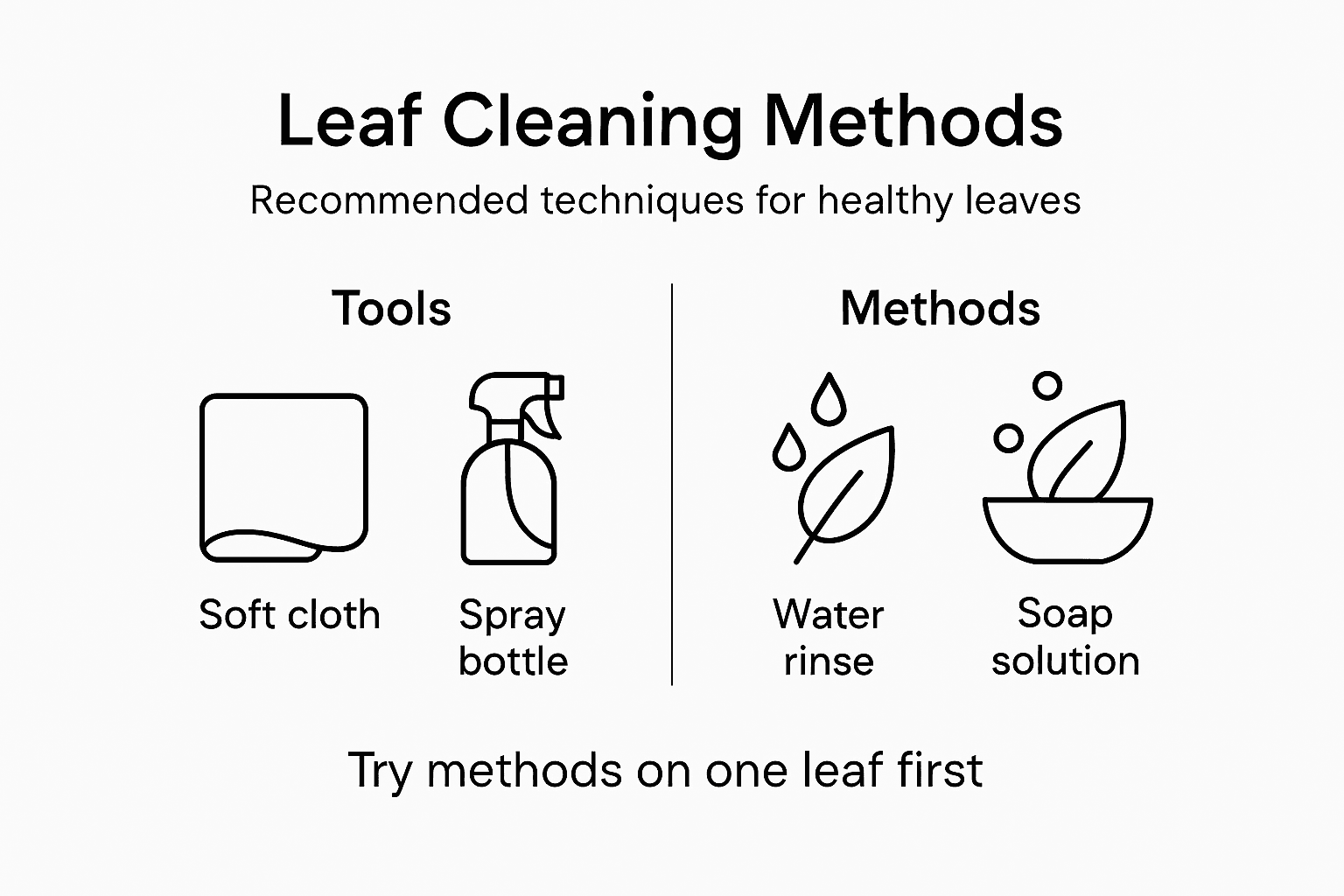
Pro tip: Test your cleaning technique on a single leaf first to ensure your plant tolerates the method without showing signs of stress or damage.
Step 4: Wipe and Rinse Leaves with Safe Solutions
Creating and applying gentle cleaning solutions can transform your plant care routine, keeping your houseplants looking vibrant and healthy. Natural leaf cleaning techniques involve careful preparation of safe and effective solutions that protect your plants.
Prepare your cleaning solution by mixing lukewarm water with a few drops of natural castile soap. For larger plants with sturdy leaves, use a soft microfiber cloth dampened with this mild solution and gently wipe each leaf from base to tip. Always work in a single direction to prevent damaging the leaf surface. For more delicate plants, consider using a spray bottle to lightly mist the leaves with water or a diluted neem oil solution. This approach helps remove dust and potential pests while maintaining the plant’s natural protective layers.
Rinse thoroughly after cleaning by using clean water to remove any soap residue. You can use a separate spray bottle with plain water or gently shower the plant under lukewarm running water. Allow the plant to air dry in a well-ventilated area away from direct sunlight. Different plant species may require slightly different approaches, so always observe your plant’s response and adjust your technique accordingly.
Pro tip: Test your cleaning solution on a single leaf and wait 24 hours to ensure the plant does not show any adverse reactions before treating the entire plant.
Step 5: Inspect and Dry Leaves to Prevent Damage
After cleaning your plants, a careful inspection and proper drying process are crucial to maintaining their health and appearance. Leaf inspection helps identify potential issues early/30%3A_Plant_Form_and_Physiology/30.10%3A_Leaves_-_Leaf_Structure_Function_and_Adaptation) and prevent long-term damage to your houseplants.
Examine each leaf carefully under good lighting. Look for any signs of damage such as cuts, tears, or residual cleaning solution. Pay close attention to leaf edges and surfaces, checking for discoloration or unusual spots that might indicate stress or disease. When drying your plants, choose a well-ventilated area away from direct sunlight and heat sources. Pat leaves gently with a soft microfiber cloth if needed, but mostly allow them to air dry naturally. Avoid rubbing or applying excessive pressure that could damage the delicate leaf surface.
If you notice any damaged or diseased leaves during your inspection, carefully trim them using clean gardening scissors. Removing these leaves prevents potential spread of problems and helps the plant direct energy toward healthy growth. Remember that different plant species may have unique drying and care requirements, so always observe your specific plant’s response and adjust your technique accordingly.
Pro tip: Use a clean white paper towel underneath leaves while drying to quickly spot and identify any pest activity or leaf damage.

Keep Your Houseplants Clean and Thriving with Lushy Gardens
If you find yourself struggling with dusty, unhealthy houseplants despite your best efforts, you are not alone. The key challenge in “Cleaning Plant Leaves Naturally for Healthier Houseplants” is maintaining the delicate balance between effective cleaning and protecting your plants’ sensitive leaf surfaces using gentle, natural solutions. This article highlights essential techniques like using diluted neem oil, castile soap mixes, and careful rinsing to remove dust and pests without harming your plants.
At Lushy Gardens, we understand how important it is to support your plants’ natural defenses while enhancing their appearance and wellbeing. Explore our Pest & Disease Management – Lushy Gardens section for expert tips on safe pest control options that complement natural leaf cleaning. For creative ways to care for your plants and improve your indoor garden space, check out our DIY Projects – Lushy Gardens category. Whether you are a beginner or seasoned gardener, our resources empower you to build confidence and nurture healthier plants.
Ready to elevate your plant care routine using natural cleaning methods and expert advice Visit us now at Lushy Gardens to find practical guides and trusted techniques that help your houseplants flourish. Don’t wait to give your plants the care they deserve and transform your indoor garden today.
Frequently Asked Questions
How can I clean my plant leaves naturally?
To clean your plant leaves naturally, use a mixture of lukewarm water and a few drops of natural castile soap. Gently wipe each leaf with a soft microfiber cloth, working from base to tip to avoid damaging the leaf surfaces.
What natural cleaning solutions are safe for houseplants?
Safe natural cleaning solutions for houseplants include diluted neem oil, mild liquid castile soap mixed with water, and a simple vinegar-water rinse. Choose one based on your plant’s specific needs: for general cleaning, use castile soap, while neem oil can help with pest control.
How often should I clean my houseplant leaves?
You should clean your houseplant leaves every few weeks to maintain their health and appearance. Regular cleaning helps prevent dust accumulation and allows your plants to maximize photosynthesis.
What precautions should I take while cleaning plant leaves?
While cleaning your plant leaves, avoid using abrasive materials that could damage the leaves’ protective coating. Always test any cleaning solution on a single leaf first to ensure there are no adverse reactions before applying it to the entire plant.
How can I tell if my plant is too stressed to clean?
If your plant shows signs of stress, such as wilting, yellowing, or drooping leaves, it’s best to postpone cleaning. Focus on supporting the plant’s recovery first before attempting any cleaning, monitoring its health closely for improvements.
What should I do if I find pests while cleaning my plant leaves?
If you discover pests while cleaning, immediately treat your plant with a diluted neem oil solution or soap mixture to deter them. Focus on thoroughly wiping affected areas and monitoring the plant for any further signs of infestation.
Recommended
- How to Clean Plant Leaves? – Lushy Gardens
- 7 Low Maintenance Houseplants for Everyone – Lushy Gardens
- 7 Best Air Purification Plants for Healthier Indoor Air – Lushy Gardens
- The Benefits of Bay Leaves for Houseplants Are Remarkable. How to Prepare and Use Bay Leaf Fertilizer? – Lushy Gardens

I’m Eleanor, a seasoned gardener with over three decades of experience tending to Mother Nature’s creations. Through Lushy Gardens, I aim to share my wealth of knowledge and help fellow plant enthusiasts uncover the wonders of gardening. Let’s dive into this journey together, one leaf at a time.


