
Table of Contents
Balcony gardeners in American cities often wonder how to turn food scraps into something valuable without creating a mess or attracting pests. Composting is more than tossing waste in a bin—it is a carefully balanced process that uses the power of microbes to transform kitchen and plant scraps into a rich soil amendment. Understanding composting fundamentals opens new possibilities for waste reduction and healthier container gardens, guiding you past misconceptions toward a cleaner, greener indoor space.
Key Takeaways
| Point | Details |
|---|---|
| Composting Process | Composting turns organic waste into nutrient-rich soil through microbial decomposition, requiring a balanced mix of carbon, nitrogen, moisture, and oxygen. |
| Methods for Composting | Various composting methods exist, such as backyard composting, vermicomposting, and bokashi composting, catering to different living situations. |
| Starting Composting | Begin with a compact setup, focusing on a balanced mix of green and brown materials, and gradually expand as you learn the process. |
| Troubleshooting Issues | Common composting problems include unpleasant odors and slow decomposition, often resolved by adjusting moisture levels and material balance. |
Composting Basics and Misconceptions Explained
Composting is a natural process that transforms organic waste into nutrient-rich soil amendment, but many urban gardeners misunderstand its fundamental principles. At its core, composting involves breaking down plant materials and food scraps through microbial decomposition, creating a sustainable method of waste reduction and soil enrichment.
The science behind composting relies on carefully balanced environmental conditions. According to EPA composting guidelines, successful decomposition requires a precise mix of carbon, nitrogen, moisture, and oxygen. Carbon-rich materials like dry leaves and paper provide energy for microorganisms, while nitrogen-rich green materials such as vegetable scraps accelerate the breakdown process. The ideal carbon-to-nitrogen ratio typically ranges between 25:1 and 30:1, which ensures efficient microbial activity.
Common misconceptions often prevent home gardeners from starting their composting journey. Many believe composting is complicated, smelly, or requires extensive space – but in reality, small-scale composting can be simple and odor-free when managed correctly. Home composting systems can be adapted to fit balconies, small patios, or even kitchen counters, making them accessible for urban dwellers with limited outdoor space.
Pro tip: Start your composting adventure with a small, contained bin and focus on learning the basic balance of green and brown materials before expanding your system.
Different Methods for Home Composting
Home composting offers multiple approaches that cater to different living spaces, waste types, and personal preferences. Composting methods vary widely depending on factors like available space, organic waste volume, and individual gardening goals, making it accessible for urban and suburban residents alike.
Traditional backyard composting remains the most common method for homeowners with outdoor space. This technique involves creating a dedicated pile or using a bin where organic materials like food scraps, yard waste, and leaves decompose naturally. The process requires periodic turning to aerate the materials and maintain proper moisture levels. For urban gardeners with limited outdoor area, vermicomposting emerges as an excellent alternative. This method uses special composting worms to break down organic waste quickly, generating nutrient-rich worm castings ideal for container gardens and indoor plant care.
For those with even more restricted spaces, innovative solutions like bokashi composting and indoor composting systems provide flexible options. Bokashi composting uses special microorganisms to ferment kitchen waste in a sealed container, producing a concentrated organic fertilizer that can be added directly to garden soil. Indoor composting systems, compact and odor-controlled, allow apartment dwellers to recycle food scraps without traditional outdoor composting requirements.
Pro tip: Choose a composting method that matches your living space and waste production, starting small and gradually expanding as you become more comfortable with the process.
Here’s a comparison of popular home composting methods and their suitability for different living situations:
| Method | Best For | Key Requirement | Typical Output Time |
|---|---|---|---|
| Backyard Composting | Outdoor spaces | Space for pile or bin | 3-6 months |
| Vermicomposting | Apartments, condos | Composting worms, bin | 2-4 months |
| Bokashi Composting | Small kitchens | Sealed container, bokashi mix | 2-4 weeks (pre-compost) |
| Indoor Composting | Urban dwellers | Compact, odor-controlled bin | 1-3 months |
What You Need to Start Composting
Starting a home composting project requires careful planning and a few essential materials. Composting basics involve gathering the right supplies and understanding the fundamental principles of organic waste transformation. The most critical components include a suitable container or designated outdoor space, a balanced mix of organic materials, and basic tools for managing your compost.
Your composting setup begins with selecting an appropriate container or location. For urban gardeners with limited space, compact compost bins or tumblers work perfectly. Outdoor composters should choose a well-drained area that receives partial sunlight and remains easily accessible throughout the year. Essential tools include a pitchfork or compost aerator for turning materials, a water source for maintaining proper moisture, and a thermometer to monitor decomposition temperatures. Green materials like vegetable scraps, coffee grounds, and fresh grass clippings provide nitrogen, while brown materials such as dry leaves, cardboard, and wood chips contribute necessary carbon.
Successful composting requires understanding the delicate balance of organic materials, moisture, and oxygen. Aim for a mix of approximately 3 parts brown materials to 1 part green materials, keeping the pile slightly damp but not waterlogged. Kitchen scraps, yard waste, and paper products can all contribute to your compost, but avoid adding meat, dairy, or oily foods that might attract pests or create unpleasant odors. Consider creating a small collection container in your kitchen to make collecting compostable materials convenient and systematic.
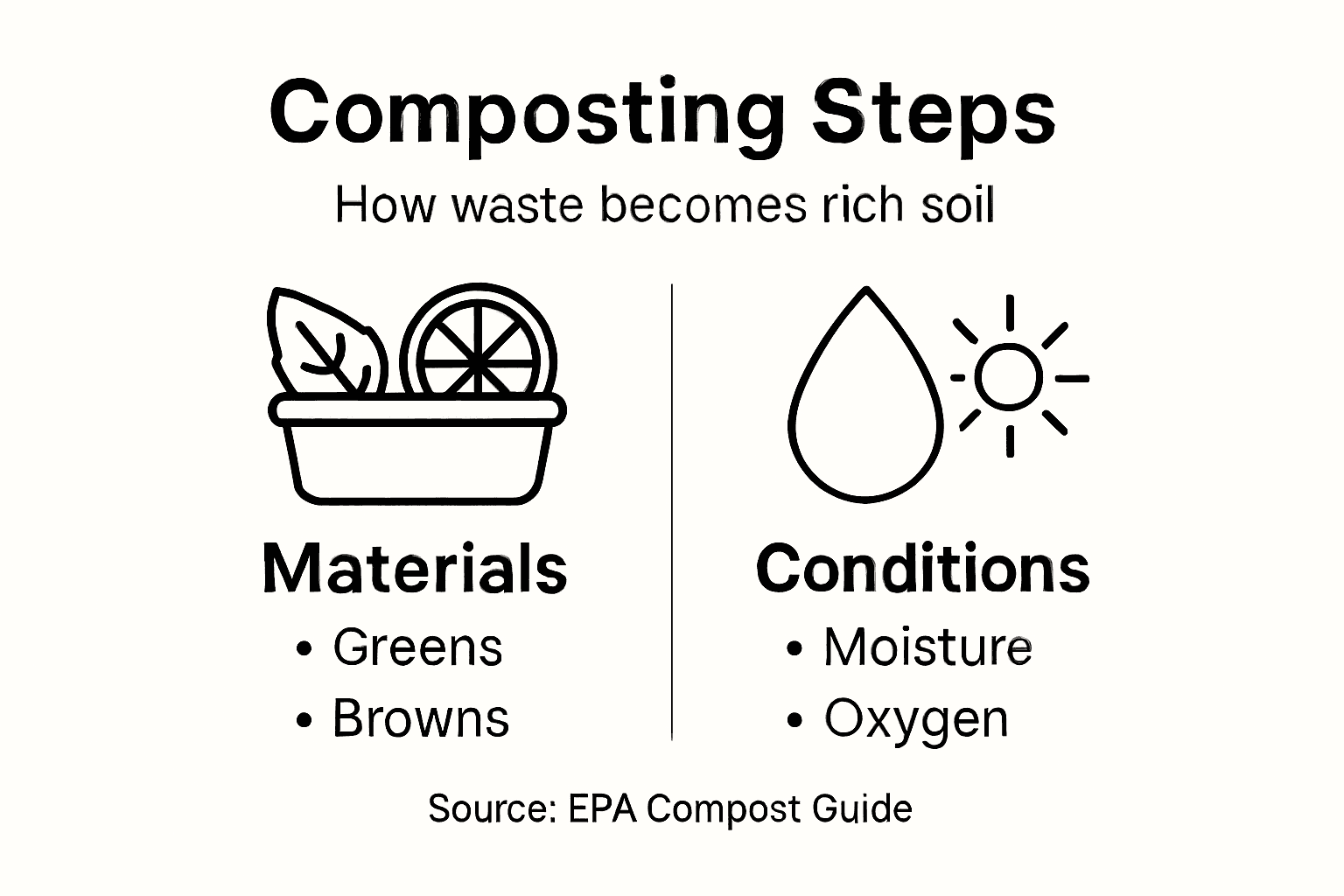
Pro tip: Start with a small composting setup and gradually learn the process, keeping a journal to track your materials, moisture levels, and decomposition progress.
Use this quick guide to identify materials suitable for composting at home:
| Material Type | Compostable Examples | Avoid These Materials |
|---|---|---|
| Greens (Nitrogen) | Vegetable peels, coffee grounds | Meat, dairy, oily foods |
| Browns (Carbon) | Dry leaves, paper, cardboard | Treated wood, glossy paper |
| Others | Eggshells, yard trimmings | Synthetic fabrics, plastics |
The Composting Process Step by Step
Composting is a dynamic biological transformation that converts organic waste into nutrient-rich soil amendment through systematic microbial activity. Composting approaches follow specific scientific principles that transform raw materials into dark, crumbly, and nutrient-dense compost over time.
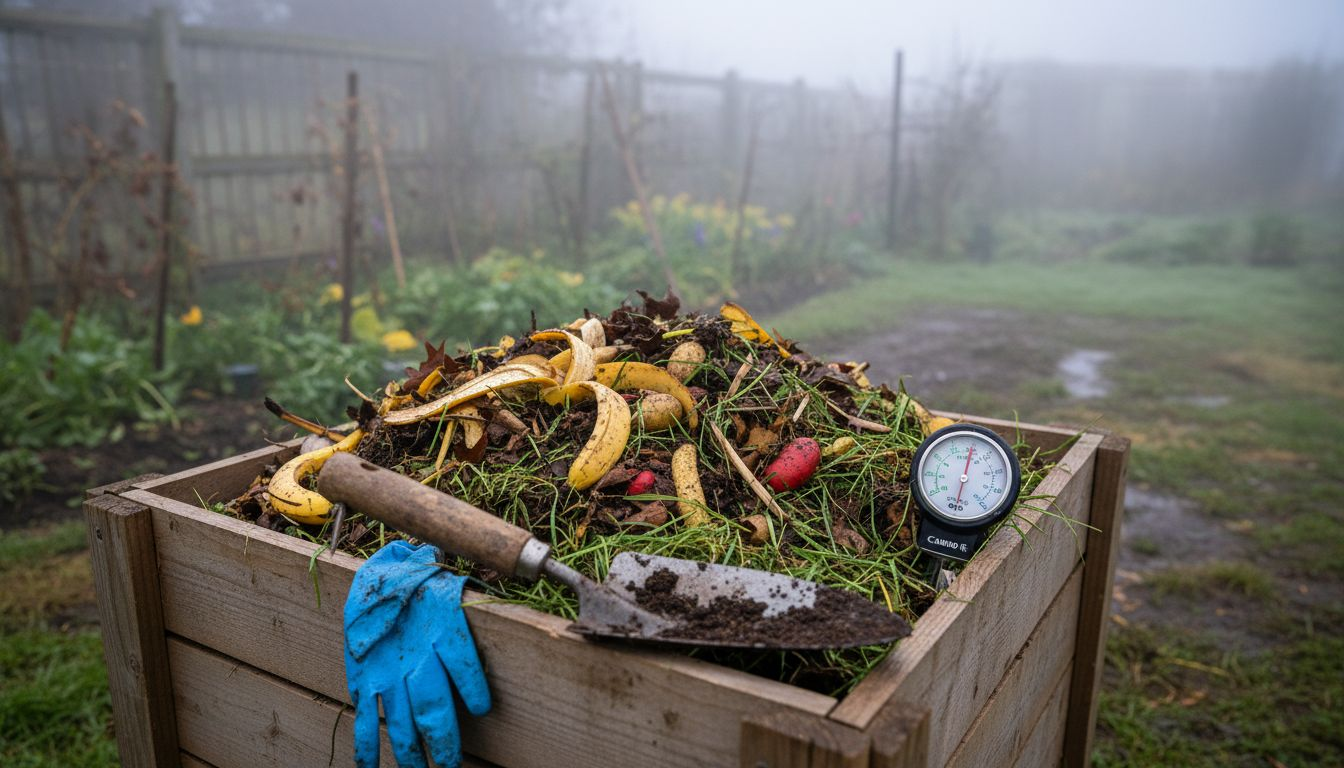
The composting process unfolds through several distinct stages characterized by temperature and microbial changes. Initially, mesophilic microorganisms begin breaking down easily decomposable materials, generating mild heat. As decomposition progresses, thermophilic bacteria take over, dramatically raising the internal temperature to between 130-150 degrees Fahrenheit. This high-temperature phase effectively kills potential plant pathogens and weed seeds while accelerating organic matter breakdown. During this stage, regular turning of the compost pile ensures even decomposition and prevents anaerobic conditions that could produce unpleasant odors.
As decomposition advances, the compost enters a cooling and curing phase where temperature gradually stabilizes and final breakdown occurs. Fungi and actinomycetes become more prominent, further breaking down complex organic compounds. The finished compost transforms into a dark, crumbly substance with an earthy smell, indicating it’s ready for use in gardens. Key indicators of mature compost include uniform texture, minimal recognizable original materials, and a rich, dark brown color. Urban gardeners should expect the entire composting process to take approximately 3-6 months, depending on management techniques and environmental conditions.
Pro tip: Monitor your compost’s temperature and moisture levels regularly, using a simple compost thermometer and performing the squeeze test to ensure optimal decomposition conditions.
Troubleshooting Common Composting Problems
Composting presents unique challenges for urban gardeners, with several recurring issues that can disrupt the decomposition process. Composting troubleshooting requires systematic diagnosis of underlying environmental and material balance problems that can impede successful organic waste transformation.
One of the most frequent complications is unpleasant odors, which typically indicate an imbalance in the compost’s composition. Foul smells often result from excess moisture or insufficient oxygen, suggesting the need to add more brown materials like dry leaves or cardboard to absorb extra moisture and improve air circulation. Anaerobic conditions can cause a rotten egg smell, signaling that the compost pile needs more frequent turning and potentially additional carbon-rich materials to restore proper microbial activity.
Pests and slow decomposition represent additional challenges for home composters. Fruit flies, ants, and rodents can be attracted to improperly managed compost piles, particularly those containing food scraps that are not fully buried or include inappropriate materials like meat, dairy, or oily foods. To deter pests, urban gardeners should maintain a balanced mix of green and brown materials, bury fresh food scraps deep within the pile, and avoid adding protein-based or fatty waste. Slow decomposition often stems from inadequate moisture, improper carbon-to-nitrogen ratios, or materials that are too large to break down efficiently. Chopping materials into smaller pieces, maintaining consistent moisture levels, and ensuring a roughly 3:1 ratio of brown to green materials can significantly accelerate the composting process.
Pro tip: Create a small reference chart detailing what materials can and cannot be composted, and keep it near your compost bin to prevent common contamination mistakes.
Unlock the Full Potential of Home Composting with Lushy Gardens
Composting at home offers a rewarding solution to reduce waste while enriching your soil with rich nutrients. If you face the challenge of balancing green and brown materials or managing a small space for composting, you are not alone. Many urban gardeners struggle with common concerns like odors, pests, or slow decomposition, but understanding the right methods and materials can transform your composting experience into a simple and enjoyable routine.
At Lushy Gardens, we provide practical insights tailored for beginners and seasoned gardeners alike. Explore our Sustainable Gardening – Lushy Gardens section to discover easy strategies for eco-friendly waste recycling. Need help choosing the right fertilizers to complement your compost? Our Fertilizers – Lushy Gardens collection offers advice on enhancing soil fertility naturally. New to gardening and composting? Start with our Gardening for Beginners – Lushy Gardens guides designed to build your confidence and skills.
Take control of your gardening journey today. Visit Lushy Gardens to unlock expert tips that can help you master home composting effectively and finally enjoy a thriving, sustainable garden.
Frequently Asked Questions
What materials can I compost at home?
You can compost green materials like vegetable scraps, coffee grounds, and fresh grass clippings, as well as brown materials such as dry leaves, cardboard, and wood chips. Avoid adding meat, dairy, and oily foods to prevent pests and odors.
How do I balance carbon and nitrogen in my compost?
Aim for a mix of approximately 3 parts brown materials (carbon) to 1 part green materials (nitrogen). This helps maintain optimal microbial activity and speeds up decomposition.
What are the signs that my compost is ready to use?
Mature compost will have a dark, crumbly texture and an earthy smell. Additionally, it should have minimal recognizable original materials, indicating it’s ready for use in your garden.
How can I troubleshoot unpleasant odors in my compost?
If your compost smells bad, it may indicate excess moisture or insufficient oxygen. Try adding more brown materials to absorb water and turning the pile more frequently to improve air circulation.
Recommended
- What Is Vermicomposting and Why It Matters – Lushy Gardens
- Best Compost for Vegetables: Complete Guide – Lushy Gardens
- Best Compost for Vegetables: Complete Essential Guide – Lushy Gardens
- Essential Sustainable Gardening Practices for Every Home – Lushy Gardens
- How to Compost at Home for Zero Waste Moving – Onyx Removals

I’m Eleanor, a seasoned gardener with over three decades of experience tending to Mother Nature’s creations. Through Lushy Gardens, I aim to share my wealth of knowledge and help fellow plant enthusiasts uncover the wonders of gardening. Let’s dive into this journey together, one leaf at a time.


