
Table of Contents
Over 40 percent of the world’s land is classified as dryland, and many American gardeners face the challenge of cultivating vegetables in hot, water-scarce environments. Gardening in arid regions calls for resourceful thinking and proven sustainable strategies that go far beyond traditional methods. If you want to grow healthy crops despite unpredictable rainfall and rising temperatures, you need approaches tailored for dry climates—like drought-resistant vegetable varieties, advanced water management techniques, and soil-building practices that support long-term success.
Key Takeaways
| Point | Details |
|---|---|
| Understanding Environmental Constraints | Dry climate vegetable gardening requires knowledge of local water scarcity and high evapotranspiration rates to implement effective practices. |
| Selecting Drought-Resistant Varieties | Focus on choosing vegetable varieties specifically bred for arid conditions to enhance resilience and productivity. |
| Implementing Efficient Watering Techniques | Utilize microirrigation systems and moisture retention strategies to maximize water efficiency in vegetable gardens. |
| Avoiding Common Mistakes | Recognize and steer clear of errors such as selecting non-drought-tolerant plants and neglecting proper soil preparation to ensure successful gardening outcomes. |
What Defines Dry Climate Vegetable Gardening
Dry climate vegetable gardening represents a specialized agricultural approach designed for regions experiencing limited water availability and challenging environmental conditions. Dryland environments cover over 40% of global land area, presenting unique challenges and opportunities for gardeners seeking to cultivate vegetables in arid landscapes.
These gardens are fundamentally defined by water scarcity and high evapotranspiration rates, requiring strategic approaches that differ significantly from traditional gardening methods. In dry climates, successful vegetable production depends on understanding local environmental constraints and implementing specialized techniques. Dry farming practices emphasize techniques like early planting, selecting drought-tolerant vegetable varieties, and maximizing soil moisture retention.
Key characteristics of dry climate vegetable gardening include adaptive strategies such as deep soil preparation, water conservation methods, and choosing plant varieties specifically bred for arid conditions. Gardeners must carefully manage limited water resources, often relying on stored soil moisture and precipitation patterns rather than consistent irrigation. The goal is creating resilient garden systems that can thrive despite minimal water input and extreme temperature fluctuations.
Pro tip: Select vegetable varieties with proven drought resistance and establish gardens in areas with maximum natural water retention to optimize your dry climate growing success.
Best Drought-Tolerant Vegetables for Arid Regions
Successful vegetable gardening in arid regions requires selecting plant varieties specifically adapted to water-scarce environments. Research from international agricultural centers demonstrates that certain vegetables possess remarkable resilience and can thrive under challenging drought conditions. These specialized varieties have unique physiological characteristics that enable them to survive and produce yields even when water resources are extremely limited.
Some of the most drought-tolerant vegetables include legumes like chickpeas, lentils, and common beans. Scientific studies on common bean varieties reveal that specific cultivars bred for water efficiency can maintain productivity under significant moisture stress. These vegetables typically feature deep root systems, enhanced water absorption capabilities, and faster maturity cycles that help them survive in challenging arid landscapes.
The most successful drought-tolerant vegetables for arid regions often include heat-resistant and water-efficient options such as:
- Okra
- Tepary beans
- Armenian cucumber
- Black-eyed peas
- Pole beans
- Cherry tomatoes
- Eggplant
Gardeners must choose varieties with specific adaptive traits like compact growth, waxy leaf surfaces, and genetic modifications that reduce water transpiration. Implementing strategic garden design and selecting region-specific vegetable varieties can transform seemingly inhospitable landscapes into productive growing spaces.
Pro tip: Select vegetable varieties with shorter growing seasons and research local drought-resistant cultivars specifically developed for your specific regional climate.
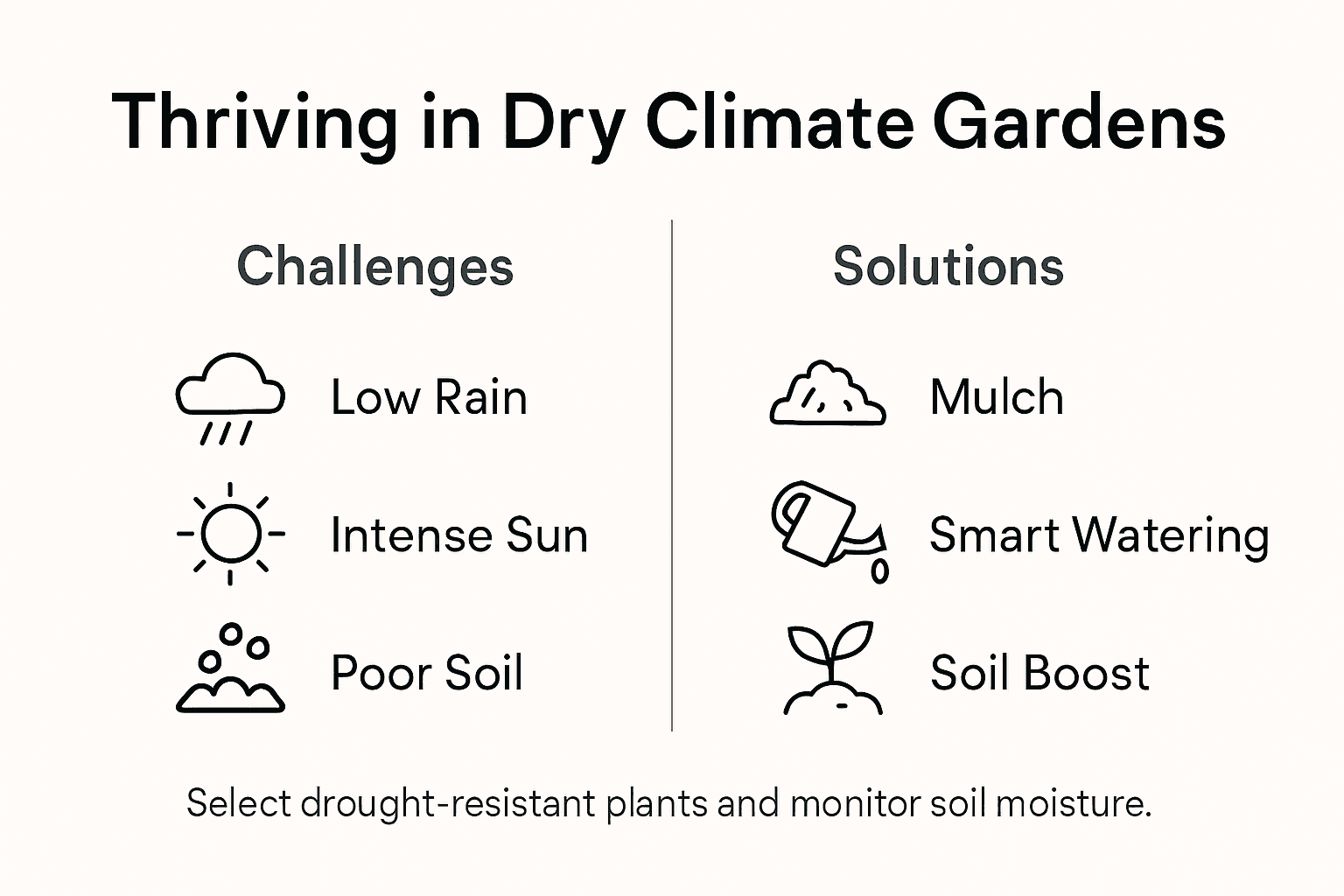
Here’s a summary comparing key adaptation strategies for successful dry climate vegetable gardening:
| Strategy Type | Purpose | Typical Method |
|---|---|---|
| Water Conservation | Reduce water usage | Mulching, microirrigation |
| Soil Improvement | Enhance moisture retention in soil | Compost, cover crops |
| Plant Selection | Maximize drought resilience | Use adapted varieties |
| Garden Design | Support natural water retention | Raised beds, site choice |
These drought-tolerant vegetables offer unique benefits for arid gardens:
| Vegetable | Notable Trait | Adaptation Benefit |
|---|---|---|
| Tepary bean | Deep-rooted | Withstands prolonged drought |
| Okra | Waxy leaf surface | Minimizes transpiration loss |
| Armenian cucumber | Rapid growth | Efficient use of short rains |
| Eggplant | High heat tolerance | Thrives in extreme temperatures |
| Cherry tomato | Compact plant structure | Useful for limited water zones |
Effective Watering Techniques and Irrigation Methods
Efficient irrigation strategies are crucial for maintaining vegetable gardens in arid regions, where water conservation becomes paramount. The key to successful dry climate gardening lies in understanding and implementing targeted watering techniques that maximize moisture retention while minimizing waste. Traditional broad-spectrum watering methods prove ineffective in water-scarce environments, demanding more precise and strategic approaches.
Microirrigation techniques emerge as the most effective solution for dry climate vegetable gardens. USDA agricultural resources recommend specialized methods like drip irrigation and targeted watering systems that deliver moisture directly to plant root zones. These techniques significantly reduce water loss through evaporation and ensure that every drop counts in water-limited landscapes.
Several advanced irrigation methods can transform your dry climate garden’s water management:
- Drip irrigation systems
- Soaker hoses
- Subsurface irrigation
- Xeriscaping techniques
- Mulch-based water retention strategies
- Rainwater harvesting systems
- Moisture-sensing automated irrigation controllers
Successful water management in arid vegetable gardens requires a holistic approach that combines technological solutions with thoughtful plant selection and landscape design. Gardeners must continuously monitor soil moisture, understand specific crop water requirements, and adapt their irrigation strategies to changing environmental conditions.
Pro tip: Install moisture sensors and create a customized watering schedule that responds to real-time soil conditions and individual plant needs.
Soil Improvement for Water Retention and Health
Improving water retention in soil requires a strategic approach that goes beyond simple watering techniques. In dry climate vegetable gardens, soil health becomes the foundation for successful plant growth, demanding careful management of organic matter, soil structure, and moisture conservation strategies. Understanding the complex interactions between soil components can transform seemingly inhospitable ground into a thriving garden ecosystem.
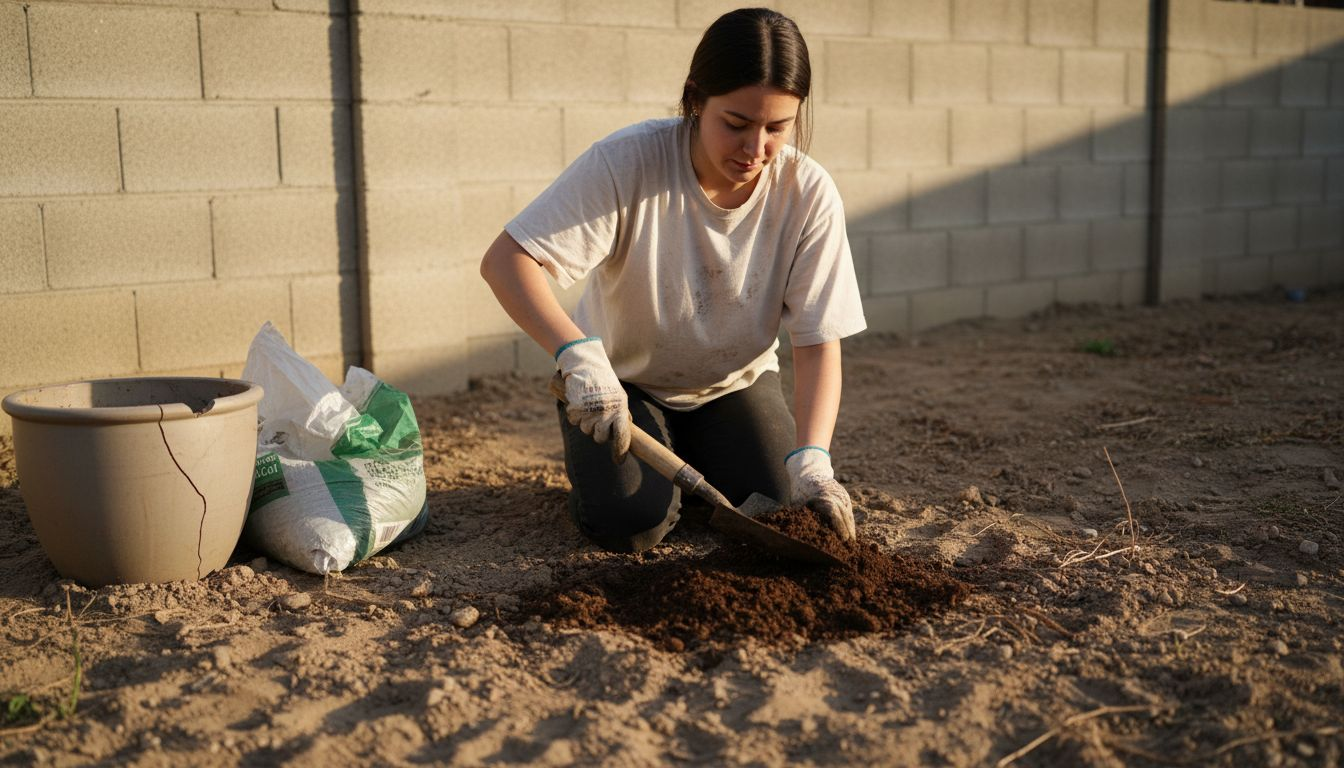
The core of effective soil management in arid regions involves multiple interconnected techniques. Soil moisture conservation methods emphasize creating a resilient soil environment that can hold and slowly release water to plant roots. Gardeners must focus on building soil structure through strategic organic matter integration, reducing tillage, and maintaining consistent soil cover to minimize moisture loss and support beneficial soil microorganisms.
Key strategies for improving soil water retention include:
- Adding high-quality compost
- Incorporating organic mulch layers
- Practicing minimal soil disturbance
- Using cover crops
- Implementing crop rotation
- Developing raised garden beds
- Integrating water-retaining soil amendments
Successful dry climate gardening requires a holistic understanding of soil dynamics. By treating soil as a living ecosystem, gardeners can create conditions that naturally support water retention, reduce evaporation, and provide essential nutrients for vegetable production. The goal is developing a self-sustaining soil environment that requires minimal external intervention.
Pro tip: Conduct a comprehensive soil test annually and customize your soil amendment strategy based on specific local environmental conditions and your garden’s unique microclimate.
Avoiding Common Mistakes in Dry Climate Gardening
Dry farming strategies reveal that most gardening failures in arid regions stem from fundamental misunderstandings about water management and plant selection. Novice gardeners often approach dry climate vegetable gardens with techniques that work in more temperate environments, leading to significant crop losses and frustration. Understanding the unique challenges of water-scarce landscapes is crucial for developing a successful gardening approach.
Common critical errors can derail dry climate vegetable production. These mistakes range from inappropriate crop selection to poor soil preparation and ineffective water management techniques. Semi-arid region gardeners must recognize that standard gardening practices often fail in environments with limited moisture, requiring specialized knowledge and adaptive strategies.
Key mistakes to avoid in dry climate vegetable gardening include:
- Selecting non-drought-tolerant vegetable varieties
- Neglecting comprehensive soil preparation
- Overwatering or inconsistent irrigation
- Failing to use mulching techniques
- Ignoring crop rotation principles
- Planting without considering local rainfall patterns
- Overlooking microclimate variations
Successful dry climate gardening demands a holistic approach that considers water conservation, soil health, and plant resilience. Gardeners must develop a nuanced understanding of their specific environmental conditions, treating each garden as a unique ecosystem with its own complex requirements. By anticipating challenges and implementing targeted strategies, vegetable gardens can thrive even in seemingly inhospitable conditions.
Pro tip: Create a detailed garden journal tracking moisture levels, plant performance, and environmental conditions to develop a personalized understanding of your specific gardening microclimate.

Master Dry Climate Gardening With Expert Guidance
Dry climate vegetable gardening challenges you to grow thriving plants with limited water and harsh conditions. If you struggle with water conservation, selecting drought-tolerant vegetables, or improving soil moisture retention, you are not alone. This specialized approach demands careful attention to watering techniques, soil health, and plant selection to succeed in arid environments.
At Lushy Gardens, we understand that your goal is to create a resilient garden that flourishes despite dry conditions. Explore our Gardening Tips – Lushy Gardens for practical advice on water-efficient gardening methods and soil improvement strategies. Discover seasonally appropriate crops and planting schedules through our Seasonal Gardening – Lushy Gardens to maximize your harvest. For those focusing on outdoor cultivation, our Outdoor Plants – Lushy Gardens category covers drought-tolerant varieties that match your climate.
Ready to transform your arid landscape into a productive vegetable garden today Visit https://lushygardens.com to access expert insights and step-by-step guides tailored to dry climate success. Take control of your garden’s future by learning proven strategies designed for water-scarce conditions now.
Frequently Asked Questions
What are the best drought-tolerant vegetables for dry climate gardening?
Some of the best drought-tolerant vegetables include okra, tepary beans, Armenian cucumber, black-eyed peas, pole beans, cherry tomatoes, and eggplant.
How can I improve soil water retention in my dry climate vegetable garden?
You can improve soil water retention by adding high-quality compost, using organic mulch, practicing minimal soil disturbance, and incorporating cover crops.
What are effective irrigation methods for gardening in arid conditions?
Effective irrigation methods for dry climate gardening include drip irrigation, soaker hoses, subsurface irrigation, and rainwater harvesting systems.
What common mistakes should I avoid in dry climate vegetable gardening?
Common mistakes to avoid include selecting non-drought-tolerant vegetable varieties, neglecting soil preparation, overwatering, and failing to use mulch for moisture retention.
Recommended
- Master Winter Vegetable Gardening for Abundant Harvests – Lushy Gardens
- Vegetable Garden Planning Made Easy: A Step-by-Step Guide – Lushy Gardens
- 7 Essential Tips for Mastering Your Vegetable Planting Calendar – Lushy Gardens
- Growing Vegetables in Pots: A Step-by-Step Success Guide – Lushy Gardens

I’m Eleanor, a seasoned gardener with over three decades of experience tending to Mother Nature’s creations. Through Lushy Gardens, I aim to share my wealth of knowledge and help fellow plant enthusiasts uncover the wonders of gardening. Let’s dive into this journey together, one leaf at a time.


