
Table of Contents
Nearly 60 percent of American urban gardeners admit they forget key planting dates each season. In the fast-paced environment of city living, tracking everything that happens in your garden can feel impossible. A dedicated gardening journal changes that, helping you recognize patterns, avoid costly mistakes, and support thriving plant growth. Discover practical ways to use journaling as your personal guide for smarter cultivation, whether you live in Paris or Sydney.
Key Takeaways
| Point | Details |
|---|---|
| Utilize a Gardening Journal | A gardening journal systematically tracks growth, challenges, and achievements, enabling informed decisions and strategy improvements in plant care. |
| Choose the Right Journal Type | Different journal types, such as Seed Inventory or Pest Tracking, cater to specific documentation needs, enhancing the focus and effectiveness of gardening. |
| Maintain Consistency | Regular documentation and updates to the journal foster a continuous learning process, helping identify patterns and optimize gardening practices over time. |
| Learn from Mistakes | Documenting both successes and failures transforms potential pitfalls into valuable insights, improving future gardening strategies and plant health. |
What Is A Gardening Journal And Why Use One
A gardening journal is a personalized documentation system that helps gardeners track, analyze, and improve their plant cultivation efforts. Unlike casual gardening notes, these journals provide a systematic approach to recording essential information about your garden’s growth, challenges, and achievements. Garden documentation supports sustainable plant production by creating a comprehensive record of your gardening journey.
Gardening journals typically include critical details like garden layouts, planting dates, seed germination rates, plant health observations, weather conditions, and harvest outcomes. By maintaining a detailed record, gardeners can learn from past experiences, identify successful techniques, and make data-driven decisions about future plantings. These journals act as a personal reference manual, helping you understand your specific garden’s unique ecosystem and microclimates.
The primary benefits of keeping a gardening journal extend beyond simple record-keeping. They serve as a valuable tool for tracking plant growth patterns, monitoring pest and disease occurrences, and planning crop rotations. Planners help gardeners stay organized by documenting important agricultural activities, ensuring you don’t miss critical planting or maintenance windows. This systematic approach transforms gardening from a trial-and-error process into a strategic, informed practice.
Pro tip: Start your gardening journal with a simple template that includes sections for dates, plant varieties, weather conditions, and personal observations to make tracking easier and more consistent.

Top Types Of Gardening Journals Explained
Gardeners have multiple options when selecting a journal to document their plant cultivation journey. The National Agricultural Library highlights several specialized journal types designed to capture different aspects of gardening performance and planning. These journals range from basic notebooks to comprehensive tracking systems, each serving unique documentation needs for home and professional gardeners.
Some primary types of gardening journals include:
- Seed Inventory Journals: Detailed logs tracking seed purchases, germination rates, and variety performance
- Weather and Climate Journals: Comprehensive records documenting temperature, rainfall, and seasonal variations
- Pest and Disease Tracking Journals: Systematic documentation of plant health challenges, treatment methods, and prevention strategies
- Experimental Journals: Specialized logs for gardeners testing new techniques, plant varieties, or cultivation methods
- Harvest and Yield Journals: Precise records of crop production, measuring output and identifying successful growing strategies
Garden journal formats can vary widely based on individual gardening needs, with some gardeners preferring digital spreadsheets while others opt for traditional handwritten notebooks. The key is selecting a system that matches your personal gardening style and information tracking preferences. Digital journals offer easy data analysis and backup, while physical journals provide a tangible, intimate connection to your gardening progress.
Here’s a summary comparison of the main types of gardening journals and their best uses:
| Journal Type | Primary Focus | Ideal For | Key Advantage |
|---|---|---|---|
| Seed Inventory | Tracking varieties and germination | Seed savers, planners | Ensures successful crops |
| Weather & Climate | Monitoring garden environment | Seasonal growers | Adapts plans to weather shifts |
| Pest & Disease | Documenting garden challenges | Integrated pest management | Enables targeted interventions |
| Experimental | Testing new methods or plants | Innovation-oriented gardeners | Tracks results for improvements |
| Harvest & Yield | Recording crop output | Urban and market gardeners | Optimizes yield each year |
Pro tip: Choose a gardening journal format that matches your technical comfort level and creates a system you will consistently maintain over multiple growing seasons.
How Journaling Elevates Plant Care And Growth
Scientific documentation practices prove essential for understanding plant growth, transforming gardening from a hit-or-miss activity into a strategic, data-driven approach. By systematically recording observations, gardeners can create a comprehensive understanding of their unique growing environment, tracking subtle changes that might otherwise go unnoticed. This methodical approach allows for more precise interventions and targeted care strategies.
Gardening journals elevate plant care through several critical mechanisms:
- Pattern Recognition: Identifying environmental and care-related trends that impact plant health
- Performance Tracking: Documenting growth rates, flowering periods, and seasonal variations
- Problem Solving: Recording pest issues, treatment methods, and their effectiveness
- Historical Reference: Creating a personalized database of what works in your specific garden ecosystem
- Predictive Planning: Using past data to make more informed future gardening decisions
Nature journaling promotes enhanced scientific thinking and observational skills, enabling gardeners to develop a deeper, more intuitive understanding of their plants’ needs. By consistently documenting environmental conditions, plant responses, and care interventions, gardeners transform their approach from reactive maintenance to proactive cultivation. This systematic approach increases the likelihood of gardening success by creating a continuous learning cycle that adapts to each plant’s unique requirements.
Pro tip: Dedicate a specific time each week to update your gardening journal, making it a consistent habit that becomes as natural as watering your plants.
Tracking Pest, Weather, And Seasonal Patterns
Advanced field pest monitoring systems integrate real-time environmental data to predict and prevent potential garden threats. By systematically documenting weather conditions, pest activities, and seasonal transitions, gardeners can develop a proactive approach to plant protection. This strategic documentation transforms garden management from reactive problem-solving to predictive care, enabling more precise and timely interventions.
Key elements to track in your gardening journal include:
- Pest Identification: Record species, population levels, and specific plant damage
- Weather Conditions: Document temperature, humidity, rainfall, and extreme events
- Seasonal Transitions: Note flowering times, growth rates, and environmental shifts
- Intervention Outcomes: Track the effectiveness of pest control and plant care strategies
- Microclimate Variations: Observe specific garden area conditions and their impacts
Integrated Pest Management (IPM) relies on comprehensive environmental monitoring to make informed decisions about plant protection. By understanding pest biology, habitat preferences, and environmental triggers, gardeners can develop targeted strategies that minimize unnecessary chemical interventions. This approach not only protects plant health but also supports sustainable gardening practices by focusing on prevention and precise, minimal-impact solutions.
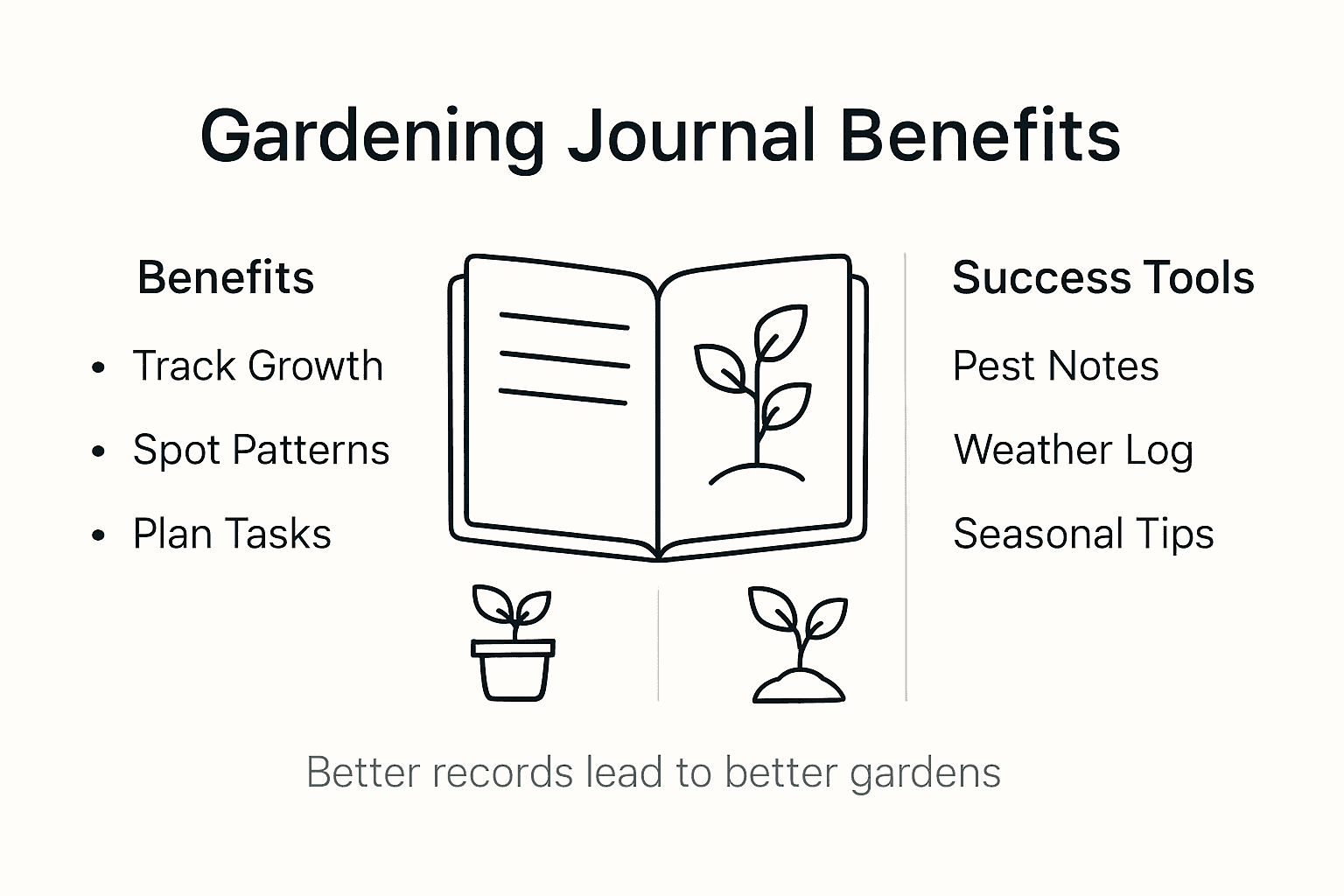
Below is a quick reference on what to track in your gardening journal for maximum impact:
| Category Tracked | Why It Matters | Example Insight |
|---|---|---|
| Weather Events | Predicts challenges and trends | Late frost risk timing |
| Pest Activities | Times intervention for success | Peak aphid season |
| Microclimate | Optimizes plant placement | Shade area outperforms |
| Intervention Results | Evaluates care strategies | Organic sprays effectiveness |
| Seasonal Transitions | Guides planning for next year | Optimal sowing dates |
Pro tip: Create a standardized tracking template in your journal with consistent categories to ensure comprehensive and comparable data across different growing seasons.
Common Mistakes And How To Avoid Them
Vegetable gardening requires strategic planning to avoid common pitfalls that can undermine plant health and garden productivity. Many gardeners unknowingly sabotage their success through inconsistent record-keeping, overlooking critical details that could transform their gardening experience. Understanding and documenting these potential mistakes becomes the first line of defense in creating a thriving garden ecosystem.
Common gardening journal mistakes include:
- Inconsistent Tracking: Sporadic or incomplete documentation that fails to capture meaningful patterns
- Vague Observations: Nonspecific notes that lack quantitative details about plant performance
- Ignoring Environmental Context: Failing to record weather conditions, soil changes, and microclimate variations
- Neglecting Pest Interaction Documentation: Incomplete records of pest encounters and intervention outcomes
- Abandoning Long-Term Perspective: Treating each growing season as isolated instead of building cumulative knowledge
Successful gardeners view their journal as a dynamic, evolving tool for continuous improvement. By meticulously documenting both successes and challenges, you create a personalized reference that adapts with your garden’s unique characteristics. This approach transforms potential mistakes into valuable learning opportunities, allowing you to refine your techniques and develop a more intuitive understanding of plant care.
Pro tip: Review and reflect on your gardening journal entries at the end of each season, identifying patterns and insights that can inform your future gardening strategies.
Transform Your Gardening Success with Smart Journaling Support
If you have experienced the frustration of inconsistent tracking or missed growth insights in your gardening journey you are not alone. The article highlights the critical challenge of maintaining detailed and consistent garden records to unlock better growth patterns and pest management. Keeping a systematic gardening journal helps you recognize plant health trends and make proactive care decisions that lead to greater garden success.
At Lushy Gardens, we understand these pain points and provide practical advice alongside expert insights to help you establish and maintain an effective garden documentation routine. Explore our Seasonal Gardening – Lushy Gardens section for tips specifically tailored to tracking weather patterns and plant development throughout the year. For those interested in eco-friendly techniques and mindful care strategies, our Sustainable Gardening – Lushy Gardens page offers guidance that complements your journaling efforts to reduce garden risks.
Start turning your garden records into a powerful growth tool today. Visit Lushy Gardens to discover actionable tips, helpful planning guides, and a welcoming community that will inspire you to journal consistently and watch your plants thrive like never before.
Frequently Asked Questions
What is a gardening journal?
A gardening journal is a personalized documentation system that helps gardeners track, analyze, and improve their plant cultivation efforts by recording essential information about their garden’s growth, challenges, and achievements.
How can a gardening journal improve plant growth?
By systematically documenting observations such as plant health, pest occurrences, and weather conditions, gardeners can identify patterns and make informed decisions that enhance overall plant care, leading to better growth outcomes.
What types of information should I include in my gardening journal?
You should record details such as garden layouts, planting dates, seed germination rates, weather conditions, pest management strategies, and harvest outcomes to create a comprehensive record of your gardening journey.
What are common mistakes to avoid when keeping a gardening journal?
Common mistakes include inconsistent tracking, vague observations, neglecting environmental context, ignoring pest interactions, and failing to view each growing season as a part of a cumulative learning experience.
Recommended
- Benefits of Raised Beds: Complete Gardening Guide – Lushy Gardens
- Benefits of Raised Beds: Complete Gardening Guide – Lushy Gardens
- Understanding Gardening as a Hobby: A Comprehensive Guide – Lushy Gardens
- 8 Essential Organic Gardening Tips for Beginners – Lushy Gardens

I’m Eleanor, a seasoned gardener with over three decades of experience tending to Mother Nature’s creations. Through Lushy Gardens, I aim to share my wealth of knowledge and help fellow plant enthusiasts uncover the wonders of gardening. Let’s dive into this journey together, one leaf at a time.


