
Table of Contents
Trying to grow fresh herbs in a small apartment can feel impossible when every inch counts. For many home gardeners in cities from New York to London, making room for greenery means finding smart ways to use compact spaces. With hydroponics offering real solutions for urban food production, you will find how the right hydroponic system selection and practical setup tips can turn your kitchen windowsill or tiny counter into a productive indoor herb garden.
Quick Summary
| Key Point | Explanation |
|---|---|
| 1. Assess Your Space First | Measure your available area to select the right hydroponic system for effective herb growth. |
| 2. Gather Essential Supplies | Collect necessary equipment like nutrient solutions and grow lights to ensure optimal conditions for your plants. |
| 3. Monitor Daily for Best Results | Regularly check nutrient solution, pH levels, and plant health to prevent and address any issues. |
| 4. Learn to Recognize Harvest Signs | Identify signs of maturity in your herbs to ensure you harvest at the right time for maximum flavor. |
| 5. Keep a Gardening Journal | Document your gardening process to track growth patterns and refine your techniques over time. |
Step 1: Assess Space and Select Hydroponic System
Successfully growing herbs indoors starts with understanding your available space and selecting the right hydroponic system. Your home’s unique layout and growing goals will determine the most effective approach for creating a thriving indoor herb garden.
Begin by carefully measuring the area where you plan to set up your hydroponic system. Look for spaces with consistent temperatures and access to electrical outlets – near a kitchen window, on a dedicated shelf, or a small countertop area work perfectly. Various hydroponic systems can be adapted to compact urban environments, making indoor herb cultivation accessible for most home gardeners.
When selecting your system, consider these key factors:
- Available space dimensions
- Natural or supplemental lighting conditions
- Types of herbs you want to grow
- Your maintenance time commitment
- Budget for initial setup
Popular hydroponic systems for home herb gardens include:
- Deep Water Culture (DWC): Simple setup, ideal for beginners
- Vertical Hydroponics: Maximizes limited space efficiently
- Nutrient Film Technique (NFT): Best for fast-growing herbs
Carefully match the system to your specific space and experience level. Compact hydroponic setups offer precise control and monitoring, enabling successful indoor herb cultivation even in small areas.
Here’s how popular home hydroponic systems compare for herb gardening:
| System Type | Space Efficiency | Ideal User | Notable Benefit |
|---|---|---|---|
| Deep Water Culture (DWC) | Moderate | Beginners | Simple maintenance |
| Vertical Hydroponics | Excellent | All levels | Maximizes plant quantity |
| Nutrient Film Technique (NFT) | High | Experienced | Rapid herb growth |
Pro tip: Start with a small, modular hydroponic system that allows easy expansion as you gain confidence in your indoor gardening skills.
Step 2: Gather Supplies and Prepare Growing Area
Preparing for your indoor hydroponic herb garden involves carefully selecting the right equipment and creating an optimal growing environment. This crucial step sets the foundation for a successful and productive herb cultivation project.
Hydroponic farming requires specific supplies that will help you create a clean, controlled growing space. Essential equipment includes:
- Growing containers or trays
- Nutrient solution specific to herbs
- pH testing kit
- Digital scale for measuring nutrients
- Grow lights
- Air and water pumps
- Growing medium (such as rockwool or coconut coir)
When preparing your growing area, focus on creating a consistent environment with these key considerations:
- Choose a location with stable temperature (between 65-75°F)
- Ensure good air circulation
- Select a spot with electrical outlet access
- Protect the area from direct drafts
- Aim for indirect but bright light
Organize your supplies systematically to minimize potential contamination and maximize plant health. Create a dedicated workspace with clean surfaces and proper storage for your hydroponic equipment.
Maintain a clean and organized workspace to prevent potential plant diseases and ensure optimal growing conditions.
Pro tip: Invest in clear plastic storage containers to keep your hydroponic supplies organized and easily accessible, creating a streamlined setup for your indoor herb garden.
Step 3: Install Equipment and Set Up Reservoir
Setting up your hydroponic reservoir is a critical step that determines the success of your indoor herb garden. This process involves carefully positioning your equipment and preparing the nutrient solution that will support your plants’ growth.
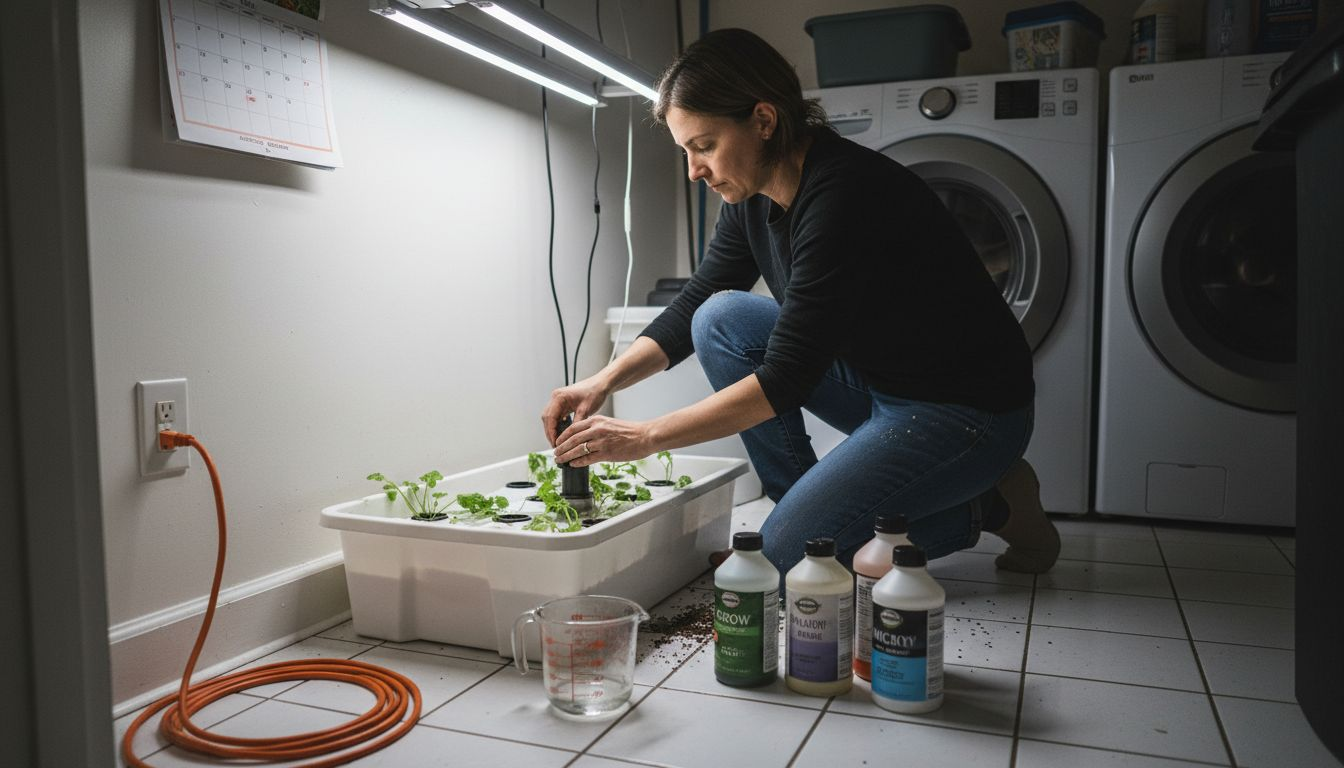
Begin by selecting a clean, level surface for your hydroponic system. Positioning is crucial for maintaining stability and ensuring proper water and nutrient circulation. Arrange your reservoir, making sure it’s placed near an electrical outlet and away from direct sunlight or drafty areas.
Key equipment installation steps include:
- Place the water reservoir on a stable, flat surface
- Install the water pump securely
- Connect air stones for oxygen circulation
- Attach necessary tubing and connectors
- Position grow lights at the recommended height
Prepare your nutrient solution with careful attention to detail:
- Measure nutrients precisely using a digital scale
- Use clean, filtered water
- Check and adjust pH levels
- Mix nutrients according to manufacturer instructions
- Allow solution to sit for 15-20 minutes before introducing plants
Proper nutrient solution preparation is the foundation of successful hydroponic gardening.
Pro tip: Label your nutrient containers and keep a detailed log of mixing ratios to ensure consistent and optimal plant nutrition throughout your growing cycle.
Step 4: Plant Seeds and Adjust Nutrient Solution
Planting seeds in your hydroponic system marks the exciting beginning of your indoor herb garden journey. Optimal crop growth depends on precise seed placement and nutrient management, so careful attention to detail is crucial.
Start by selecting high-quality herb seeds compatible with hydroponic systems. Prepare your growing medium carefully, using materials like rockwool cubes or coconut coir that provide excellent seed support and moisture retention. Gently place seeds in the growing medium, ensuring they are not buried too deeply.
Seed planting steps:
- Moisten the growing medium before seed placement
- Create small indentations for seeds
- Place seeds with minimal contact
- Cover lightly with growing medium
- Maintain consistent moisture and temperature
Nutrient solution management is critical for successful herb growth:
- Test initial pH levels (aim for 5.5-6.5)
- Measure electrical conductivity
- Start with half-strength nutrient solution
- Monitor plant response
- Adjust nutrients based on plant growth stages
Continuous monitoring and precise nutrient solution management are key to thriving hydroponic herbs.
Pro tip: Keep a detailed gardening journal to track seed germination, nutrient adjustments, and plant growth, helping you refine your hydroponic techniques over time.
Step 5: Monitor Growth and Maintain Hydroponic System
Successful hydroponic herb gardening requires consistent monitoring and proactive maintenance. Maintaining your hydroponic system demands regular attention to multiple growth parameters to ensure healthy and robust herb production.
Daily monitoring involves checking several critical aspects of your hydroponic setup. Observe your plants closely for signs of nutrient deficiencies, pest issues, or environmental stress. Use a digital pH meter and electrical conductivity tester to track nutrient solution quality, making adjustments as needed.
Key maintenance tasks include:
- Check water levels daily
- Test pH and nutrient concentration
- Clean system components weekly
- Inspect plants for disease signs
- Adjust lighting and temperature
Important system monitoring checklist:
- Measure water temperature (ideal range 65-75°F)
- Verify nutrient solution clarity
- Check pump and aeration system functionality
- Inspect roots for healthy white coloration
- Remove any dead or yellowing leaves
Consistent monitoring prevents minor issues from becoming major problems in your hydroponic system.
Pro tip: Create a weekly maintenance schedule and log to track your system’s performance, helping you identify patterns and optimize your herb growing conditions.

Step 6: Verify Harvest Readiness and Troubleshoot Issues
Home hydroponic gardeners can successfully manage crop challenges by learning to recognize harvest signs and address potential growing problems proactively. Understanding when and how to harvest your herbs ensures maximum flavor and continued plant productivity.
Harvest readiness indicators vary by herb type, but generally look for these key signs:
- Robust leaf growth
- Vibrant green color
- Mature plant height
- Absence of flower buds
- Consistent leaf development
Common hydroponic troubleshooting scenarios include:
- Yellowing leaves (potential nutrient deficiency)
- Stunted growth
- Root discoloration
- Pest infestations
- pH level imbalances
Troubleshooting strategies:
Quick reference: Common signs of hydroponic herb issues and recommended actions:
| Issue Symptom | Possible Cause | Recommended Action |
|---|---|---|
| Yellowing leaves | Nutrient deficiency | Adjust solution, check pH level |
| Wilting plants | Poor aeration | Clean or replace air stones |
| Browning roots | Disease or rot | Improve system hygiene |
| Stunted growth | Low light/nutrients | Raise lighting, recheck feeding |
- Conduct weekly system inspections
- Test nutrient solution regularly
- Maintain consistent environmental conditions
- Clean system components frequently
- Replace nutrient solutions promptly
Early detection of system issues prevents long-term crop damage and ensures continued herb production.
Pro tip: Take weekly photographs of your plants to create a visual growth log, helping you quickly identify and address any developing problems.
Unlock Your Indoor Herb Garden Success with Lushy Gardens
Growing fresh herbs indoors using hydroponics can be rewarding but challenging. You need the right system that fits your space, precise nutrient management, and ongoing monitoring to ensure your herbs thrive. Many home gardeners struggle with selecting the perfect setup or maintaining stable growing conditions that lead to fulfilling harvests.
At Lushy Gardens, we understand these challenges and provide practical guidance tailored for enthusiasts at all levels. Explore our Gardening for Beginners – Lushy Gardens section for easy-to-follow advice on setting up your first hydroponic herb garden. Discover trusted recommendations in our Garden Tools & Equipment – Lushy Gardens category to find gear that suits your indoor space. Plus, our expert-reviewed products listed in Reviews – Lushy Gardens help you choose reliable supplies for every stage of your hydroponic journey.
Ready to transform your indoor gardening experience? Visit Lushy Gardens now and start growing fresh, flavorful herbs in your home with confidence. Your thriving hydroponic garden awaits.
Frequently Asked Questions
What is the best hydroponic system for growing herbs indoors?
Selecting the right hydroponic system depends on your available space and experience level. Popular options include Deep Water Culture for beginners, Vertical Hydroponics for maximizing space, and Nutrient Film Technique for experienced gardeners. Consider starting with a small system that suits your needs and allows for future expansion.
How do I prepare my indoor space for a hydroponic herb garden?
Prepare your indoor space by ensuring it has stable temperatures, good air circulation, and access to electrical outlets. Aim for a location that receives indirect but bright light and can maintain temperatures between 65-75°F. Create a clean workspace to organize your supplies and minimize contamination.
How do I set up the nutrient solution for my hydroponic herbs?
To set up the nutrient solution, measure nutrients using a digital scale and combine them with clean, filtered water. Adjust the pH levels to between 5.5-6.5 and let it sit for 15-20 minutes before introducing your plants. Be precise with your measurements to ensure successful growth.
What common issues should I look out for in my hydroponic herb garden?
Watch for signs like yellowing leaves, stunted growth, or pest infestations. These issues often indicate nutrient deficiencies, poor aeration, or environmental stress. Conduct regular inspections and quickly address any problems to maintain healthy plants.
How can I tell when my herbs are ready to be harvested?
Herbs are ready for harvest when they exhibit robust leaf growth, vibrant green color, and a mature height without any flower buds. Regularly check for these indicators to ensure maximum flavor and continued productivity from your plants. Harvest at the right time to promote further growth.
What maintenance tasks are necessary for keeping my hydroponic system running smoothly?
Regular maintenance tasks include checking water levels, testing the pH and nutrient concentration, and cleaning system components weekly. Inspect your plants for any signs of disease, and maintain consistent environmental conditions to support optimal herb growth. Create a weekly schedule to help you stay organized.
Recommended
- 7 Smart Indoor Herb Garden Ideas for Home Gardeners – Lushy Gardens
- Vertical Herb Garden: Growing Fresh Herbs Indoors – Lushy Gardens
- Master Vegetable Gardening Indoors: Grow Fresh Produce at Home – Lushy Gardens
- Understanding Hydroponics at Home: A Beginner’s Guide – Lushy Gardens

I’m Eleanor, a seasoned gardener with over three decades of experience tending to Mother Nature’s creations. Through Lushy Gardens, I aim to share my wealth of knowledge and help fellow plant enthusiasts uncover the wonders of gardening. Let’s dive into this journey together, one leaf at a time.


