
Table of Contents
Bees buzzing through a New York balcony or butterflies fluttering across a Toronto rooftop are more than just beautiful sights for city gardeners. For anyone growing tomatoes, wildflowers, or even a single apple tree, attracting pollinators is the secret to reliable fruit and flower production. Pollinators are responsible for fertilizing about 75 percent of flowering plants globally, making them essential for a thriving urban garden. This guide explains how pollinators work and shares steps you can take to make your garden a valuable habitat for them.
Key Takeaways
| Point | Details |
|---|---|
| Importance of Pollinators | Pollinators are crucial for about 75% of flowering plants, directly impacting food production and ecosystem health. |
| Diversity of Pollinators | Various creatures, including bees, butterflies, and hummingbirds, contribute uniquely to pollination, enhancing garden biodiversity. |
| Supporting Pollinators | Gardeners can help by eliminating pesticides, planting native flowers, and providing shelter, which boosts pollinator visits and garden yields. |
| Threats to Pollinators | Habitat loss, pesticide use, and climate change threaten pollinator populations, necessitating informed actions from gardeners to reverse declines. |
What Are Pollinators and How Do They Work
A pollinator is any animal that transfers pollen from the male part of a flower to the female part, enabling fertilization and reproduction. When you see bees buzzing around your tomato blossoms or butterflies visiting your zinnias, you’re watching pollination in action. These creatures aren’t trying to help your garden out of kindness. They’re simply visiting flowers to collect nectar and pollen for food, or gathering materials for their nests and shelter. As they move from bloom to bloom, pollen sticks to their bodies and gets transferred to the next flower they visit. Sometimes this happens by accident as they feed. Other times, certain insects actively collect pollen in specialized pouches on their legs. Either way, the result is the same: plants get fertilized, seeds develop, and fruit forms.
The diversity of pollinators is remarkable. Bees, butterflies, birds, bats, and even some mammals all serve as pollinators, and different species are attracted to different flowers. Over millions of years, flowers have evolved specific traits to attract their preferred pollinators. Some flowers developed bright red or orange colors to catch the attention of hummingbirds. Others produce sweet fragrances that lure night-flying bats. Purple and blue flowers often attract bees, which can see these colors better than humans can. This relationship between pollinators and flowers is so finely tuned that the success of one depends on the other. Without pollinators, roughly 75% of flowering plants globally wouldn’t be able to reproduce. That’s not an exaggeration. That statistic encompasses the plants that produce the fruits, vegetables, and seeds that feed ecosystems and humans alike.
In your own garden, this means that pollinators are directly responsible for whether your apple tree sets fruit, your cucumber plants produce vegetables, or your wildflowers reseed themselves next spring. A single bee visit to a squash flower can mean the difference between a harvest and empty vines. The pollination process itself is quick. A bee might spend only a few seconds on a flower, but that brief visit accomplishes the genetic transfer needed for reproduction. Understanding how this works helps explain why losing pollinator populations is such a concern and why attracting them to your garden should be a priority.
Pro tip: Plant flowers with staggered bloom times throughout the growing season to provide pollinators with consistent food sources from spring through fall, keeping them active in your garden longer.
Major Types of Pollinators and Their Roles
When you think of pollinators, bees probably come to mind first. That makes sense. Bees are the workhorses of the pollination world, equipped with specialized body structures specifically designed for collecting and carrying pollen. Their fuzzy bodies trap pollen particles, and many bee species have developed pollen baskets on their hind legs that can hold impressive amounts of pollen and nectar. But bees aren’t the only players in this game. The pollinator world is far more diverse than most gardeners realize. Butterflies, moths, beetles, wasps, and flies all contribute to pollination across different environments and plant types. Each brings different advantages to the table. While these non-bee pollinators might not be as efficient at depositing pollen as honeybees, they visit flowers more frequently and can reach plants that bees might skip. This consistent traffic makes them invaluable to garden reproduction.
Beyond insects, other remarkable pollinators deserve recognition. Hummingbirds are precision pollinators, drawn to bright red and orange flowers that match their vision perfectly. Their long beaks fit into tubular flowers designed specifically for them. In tropical and subtropical regions, bats are significant pollinators, visiting night blooming flowers to feed on nectar. These nocturnal visits are crucial for plants that depend on darkness to attract their pollinators. Even more unusual visitors contribute to pollination. Some regions have monkeys, lemurs, rodents, and even reptiles serving as pollinators. A few gardeners have even reported snails helping with pollination, though less efficiently. The point is this: nearly 90% of flowering plants depend on some type of animal pollinator. Your garden likely benefits from multiple pollinator species working together.
Understanding which pollinators visit your garden helps you create conditions that attract them. Native bees, for instance, prefer flowers with open, accessible centers. Butterflies need flowers with landing platforms. Hummingbirds seek tubular blooms. When you plant diverse flower types and colors, you’re essentially rolling out a welcome mat for different pollinator species. Each type of pollinator has coevolved with specific plants, meaning they’ve developed matching preferences over thousands of years. A bee’s proboscis length matches certain flower depths. A moth’s body shape fits particular blossom shapes. This co-evolution means that supporting pollinator diversity directly supports plant diversity in your garden.
Pro tip: Observe which pollinators visit your garden in early morning and evening, then choose plants that flower during those times to maximize visits from those specific species.
Here’s a quick comparison of major pollinator types and their contributions:
| Pollinator Type | Example Species | Preferred Flowers | Unique Role |
|---|---|---|---|
| Bee | Honeybee, bumblebee | Purple, blue, open | Efficient pollen transfer |
| Butterfly | Monarch, swallowtail | Flat, brightly colored | Daytime pollination |
| Hummingbird | Ruby-throated | Red, tubular | Pollinates deep blooms |
| Bat | Fruit bat, long-tongue | Night blooming, fragrant | Nocturnal pollination |
| Beetle/Other | Scarab, fly, moth | Varied, often white | Visits unusual plant types |
Pollinators’ Impact on Gardens and Food Security
The relationship between pollinators and food production is direct and undeniable. About two-thirds of the world’s crops depend on pollinators to produce the seeds and fruits we eat. When you bite into an apple, crunch a carrot, or enjoy a handful of almonds, you’re consuming the direct result of pollinator activity. Without pollinators visiting those flowers, these foods simply wouldn’t exist. Your home garden operates on the same principle. The vegetables and fruits you grow depend on these small creatures to complete the reproductive cycle. A tomato plant with no pollinator visits will produce fewer tomatoes. A zucchini plant without bee activity will yield empty vines. This isn’t a minor issue in gardening. It’s the foundation of your entire harvest.
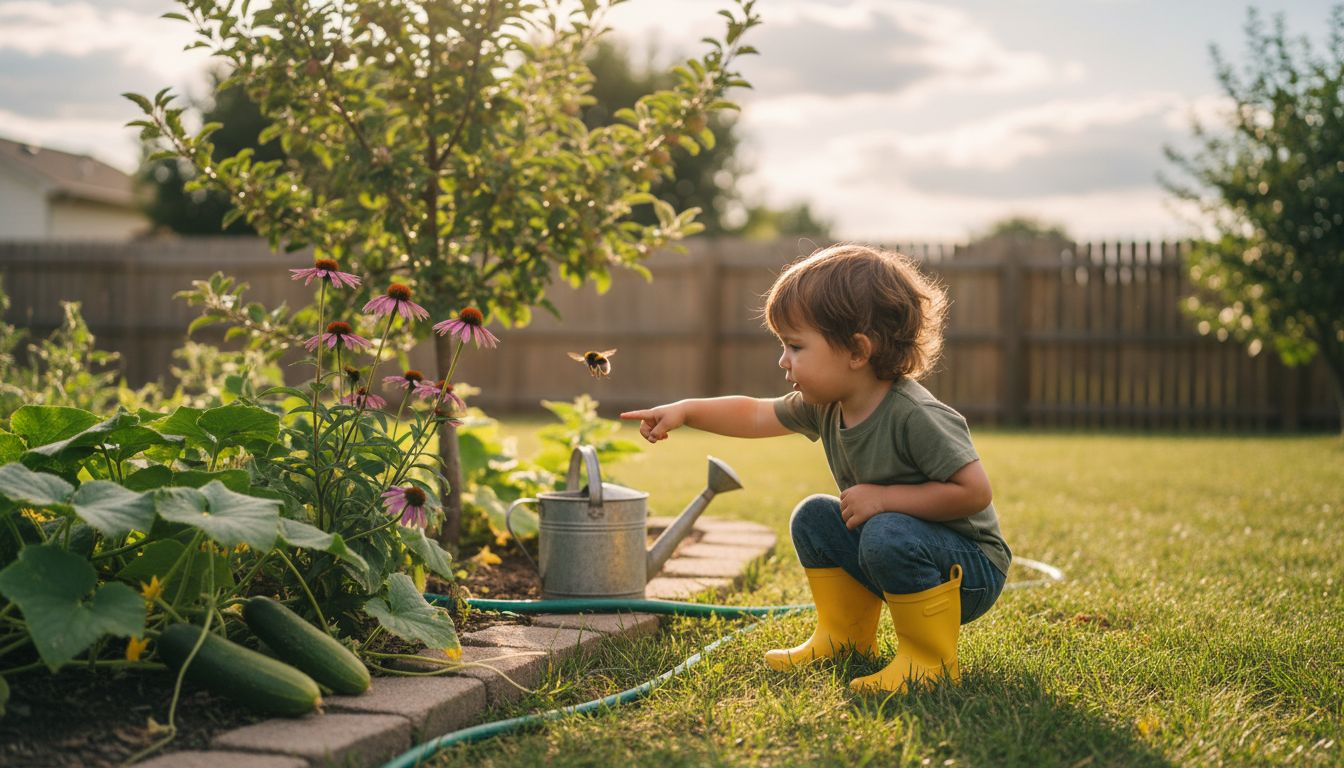
The stakes extend far beyond your backyard. Global food security depends on pollinator health, yet pollinator populations are declining at alarming rates. Agriculture intensification, habitat loss, and pesticide use are destroying the environments these creatures need to thrive. When wild pollinator populations drop, crop yields follow. Smaller harvests mean higher food prices and reduced availability at grocery stores. The economic impact ripples through entire food systems. Farmers lose income. Consumers pay more. Food security becomes uncertain, especially for vulnerable populations. In North American cities where food is imported from distant farms, the collapse of pollinator populations in those regions directly affects what shows up in your local market and at what price.
Your home garden can be part of the solution. By creating conditions that attract and support pollinators, you’re doing more than improving your own harvest. You’re contributing to pollinator population recovery in your area. Native plants provide food sources. Diverse flower selections support multiple pollinator species. Avoiding pesticides protects their bodies and reproductive systems. When you build garden wildlife habitats that welcome pollinators, you create a micro-sanctuary. Neighbors notice your thriving garden and follow suit. These individual actions, multiplied across hundreds of urban gardens, create green corridors that help pollinator populations rebound. This matters for long-term food security in your region and beyond. The connection between your garden and global food production is real and powerful.
Pro tip: Leave some garden areas unmulched or with loose soil exposed, as many native bee species nest underground and need access to bare ground in spring to establish their colonies.
Threats to Pollinator Populations Worldwide
Pollinators are under siege from multiple directions. Habitat loss stands as the primary threat, destroying the meadows, woodlands, and wild spaces where these creatures live and breed. When forests are cleared for development, when prairies are converted to monoculture farms, and when native plants disappear from urban and suburban landscapes, pollinators lose the food sources and nesting sites they depend on. This happens at a staggering scale. In North America, over 99% of native prairies have been converted to agricultural or developed land. Butterflies that once numbered in the millions now appear in scattered groups. Native bees that nested in dead wood and hollow stems have nowhere to establish colonies. The habitat loss is happening so fast that many pollinator species cannot adapt or relocate quickly enough.
Beyond habitat destruction, pollinators face multiple simultaneous stressors that compound the problem. Pesticide exposure weakens their immune systems and affects their ability to navigate, find food, and reproduce. When a bee forages in a chemically treated garden or farm, it ingests toxins that damage its nervous system. Parasites like Varroa mites weaken honeybees from the inside. Diseases spread through stressed pollinator populations faster than healthy ones. Invasive species introduce competition for resources and sometimes directly prey on native pollinators. Climate change shifts the timing of flower blooms, creating mismatches where pollinators emerge from dormancy but flowers haven’t opened yet. A bee searching for food finds nothing. A flower that should be pollinated goes unvisited. These threats don’t work in isolation. They combine and amplify each other, creating a cascade of problems that pushes pollinator populations toward collapse.
Agricultural intensification accelerates all these threats. Modern farming practices favor large monocultures of a single crop, eliminating the diverse plant life that pollinators need year-round. Synthetic pesticides kill pollinators directly or poison the flowers they visit. The drive for higher yields removes hedgerows, field margins, and other natural areas that provide pollinator habitat. Urban gardeners in North America might assume they’re removed from this crisis, but the reality is interconnected. The food you buy comes from farms affected by these practices. The pollinator species struggling nationwide are the same ones trying to survive in city gardens. When wild pollinator populations collapse in agricultural regions, fewer pollinators migrate to urban areas seeking better conditions. Understanding these threats isn’t meant to discourage you. It’s meant to clarify why your actions in your garden matter so much.
Pro tip: Avoid broad-spectrum pesticides entirely and choose targeted, pollinator-safe alternatives like neem oil or insecticidal soaps only when absolutely necessary, applying them in evening hours when pollinators are less active.
How Gardeners Can Support Pollinators
The good news is that supporting pollinators doesn’t require expensive equipment or complicated techniques. You can start making a difference immediately by making simple changes to how you garden. The first and most important step is eliminating pesticides. Broad-spectrum pesticides kill beneficial insects along with pests, and they poison the flowers pollinators depend on for food. When you spray a garden, you’re not just killing the aphids on your roses. You’re destroying the nervous systems of bees visiting nearby blooms and contaminating the nectar they collect. Organic alternatives exist, but even better is learning to tolerate some pest damage. A few holes in a leaf won’t kill your plant, but pesticides will kill the pollinators that help your plant reproduce. Once you stop using chemicals, your garden becomes a safe foraging ground for bees, butterflies, and other beneficial visitors.
Planting the right flowers matters enormously. Native plants that bloom from early spring through late fall provide consistent food sources that keep pollinators active in your garden all season. Single-flowered varieties with open centers allow easy access to nectar and pollen. Avoid hybrid and double-flowered cultivars, which often lack the nectar and pollen that pollinators need. When you choose plants strategically, you’re essentially creating a restaurant that stays open for months. A spring-blooming native plant feeds hungry pollinators emerging from dormancy. Summer bloomers sustain them through the heat. Fall flowers fuel them as they prepare for winter. Grouping plants of the same species together in clusters helps pollinators locate resources more efficiently. A single purple coneflower gets overlooked. A patch of five coneflowers becomes a beacon visible from across the yard.
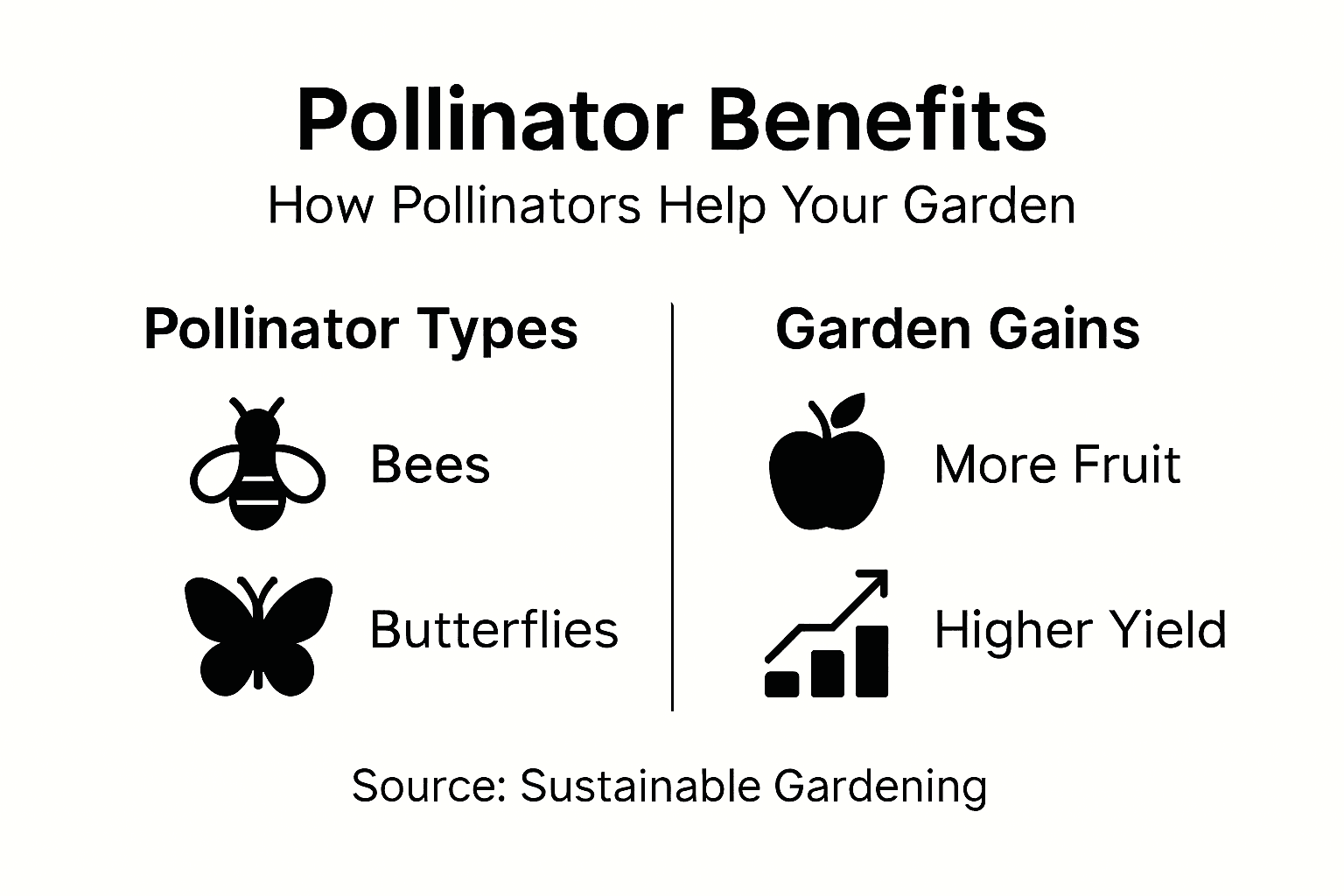
Beyond flowers, pollinators need shelter and water. Dead wood, hollow stems, and bare patches of soil provide nesting sites for native bees. Leaving some areas of your garden “messy” serves a biological purpose. A shallow water source like a birdbath or small dish with pebbles prevents drowning while providing drinking water during dry periods. Creating these basic resources transforms your garden into a pollinator sanctuary that benefits from increased pollinator visits and better fruit and vegetable yields. You’re not asking pollinators to help your garden. You’re building a home for them, and they reward you with abundance. Start small if you need to. Replace one chemically treated section with native plants. Stop spraying one area and let it grow wild. These incremental changes add up, creating a garden that thrives because it works with nature rather than against it.
Pro tip: Plant native species in mass groupings of at least three to five plants of the same species, as concentrated patches are far more visible and attractive to pollinators than scattered individual plants.
The following table summarizes practical ways gardeners can support pollinators:
| Action | Benefit for Pollinators | Result in Garden |
|---|---|---|
| Eliminate pesticides | Prevents toxic exposure | More frequent pollinator visits |
| Plant native flowers | Provides consistent food | Higher fruit and seed yield |
| Group same species | Improves visibility of food | Larger, healthier pollinator populations |
| Leave messy areas | Offers shelter and nesting | Sustained pollinator presence |

Support Pollinators to Transform Your Garden’s Health and Yield
Pollinators are essential for vibrant gardens and abundant harvests, yet they face threats that could jeopardize your plants’ success. If you want to overcome challenges like declining bee populations and pesticide harm, focusing on sustainable gardening techniques can make a real difference. By welcoming pollinators with native flowers and creating safe habitats, you not only enhance fruit and vegetable yields but also contribute to restoring vital ecosystems.
Explore expert advice and practical tips on building a pollinator-friendly garden in our Sustainable Gardening – Lushy Gardens section. Start taking control now to protect these crucial helpers and boost your gardening results. Visit Lushy Gardens today and learn how small steps create lasting impact.
Frequently Asked Questions
What are pollinators and how do they benefit my garden?
Pollinators are animals that transfer pollen from one flower to another, enabling fertilization and reproduction. They are crucial for your garden as they help produce fruits, vegetables, and seeds essential for food production.
Why should I attract pollinators to my garden?
Attracting pollinators to your garden enhances plant reproduction and increases the yield of fruits and vegetables. About two-thirds of the world’s crops depend on pollinator activity for seed and fruit production, making them vital for food security.
What types of plants should I grow to support pollinators?
To support pollinators, plant native flowers that bloom from early spring through late fall. Choose single-flowered varieties with open centers for easy access to nectar and pollen, and avoid hybrid or double-flowered cultivars that often lack the necessary resources for pollinators.
How can I create a welcoming environment for pollinators in my garden?
You can create a welcoming environment by eliminating pesticides, planting diverse flowering species, grouping plants together, and providing shelter like dead wood and bare soil for nesting. Additionally, providing a shallow water source helps keep pollinators hydrated.
Recommended
- Understanding Garden Wildlife Habitats for Your Garden – Lushy Gardens
- What is Companion Planting? Understanding Its Benefits – Lushy Gardens
- Building Community Gardens: Growing Food and Connections – Lushy Gardens
- 8 Essential Organic Gardening Tips for Beginners – Lushy Gardens

I’m Eleanor, a seasoned gardener with over three decades of experience tending to Mother Nature’s creations. Through Lushy Gardens, I aim to share my wealth of knowledge and help fellow plant enthusiasts uncover the wonders of gardening. Let’s dive into this journey together, one leaf at a time.


