
Table of Contents
More than forty percent of American Midwestern home gardeners lose crops every year due to mistimed planting and unexpected frosts. Getting the timing right can mean the difference between abundant harvests and a disappointing yield. Whether you are struggling with unpredictable spring weather or aiming to extend your growing season, this guide helps you harness regional climate data and proven tactics for building a customized planting calendar that adapts to every Midwest garden.
Quick Summary
| Key Insight | Explanation |
|---|---|
| 1. Know Local Frost Dates | Understand your local frost dates to protect your garden and optimize planting schedules based on specific regional conditions. |
| 2. Choose Seasonal Vegetables | Select appropriate vegetables for each season to enhance growth and maximize harvest yields throughout the year. |
| 3. Create a Custom Planting Chart | Develop a personalized planting chart to strategically time your plantings and manage vegetable growth effectively. |
| 4. Prepare Soil and Planting Area | Ensure adequate soil preparation and temperature checks to promote strong seed germination and plant health. |
| 5. Regularly Monitor Garden Performance | Document your garden’s growth and climate conditions to refine future planting strategies and improve accuracy over time. |
Step 1: Assess Midwest Climate and Frost Dates
Knowing your local frost dates is the secret weapon for successful vegetable gardening in the Midwest. Understanding these crucial planting windows will help you maximize your garden’s potential and protect delicate plants from unexpected temperature drops.
To get started, you’ll want to explore the comprehensive climate data from the Midwest Regional Climate Center, which provides detailed temperature and frost information specific to your region. Each Midwestern state can have slightly different frost patterns, so pinpointing your exact local dates is critical. The Illinois State Climatologist’s frost resources offer excellent median, earliest, and latest frost date information that can serve as an excellent baseline for most Midwestern gardening zones.
Determining your specific frost dates involves checking both your first and last expected frost periods. Most Midwestern states experience their last spring frost between mid-April and early May, with first fall frost typically occurring between late September and mid-October. Your local county extension office can provide the most precise data for your exact location, taking into account microclimates and specific elevation changes that might affect temperature.
Pro tip: Keep a garden journal tracking your actual local frost dates each year to develop a personalized planting calendar that becomes more accurate with each growing season.
Step 2: Select Suitable Vegetables by Season
Selecting the right vegetables for each Midwestern season is crucial to creating a thriving garden that produces abundant harvests throughout the year. Understanding which crops perform best during specific seasonal windows will help you maximize your garden’s productivity and minimize potential growing challenges.
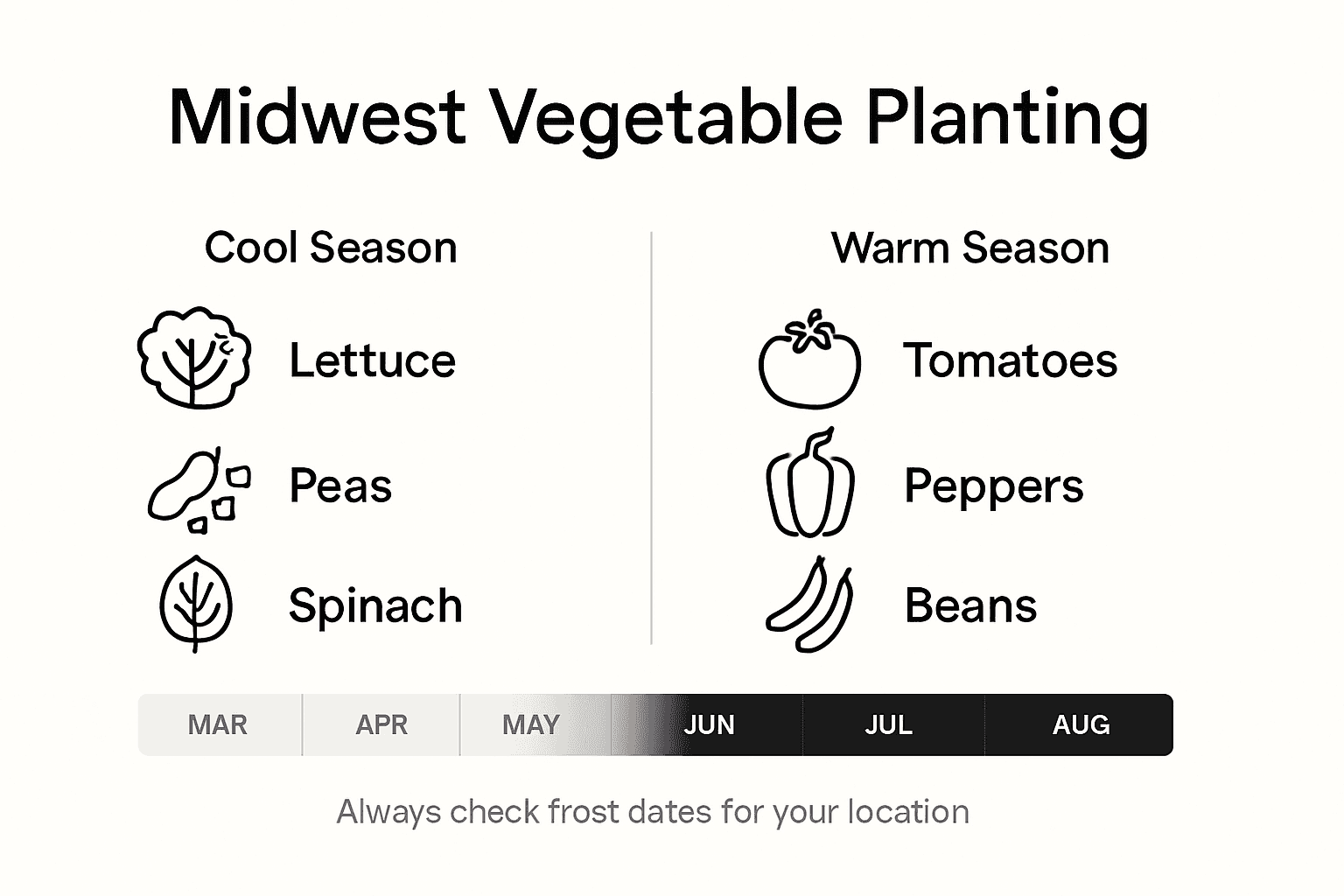
The Midwest Seasonal Produce Guide offers essential insights into matching vegetables with their optimal growing periods. Spring typically welcomes cool season crops like lettuce, spinach, peas, and radishes that tolerate lower temperatures. Summer brings warmth loving vegetables such as tomatoes, peppers, cucumbers, and squash that require consistent heat to mature. Fall gardens shine with root vegetables like carrots, beets, and turnips, while also supporting late season greens that can withstand mild frost.
To ensure successful vegetable selection, consider your specific microclimate, soil conditions, and local temperature patterns. The Midwest Vegetable Production Guide recommends paying close attention to variety selection, as some cultivars are better adapted to regional growing conditions than others. Create a planting schedule that staggers different vegetable types to extend your harvest window and maintain continuous garden productivity.
Pro tip: Start a garden notebook tracking which vegetable varieties perform best in your specific location to refine your planting strategy each successive growing season.
Here’s a quick comparison of common Midwest vegetables and their best planting seasons:
| Vegetable | Optimal Planting Season | Temperature Needs |
|---|---|---|
| Lettuce | Early spring | Cool, tolerates light frost |
| Tomatoes | Late spring/summer | Warm, frost-sensitive |
| Carrots | Late summer/fall | Cool, mild frost tolerant |
| Peppers | Summer | Warm, consistent heat |
| Spinach | Early spring/fall | Cool, prefers cold snaps |
| Squash | Late spring/summer | Warm, direct sunlight |
Step 3: Create Your Custom Planting Chart
Creating a personalized vegetable planting chart transforms your gardening approach from guesswork to strategic planning. This custom roadmap will help you maximize your Midwest garden’s potential by timing your plantings precisely and avoiding common seasonal pitfalls.

Scheduling vegetable plantings for continuous harvest requires careful consideration of multiple factors. Begin by drawing a simple grid with months along the top and vegetable types down the side. Mark your specific last and first frost dates as anchoring points. Then, work backward and forward from these dates, accounting for each vegetable’s typical days to maturity and ideal temperature ranges. The Midwest Vegetable Production Guide recommends integrating local climate data to refine your planting timeline, ensuring each crop has optimal growing conditions.
To create an effective chart, group vegetables by their temperature requirements and expected harvest times. Cool season crops like lettuce and peas can be planted earlier, while heat loving vegetables such as tomatoes and peppers need warm soil and air temperatures. Consider succession planting techniques to extend your harvest window and maintain continuous production throughout the growing season.
Pro tip: Laminate your custom planting chart or create a digital version you can easily update each year to track your garden’s performance and refine your strategy.
Step 4: Implement Your Planting Plan Outdoors
Transitioning from your carefully crafted planting chart to actual garden implementation requires strategic preparation and precise execution. This critical stage transforms your planning into tangible vegetable rows that will soon produce a bountiful harvest.
Site preparation and soil management techniques are fundamental to successful outdoor planting. Start by testing your soil and amending it with organic compost to ensure optimal nutrient balance. Wait until soil temperatures match each vegetable’s specific requirements before transplanting seedlings or direct sowing. The practical planting guidance from agricultural resources recommends carefully monitoring soil temperature and moisture levels to maximize germination success.
Precision matters when implementing your outdoor planting strategy. Space your vegetables according to your custom chart, considering each variety’s mature size and sunlight requirements. Use row markers or string lines to maintain straight planting rows and consistent spacing. Water newly planted seeds and seedlings gently but consistently, avoiding soil compaction while ensuring adequate moisture for strong root development.
Pro tip: Create small plant markers using weatherproof materials to track each vegetable variety and its specific planting date, helping you monitor and learn from your garden’s performance.
Step 5: Verify Calendar Accuracy with Garden Observations
Verifying the accuracy of your planting calendar is an ongoing process that transforms gardening from static planning to dynamic learning. Your initial chart serves as a starting point, but real world conditions will always provide the most valuable insights.
Utilize climate data resources to compare your actual garden performance against historical temperature and growing degree day records. Track key metrics like germination rates, days to maturity, and plant vigor throughout the growing season. Note any significant variations between your predicted timeline and actual plant development. Pay special attention to microclimatic variations within your garden such as areas with different sun exposure, soil moisture, or wind patterns that might impact plant growth differently than your original calendar anticipated.
Document your observations meticulously in a garden journal. Record the actual dates of planting, first sprouts, flowering, and harvest for each vegetable variety. These detailed notes will help you refine your planting calendar for future seasons, accounting for the unique characteristics of your specific Midwest garden location. By comparing your real world results with your initial projections, you can gradually develop a highly personalized and accurate planting strategy.
Pro tip: Take photographs of your garden at regular intervals to create a visual record that complements your written observations and helps track subtle changes in plant development.
Compare these garden monitoring methods for refining your calendar:
| Monitoring Method | Data Collected | Benefit for Gardeners |
|---|---|---|
| Written Journal | Dates, observations | Improves long-term calendar accuracy |
| Photographic Record | Visual plant changes | Tracks subtle growth differences |
| Climate Data Review | Historical temp trends | Refines future planting schedules |
| Microclimate Mapping | Sun, moisture variations | Identifies garden performance zones |
Take Control of Your Midwest Garden with Expert Seasonal Guidance
Planning the perfect vegetable garden in the Midwest can feel overwhelming when faced with changing frost dates and picking the right crops for each season. This article highlights your challenge of timing plantings precisely and creating a custom planting chart to ensure a bountiful harvest while avoiding costly mistakes. If you want to master these crucial seasonal gardening techniques and understand how to adapt your garden plan to real-world conditions, Lushy Gardens is your go-to resource.
Explore our rich collection of Seasonal Gardening articles packed with practical advice and expert insights. Learn how to interpret climate data, select the best vegetable varieties for your region, and implement planting schedules with confidence. Ready to transform your planting plan into a thriving outdoor garden? Visit Outdoor Plants for tips on soil preparation and garden maintenance. Start your gardening journey today with trusted support and community at Lushy Gardens and watch your Midwest garden flourish season after season.

Frequently Asked Questions
How can I determine my local frost dates for vegetable planting?
Knowing your local frost dates is essential for successful gardening. Check resources from local agricultural extension offices or consult online climate data specific to your area to identify your expected last spring and first fall frost dates.
What vegetables should I plant in the Midwest for each season?
Different vegetables thrive in specific seasons; for example, cool season crops like lettuce and spinach can be planted in early spring, while warm season vegetables like tomatoes and peppers should be planted in late spring. Evaluate your region’s climate and soil conditions to create a tailored planting schedule for continuous harvests throughout the year.
How do I create a personalized vegetable planting chart?
Start by making a grid with the months at the top and vegetable types down the side. Input your specific frost dates, days to maturity for each crop, and expected temperature needs to visualize and plan your plantings effectively.
What are some tips for implementing my planting plan outdoors?
Prepare your garden by testing and amending the soil as needed to support plant growth. Once conditions are right, follow your planting chart to space your seeds appropriately, ensuring they have enough room to grow while keeping a close eye on temperature and moisture levels.
How do I track the success of my vegetable garden?
Keep a garden journal to record key dates like planting, watering, and harvesting, along with observations on plant health and yield. This documentation allows you to refine your future planting plans based on actual performance and microclimate effects in your garden.
What should I focus on when monitoring my garden’s performance?
Pay attention to germination rates, days to maturity, and any variations in plant vigor compared to your initial planting calendar. Regularly document these observations to adjust your planting strategy, aiming for continuous improvement with each growing season.
Recommended
- 7 Essential Tips for Mastering Your Vegetable Planting Calendar – Lushy Gardens
- Master Winter Vegetable Gardening for Abundant Harvests – Lushy Gardens
- Master Fall Vegetable Gardening for a Bountiful Harvest – Lushy Gardens
- Vegetable Garden Planning Made Easy: A Step-by-Step Guide – Lushy Gardens

I’m Eleanor, a seasoned gardener with over three decades of experience tending to Mother Nature’s creations. Through Lushy Gardens, I aim to share my wealth of knowledge and help fellow plant enthusiasts uncover the wonders of gardening. Let’s dive into this journey together, one leaf at a time.


