
Table of Contents
Most american apartment dwellers struggle to keep plants alive when natural light is limited, making succulents a top pick for indoor gardeners craving both beauty and simplicity. These adaptive plants can store water for weeks and flourish where many others fail, making them perfect for city lifestyles and small spaces. Uncover what sets succulents apart and discover smart care strategies designed for compact, modern homes facing light and space constraints.
Key Takeaways
| Point | Details |
|---|---|
| Succulent Characteristics | Succulents store water in specialized tissues, enabling survival in dry conditions through adaptations like the succulent syndrome and CAM photosynthesis. |
| Indoor Succulent Selection | Choose varieties based on light and water needs to create harmonious displays and ensure simple care routines. |
| Environmental Factors | Proper lighting, well-draining soil, and a controlled watering schedule are crucial for maintaining healthy indoor succulents. |
| Pet Safety Considerations | Opt for non-toxic succulents like Echeveria and Haworthia to ensure a safe environment for pets while enjoying beautiful plants. |
What Makes a Plant a Succulent?
Succulent plants are botanical marvels defined by their extraordinary ability to store water in specialized tissues, allowing them to survive in challenging environments. Unlike typical plants, succulents have developed unique adaptations for water retention that make them remarkably resilient.
The core characteristic of succulents is their thick, fleshy tissues capable of storing significant water volumes. These storage areas can be found in leaves, stems, or roots, creating a remarkable survival mechanism. Scientifically, this water-storing ability is called the succulent syndrome, which involves accumulating water in specialized parenchyma tissue that helps plants endure periods of drought.
Most succulents have evolved sophisticated water management strategies. A prime example is their use of Crassulacean Acid Metabolism (CAM), a photosynthetic process where plants open their stomata at night to minimize water loss. This adaptation allows succulents to thrive in arid regions where other plants would quickly dehydrate. Interestingly, while many people associate succulents with deserts, these remarkable plants actually exist in over 60 different plant families worldwide, demonstrating their incredible evolutionary versatility.
Pro Tip: When identifying a succulent, look for thick, plump leaves or stems that appear swollen or water-filled, which are clear indicators of their water-storing capabilities.
Popular Indoor Succulent Types and Traits
Indoor succulents offer an incredible variety of shapes, colors, and sizes that can transform any living space. Some of the most popular indoor succulent varieties include charming options like the Panda Plant, Echeveria, and String of Pearls, each bringing unique aesthetic qualities and low-maintenance care requirements to your home.
Echeveria varieties are particularly beloved for their stunning rosette formations and wide range of colors, from soft pastels to deep greens and purples. These succulents typically feature compact, symmetrical shapes that work beautifully in modern interior designs. The Panda Plant (Kalanchoe tomentosa) stands out with its fuzzy, gray-green leaves spotted with brown, creating a tactile and visually interesting houseplant that thrives in indirect light conditions.
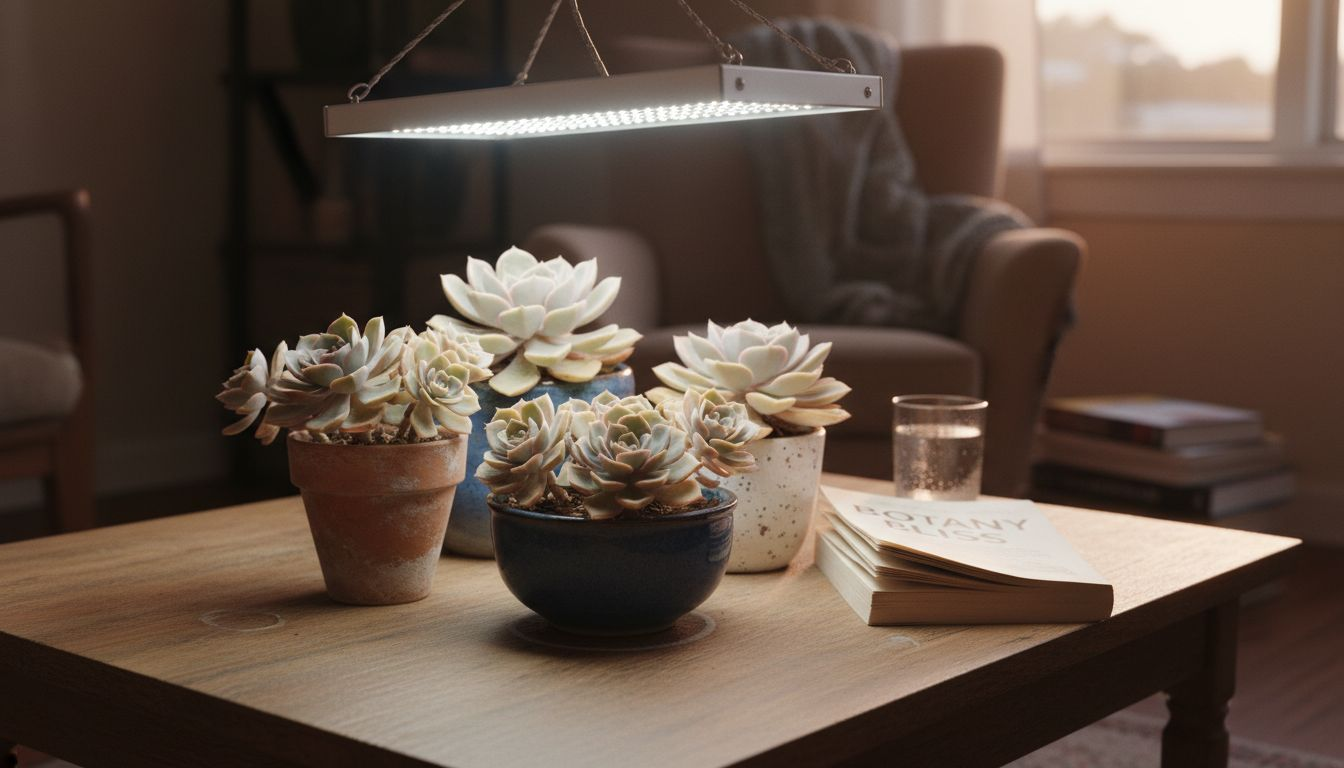
The String of Pearls (Senecio rowleyanus) offers a dramatically different aesthetic, with delicate, spherical leaves cascading from hanging planters. This variety is especially popular among urban gardeners with limited space, as it can create stunning vertical displays. Other notable indoor succulents include the Lavender Scallops (Kalanchoe) with its delicate, undulating leaf edges and the Jade Plant, known for its tree-like growth and symbolism of good luck.
Pro Tip: When selecting indoor succulents, choose varieties with similar light and water requirements to simplify your plant care routine and create harmonious displays.
Here’s how popular indoor succulents compare in key traits:
| Succulent Variety | Distinct Appearance | Light Needs | Special Care Note |
|---|---|---|---|
| Echeveria | Rosette, pastel or deep hues | Bright, indirect | Allow soil to dry completely |
| Panda Plant | Fuzzy, gray-green leaves | Indirect sunlight | Avoid excess humidity |
| String of Pearls | Spherical, trailing stems | Filtered, medium | Sensitive to overwatering |
| Jade Plant | Tree-like, glossy leaves | Bright, indirect | Toxic to pets, watch for droop |
| Haworthia | Striped, compact rosettes | Low to moderate | Tolerates lower indoor light |
Lighting, Soil, and Watering Requirements
Succulents have unique requirements that can dramatically impact their health and appearance, particularly in low-light indoor environments. Each succulent species has distinct lighting and care needs that must be carefully understood to ensure their survival and aesthetic appeal.
Lighting is perhaps the most critical factor for indoor succulent health. Different species have varying light tolerances, with some like Echeveria and Jade Plants requiring bright, indirect sunlight, while others such as Haworthia can thrive in lower light conditions. Watch for signs of light stress, including etiolation (excessive stretching) or color fading, which indicate the plant is not receiving optimal light. North-facing windows typically provide the most consistent, filtered light for most indoor succulent varieties.
Soil and watering practices are equally crucial for succulent survival. The ideal soil mixture should be extremely well-draining, typically combining standard potting soil with coarse sand or perlite to prevent water retention. Most succulents prefer a ‘soak and dry’ watering method, where you thoroughly water the plant and then allow the soil to completely dry out between waterings. This mimics their natural desert habitat and prevents root rot, a common issue in overwatered succulents.
Pro Tip: Create a simple watering schedule by using a wooden skewer or chopstick to test soil moisture depth before watering your succulents, ensuring you only water when the soil is completely dry.
Choosing Pots and Managing Growth
Selecting the right pot and understanding growth management are crucial steps in maintaining healthy indoor succulents. Proper container selection can significantly impact your succulent’s long-term health and appearance, making it a critical decision for urban plant enthusiasts.
Pot selection goes far beyond aesthetic considerations. The ideal container for succulents must have drainage holes to prevent water accumulation, which can lead to root rot. Terracotta and ceramic pots are excellent choices because they’re porous and allow soil to breathe, helping regulate moisture levels. When choosing pot size, select containers only slightly larger than the plant’s root system, as succulents prefer compact environments that prevent excessive moisture retention.
Succulent growth management requires understanding each plant’s unique characteristics. Some varieties grow slowly and remain compact, while others can spread or develop trailing habits. Propagation becomes an essential skill for managing growth, allowing you to control plant size and create new plants from cuttings. Look for signs of healthy growth like new leaf formations or offsets, which indicate your succulent is thriving. Rotate your plants periodically to ensure even light exposure and prevent uneven growth patterns, particularly in low-light indoor settings.
Pro Tip: Create a growth tracking journal to document your succulent’s development, noting pot size changes, propagation attempts, and growth rates to become a more informed plant caretaker.
Common Issues: Overwatering, Pests, and Light Stress
Indoor succulent care requires vigilance against several common challenges that can compromise plant health. Succulent troubleshooting involves understanding and addressing critical environmental stressors that can quickly damage these delicate plants.
Overwatering represents the most dangerous threat to succulent survival. Excess moisture leads to root rot, a condition where roots become waterlogged and begin to decay, often appearing mushy and discolored. Signs include yellowing leaves, soft or translucent plant tissue, and a general wilting appearance. Prevent overwatering by ensuring excellent drainage, using specialized succulent soil mixes, and waiting until the soil is completely dry between watering sessions.
Pests pose another significant challenge for indoor succulents. Common invaders like mealybugs, spider mites, and aphids can quickly multiply and damage plant structures. These tiny insects often hide in leaf crevices, feeding on plant tissues and secreting damaging substances. Immediate isolation of infected plants, careful manual removal using alcohol-dipped cotton swabs, and potential treatment with insecticidal soap can help manage infestations. Light stress manifests differently, with plants either stretching unnaturally (etiolation) in low light or showing bleached, scorched areas in direct sunlight, making proper light placement crucial.
Pro Tip: Perform a weekly visual inspection of your succulents, checking under leaves and near stem bases for early signs of pest activity or moisture-related stress.
For quick reference, here are common succulent issues and how to spot them:
| Issue Type | Visual Sign | Prevention Tip |
|---|---|---|
| Overwatering | Mushy or yellow leaves | Use well-draining soil |
| Pests | White fuzz or webbing | Regularly inspect leaf crevices |
| Light Stress | Pale or stretched stems | Move closer to a light source |
Pet Safety and Selecting Non-Toxic Succulents
Navigating pet safety in a home filled with succulents requires careful plant selection and strategic placement. Understanding which succulent species are safe for pets is crucial for creating a harmonious living environment that protects both your plants and your furry companions.
Fortunately, many popular succulent varieties are completely non-toxic and safe around pets. Echeveria, Haworthia, and Sempervivum are excellent choices for pet owners, offering beautiful aesthetic qualities without posing health risks. These pet-friendly succulents come in diverse shapes and colors, allowing you to create visually interesting displays without compromising animal safety. On the other hand, some succulent species like Jade Plant (Crassula) and Euphorbia can be toxic to cats and dogs, causing symptoms ranging from mild digestive upset to more serious complications.
To maintain a safe indoor environment, consider implementing strategic placement techniques. Keep potentially toxic succulents in elevated areas completely inaccessible to pets, use hanging planters, or create dedicated plant zones with barriers. Always research each specific plant’s scientific name and consult veterinary resources before introducing new succulents into homes with pets. Monitor your animals for any unusual behavior around plants, and establish clear boundaries to prevent accidental interactions with potentially harmful species.
Pro Tip: Create a dedicated plant reference chart listing each succulent’s scientific name, toxicity status, and potential symptoms to help quickly identify any risks if your pet accidentally encounters a plant.

Master Succulent Care in Low Light Homes with Lushy Gardens
Struggling to keep your succulents healthy in spaces with limited sunlight means you are not alone. This article reveals key challenges like managing proper light, preventing overwatering, and selecting varieties that thrive indoors. Understanding terms like etiolation and the soak and dry watering technique can transform your approach to succulent care. Imagine bringing life to your home with vibrant, well-tended succulents that thrive even in low light conditions.
Unlock expert advice and practical solutions on Indoor Plants – Lushy Gardens and dive deeper into effective routines through our comprehensive Plant Care – Lushy Gardens guides. Find trustworthy tips, discover how to deal with pests and light stress, and create your own thriving indoor garden today. Visit Lushy Gardens now and start mastering the art of succulent care to bring lasting greenery into your low-light home environment.
Frequently Asked Questions
What are common signs of overwatering in succulents?
Overwatering can cause yellowing leaves, mushy or translucent plant tissue, and a general wilting appearance. It often leads to root rot, making proper watering essential.
How can I tell if my succulent is getting enough light?
Signs of adequate light include vibrant color and compact leaf growth. If your succulent is stretching unnaturally (etiolation) or has bleached, scorched areas, it may be receiving too little or too much light.
What soil type is best for succulents?
Succulents thrive in extremely well-draining soil. A good mix typically combines standard potting soil with coarse sand or perlite to prevent water retention and promote healthy root growth.
Which succulents are safe for pets?
Non-toxic options include Echeveria, Haworthia, and Sempervivum, making them great choices for pet owners. However, avoid toxic species like Jade Plants and Euphorbia, which can cause digestive upset in pets.
Recommended
- How to Care for Low Light Houseplants – Lushy Gardens
- Master Indoor Succulent Care for a Thriving Collection – Lushy Gardens
- 7 Low Maintenance Houseplants for Everyone – Lushy Gardens
- 7 Types of Indoor Plants to Brighten Your Home – Lushy Gardens

I’m Eleanor, a seasoned gardener with over three decades of experience tending to Mother Nature’s creations. Through Lushy Gardens, I aim to share my wealth of knowledge and help fellow plant enthusiasts uncover the wonders of gardening. Let’s dive into this journey together, one leaf at a time.


