
Table of Contents
Most american gardeners have faced the disappointment of seeing their hard work overtaken by unexpected plant invaders. With more than 80 percent of home gardens struggling at some point with weed infestations, understanding what truly makes a plant a weed becomes crucial. Getting clear on weed identification gives gardeners the power to protect their landscapes, choose the right removal strategies, and prevent future problems before they start.
Key Takeaways
| Point | Details |
|---|---|
| Understanding Weeds | Weeds are plants growing where they are not wanted, competing with desired crops for vital resources. Proper identification and management are crucial for a healthy garden. |
| Types of Weeds | Weeds are classified into annuals, biennials, and perennials, each requiring different management strategies based on their growth cycles. |
| Accurate Identification | Effective weed management starts with accurate identification using physical traits and growth patterns to distinguish weeds from desirable plants. |
| Integrated Management Strategies | Successful weed control combines cultural, mechanical, and chemical methods, emphasizing ecological balance and sustainable practices. |
Defining Weeds And Core Identification Concepts
In the world of gardening, understanding what constitutes a weed is more nuanced than simply labeling an unwanted plant. Weeds are plants growing where they are not wanted, often competing aggressively with desirable crops for critical resources like water, nutrients, and sunlight. These opportunistic plants can quickly disrupt carefully cultivated garden spaces, making identification and management essential for maintaining healthy landscapes.
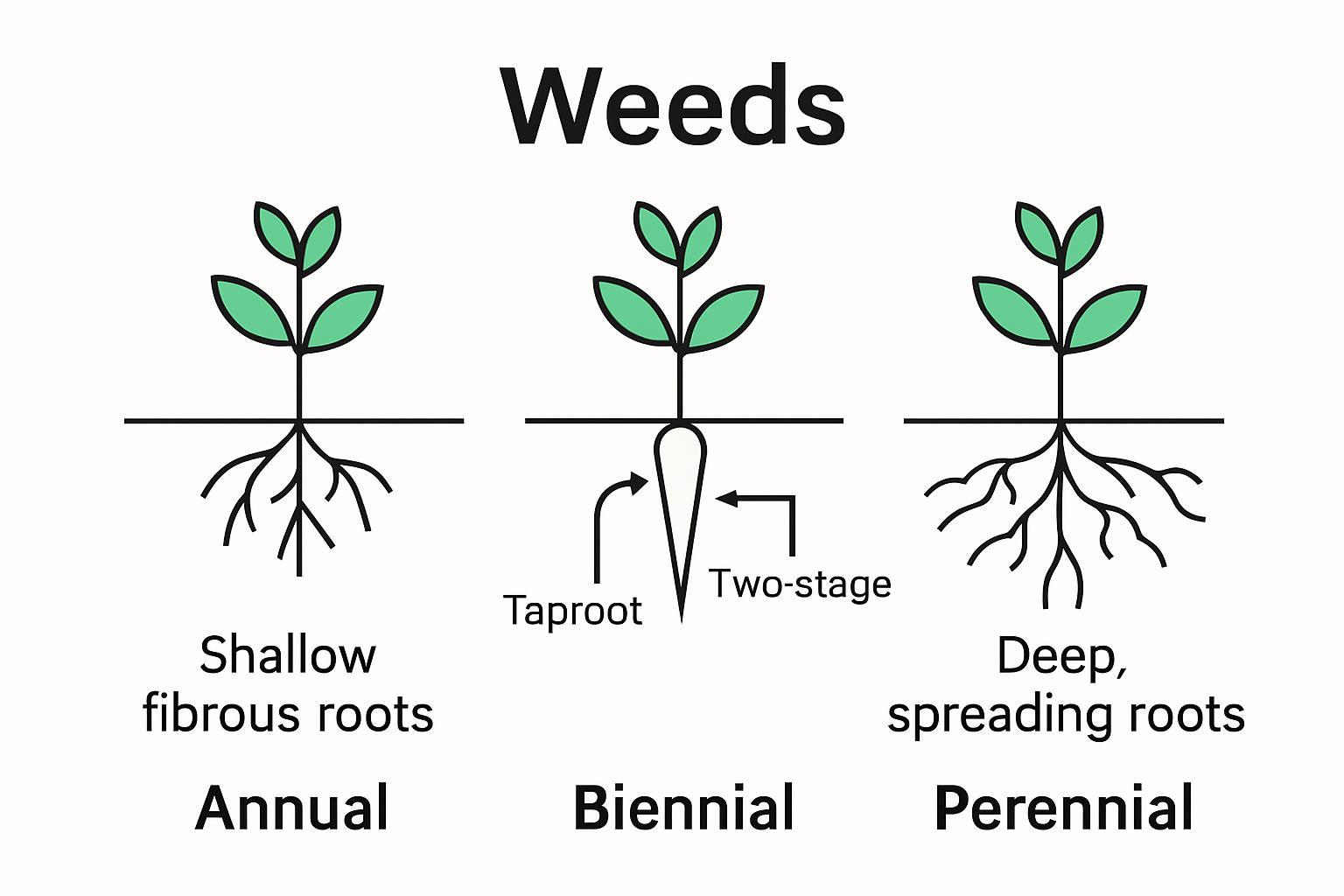
Weeds are scientifically categorized based on their life cycles, which determines their growth patterns and potential management strategies. According to agricultural research, weeds are classified into three primary groups: annuals, biennials, and perennials. Annual weeds complete their entire life cycle within a single growing season, producing seeds and dying off. Biennials require two years to mature and reproduce, while perennial weeds can persist for multiple years, developing complex root systems that make them particularly challenging to eliminate.
Successful weed management requires more than simple recognition. Gardeners must understand the unique characteristics that distinguish weeds from desired plants, including their rapid reproduction methods, adaptive capabilities, and resilience. Key identification factors include leaf shape, growth pattern, root structure, and reproductive mechanisms. Some weeds spread through seeds, while others propagate through underground rhizomes or specialized stem structures. Developing a keen eye for these distinguishing traits allows gardeners to implement targeted removal strategies that prevent further spread and minimize garden disruption.
Understanding weed biology transforms them from frustrating garden invaders into fascinating botanical subjects. By recognizing their survival strategies and ecological roles, gardeners can develop more holistic approaches to landscape management that balance plant diversity with cultivation goals.
Types Of Weeds: Annual, Perennial, And Biennial
Weed classifications are fundamental to understanding their behavior and developing effective management strategies. Weeds are scientifically categorized based on their distinct life cycles, which directly influence their growth patterns, reproduction methods, and potential control techniques. Understanding these categories helps gardeners anticipate and counteract the unique challenges each weed type presents.
Annual weeds complete their entire life cycle within a single growing season. These plants germinate, grow rapidly, produce seeds, and die within one year, making their reproductive strategy incredibly efficient. Common examples include crabgrass, pigweed, and lambsquarters. Because they reproduce solely through seeds, preventing seed production becomes the primary management strategy. Quick intervention before seed formation can dramatically reduce future weed populations.
Biennial weeds follow a two-year life cycle, presenting a more complex growth pattern. During their first year, these plants typically develop a low-growing rosette of leaves and establish a robust root system. In the second year, they bolt (send up a flowering stem), produce seeds, and then die. Classic biennial weeds include wild carrot (Queen Anne’s lace) and common mullein. Their two-stage growth makes timing of control interventions critical, with the most effective management occurring during the rosette stage before flowering.
Perennial weeds are the most resilient category, living for multiple years and developing sophisticated survival mechanisms. These plants can reproduce through seeds and vegetative structures like underground rhizomes, root fragments, or stolons. Examples include dandelions, bindweed, and thistle. Their complex root systems make complete eradication challenging, often requiring repeated, targeted interventions. Successful management of perennial weeds demands persistent strategies that disrupt their ability to regenerate and spread, such as consistent removal of entire root systems and preventing seed production.

Key Features For Accurate Weed Identification
Weed identification requires a systematic approach that goes beyond simple visual recognition. Successful identification involves understanding multiple botanical characteristics, growth patterns, and environmental interactions. Gardeners and landscapers must develop a keen eye for subtle details that distinguish weeds from desired plants, transforming identification from a challenge into a precise scientific observation.
The first critical feature in weed identification involves botanical classification. Weeds are primarily categorized into two fundamental groups: broadleaf and grassy types. Broadleaf weeds feature wide, flat leaves with visible veins, while grassy weeds resemble lawn grass with narrow, elongated leaves. Each category requires different identification strategies and control methods. Leaf structure, arrangement, and texture become crucial diagnostic tools, with characteristics like leaf edge (smooth, serrated, or lobed), vein patterns, and overall leaf shape providing essential clues to a weed’s identity.
Root structure and reproductive mechanisms represent another pivotal identification feature. Some weeds spread through underground rhizomes, creating complex networks that make complete removal challenging. Others rely on seed dispersal, producing numerous tiny seeds that can remain dormant for years. Careful examination of root systems, including depth, branching patterns, and potential regenerative capabilities, provides invaluable insights into a weed’s lifecycle and potential management strategies. Observing a weed’s growth habit and seasonal changes can reveal critical information about its classification and potential control methods.
Environmental adaptation serves as the final key identification feature. Weeds demonstrate remarkable resilience, thriving in conditions that would challenge many cultivated plants. Some prefer compacted soils, while others flourish in areas with specific moisture levels or sunlight exposure. By understanding these environmental preferences, gardeners can not only identify weeds more accurately but also develop targeted strategies for prevention and control. The most successful weed management approaches combine precise identification with a comprehensive understanding of each plant’s unique ecological characteristics.
Top Methods And Tools For Weed Recognition
Weed recognition demands a strategic approach combining technological tools and hands-on observation techniques. Advanced identification resources like specialized weed photo galleries have revolutionized the way gardeners and landscapers diagnose unwanted plant species. Modern weed identification no longer relies solely on intuition but incorporates systematic methodologies that blend visual analysis, digital resources, and botanical knowledge.
Digital identification tools have become increasingly sophisticated in recent years. Smartphone applications and online databases now offer unprecedented accuracy in weed recognition. These digital platforms typically allow users to upload plant photos, which are then analyzed using advanced image recognition algorithms. Key features like leaf shape, flower structure, and growth pattern are cross-referenced against extensive botanical databases, providing near-instantaneous species identification. Winter annual weeds like henbit and chickweed present unique identification challenges that these digital tools help gardeners navigate with greater precision.
Traditional field identification methods remain crucial complementing digital technologies. Experienced gardeners develop a keen eye for subtle botanical differences, examining characteristics such as leaf arrangement, stem structure, root system, and reproductive mechanisms. Detailed field guides, botanical keys, and local extension office resources provide comprehensive references for manual identification. Creating a personal weed identification journal can help track local species, their growth patterns, and seasonal variations, transforming recognition from a challenge into an intuitive skill.
Successful weed recognition ultimately requires a multifaceted approach. Combining digital tools, field observation techniques, and continuous learning creates a comprehensive strategy for identifying and managing unwanted plant species. Gardeners who invest time in understanding botanical characteristics and leveraging modern identification technologies can develop an almost instinctive ability to distinguish weeds from desirable plants, transforming landscape management from a reactive to a proactive process.
Common Mistakes In Weed Identification To Avoid
Weed identification requires precision and careful observation, with numerous potential pitfalls that can derail effective garden management. Gardeners often approach weed identification with assumptions that lead to critical errors, potentially allowing invasive plants to spread unchecked. Understanding these common mistakes becomes the first line of defense in maintaining a healthy, controlled landscape.
One of the most significant errors involves misclassifying weed life cycles. Treating weeds without understanding their reproductive strategies can lead to ineffective control measures, essentially fighting the wrong battle. For instance, applying annual weed control techniques to a biennial or perennial species will prove futile. Each weed type demands a unique approach – annuals require seed prevention, biennials need intervention before their second-year flowering stage, and perennials demand comprehensive root system removal. Gardeners frequently make the mistake of applying a one-size-fits-all strategy, which ultimately allows weeds to persist and proliferate.
Visual misidentification represents another critical error in weed recognition. Many desirable plants closely resemble weeds during early growth stages, leading gardeners to accidentally remove beneficial species or ignore dangerous invasive plants. Seasonal variations, young plant appearances, and similar leaf structures can create significant confusion. Some gardeners rely too heavily on digital identification tools without cross-referencing multiple sources or understanding local botanical variations. Developing a nuanced understanding requires more than a quick smartphone app scan – it demands patient observation, local knowledge, and a willingness to learn from mistakes.
The most profound mistake in weed identification is treating it as a static, one-time process. Successful weed management is dynamic, requiring continuous learning and adaptation. Weeds evolve, migrate, and develop resistance to control methods. Gardeners who remain curious, document their observations, and stay informed about local plant ecosystems will ultimately develop the most effective identification and management strategies. Recognizing that weed identification is an ongoing journey, not a destination, transforms potential frustration into an opportunity for deeper ecological understanding.
Effective Strategies For Managing Identified Weeds
Weed management requires a comprehensive approach that goes beyond simple removal techniques. Successful strategies integrate multiple control methods tailored to specific weed types, understanding that no single approach works universally. The most effective weed management plans combine proactive prevention, precise identification, and targeted intervention strategies that minimize environmental impact while maximizing garden health.
Cultural and mechanical control methods form the foundation of sustainable weed management. Proper identification of weed life cycles enables gardeners to select the most appropriate control techniques, creating a multilayered defense strategy. Mechanical techniques like hand pulling, mulching, and cultivating work best for annual weeds with shallow root systems, while perennial weeds require more comprehensive approaches such as repeated cutting, precise digging, or root barrier installation. Implementing ground covers, maintaining dense plant populations, and using strategic crop rotation can naturally suppress weed growth by reducing available resources.
Chemical control methods should be considered a last resort, used sparingly and with extreme precision. Organic herbicides and targeted spot treatments can effectively manage persistent weed populations without causing widespread ecosystem disruption. Gardeners must carefully match herbicide types to specific weed classifications, considering factors like plant stage, root structure, and surrounding vegetation. Organic pest management techniques can provide complementary strategies that support long-term garden health while controlling unwanted plant growth.
The most successful weed management approach embraces ecological balance. Instead of viewing weeds as enemies, gardeners should understand them as indicators of soil health, microclimate conditions, and potential nutrient imbalances. By addressing underlying environmental factors, implementing diverse control strategies, and maintaining consistent monitoring, gardeners can transform weed management from a constant battle to a nuanced, sustainable practice that supports overall landscape vitality.

Take Control of Your Garden by Mastering Weed Identification
Struggling to keep your garden thriving while battling persistent weeds can feel overwhelming. This guide breaks down essential weed identification concepts that help you understand the enemy in your garden. From distinguishing annuals, biennials, and perennials to spotting key features like leaf shape and root structure, gaining this knowledge empowers you to act with confidence and precision. Stop letting weeds sap your garden’s resources and steal your hard work.
Get practical advice tailored for gardeners at every level in our Gardening for Beginners – Lushy Gardens section. Learn proven strategies for prevention and management that complement your newfound identification skills. Ready to transform your gardening experience and achieve healthier plants today Use the expert tips and resources only at Lushy Gardens to make your garden flourish with less frustration.
Explore more about managing pests that often accompany weeds in Pest & Disease Management – Lushy Gardens and discover how companion planting can naturally reduce weed competition at Companion Planting – Lushy Gardens. Start improving your garden landscape now by visiting our site and unlocking smart solutions designed to fit your gardening goals.
Frequently Asked Questions
What are the main types of weeds?
Weeds are classified into three main types based on their life cycles: annuals, biennials, and perennials. Annual weeds complete their life cycle in one growing season, biennials take two years, and perennials can live for multiple years.
How can I effectively identify weeds in my garden?
Effective weed identification involves examining botanical features such as leaf shape, growth pattern, root structure, and reproductive mechanisms. Utilizing digital tools like apps or databases, along with traditional field guides, can enhance accuracy.
What strategies can I use to manage identified weeds?
Managing weeds effectively requires a combination of cultural, mechanical, and chemical control methods. Mechanical techniques such as hand pulling and mulching work well for annual weeds, while perennials may require targeted digging or the use of organic herbicides.
Why is understanding weed biology important for gardeners?
Understanding weed biology helps gardeners recognize survival strategies, anticipated growth patterns, and optimal management techniques. This knowledge allows for a more holistic approach to landscape management, balancing plant diversity and cultivation goals.
Recommended

I’m Eleanor, a seasoned gardener with over three decades of experience tending to Mother Nature’s creations. Through Lushy Gardens, I aim to share my wealth of knowledge and help fellow plant enthusiasts uncover the wonders of gardening. Let’s dive into this journey together, one leaf at a time.


