
Table of Contents
More than 85 million american households garden each year, but choosing between perennial and annual plants can leave even dedicated growers scratching their heads. These plant types shape every aspect of a garden, from seasonal color to long-term structure. Understanding how annuals deliver quick bursts of bloom while perennials create lasting beauty helps gardeners of all experience levels design outdoor spaces that thrive through changing conditions.
Key Takeaways
| Point | Details |
|---|---|
| Understanding Plant Types | Annual plants complete their life cycle in one growing season, while perennials live for multiple years, returning seasonally. |
| Growth Strategies | Annuals focus on quick germination and seed production, whereas perennials employ a sustainable reproductive strategy allowing for year-after-year growth. |
| Maintenance Requirements | Annuals require intense care every season, while established perennials typically need less frequent intervention. |
| Design Applications | Combining annuals and perennials creates dynamic gardens that offer immediate color and long-term structure, maximizing visual appeal and ecosystem support. |
Understanding Perennial and Annual Plants
In the diverse world of gardening, understanding plant life cycles is essential for successful cultivation. Plant life cycles categorize how different plants grow, reproduce, and survive through changing seasons. According to Penn State Extension, plants are fundamentally classified into three primary groups based on their growing seasons: annuals, biennials, and perennials.
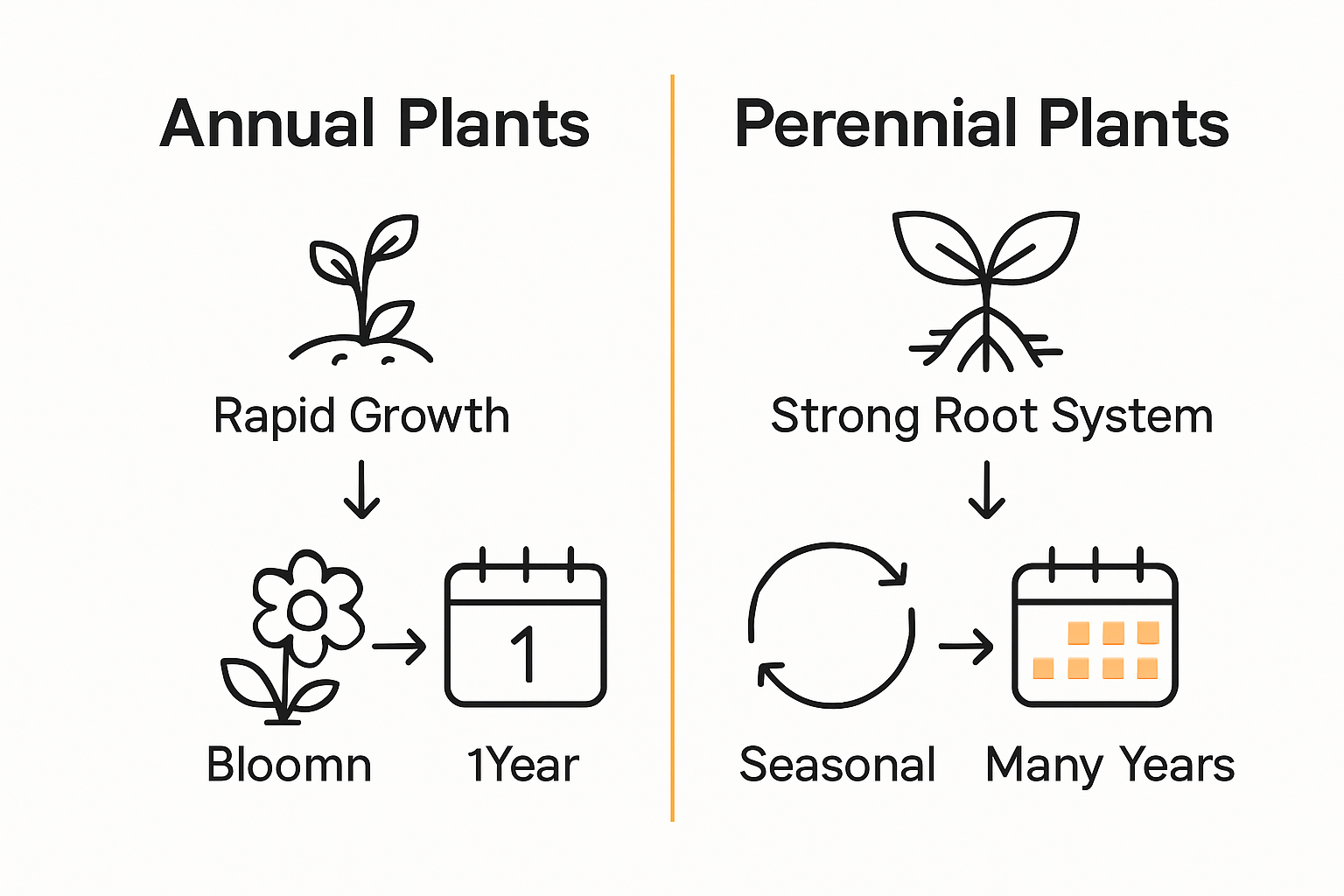
An annual plant completes its entire life cycle within a single growing season. From germination to seed production, these plants live, flower, and die all within one year. Popular annual flowers like marigolds, zinnias, and petunias are perfect examples. They burst into vibrant colors during their short lifespan, producing seeds for the next generation before withering away. As Oregon State University Extension explains, annuals are characterized by their rapid growth and complete reproductive cycle in just one year.
In contrast, perennial plants have a much longer life cycle, living for multiple years and returning season after season. Unlike annuals, perennials can survive winter dormancy and regrow from their root systems when conditions become favorable. These resilient plants often flower annually after reaching maturity, providing consistent beauty and structure in gardens. Classic perennial examples include lavender, peonies, and ornamental grasses. Their ability to survive multiple growing seasons makes them a favorite among gardeners seeking long-term landscape solutions.
Understanding the differences between annual and perennial plants helps gardeners make informed decisions about plant selection, garden design, and maintenance strategies. By recognizing each plant type’s unique characteristics, you can create a more dynamic and sustainable garden ecosystem that thrives throughout changing seasons.
Key Differences in Growth Cycles
Understanding the fundamental growth cycle differences between annual and perennial plants reveals fascinating botanical strategies for survival and reproduction. PubMed Research highlights critical distinctions in how these plant types approach their biological lifecycle. Reproductive strategies vary dramatically between these two plant categories, fundamentally impacting their growth, survival, and garden performance.
Annual plants represent a rapid, intense approach to survival. According to PubMed Research, their lifecycle is characterized by a complete reproductive process within a single growing season, where flowering is directly associated with plant senescence and death. These plants invest all their energy into quick germination, rapid growth, flowering, and seed production. This strategy ensures genetic continuation through prolific seed generation before the plant dies, making them incredibly efficient at reproducing in challenging environmental conditions.
Perennial plants, conversely, employ a more sustainable and long-term reproductive strategy. Their growth cycle allows for multiple years of survival, with complex meristematic behavior that enables continuous vegetative development. Interestingly, perennials maintain some meristems in a vegetative state while others undergo floral transition, allowing them to flower consecutively without compromising the plant’s overall survival. This sophisticated approach means perennials can rebuild their above-ground structures annually while maintaining a robust, established root system that survives dormant periods.
The core difference lies in resource allocation and survival mechanisms. Annual plants concentrate their entire life force into one explosive growth and reproduction cycle, while perennials distribute their energy across multiple seasons. This fundamental distinction impacts everything from garden design and plant selection to maintenance strategies.
Gardeners can leverage these differences by understanding each plant type’s unique growth characteristics, creating more dynamic and resilient landscape designs that balance quick, vibrant annual displays with the steady, enduring presence of perennial plantings.
Care Requirements and Maintenance Tips
Navigating the care requirements for annual and perennial plants demands different strategies and approaches. Oregon State University Extension highlights the fundamental distinctions in maintenance needs between these two plant types. Plant maintenance involves understanding each species’ unique growth patterns, nutrient requirements, and seasonal adaptations.
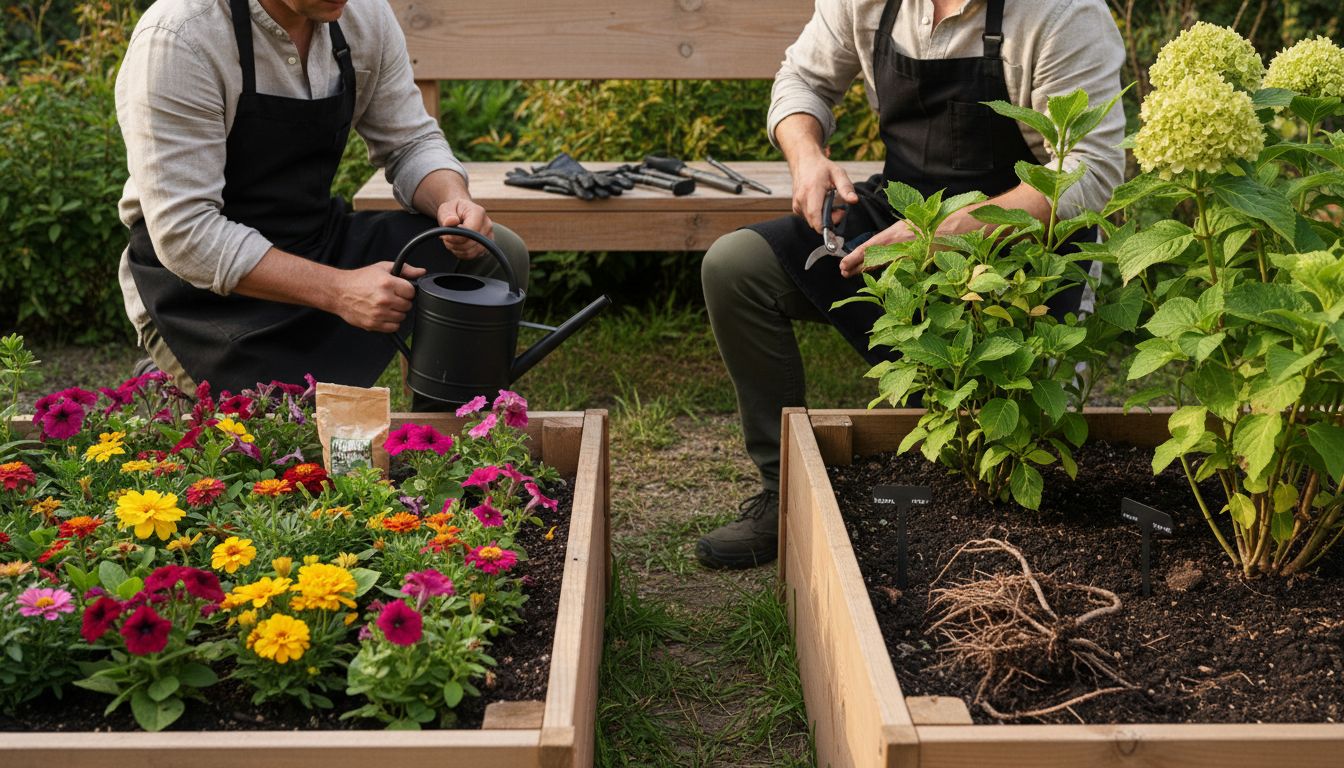
Annual plants require more intensive, concentrated care throughout their single growing season. These plants demand consistent watering, frequent fertilization, and meticulous attention to ensure robust growth and continuous blooming. Gardeners must replant annuals each year, investing time in soil preparation, selecting optimal planting locations, and providing regular nutrient support. Penn State Extension notes that annuals offer the advantage of continuous blooms throughout their growing season, making them ideal for creating vibrant, constantly changing garden displays.
Perennial plants present a more sustainable maintenance approach. Once established, these plants typically require less frequent intervention. Their maintenance revolves around periodic pruning, strategic division of root systems, and occasional fertilization to promote healthy growth. Experienced gardeners focus on creating optimal initial conditions during planting, such as selecting appropriate soil conditions, ensuring proper drainage, and choosing locations that match the plant’s specific sunlight and temperature requirements. This upfront investment pays dividends through years of reliable, recurring growth.
Successful plant care ultimately depends on understanding each plant’s unique characteristics. While annuals demand high-energy, short-term care, perennials require a more patient, long-term approach. By learning seasonal garden maintenance techniques, gardeners can develop nuanced strategies that maximize the potential of both annual and perennial plants, creating dynamic, thriving garden ecosystems that evolve beautifully through changing seasons.
Common Uses in Home Gardens
Garden design requires strategic plant selection, and understanding the unique roles of annuals and perennials is crucial for creating dynamic, visually appealing landscapes. Oregon State University Extension highlights how these plant types serve distinct purposes in home garden environments, offering gardeners flexible design strategies.
Annuals excel at providing instant, continuous color and filling visual gaps in garden beds. These vibrant plants are perfect for creating seasonal displays, container gardens, and adding immediate visual interest to landscapes. Penn State Extension notes that annuals deliver consistent blooms throughout the growing season, making them ideal for gardeners seeking quick, dramatic transformations. They work wonderfully in hanging baskets, window boxes, and as temporary fillers between slower-growing perennial plantings.
Perennial plants serve as the architectural backbone of garden design, offering long-term structure and reliable recurring beauty. These plants create stable, evolving landscapes that develop character over years. Gardeners strategically use perennials to establish consistent garden themes, create naturalistic borders, and develop low-maintenance landscaping solutions. Their ability to return annually means they provide reliable foundation plantings that anchor garden designs and offer predictable aesthetic appeal.
For gardeners looking to create comprehensive, adaptable outdoor spaces, combining annuals and perennials offers the best of both worlds. Understanding urban gardening techniques can help maximize limited garden spaces by thoughtfully integrating these complementary plant types. Whether you’re working with a small balcony garden or a sprawling backyard, mixing annuals’ vibrant temporary color with perennials’ enduring structure creates rich, dynamic garden ecosystems that evolve beautifully through changing seasons.
Pros, Cons, and Choosing the Right Plant
Selecting the ideal plants for your garden involves carefully weighing the unique advantages and limitations of annuals and perennials. Plant selection is not a one-size-fits-all decision, but a strategic process that considers your specific gardening goals, environmental conditions, and long-term landscape vision.
The Land Institute highlights the significant ecological benefits of perennial plants, noting their deep root systems that anchor soil and reduce erosion while providing critical habitats for diverse species. Annuals, by contrast, offer gardeners rapid visual transformation and flexibility. Geeks for Geeks explains that annuals excel at quickly adapting to disturbed environments, making them ideal for gardeners seeking immediate, dynamic landscape changes.
Choosing between annuals and perennials requires understanding your specific gardening context. Consider factors like maintenance capacity, budget, aesthetic preferences, and local climate. Annuals shine in scenarios demanding quick color bursts and seasonal variety, while perennials provide stable, long-term landscape structure. Urban gardeners with limited space can strategically combine both to maximize visual appeal and ecological function.
Master plant propagation methods can help gardeners optimize their plant selections. By understanding the unique strengths of annuals and perennials, you can create a garden that not only looks beautiful but also supports local ecosystems, adapts to changing conditions, and reflects your personal gardening style. The key is balance selecting the right plants for the right purposes.
Master Your Garden with Annuals and Perennials Knowledge
Choosing between perennial and annual plants can feel overwhelming when planning your garden’s future. You want vibrant colors, lasting beauty, and manageable care but balancing these goals requires understanding complex plant life cycles and care needs. This article highlighted the key differences in growth rhythms, maintenance demands, and design roles of these plants, helping you make smarter planting decisions. Don’t let uncertainty hold you back from creating the garden you imagine.
Discover expert gardening tips, seasonal strategies, and sustainable planting methods at Seasonal Gardening – Lushy Gardens. Unlock practical advice tailored to both quick-flowering annuals and long-lasting perennials. Take control of your gardening journey now by visiting Lushy Gardens and explore all our resources. Start turning your green space into a thriving oasis today.
Frequently Asked Questions
What is the main difference between annual and perennial plants?
Annual plants complete their life cycle within one growing season, growing quickly and flowering before dying. Perennial plants live for multiple years, returning each season after winter dormancy.
How do I care for annual plants compared to perennial plants?
Annual plants require more intensive care, including frequent watering and fertilization, as they last only one season. Perennial plants generally need less maintenance once established, focusing on periodic pruning and occasional fertilization.
What are some examples of popular annual and perennial plants?
Popular annuals include marigolds, zinnias, and petunias, while common perennials include lavender, peonies, and ornamental grasses.
Why should I choose perennial plants for my garden?
Perennial plants provide long-term beauty and structure in your garden, returning year after year, which can lead to lower maintenance over time and a more sustainable garden ecosystem.
Recommended
- Blog – Lushy Gardens
- What Is Plant Dormancy? Complete Guide for Gardeners – Lushy Gardens
- Plant Hardiness Explained: Climate Zones and Selection – Lushy Gardens
- Seasonal Garden Maintenance: Step-by-Step Success Guide – Lushy Gardens

I’m Eleanor, a seasoned gardener with over three decades of experience tending to Mother Nature’s creations. Through Lushy Gardens, I aim to share my wealth of knowledge and help fellow plant enthusiasts uncover the wonders of gardening. Let’s dive into this journey together, one leaf at a time.


