
Table of Contents
Overwatering kills more American houseplants than underwatering, yet many plant lovers do not realize the risk until it is too late. When plants sit in soggy soil, their roots suffocate and lose the ability to take up nutrients. As a result, even the healthiest American plants can suddenly show yellow leaves, moldy soil, and stunted growth. Learning how to recognize and prevent these problems will help you keep your plants thriving all year.
Key Takeaways
| Point | Details |
|---|---|
| Understanding Overwatering | Overwatering suffocates plant roots, leading to nutrient absorption failure and potential decay. |
| Recognizing Symptoms | Early signs include yellowing leaves, wilting despite wet soil, and a moldy surface, which are critical for intervention. |
| Distinguishing from Underwatering | Overwatering results in saturated soil and soft, yellow leaves, while underwatering features dry soil and brittle, brown leaves. |
| Prevention and Recovery | Implement strategic moisture assessments, ensure proper drainage, and customize watering routines based on individual plant needs. |
What Does Overwatering Mean For Plants?
Overwatering represents a serious yet often misunderstood threat to plant health that goes far beyond simply adding too much water. At its core, overwatering creates an environment where plant roots cannot breathe, effectively suffocating the fundamental systems responsible for nutrient absorption and survival.
When plants receive excessive water, their root systems become saturated, preventing oxygen from reaching critical cellular structures. Root damage from waterlogged conditions can trigger a cascade of devastating physiological responses. The roots begin to decay, lose their ability to transport nutrients, and become highly susceptible to fungal infections and root rot.
The consequences of overwatering extend beyond immediate root damage. Plants experiencing consistent moisture overload will exhibit multiple distress signals, including:
- Yellowing leaves that feel soft and mushy
- Wilting despite soil being wet
- Stunted growth and reduced overall plant vitality
- Moldy or fungus-covered soil surface
- Unexplained leaf drop
Recognizing these symptoms early can mean the difference between saving your plant and watching it slowly deteriorate. The key is understanding that water management is a delicate balance, requiring careful observation of each plant’s unique environmental needs and drainage capabilities.
Visible Symptoms Of Overwatered Plants
Plants communicate their distress through a complex language of visual signals, and overwatering triggers a distinctive set of symptoms that can quickly spell disaster for your green companions. Leaf discoloration and wilting represent the most immediate and recognizable warning signs that your plant is drowning at the root level.

The progression of overwatering damage follows a predictable and devastating pattern. Initially, plants might display seemingly contradictory symptoms that can confuse even experienced gardeners. Lower leaves begin yellowing, inner foliage shows signs of necrosis, and the overall plant structure experiences dramatic canopy dieback. These symptoms often mimic drought stress, making precise diagnosis critical for plant survival.
Recognizing the nuanced signs of overwatering requires careful observation. Look for these telltale indicators:
- Soft, mushy stems that feel weak when touched
- Leaves turning yellow, especially starting from the bottom of the plant
- Soil that remains consistently wet and develops a moldy surface
- Unexplained leaf drop, even when plant appears otherwise healthy
- Stunted growth or complete cessation of new leaf production
- Fungus or mold developing around the plant’s base
When spotting dying plant symptoms, swift intervention becomes crucial. Understanding these visual cues can mean the difference between saving your plant and watching it deteriorate beyond recovery.
Less Obvious Signs And Root Issues
Beyond the immediately visible symptoms, overwatering creates a complex network of subtle but devastating plant health complications. Edema presents as unique brown, corky spots on leaves, representing a critical early warning sign of cellular damage caused by excessive moisture pressure.
Underground root systems suffer profound transformations during prolonged overwatering. The roots become waterlogged, losing their ability to breathe and absorb nutrients effectively. This suffocation process triggers a domino effect of deterioration: root cells begin to break down, beneficial microorganisms die, and the entire root structure becomes vulnerable to fungal invasions and bacterial diseases.
The less apparent indicators of overwatering demand keen observation and understanding:
- Unexplained changes in leaf texture
- Soft, mushy root systems when gently examined
- Persistent musty odors emanating from soil
- Slow or halted growth despite adequate light
- Roots appearing brown or black instead of healthy white
- Mineral salt buildup on soil surface
When investigating plant health problems, gardeners must recognize that root damage often occurs long before visible symptoms emerge. Proactive monitoring and understanding these subtle signals can mean the difference between plant recovery and complete system collapse.
How Overwatering Differs From Underwatering
Root damage mechanisms reveal a surprisingly complex relationship between water stress and plant survival. While both overwatering and underwatering can ultimately kill a plant, their physiological impacts are dramatically different. Overwatering suffocates roots by eliminating oxygen, whereas underwatering starves plants of critical hydration and nutrient transport.
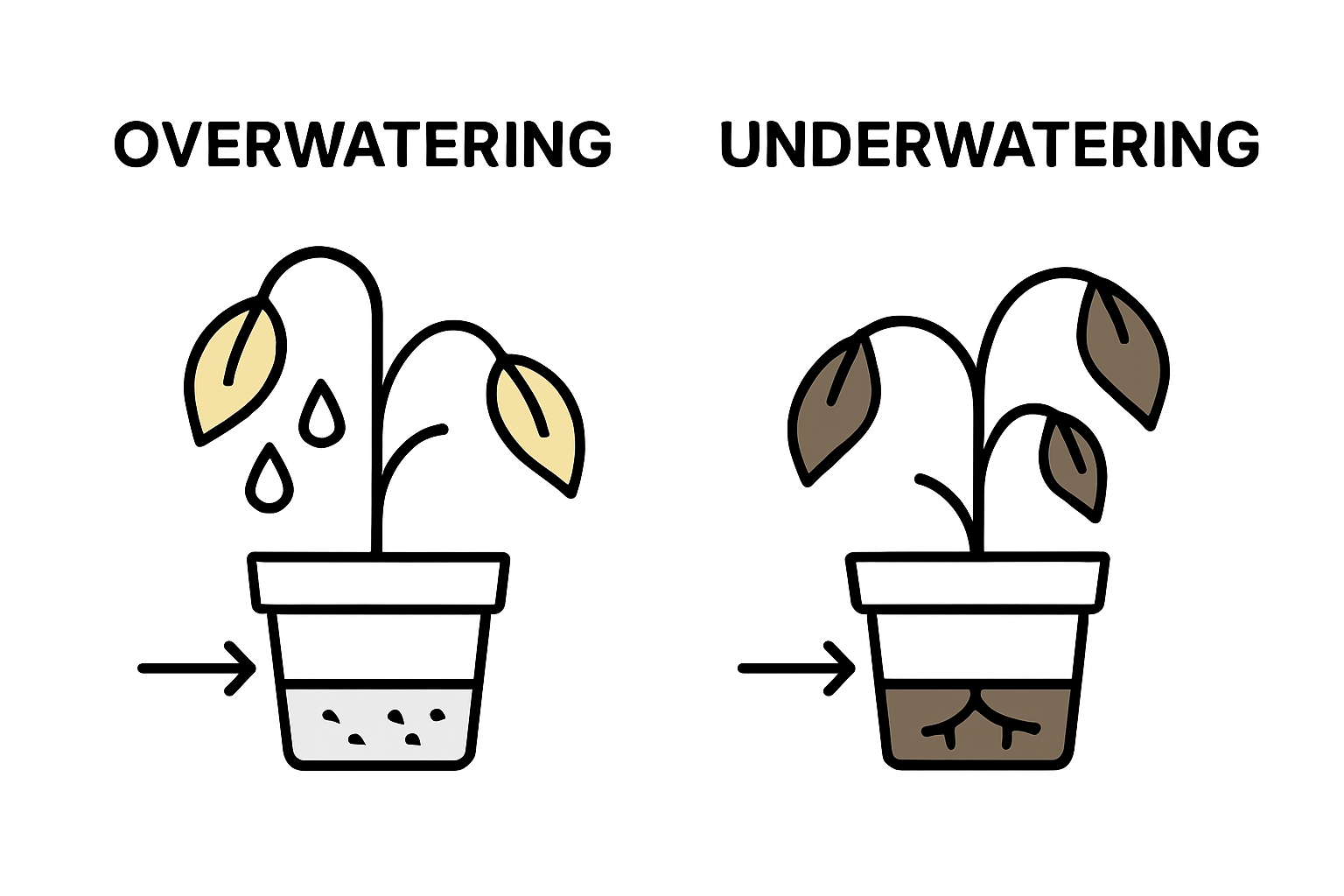
Diagnostic symptoms can be remarkably similar, making precise identification challenging. Overwatered plants often display wilting and yellowing that mimics drought stress, but with one crucial difference: the soil remains wet. Underwatered plants, conversely, will have bone-dry soil and crisp, brittle leaves that indicate severe dehydration.
Key differences between overwatering and underwatering include:
- Soil Moisture:
- Overwatering: Consistently wet, potentially moldy soil
- Underwatering: Completely dry, dusty soil
- Leaf Appearance:
- Overwatering: Soft, yellowing leaves
- Underwatering: Crisp, brown, curling leaves
- Root Condition:
- Overwatering: Soft, mushy, dark-colored roots
- Underwatering: Dry, brittle, shriveled roots
Watering indoor plants naturally requires understanding these nuanced differences. The key is recognizing that both extremes can be fatal, and finding the delicate balance of consistent, appropriate hydration is crucial for plant survival.
Prevention Strategies And Recovery Steps
Preventing overwatering requires a strategic approach to understanding plant water needs. Different plants have unique hydration requirements influenced by factors like pot size, soil composition, humidity, and growth stage. Developing an intuitive watering strategy means moving beyond generic schedules and learning to read your individual plant’s specific signals.
Successful water management involves carefully analyzing soil texture and plant grouping strategies. Creating an effective prevention plan requires understanding each plant’s unique characteristics and creating an environment that supports optimal moisture balance. This means considering pot drainage, selecting appropriate soil mixes, and monitoring environmental conditions that impact water retention.
Key prevention and recovery strategies include:
- Moisture Assessment Techniques:
- Use finger test to check soil moisture depth
- Invest in moisture meter for precise readings
- Observe plant response after watering
- Drainage Improvement:
- Choose pots with drainage holes
- Use well-draining potting mix
- Add perlite or sand to improve soil structure
- Recovery Steps:
- Remove plant from saturated soil
- Trim damaged roots carefully
- Repot in fresh, dry potting mix
- Reduce watering frequency
Watering indoor plants naturally demands patience, observation, and a willingness to adapt your approach. Each plant is unique, and mastering their individual needs is the key to long-term plant health.
Protect Your Plants From the Hidden Dangers of Overwatering
Overwatering can silently damage your plants by suffocating their roots and causing symptoms like yellowing leaves, mushy stems, and moldy soil. These signs might leave you confused since they can resemble underwatering, yet the key difference lies in soil moisture and root health. If you want to avoid the heartbreak of losing your favorite plants and keep them thriving, understanding precise water management is essential.
Explore expert advice and practical tips on how to balance watering, improve drainage, and recognize subtle warning signs by diving into our comprehensive Plant Care – Lushy Gardens guides. Whether you are nurturing indoor plants or outdoor greenery, our Indoor Plants – Lushy Gardens section offers tailored advice to help you avoid common pitfalls like overwatering. Start transforming your watering routine now and save your plants from irreversible damage. Visit us at Lushy Gardens and take the first step to healthier, happier plants today.
Frequently Asked Questions
What are the common signs of overwatered plants?
Common signs include yellowing leaves that feel soft and mushy, wilting despite wet soil, stunted growth, moldy or fungus-covered soil, and unexplained leaf drop.
How does overwatering affect plant roots?
Overwatering suffocates plant roots by saturating the soil, preventing oxygen from reaching the roots, leading to root decay, nutrient transport issues, and increased susceptibility to fungal infections and root rot.
How can I differentiate between overwatering and underwatering?
Overwatered plants typically have consistently wet, potentially moldy soil and soft, yellowing leaves. In contrast, underwatered plants exhibit completely dry soil with crispy, brown, curling leaves.
What steps can I take to prevent overwatering?
To prevent overwatering, assess soil moisture using a finger test or moisture meter, ensure proper drainage by using pots with drainage holes and a well-draining potting mix, and adjust your watering frequency based on the plant’s specific needs.
Recommended
- Why Plants Wilt: Complete Guide for Gardeners – Lushy Gardens
- How Often to Water Snake Plant: Ultimate Watering Guide – Lushy Gardens
- Watering Indoor Plants Made Easy: Your Step-by-Step Guide – Lushy Gardens
- How Often to Water Spider Plant – A Comprehensive Guide – Lushy Gardens
- Understanding the Effects of Water Contamination – My WordPress

I’m Eleanor, a seasoned gardener with over three decades of experience tending to Mother Nature’s creations. Through Lushy Gardens, I aim to share my wealth of knowledge and help fellow plant enthusiasts uncover the wonders of gardening. Let’s dive into this journey together, one leaf at a time.


