
Table of Contents
Watering small beds in cities like London or Manchester can quickly feel like a daily chore, especially during Britain’s unpredictable summers. Mulching offers a simple, proven way to retain moisture and keep weeds under control even in the tightest vegetable and flower beds. By spreading a protective layer over your soil, you not only cut down on watering but also give your plants healthier growing conditions and less competition from unwanted weeds.
Key Takeaways
| Point | Details |
|---|---|
| Mulch Conserves Moisture | Applying mulch reduces soil evaporation, keeping water in the soil longer and reducing the frequency of watering. |
| Types of Mulch Impact Soil Health | Organic mulches improve soil structure and fertility as they decompose, while inorganic options do not add nutrients but provide lasting coverage. |
| Proper Application is Crucial | Aim for a mulch depth of 2 to 3 inches, leaving a gap around plant stems to prevent rot and enable oxygen flow. |
| Avoid Common Mistakes | Prevent issues by not over-mulching, not placing mulch directly against plant stems, and not using both mulch and weed fabric together. |
Defining Mulch and Its Core Purposes
Multch is simply a protective layer of material spread across your garden soil. Think of it as a blanket for your beds. It sits on top of the earth around your plants and serves multiple important functions that make growing vegetables and flowers significantly easier in urban spaces where every square inch counts.
At its core, mulch works by covering the soil surface with organic or inorganic materials such as leaves, grass clippings, straw, wood chips, or even recycled plastic. The material acts as an insulating barrier between your soil and the environment, which is particularly valuable when you’re working with limited garden space in cities like London, Manchester, or Bristol where compact raised beds are the norm.
The primary purposes mulch serves are straightforward and practical. It conserves moisture in your soil, reducing how often you need to water during dry spells. It suppresses weeds by blocking sunlight from reaching weed seeds, meaning less time spent pulling weeds from your vegetable patches. It regulates soil temperature, keeping roots cooler in summer heat and protecting them during winter cold. It also gradually breaks down to improve your soil structure and fertility, which is essential when working with urban garden soil that may be compacted or depleted.
Organic mulches like compost, shredded bark, or grass clippings offer the added benefit of feeding your soil as they decompose. Inorganic options like gravel or landscape fabric work differently—they don’t add nutrients but provide longer lasting coverage and are useful for permanent garden features. For most UK urban gardeners growing vegetables and flowers, organic mulches deliver the best results because they improve soil health while performing all the practical functions you need.
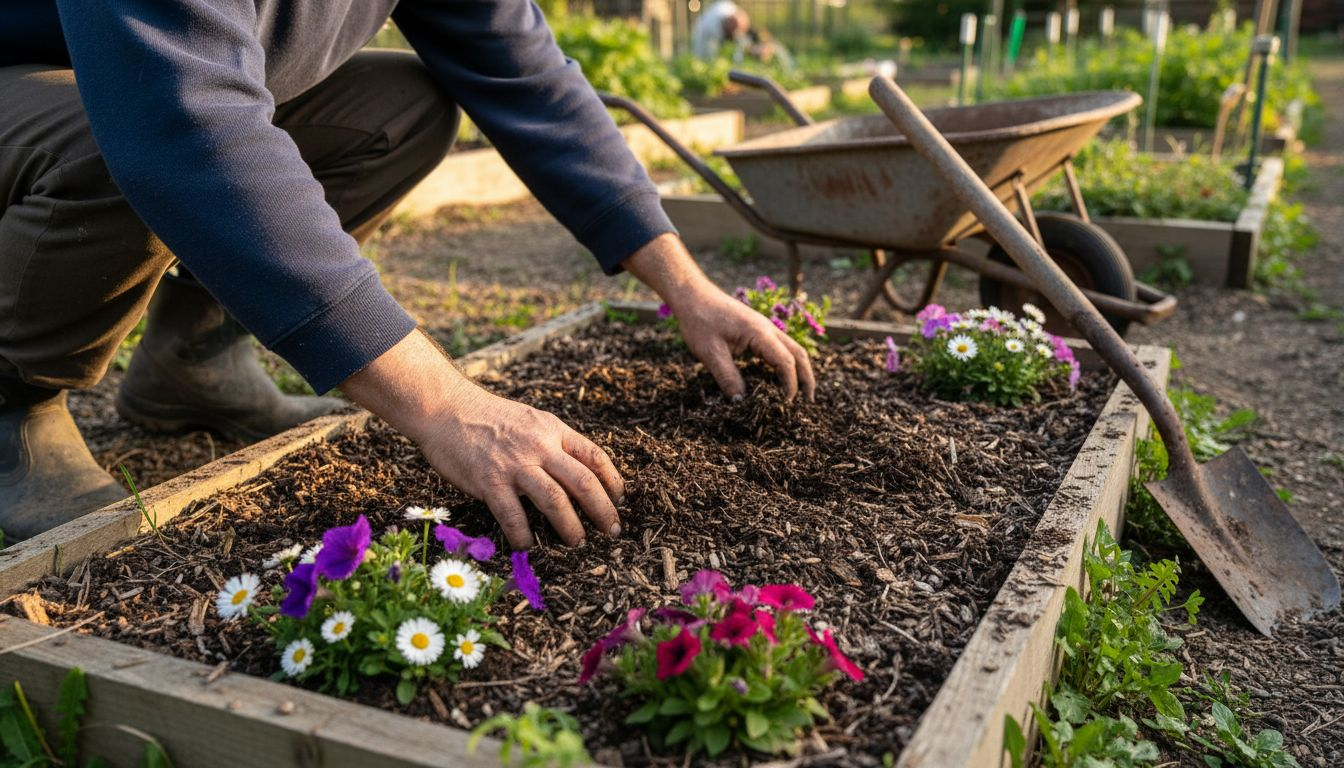
When you apply mulch properly, you’re not just tidying your garden beds. You’re creating an environment where your plants thrive with less effort, your soil becomes richer year after year, and water stays in the ground longer instead of evaporating in the summer sun.
Pro tip: Apply mulch to a depth of 2 to 4 inches around your plants, keeping it pulled back slightly from plant stems to prevent rot and discourage pests from nesting directly against your vegetables and flowers.
Major Mulch Types and Their Differences
Not all mulches perform the same way in your urban garden. The type you choose depends on what you’re growing, how much maintenance you want to do, and what results matter most to you. Understanding the differences helps you make the right choice for your specific beds.
Organic mulches are the go-to option for most UK urban gardeners growing vegetables and flowers. These include wood chips, pine bark, straw, shredded leaves, and grass clippings. They break down over time, feeding your soil with valuable nutrients and improving its structure. The trade-off is that you’ll need to replenish them annually as they decompose. For vegetable beds especially, this replenishment cycle is actually beneficial because you’re constantly adding fresh organic matter.
Inorganic mulches like gravel, stones, and landscape fabric work differently. They last much longer than organic options, sometimes for several years without replacement. However, they don’t add nutrients to your soil as they break down because they simply don’t break down. Rocks can also absorb and retain heat, which may not be ideal during hot summers when you want to keep soil cooler. Different mulch types affect soil temperature and moisture retention in varying ways, so consider your climate zone when choosing.
Synthetic mulches include recycled rubber and plastic films. Plastic mulches can be effective for conserving moisture and suppressing weeds, but they require removal and disposal annually. Living mulches are ground cover plants like clover that protect your soil while adding nitrogen naturally. These work best in larger garden spaces and may compete with your main plants for resources in tight urban settings.
For most compact urban vegetable and flower beds in cities across the UK, organic mulches deliver the best balance. They improve soil health, suppress weeds effectively, and don’t require specialized removal. Start with what feels manageable for your schedule, and adjust based on your results.
Here’s a comparison of main mulch types and their key benefits for urban gardens:
| Mulch Type | Soil Improvement | Maintenance Needs | Ideal Use Case |
|---|---|---|---|
| Organic | Adds nutrients | Replenish yearly | Vegetables, flowers |
| Inorganic | No improvement | Lasts several years | Permanent paths, features |
| Synthetic | No improvement | Remove annually | Moisture/weed control, temp |
| Living | Adds nitrogen | May need trimming | Large spaces, cover crops |
Pro tip: Combine mulch types strategically by using organic mulch around your vegetables and flowers, then adding a layer of cardboard underneath in problem weed areas for extra suppression without digging out established beds.
How Mulch Retains Moisture and Suppresses Weeds
Two of mulch’s most valuable functions for urban gardeners are moisture retention and weed suppression. Both happen through simple physical mechanisms that work together to make your garden easier to maintain and more productive overall.
Moisture retention starts with a basic principle. Mulch acts as a protective layer between your soil and the sun, reducing direct heat exposure. This shield significantly cuts down on evaporation, meaning water stays in the ground longer instead of disappearing into the air during hot days. In urban gardens where you may water by hand or rely on irregular rainfall, this makes a real difference in how often you need to reach for the watering can.
Organic mulches offer an added bonus. As they break down, they increase the amount of organic matter in your soil, which acts like a sponge. Better soil structure means water soaks in deeper and gets held more effectively around plant roots where plants actually need it. Mulch reduces evaporation by covering soil and insulating it against temperature extremes, which is particularly helpful during London’s occasional heat waves or Manchester’s unpredictable dry spells.
Weed suppression works through blocking light. Weed seeds need sunlight to germinate. When you apply mulch across your beds, you’re essentially creating darkness underground, preventing those millions of weed seeds from sprouting in the first place. You’ll notice far fewer weeds pushing through compared to bare soil beds. Those that do manage to emerge often pull out easily because the mulch keeps the soil soft and workable.
Application thickness matters. Too thin (under an inch) and moisture loss continues, weeds still emerge. Too thick (over 4 inches) and you risk trapping excess moisture against plant stems, creating conditions for rot and disease. Aim for 2 to 3 inches around your vegetable and flower beds as the sweet spot.
Pro tip: Water your soil thoroughly before applying mulch, then check moisture levels weekly during the first month to confirm the mulch is actually reducing how often you need to water in your specific garden location.
Selecting the Right Mulch for Small Beds
Choosing the right mulch for your compact urban beds isn’t complicated, but a few practical considerations will help you make the best decision for your specific situation. What works brilliantly in one garden may not be ideal in another, so think about your priorities first.
Start with texture and composition. Medium-textured mulches work best for small beds because they break down at a reasonable pace, don’t compact the soil, and allow water to penetrate effectively. Hardwood bark, composted wood chips, and composted leaves all fit this profile well. Avoid very fine mulches like dust or sand, which can harden into a crust and block water from reaching your soil. Coarse mulches enhance water penetration and air circulation without compacting the soil, which is crucial in small beds where you can’t easily fix compacted areas.
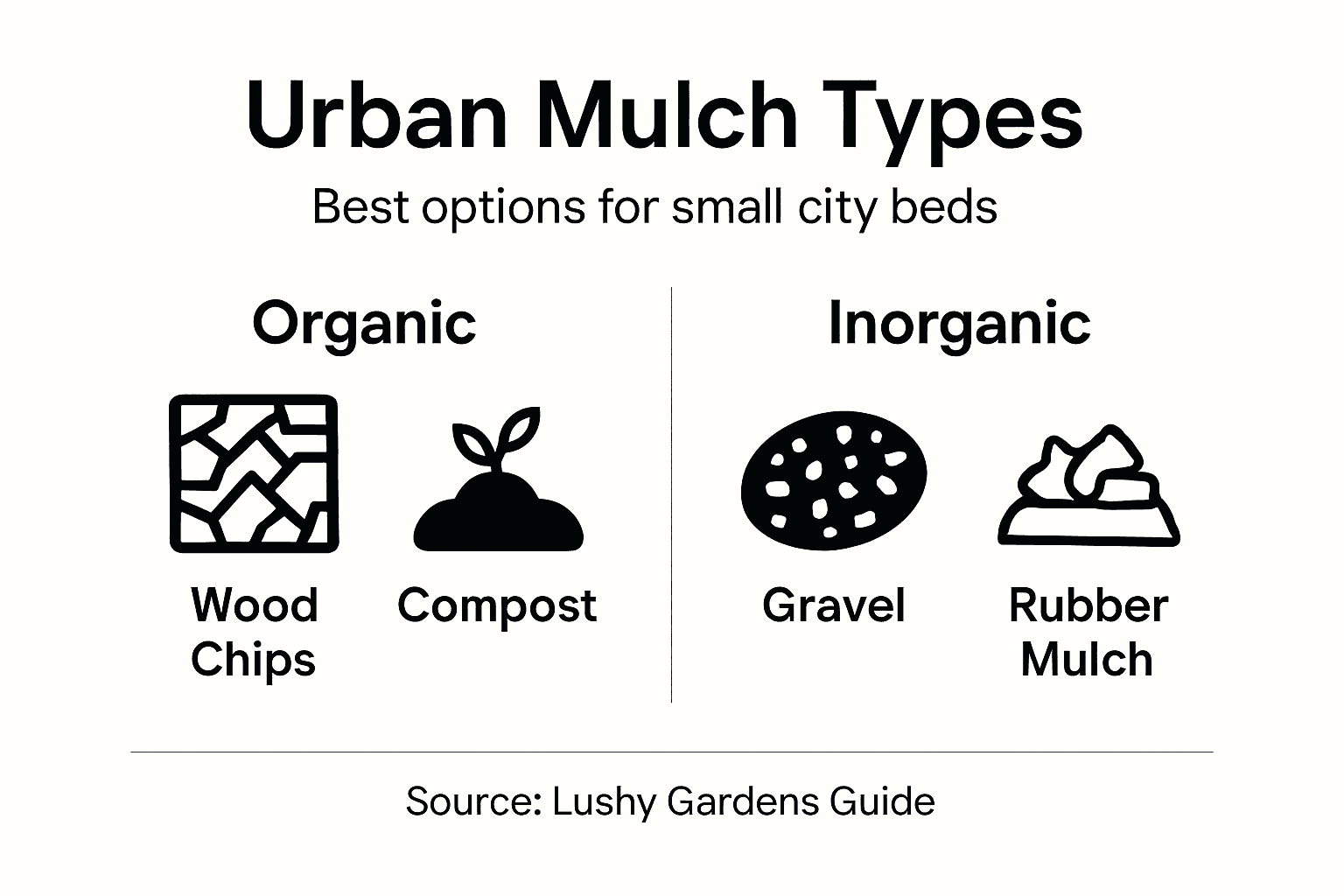
Organic versus inorganic matters for small spaces. Organic mulches enrich your soil as they decompose, which is especially valuable when you’re working with limited growing area. Every season you add mulch, you’re building soil fertility. Inorganic mulches last longer but contribute nothing to soil health. For vegetables and flowers in tight urban beds, organic usually wins.
Availability and cost factor in heavily. What you can easily source locally often costs less and requires less transportation. Many UK gardeners find composted leaves from autumn cleanup or grass clippings from their lawn to be perfect free options. If you’re buying bagged mulch, hardwood bark offers good value and longevity.
Timing matters too. Apply mulch in late spring once soil has warmed, or in early fall to prepare beds for winter. Leave small gaps around plant stems to prevent moisture buildup and rot. In very small beds, leaving a 6 inch diameter circle unmulched around each plant is wise.
Pro tip: Compost your own mulch before applying it to eliminate weed seeds and pathogens that could cause problems in your compact beds where plant spacing is tight.
Common Mulching Pitfalls and How to Avoid Them
Mulch is powerful, but it’s also easy to apply it wrong. A few common mistakes can actually harm your plants instead of helping them. Learning what to avoid makes all the difference between a thriving garden and one plagued with problems.
The biggest mistake is applying mulch too thick. Many well-meaning gardeners heap 4, 5, or even 6 inches of mulch around their beds thinking more protection equals better results. This backfires fast. Excessive depth traps moisture against plant stems, creating rot and disease. It also blocks oxygen from reaching roots and soil organisms that your plants need. The correct depth is 2 to 3 inches, measured from the soil surface. This provides all the benefits without the risk.
Another critical error is piling mulch directly against plant stems and tree trunks. Leave a 3 to 6 inch gap around each plant. Improper mulch application against trunks and stems causes bark damage, pest problems, and disease. Urban gardeners often crowd their beds, but even in tight spaces, create that small circle of bare soil around each plant. It’s genuinely important.
Weed fabric under mulch creates another problem many gardeners encounter. The fabric blocks oxygen and water movement while the mulch sits on top, trapping moisture. If you’re using fabric to suppress existing weeds, skip the mulch layer altogether. If you want mulch, skip the fabric. One or the other works. Both together causes more problems than it solves.
Using the wrong mulch type for your situation wastes effort. Fine materials compact and become waterproof. Dyed mulch may contain harmful chemicals. Mulch made from diseased wood introduces problems to healthy beds. Know what you’re applying and why.
Choosing the right depth and placement prevents 90 percent of mulching problems in urban gardens.
Below is a quick guide to common mulching mistakes and how to avoid them:
| Mistake | Risk to Plants | Recommended Solution |
|---|---|---|
| Mulch too thick | Rot, blocked oxygen | Use 2–3 inch depth only |
| Against plant stems | Rot, pest buildup | Leave 3–6 inch bare gap |
| Both mulch and fabric | Traps moisture, poor roots | Use either one, not both |
| Wrong mulch material | Compaction, toxins | Select safe, suitable type |
Pro tip: Mark a circle around each plant with a finger or stick before mulching to remind yourself where to stop, then check back monthly as mulch settles to maintain that critical bare gap around stems.

Enhance Your Urban Garden with Smart Mulching and Soil Care
Struggling to keep your urban garden thriving while managing soil moisture and weed growth? This article highlights the crucial role mulch plays in moisture retention, weed suppression, and overall soil health. If you want your small vegetable and flower beds to flourish with less effort and better results mulch is just the start. Pairing it with the right fertilizers can truly transform your soil’s fertility and plant growth.
Explore expert advice and find quality gardening solutions on Lushy Gardens. Discover practical tips on choosing organic mulches and complementing them with effective nutrients from our Fertilizers – Lushy Gardens section. Take control of your garden’s success today by visiting Lushy Gardens for expert guidance and inspiration to cultivate a vibrant urban garden with less hassle.
Frequently Asked Questions
What is the purpose of using mulch in urban gardens?
Mulch serves multiple purposes, including conserving soil moisture, suppressing weeds, regulating soil temperature, and improving soil structure and fertility as it breaks down over time.
What types of mulch are best for small urban garden beds?
Organic mulches, such as wood chips, shredded leaves, and straw, are usually best for small urban beds as they enrich the soil while providing necessary benefits like moisture retention and weed suppression.
How thick should I apply mulch in my garden?
A depth of 2 to 3 inches of mulch is recommended. This thickness allows for effective moisture retention and weed suppression while preventing issues like rot or restricted oxygen flow to the plant roots.
Can I use both organic and inorganic mulches together?
Yes, you can combine mulch types strategically. For example, use organic mulch around vegetables and flowers while adding a layer of cardboard underneath in areas prone to weeds for extra suppression without disturbing your established beds.
Recommended
- Complete Guide to the Benefits of Mulching – Lushy Gardens
- Understanding Mulching Vegetable Gardens for Healthier Growth – Lushy Gardens
- 10 Essential Urban Gardening Tips for Plant Lovers – Lushy Gardens
- Basic Garden Design Principles for Urban Homes – Lushy Gardens

I’m Eleanor, a seasoned gardener with over three decades of experience tending to Mother Nature’s creations. Through Lushy Gardens, I aim to share my wealth of knowledge and help fellow plant enthusiasts uncover the wonders of gardening. Let’s dive into this journey together, one leaf at a time.


