
Table of Contents
Caring for indoor plants sometimes feels more stressful than soothing, especially when your mind is racing. Many home gardeners are discovering that nature sounds offer powerful psychological and physiological relaxation, lowering stress and improving mood far beyond what silence or artificial noise can provide. Authentic audio from flowing streams, birdsong, and gentle rainfall activates deep comfort and focus, helping gardeners nurture both their plants and themselves with calm attention and renewed patience.
Key Takeaways
| Point | Details |
|---|---|
| Nature Sounds Improve Relaxation | Authentic nature sounds reduce stress hormones and enhance psychological well-being. |
| Quality of Sound Matters | Selecting high-quality recordings with minimal human interference maximizes relaxation benefits. |
| Personal Preferences Count | Tailoring sound selections to individual preferences enhances emotional responses and relaxation. |
| Mindful Gardening Benefits | Integrating nature sounds into gardening can transform the experience, fostering emotional balance and plant connection. |
Nature Sounds for Relaxation Defined
Nature sounds represent a sophisticated auditory experience that goes far beyond simple background noise. Systematic research reveals these environmental acoustic stimuli profoundly impact psychological recovery and cognitive performance, creating a multisensory pathway to relaxation and wellness.
At its core, nature sounds encompass authentic audio recordings from natural environments, including elements like:
- Gentle forest streams
- Soft rainfall
- Birdsong choruses
- Ocean wave rhythms
- Wind rustling through leaves
- Mountain creek sounds
These acoustic landscapes do more than simply entertain. Studies demonstrate they trigger measurable psychological responses, lowering stress hormones and creating feelings of comfort and naturalness. The nuanced soundscapes activate our parasympathetic nervous system, encouraging deeper relaxation and emotional restoration.
Compared to artificial or urban noise, natural sounds provide a restorative auditory experience that reconnects us with environmental rhythms. By mimicking wilderness environments, these sounds help reset our internal stress responses, promoting mental clarity and emotional balance.
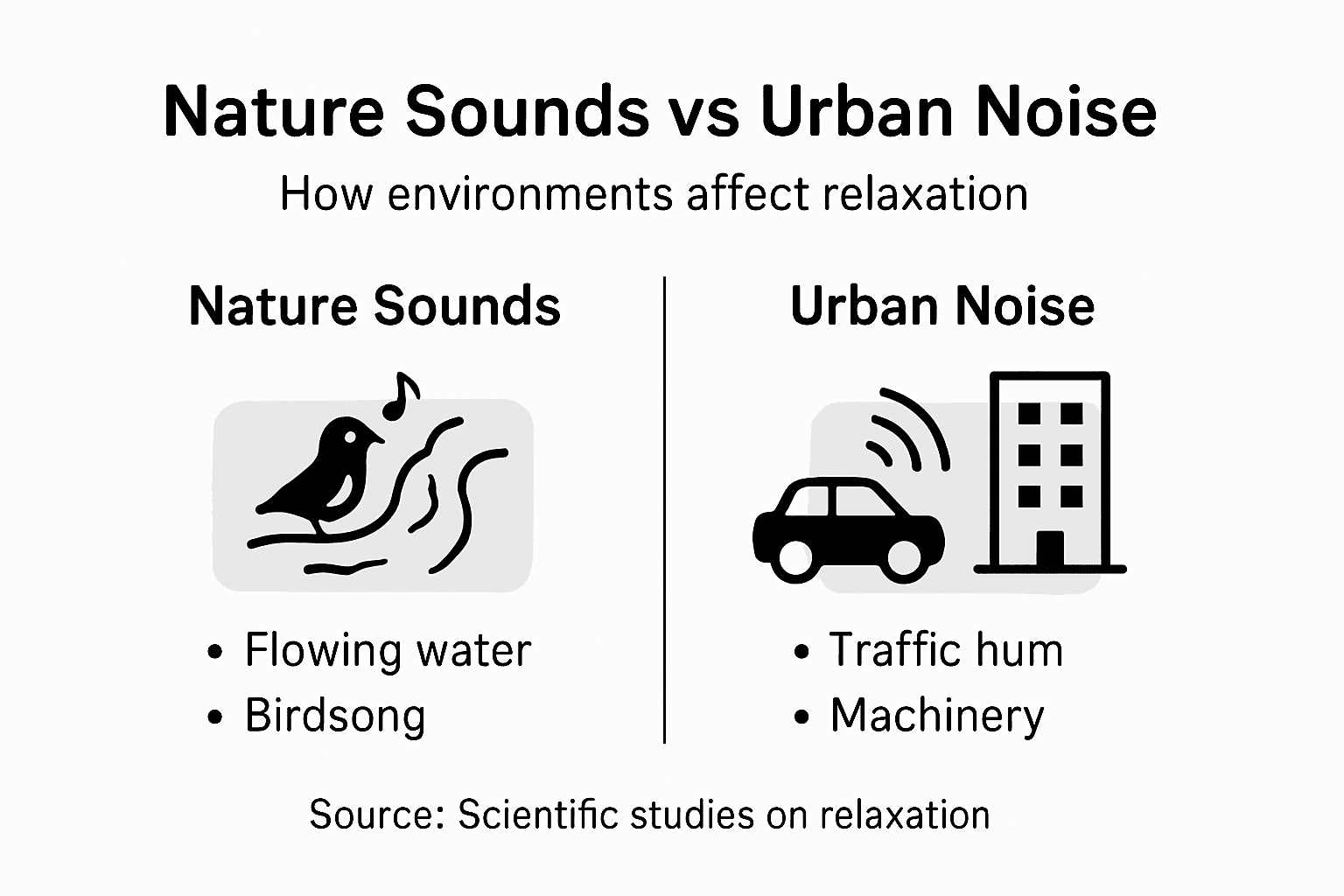
Here’s a summary comparing natural versus artificial sound environments for relaxation:
| Attribute | Natural Sound Environments | Artificial/Urban Sound Environments |
|---|---|---|
| Psychological Effects | Promotes calm and clarity | Often increases stress and distraction |
| Physiological Impact | Lowers cortisol, relaxes body | May elevate blood pressure, tension |
| Connection to Nature | Enhances sense of environmental harmony | Limited or no connection to nature |
| Long-Term Benefits | Supports emotional well-being | Minimal restorative effect |
Pro tip: Select nature sound recordings with minimal human interference for the most authentic relaxation experience.
Popular Nature Sounds and Their Effects
Nature sounds represent a sophisticated therapeutic approach to stress reduction, with certain acoustic environments offering remarkable psychological benefits. Comprehensive research highlights specific sound categories that significantly impact human physiological and emotional responses.
The most impactful nature sounds include:
- Birdsong: Characterized by high-frequency melodies that improve mood
- Flowing water: Rivers and streams promoting deep relaxation
- Rainfall: Soft percussion sounds reducing anxiety
- Wind through leaves: Gentle rustling creating a sense of calm
- Ocean waves: Rhythmic sounds regulating breathing patterns
Studies demonstrate that melodic bird songs with complex frequencies are particularly effective in reducing stress and enhancing mental well-being. The intricate acoustic patterns trigger positive neurological responses, helping listeners feel more connected to natural environments.
Interestingly, individual appreciation for nature plays a crucial role in how deeply these sounds impact emotional states. People with greater environmental awareness tend to experience more profound relaxation and psychological restoration when exposed to authentic natural soundscapes.
Pro tip: Use high-quality field recordings with minimal background noise for the most authentic nature sound experience.
How Nature Sounds Reduce Stress
Scientific research reveals the profound mechanisms by which natural sounds actively counteract physiological stress responses. The human body responds to these acoustic environments by triggering a complex neurological relaxation process that helps reset our internal stress management systems.
Key stress reduction mechanisms include:
- Lowering cortisol levels: Natural sounds decrease stress hormone production
- Regulating heart rate: Rhythmic environmental sounds stabilize cardiovascular responses
- Activating parasympathetic nervous system: Creating a calm physiological state
- Reducing blood pressure: Promoting cardiovascular relaxation
- Interrupting negative thought patterns: Redirecting mental focus
Psychological studies demonstrate that specific sound frequencies found in natural environments have remarkable therapeutic properties. The intricate acoustic patterns of birdsong and flowing water engage our neurological systems in ways that systematically reduce anxiety and promote emotional equilibrium.

The Biophilia Hypothesis suggests humans possess an innate connection to natural environments, explaining why these sounds resonate so deeply. By mimicking evolutionary soundscapes, nature sounds help our bodies return to a state of balanced calm, essentially reprogramming our stress response at a fundamental neurological level.
Pro tip: Create a personalized nature sound playlist featuring recordings with minimal human interference for maximum stress reduction.
Using Nature Sounds to Enhance Gardening
Mindful gardening practices suggest that integrating nature sounds into your plant care routine can transform the entire gardening experience. By creating a harmonious acoustic environment, gardeners can cultivate deeper connections with their plants and reduce stress during cultivation.
Strategies for incorporating nature sounds into gardening include:
- Background audio: Playing soft nature sound recordings while tending plants
- Outdoor listening: Gardening during natural sound-rich times of day
- Meditative moments: Using sounds to create focused, calm gardening sessions
- Plant response tracking: Observing potential plant reactions to different sound environments
- Stress reduction: Using sounds to maintain emotional balance during plant care
The symbiotic relationship between sound and plant care extends beyond simple relaxation. Acoustic environments can potentially influence plant growth, creating a more intuitive and empathetic gardening approach. Just as humans respond to sound, plants may also have subtle responses to acoustic stimuli.
The key is intentional and mindful integration of nature sounds, transforming gardening from a mere task into a holistic, sensory experience that nurtures both plants and gardeners.
Pro tip: Experiment with different nature sound recordings to discover which acoustic environments most positively impact your gardening mood and plant interactions.
Common Mistakes When Using Nature Audio
Audio quality significantly impacts the effectiveness of nature sound relaxation techniques. Many individuals unknowingly undermine their stress reduction efforts by selecting inappropriate or poorly designed sound recordings that can actually increase anxiety instead of promoting relaxation.
Common mistakes when using nature audio include:
- Repetitive sound loops: Using short, monotonous recordings that become irritating
- Incorrect volume levels: Playing sounds too loudly or too softly
- Inappropriate sound selection: Choosing sounds that trigger negative emotional responses
- Ignoring personal preferences: Forcing sounds that don’t resonate with individual comfort
- Lack of variety: Relying on a single sound type without exploring different acoustic environments
Research on sound interventions demonstrates that personalized approach is crucial. What works for one person may create stress for another, highlighting the importance of carefully curated and individually tailored nature sound experiences.
Effective nature audio requires nuanced understanding of personal acoustic preferences, environmental context, and intentional sound selection. The goal is creating a harmonious auditory environment that genuinely supports relaxation and emotional well-being.
Use this table for quick reference to optimize your nature audio experience:
| Mistake | Negative Effect | Improvement Strategy |
|---|---|---|
| Repetitive audio loops | Causes irritation, disrupts focus | Choose longer, varied recordings |
| Wrong volume setting | Induces agitation or inaudibility | Set moderate, clear volume |
| Poor sound selection | Can induce anxiety or discomfort | Tailor choices to personal mood |
| Ignoring acoustic preferences | Lowers relaxation impact | Test and adapt to what feels best |
Pro tip: Create a diverse nature sound playlist and test different recordings to identify which sounds most effectively reduce your stress.
Enhance Your Gardening Experience with the Power of Nature Sounds
Struggling to find calm and connection in your plant care routine The article highlights how nature sounds can lower stress and deepen your emotional bond with plants by activating relaxation mechanisms like lowering cortisol and engaging the parasympathetic nervous system. If you want to transform gardening from a task into a soothing, mindful experience these insights are essential.
Explore expert tips and practical advice on integrating natural soundscapes into your gardening practice at Gardening & Health – Lushy Gardens. Discover how to create the perfect acoustic environment to enhance both your well-being and plant care. Start cultivating a more peaceful and fulfilling gardening journey today by visiting Lushy Gardens. Don’t wait to experience the calming benefits that nature sounds can bring to your garden and your life.
Frequently Asked Questions
How do nature sounds enhance relaxation during gardening?
Nature sounds create a calming auditory environment that helps reduce stress and enhances focus, allowing gardeners to connect more deeply with their plants and foster a more mindful gardening practice.
What types of nature sounds are most beneficial for plant care?
Popular nature sounds that promote relaxation include flowing water, birdsong, soft rainfall, and gentle wind rustling through leaves. These sounds can create an inviting atmosphere for gardening.
Can playing nature sounds influence plant growth?
While more research is needed, some studies suggest that plants may have subtle responses to sound environments, potentially enhancing their growth by creating a more intuitive and empathetic gardening approach.
What mistakes should I avoid when using nature sounds in gardening?
Common mistakes include using repetitive audio loops, incorrect volume levels, and ignoring personal acoustic preferences. It’s essential to choose varied, high-quality recordings that resonate with your personal tastes to maximize the benefits.
Recommended
- Mindful Plant Care: Fostering Growth and Well-Being – Lushy Gardens
- Forest Bathing Benefits: Everything You Need to Know – Lushy Gardens
- Mindful Gardening Practices for Everyday Wellness – Lushy Gardens
- 7 Low Maintenance Houseplants for Everyone – Lushy Gardens

I’m Eleanor, a seasoned gardener with over three decades of experience tending to Mother Nature’s creations. Through Lushy Gardens, I aim to share my wealth of knowledge and help fellow plant enthusiasts uncover the wonders of gardening. Let’s dive into this journey together, one leaf at a time.


