
Table of Contents
TL;DR:
- Not all “safe” plants are non-toxic; understanding the difference is crucial.
- Eight recommended child-friendly plants include spider plant, Boston fern, and calathea.
- Safety tips include teaching children respect for plants and elevating plants out of reach.
Bringing plants into your home is one of the best things you can do for your family’s space and wellbeing. But if you have young children, especially curious toddlers who touch and taste everything, figuring out which plants are truly safe feels overwhelming. A quick internet search returns conflicting lists, vague warnings, and advice written mostly for pet owners rather than parents. This guide cuts through the noise by using trusted sources like the ASPCA and pediatric safety organizations to give you a clear, actionable plan for choosing child-friendly houseplants you can actually feel good about.
Table of Contents
- How to choose child friendly houseplants
- 8 best child friendly houseplants every family can enjoy
- Comparing child safe houseplants: features at a glance
- Key tips for keeping both children and plants safe
- A fresh perspective: Why most child-safe plant lists aren’t enough
- Ready to grow a safer, greener home?
- Frequently asked questions
Key Takeaways
| Point | Details |
|---|---|
| Check multiple safety lists | Cross-reference ASPCA and pediatric sources for the safest plant choices. |
| Supervise and educate | Teach kids not to eat any plant, even non-toxic ones, and keep them out of reach. |
| Choose practical varieties | Select easy-care, non-toxic houseplants like spider plant or Calathea for a low-risk, beautiful home. |
| Monitor for reactions | Watch for any signs of irritation or upset after contact or ingestion, and call Poison Control if needed. |
How to choose child friendly houseplants
Not all “safe” labels mean the same thing. The first thing parents need to understand is the difference between non-toxic and simply low-toxicity. Non-toxic means a plant lacks the chemical compounds that cause systemic poisoning. Low-toxicity means a plant might cause minor irritation but won’t land a child in the hospital. These are very different situations, and most online lists blur the line between them.
The ASPCA is one of the most reliable resources parents can use. ASPCA non-toxic plants are listed for pets, but this generally applies to children too, since the criteria focus on plants that lack systemic toxins. Pediatric sources add an extra layer by flagging plants with irritants like calcium oxalate crystals, which can cause mouth swelling or skin rashes even when a plant isn’t traditionally classified as “poisonous.” The Children’s Hospital of Philadelphia advises parents to identify and avoid plants with these irritants when young kids are in the home.
For parents doing their own research, here are the top criteria to use when evaluating any houseplant:
- Non-toxicity: Confirmed on ASPCA or pediatric lists
- No calcium oxalate crystals: Avoids mouth and skin irritation
- Low allergen potential: Minimal pollen or sap exposure
- Ease of care: A thriving plant is easier to manage than a struggling, droopy one that kids want to investigate
- Realistic placement: Can it live safely out of a toddler’s reach?
It also helps to explore a kids-friendly indoor plant guide to see which plants check all these boxes before you buy. And if better air quality is also a priority, pairing safety with indoor air quality with houseplants research gives you even more reasons to pick the right species.
Pro Tip: Even verified non-toxic plants are not snacks. Teach children from the start that plants are for looking, not tasting, and place any plant at an elevation above toddler reach as an extra layer of protection.
“The safest approach combines choosing non-toxic species with teaching children plant respect and keeping all plants physically out of easy reach.” — Pediatric plant safety consensus
8 best child friendly houseplants every family can enjoy
With your criteria in hand, here are eight houseplants that stand up to the toughest safety standards while still looking beautiful in your home.
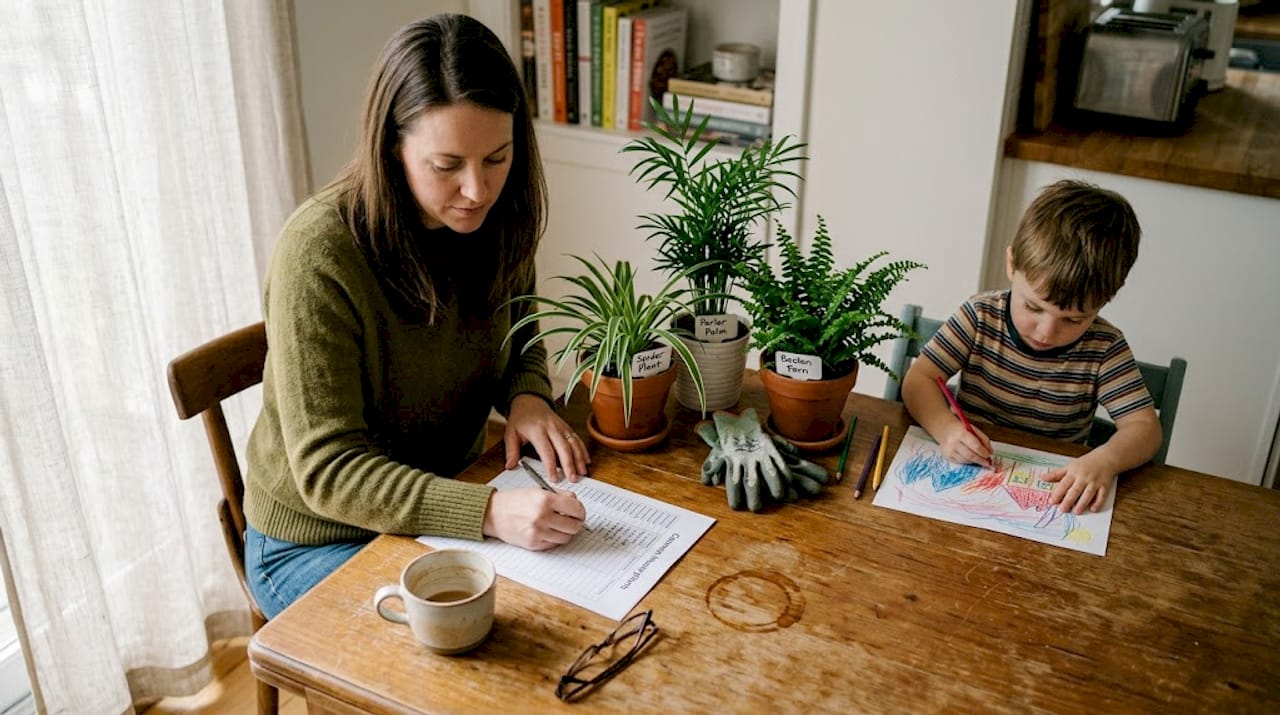
- Spider plant (Chlorophytum comosum): Practically impossible to kill and confirmed non-toxic. Its arching green-and-white leaves and dangling baby plantlets make it endlessly interesting to kids. Place in bright, indirect light and water weekly.
- Boston fern (Nephrolepis exaltata): Lush, feathery fronds that thrive in humid bathrooms or kitchens. Non-toxic and a solid choice for improving indoor air. Needs consistent moisture and indirect light.
- Calathea (various species): Calathea species like Rattlesnake and Prayer Plant are non-toxic, visually striking, and thrive in medium indirect light with higher humidity. Their moving leaves, which fold up at night, are a genuine source of wonder for kids.
- African violet (Saintpaulia): Compact, colorful, and non-toxic. Perfect for windowsills. Water from the bottom to keep leaves dry, and kids love the velvety texture.
- Peperomia (various species): Dozens of varieties, nearly all confirmed non-toxic. Thick leaves store water, making them forgiving when care is inconsistent. Great for beginner parents.
- Baby’s tears (Soleirolia soleirolii): A soft, moss-like groundcover plant that’s safe and surprisingly tactile. Perfect for low terrariums kids can observe up close.
- Parlor palm (Chamaedorea elegans): One of the most elegant options on this list. Non-toxic, tolerates low light beautifully, and adds real visual impact to a living room or bedroom.
- Polka dot plant (Hypoestes phyllostachya): Splashed with pink, red, or white spots, this plant is visually fun for children. Non-toxic and thrives in bright, indirect light with regular watering.
An impressive number of common houseplants earn non-toxic status when you know where to look. Pairing this list with a guide to safe indoor plants for kids helps you expand your collection confidently over time. You can also cross-reference with pet safe indoor plants if you have both kids and animals at home.
Pro Tip: Calathea plants do best with distilled or filtered water. Tap water can cause brown leaf edges, which doesn’t affect safety but does affect how beautiful the plant looks in your space.
Comparing child safe houseplants: features at a glance
Now that you know the best options, compare them directly based on your home’s needs.
| Plant | Light need | Care level | Key safety note | Best placement |
|---|---|---|---|---|
| Spider plant | Bright, indirect | Easy | Non-toxic, no irritants | Hanging basket |
| Boston fern | Indirect, humid | Moderate | Non-toxic | Bathroom shelf |
| Calathea | Medium, indirect | Moderate | Non-toxic, ASPCA verified | Bedroom, living room |
| African violet | Bright, indirect | Easy | Non-toxic | Windowsill |
| Peperomia | Low to bright | Very easy | Non-toxic, many varieties | Desk, bookshelf |
| Baby’s tears | Indirect | Easy | Non-toxic | Terrarium, low shelf |
| Parlor palm | Low to indirect | Easy | Non-toxic | Floor or corner |
| Polka dot plant | Bright, indirect | Easy | Non-toxic | Table display |
A few standouts based on specific family needs:
- Best for beginners: Peperomia and spider plant require the least fuss and bounce back from missed waterings.
- Most decorative: Calathea and polka dot plant bring serious visual interest without any safety trade-offs.
- Best for air quality: Boston fern and parlor palm are both non-toxic and recognized for filtering indoor air.
- Best for small spaces: African violet and baby’s tears stay compact and manageable.
One critical note from the New York Botanical Garden: even non-toxic plants can cause mild stomach upset if a child eats a large quantity of leaves or soil. This is why elevation matters for every plant on this list, not just the toxic ones. Check out beginner-friendly houseplants if you want to build your collection with the easiest-to-manage options first.
Key tips for keeping both children and plants safe
To make the most of your child-friendly houseplants, incorporate these practical habits from day one.
- Teach the “look, don’t eat” rule early. Even two-year-olds absorb simple, repeated rules. Make it a household norm that plants are not food.
- Wash hands after plant time. Soil carries bacteria and minor irritants. A quick handwash after touching plants or soil is a good habit for the whole family.
- Elevate all plants for toddlers. Use high shelves, hanging baskets, or wall-mounted planters. Even non-toxic plants are safer when they’re not within arm’s reach of a curious toddler.
- Audit your home for hidden risks. Check every room. Many families have a toxic plant like pothos or peace lily that was gifted years ago and forgotten. Refer to a list of houseplants to avoid to identify any that need to go.
- Know who to call. If ingestion happens, call Poison Control at 1-800-222-1222 immediately, even if the plant is considered safe. Watch for drooling, swelling, vomiting, or unusual behavior.
- Label your plants. Write the plant’s full name on a tag. If you ever need to call Poison Control, knowing the exact species saves critical time.
The NYBG guidance is clear: place plants out of reach and actively teach children not to eat any plant, regardless of its toxicity rating.
“No plant, however safe its classification, should be treated as a harmless snack. Teach children that plants are living things we care for, not food we eat.”
For broader plant care habits that make your space safer and healthier overall, beginner houseplant tips offer excellent foundational guidance.
A fresh perspective: Why most child-safe plant lists aren’t enough
Most articles on this topic hand you a list and call it done. After years of working with indoor plants and talking to parents, we’ve noticed what those lists consistently miss: contact irritants and the reality of how kids actually behave around plants.
A plant can be completely non-toxic if swallowed but still cause a skin rash from sap contact. Some children have grass or pollen sensitivities that extend to certain houseplants. Kids who are climbers or tactile explorers interact with plants very differently than kids who are mainly observers. A non-toxic plant sitting on a low shelf is still a problem if your child is the type to drag it onto the floor.
The most useful framework we’ve found is thinking in three layers: what a plant does if eaten, what it does on skin contact, and what your specific child is likely to do with it. That third layer is something only you as a parent can assess.
Involving kids in plant care is actually one of the smartest safety moves. Children who water and tend plants learn to treat them with respect rather than curiosity-driven destruction. Exploring wellbeing with indoor plants can also show you how this habit benefits children emotionally, not just physically.
Pro Tip: Rotate plant locations every few months. It refreshes the visual appeal of your space and gives you a natural opportunity to reassess whether each plant’s current placement is still appropriate as your child grows and reaches new heights.
Ready to grow a safer, greener home?
Building a child-friendly indoor garden doesn’t have to feel complicated or risky. With the right plant choices and a few smart habits, you can fill your home with greenery that’s beautiful, healthy, and genuinely safe for your whole family. Lushy Gardens has everything you need to keep learning and growing with confidence. Start with our complete indoor house plants guide for more ideas on combining safety with air quality benefits. Then dig into our gardening basics guide to set up good care routines from day one. Ready to multiply your favorites? Our propagating houseplants guide shows you how to grow more plants from the ones you already love.
Frequently asked questions
Are all non-toxic houseplants completely safe for kids?
No. Even non-toxic plants can cause mild stomach upset if a child chews or eats a large amount, so supervision and smart placement still matter.
What should I do if my child eats a houseplant?
Call Poison Control at 1-800-222-1222 right away and monitor for symptoms. Even if the plant is non-toxic, it’s important to identify the plant and report the exact species.
Which child-friendly plants are also good for air quality?
Spider plant, Boston fern, and parlor palm are all ASPCA non-toxic verified and commonly recognized for their indoor air-filtering qualities.
Are pet-safe plants always kid-safe?
Most are, but not automatically. Cross-reference ASPCA lists with pediatric sources, since some plants may be pet-safe but still cause skin or mouth irritation in young children.
Recommended
- Best kids-friendly indoor plants for a safe, happy home – Lushy Gardens
- Pet Safe Houseplants for a Healthier Indoor Garden – Lushy Gardens
- 7 Essential Pet Safe Indoor Plants for Every Home Gardener – Lushy Gardens
- Indoor House Plants: Enhance Air Quality Safely – Lushy Gardens
- Как да създадете безопасна градина за домашен любимец

I’m Eleanor, a seasoned gardener with over three decades of experience tending to Mother Nature’s creations. Through Lushy Gardens, I aim to share my wealth of knowledge and help fellow plant enthusiasts uncover the wonders of gardening. Let’s dive into this journey together, one leaf at a time.


