
Table of Contents
TL;DR:
- Light spectrum and duration are crucial for healthy indoor plant growth and flowering.
- Full-spectrum LED grow lights offer the best balance of plant-friendly wavelengths and energy efficiency.
- Proper setup, including correct distance, timing, and matching to plant needs, optimizes growth results.
How to choose indoor plant lights for healthy growth
You water consistently, pick the sunniest windowsill you can find, and still watch your houseplants stretch toward the ceiling or drop leaves without explanation. The problem almost always comes down to light, and not just how much of it your plants get, but what kind. Most indoor plant owners don’t realize that the warm glow of a living room lamp does almost nothing useful for a pothos or a peperomia. This guide cuts through the noise and gives you a clear, practical framework for choosing the right indoor plant lights, setting them up correctly, and matching them to what your plants actually need to thrive.
Table of Contents
- Why light matters for indoor plants
- Types of indoor plant lights and their pros and cons
- Matching light to your plants’ needs
- Setting up and optimizing your indoor plant lights
- Why most plant lighting advice gets it wrong
- Take your indoor plants to the next level
- Frequently asked questions
Key Takeaways
| Point | Details |
|---|---|
| Light spectrum matters | Full-spectrum white LEDs support all plant stages better than basic bulbs or colored lights. |
| Match light to plant | Assess each plant’s needs and supplement with the appropriate light intensity and exposure. |
| Optimize installation | Correct setup, distance, and timing of lights ensure healthy, non-leggy indoor growth. |
| Experiment carefully | Monitor your plants and tweak lighting, as each home and each species may need slightly different setups. |
Why light matters for indoor plants
Light is food for plants. That’s not an oversimplification. Through photosynthesis, plants convert light energy into the sugars they use to grow, flower, and stay healthy. But here’s what most people miss: not all light is created equal. Plants respond to specific wavelengths of light, not just brightness. Blue wavelengths (roughly 400 to 500 nanometers) drive leafy, compact vegetative growth. Red wavelengths (roughly 600 to 700 nanometers) trigger flowering and fruiting. Without the right mix, plants can’t complete their natural growth cycles, no matter how often you fertilize them.
Room lighting, whether incandescent or standard LED, is designed for human vision, not plant biology. It skips large portions of the spectrum that plants depend on. Plants need the right spectrum (blue for growth, red for flowering), and most house lights simply don’t provide it. This is why you’ll see a plant “survive” in a dim corner but never actually grow, put out new leaves, or look vibrant.
Different plant types also have wildly different light needs. Succulents and cacti want intense, direct light for 12 or more hours a day. Low-light favorites like snake plants and ZZ plants can tolerate minimal light but still benefit from a quality supplemental source. Tropical foliage plants like monstera and philodendron sit in the middle, needing bright, indirect light consistently to push out new growth. Understanding these differences is the foundation of good indoor plant care, and plant light requirements vary much more than most beginner guides suggest.
Here’s what happens when your light doesn’t match your plant’s needs:
- Etiolation: Plants stretch toward the light source, producing long, weak stems and wide gaps between leaves
- Pale or yellowing leaves: Especially in the lower canopy, where light penetration is weakest
- No flowering: Flowering plants like African violets need red-spectrum light to bloom and simply won’t perform under standard bulbs
- Root rot risk: Weak, light-starved plants are more vulnerable to overwatering issues because they can’t process water efficiently
- Stunted growth: New leaves emerge small, thin, and fragile instead of full and healthy
“Providing proper light is the single most important factor in growing healthy houseplants indoors.” This aligns with University of Georgia guidance on indoor plant success, which emphasizes light as the primary limiting factor in any indoor growing setup.
Understanding whether LED lights can grow plants effectively starts with accepting that not all LEDs are equal. Now that you know how crucial the right light is, let’s uncover what separates an effective indoor plant light from a regular home bulb.
Types of indoor plant lights and their pros and cons
With a grasp of how light affects your plants, it’s time to compare your main options so you can select what’s best for your space. The grow light market has expanded dramatically in recent years, and the choices can feel overwhelming. You’ll mostly be choosing between three main categories: LEDs, fluorescents, and incandescents.
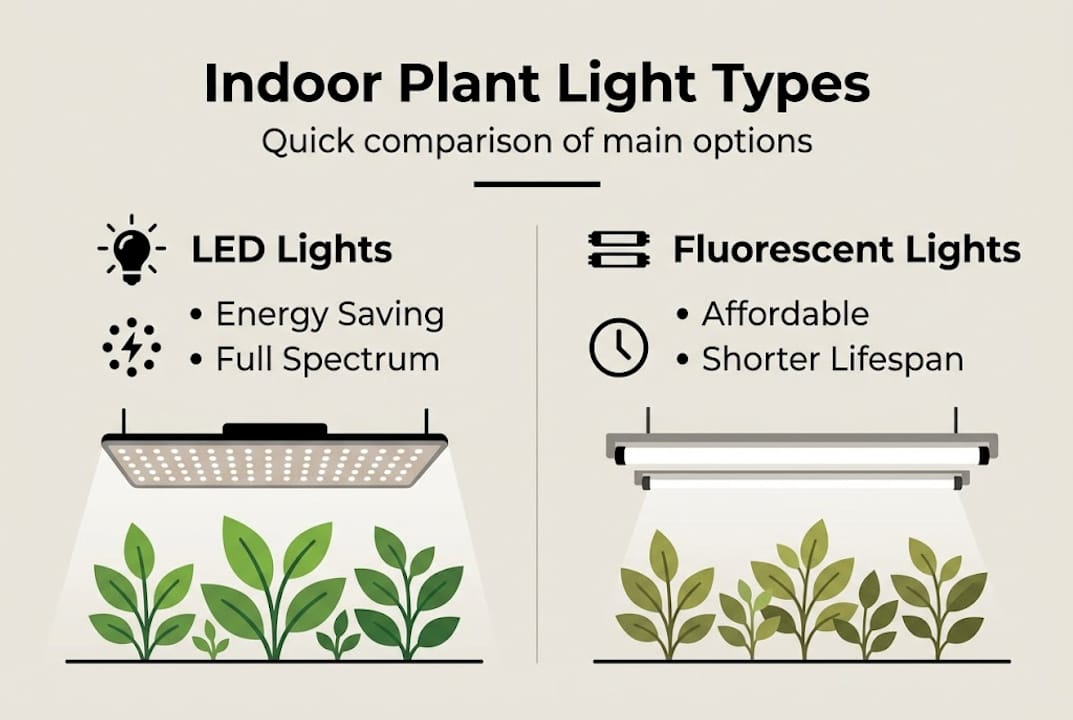
Full-spectrum LED grow lights are currently the gold standard for most indoor plant owners. Full-spectrum white LEDs (3000 to 5000K) are preferred for balanced plant growth, appearance, and a process called photomorphogenesis (how light shapes plant structure). They run cool, last up to 50,000 hours, and provide an even spread of wavelengths that plants actually use.
Fluorescent lights, especially T5 high-output tubes, were the go-to option for decades. They work reasonably well for seedlings and low-to-medium light plants, emit less heat than older alternatives, and are often more affordable upfront. Their downside is a shorter lifespan than LEDs and less intensity for high-light plants.
Incandescent bulbs are essentially useless for plant growing. They produce mostly red and infrared light, generate a lot of heat, and waste the majority of their energy. Placing them near plants risks leaf burn rather than healthy growth.
| Light type | Spectrum quality | Energy efficiency | Lifespan | Upfront cost |
|---|---|---|---|---|
| Full-spectrum LED | Excellent | Very high | 25,000-50,000 hrs | Medium to high |
| Fluorescent (T5) | Good | Moderate | 10,000-20,000 hrs | Low to medium |
| Incandescent | Poor | Very low | 1,000-2,000 hrs | Very low |
| Blurple LED (red/blue) | Narrow | High | 25,000-50,000 hrs | Low to medium |
Here’s a simple process to evaluate which light type fits your situation:
- Identify your plants’ light category: High-light (succulents, herbs, vegetables), medium-light (pothos, philodendron), or low-light (snake plant, ZZ plant)
- Assess your room’s natural light: How many hours of direct or indirect sun does the space already get?
- Decide on your budget: Full-spectrum LEDs cost more upfront but save money on electricity and replacements over time
- Consider aesthetics: Blurple lights turn your living room pink or purple, which many people find unappealing for shared spaces
- Match the fixture to the space: Panel lights work well for shelves, bar lights for single plants, and clip-on lights for flexibility
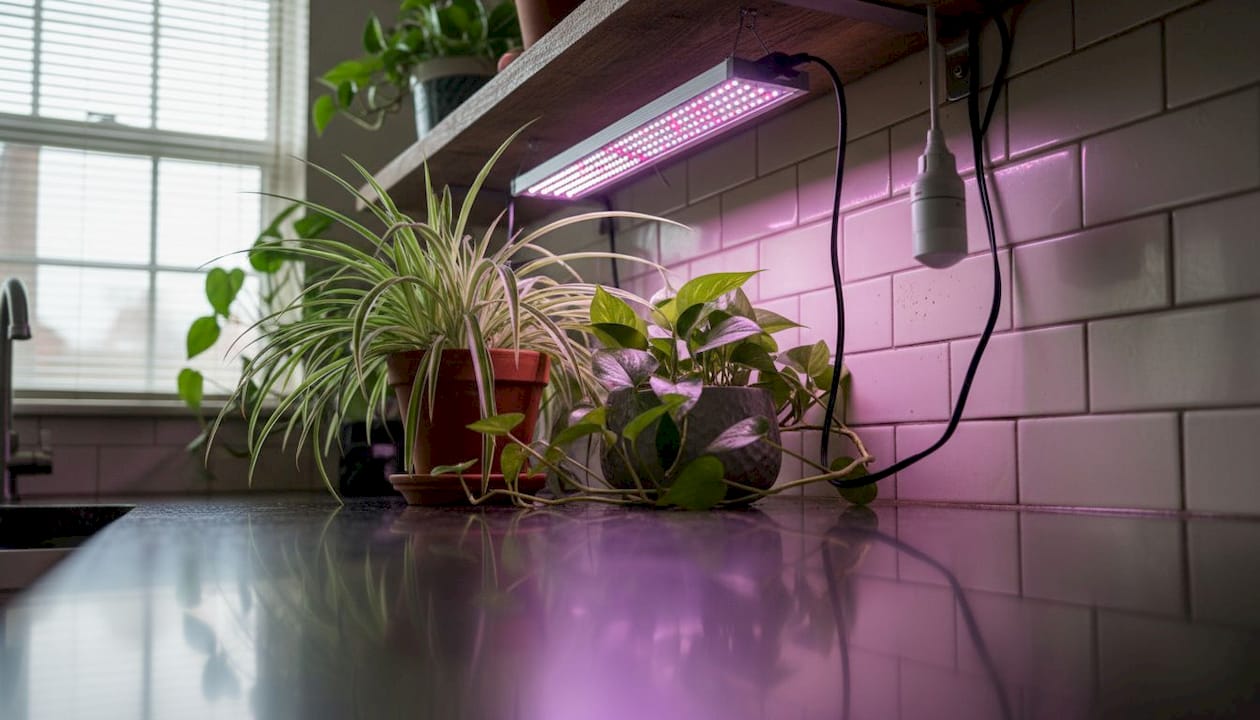
Pro Tip: Those pink and purple “blurple” lights you see advertised cheaply online are designed for commercial growing in closed tents, not for living rooms. Full-spectrum white LEDs look natural in your home, support the same range of plant processes, and won’t make your décor look like a grow operation. For everyday plant owners, they’re almost always the better choice. You can explore the best indoor plant lights in different categories to find options that fit your setup and budget.
Matching light to your plants’ needs
Choosing the right lamp is only half the battle. Next, let’s match your lighting strategy to your exact plant setup for the best results. Even the best grow light won’t help if it’s the wrong intensity for your plant or positioned incorrectly in your space.
Several factors shape your ideal lighting plan. Plant species is the biggest variable. Window direction matters enormously: south-facing windows provide the most light year-round, while north-facing ones offer very little. Season shifts everything because winter days are shorter and sun angles are lower, reducing the light your plants receive even from bright windows. Room layout, including furniture, walls, and ceiling height, affects how light disperses once it enters.
Supplementing rather than replacing natural light is the approach experts recommend, adjusting your setup based on plant species and room-specific factors rather than applying a one-size-fits-all solution.
Here’s a quick reference for common indoor plants:
| Plant | Light need | Recommended supplemental light |
|---|---|---|
| Succulent or cactus | High (6+ hrs direct) | Full-spectrum LED, 12-16 hrs |
| Pothos or heartleaf philodendron | Medium (indirect) | Fluorescent or LED, 10-12 hrs |
| African violet | Medium-high | Full-spectrum LED, 12-14 hrs |
| Snake plant or ZZ plant | Low to medium | Any grow light, 8-10 hrs |
| Monstera deliciosa | Medium-high (bright indirect) | Full-spectrum LED, 10-14 hrs |
| Herbs (basil, mint, parsley) | High | Full-spectrum LED, 14-16 hrs |
Signs your plant needs more light:
- Leggy, stretched growth between nodes
- Leaves turning pale green or yellow from the base upward
- Slow growth even during the active season (spring and summer)
- Loss of variegation in plants like pothos or caladium
Signs your plant is getting too much light:
- Crispy, brown leaf edges or tips
- Bleached or washed-out leaf color
- Soil drying out unusually fast
- Leaves curling inward as a stress response
Pro Tip: For seasonal plants or those that bloom only at certain times of year, adjust your timer settings every 4 to 6 weeks rather than leaving them fixed. In winter, add 2 to 4 extra hours of supplemental light to compensate for shorter days. In summer, many plants near bright windows need less supplemental light or none at all. Your indoor plant care guide can help you build a seasonal rhythm that keeps plants thriving all year, and pairing that with indoor plant care tips makes the process much more manageable.
Setting up and optimizing your indoor plant lights
Armed with the right light and a tailored plan, setting up your system correctly makes all the difference in plant growth. A quality grow light used incorrectly will still produce disappointing results. Here’s how to get the setup right from the start.
Step-by-step installation guide:
- Choose your mounting method: Panel lights often hang from hooks or adjustable ropes; clip-on and shelf lights attach directly to furniture or plant stands
- Set the initial height: For most full-spectrum LEDs, start at 12 to 18 inches above the plant canopy and adjust based on response
- Plug in a timer: Set it before you switch the light on. Most plants do best with 12 to 16 hours on and 8 to 12 hours of darkness. Darkness matters too because plants use the dark period for essential metabolic processes
- Check coverage area: Make sure the light reaches all plants in the group, not just the ones directly underneath
- Monitor for one week: Look for signs of improvement (new growth, perkier leaves) or stress (curling, bleaching) before making adjustments
Proper setup of distance, timing, and coverage maximizes the benefits of supplemental plant lighting and is just as important as which light you choose.
Distance guidelines by plant type:
- Seedlings and delicate plants: 18 to 24 inches from the light source
- Medium-light foliage plants: 12 to 18 inches
- High-light plants and herbs: 6 to 12 inches
- Succulents and cacti: 6 to 10 inches for high-output LEDs
Troubleshooting common setup issues:
- Leaf burn or brown patches: Light is too close; raise it by 4 to 6 inches
- Stretching toward the light: Light is too far away or intensity is too low; lower it or upgrade to a higher-output fixture
- Pale, washed-out color: Could be too much light or wrong spectrum; switch to a warmer Kelvin rating
- No visible growth after 4 weeks: Check timer settings, confirm the light is actually in the correct spectrum range, and rule out other issues like watering or root problems
For long-term safety, avoid leaving lights on surfaces that trap heat, use surge protectors with your grow light setup, and inspect cords periodically for wear. You’ll find more practical guidance in our indoor gardening tips for building a reliable, low-maintenance indoor growing space.
Why most plant lighting advice gets it wrong
Here’s something most lighting guides won’t tell you: buying an expensive, high-wattage grow light and blasting your plants with it is one of the fastest ways to kill them. The “more light is always better” mindset is genuinely harmful and surprisingly common. We’ve seen it repeatedly: someone invests in a powerful LED panel, hangs it 6 inches above a pothos, runs it 18 hours a day, and wonders why the leaves bleach and curl within two weeks.
What actually works is matching the spectrum and intensity to the plant’s biology, not to a manufacturer’s wattage claim. A modest full-spectrum LED at the right distance and duration will outperform a commercial-grade light used carelessly every single time. The subtle benefits of gardening extend beyond plant health into your own wellbeing, and that positive relationship starts with understanding rather than overcorrecting.
Thoughtful experimentation beats blind product-following. Try adjusting your timer by two hours, raising or lowering your light by a few inches, and observing your plant’s response over two weeks before making another change. That patient, observational approach, paired with solid knowledge of what your specific plant actually needs, is what separates plant owners who struggle from those who successfully grow an indoor garden that genuinely thrives year-round.
Take your indoor plants to the next level
Now that you have a solid foundation in indoor plant lighting, the real growth happens when you connect all the pieces of plant care together. Understanding light is step one, but your plants also need the right watering schedule, humidity levels, and feeding routines to truly flourish. At Lushy Gardens, we’ve put together in-depth resources to help you at every stage.
Explore our full indoor plant care guide for a complete breakdown of what your houseplants need to thrive, and check out our fix indoor plant problems guide when something goes wrong. If you’re curious about the broader benefits of keeping plants indoors, our deep-dive into indoor house plant benefits is a great next read. Your indoor jungle deserves more than guesswork, and we’re here to make expert plant care accessible for every level of grower.
Frequently asked questions
What type of light is best for most indoor plants?
Full-spectrum white LED lights (3000 to 5000K) closely mimic sunlight and are ideal for balanced growth in most indoor plants. They outperform narrow-spectrum blurple LEDs for both plant health and home aesthetics.
Can ordinary LED bulbs replace grow lights for houseplants?
Most standard LED bulbs lack the spectrum needed for optimal photosynthesis and may lead to leggy or weak plants over time. Purpose-built grow lights with the correct Kelvin range are a much more reliable option.
How many hours should I run my indoor plant light each day?
Most indoor plants do best with 12 to 16 hours of supplemental light daily, but University experts recommend adjusting exposure hours based on plant type and the amount of natural sunlight available in your space.
How close should grow lights be to my indoor plants?
Keep LED grow lights 6 to 18 inches above plants. Proper distance is crucial to avoid burning leaves or causing stretching, so adjust based on your plant’s size, type, and the light’s intensity rating.
Recommended
- Best Indoor Plant Lights for Plant Lovers – Expert Comparison 2025 – Lushy Gardens
- Indoor plant care guide: healthier, happier plants at home – Lushy Gardens
- Pruning Indoor Plants Naturally for Healthy Growth – Lushy Gardens
- 8 Essential Indoor Plant Care Tips for Every Gardener – Lushy Gardens

I’m Eleanor, a seasoned gardener with over three decades of experience tending to Mother Nature’s creations. Through Lushy Gardens, I aim to share my wealth of knowledge and help fellow plant enthusiasts uncover the wonders of gardening. Let’s dive into this journey together, one leaf at a time.


