
Table of Contents
TL;DR:
- Vertical herb gardens convert walls and fences into productive growing spaces, ideal for small areas with limited sunlight. Choosing the right structure, placing it in optimal light, and selecting shallow-root herbs like basil and mint ensures successful cultivation, supported by proper watering and supplemental lighting if needed. Attention to structural constraints and ongoing adjustment lead to thriving, sustainable herb gardens in compact urban environments.
You want fresh basil for your pasta, thyme for roasted chicken, and a handful of mint for iced tea, but your kitchen windowsill holds exactly two small pots before things get crowded. Sound familiar? Limited floor space, inconsistent sunlight, and the frustration of scraggly herbs are real problems for apartment dwellers and small-yard gardeners. Vertical herb gardens solve all of this by turning your walls, fences, and railings into productive growing surfaces. This guide walks you through every step, from picking the right materials to avoiding costly mistakes, so you can harvest more herbs from the square footage you actually have.
Table of Contents
- Essential tools and materials for your vertical herb garden
- How light, placement, and density affect your herb garden’s yield
- Smart herb selection: roots, pockets, and practical pairings
- Watering, drainage, and avoiding common vertical garden mistakes
- Boosting growth: when and how to use grow lights in vertical gardens
- Why space-saving doesn’t mean cutting corners: our hard-won lessons from vertical herb gardens
- Take your vertical garden to the next level with Lushy Gardens
- Frequently asked questions
Key Takeaways
| Point | Details |
|---|---|
| Prioritize sunlight exposure | Locate your vertical herb garden where it will receive the most sunlight to maximize yield and plant health. |
| Choose the right herbs | Stick to shallow-rooted varieties for best results and avoid overcrowding deep-rooted herbs in small pockets. |
| Master watering and drainage | Prevent root rot and stains by ensuring proper drainage in your vertical setup and adjusting watering to your plant density. |
| Use modular, scalable systems | Opt for flexible and expandable setups so you can easily adjust as your needs or available light changes. |
| Supplement light when needed | For dim areas or indoors, consider LED grow lights to ensure a steady, robust herb harvest year-round. |
Essential tools and materials for your vertical herb garden
With your motivation set, let’s gather everything you need for a successful vertical herb garden.
The good news is that you don’t need a lot of money or tools to start. You do need the right combination of structure, containers, growing media, and a few basic supplies. Getting these choices right at the beginning saves you from rebuilding the whole thing three months later.
Core materials you’ll need:
- Structure: A wall-mounted wooden pallet, a freestanding metal A-frame, a tension rod system, or a purpose-built pocket panel
- Containers: Felt pockets, terracotta pots, plastic cups, or modular clip-on planters
- Potting mix: A lightweight, fast-draining mix formulated for containers (avoid heavy garden soil, which compacts and suffocates roots)
- Fasteners: Wall anchors, zip ties, S-hooks, or frame clips depending on your chosen structure
- Watering tools: A long-spout watering can, squeeze bottle, or drip irrigation kit for multi-tier setups
- Drainage trays: Catchment trays or splash guards placed at the base of the structure
Here’s a quick comparison of the most popular structural options to help you decide:
| Structure type | Best for | Average cost | DIY-friendly? |
|---|---|---|---|
| Wooden pallet | Outdoor fences, patios | $0–$30 | Yes |
| Pocket panel (fabric) | Indoor walls, apartments | $15–$60 | Minimal setup |
| Stackable pots | Balconies, tabletops | $20–$80 | Yes |
| Metal grid frame | Balcony railings, walls | $30–$100 | Yes |
| Prefab wall planter | Indoor or outdoor walls | $40–$150 | No |
One of the smartest decisions you can make early on is choosing a modular system over a fixed, single-unit layout. Modular setups let you add pockets, swap out containers, and scale the garden as you learn what works in your specific space. You’ll find detailed setup options in this vertical garden setup guide and more creative layouts in these vertical gardening ideas.
Pro Tip: Start with just four to six pockets in your first season. This keeps maintenance manageable and lets you figure out your space’s quirks before you commit to a 20-pocket wall.
How light, placement, and density affect your herb garden’s yield
Now that you’re ready to get started, it’s vital to choose the right location for your vertical garden to ensure your herbs flourish.
Sunlight is the single biggest factor determining whether your vertical herb garden thrives or merely survives. You can have the best potting mix in the world and still get spindly, flavorless herbs if the light isn’t right.
What the numbers look like in practice:
Experts consistently recommend 6 hours of sunlight as your daily target for edible herbs, though 4 hours can work as a functional minimum. Below 4 hours, most culinary herbs produce less essential oil (meaning less flavor), grow slowly, and become prone to legginess.
Research from controlled vertical growing environments shows that higher density boosts yield per square foot, but individual plant size shrinks when light is limited. In a study measuring lettuce and basil, the highest planting density (680 plants per square meter) outperformed the lowest density (123 plants per square meter) for total fresh weight, but each individual plant was smaller because the crowded canopy reduced light penetration.
Placement scenarios and what to expect:
| Location | Daily light | Expected herb performance |
|---|---|---|
| South-facing window | 5–8 hours | Excellent for basil, thyme, oregano |
| East or west window | 3–5 hours | Good for mint, parsley, chives |
| North-facing window | 1–2 hours | Supplemental lighting needed |
| Covered balcony | 3–5 hours | Adequate for most herbs with rotation |
| Open rooftop or patio | 6+ hours | Ideal for all culinary herbs |
Here are the key placement principles to follow:
- Mount your structure on the wall that gets the most direct morning or afternoon sun
- Keep the top tier as open to natural light as possible since the bottom tiers naturally get shaded
- If you’re growing indoors, place the garden within 12 to 18 inches of the nearest bright window
- On shaded balconies, use light-colored walls or reflective surfaces behind the planter to bounce extra light forward
Pro Tip: Rotate your planter a quarter turn every two weeks if it sits near a single window. Herbs grow toward light, so rotating prevents lopsided, stretched plants and keeps every side of the pocket well-lit. More practical guidance on this lives in our indoor gardening tips for urban growers.
Smart herb selection: roots, pockets, and practical pairings
Once your structure is ready and placed for optimal light, it’s time to choose the most suitable herbs for your setup.
Not every herb belongs in a vertical garden. The ones that struggle most are those with deep, spreading root systems. Trying to grow a plant in a container that’s too shallow is one of the most common beginner mistakes, and it leads to wilting, stunted growth, and confusion about why a “healthy” plant looks terrible.
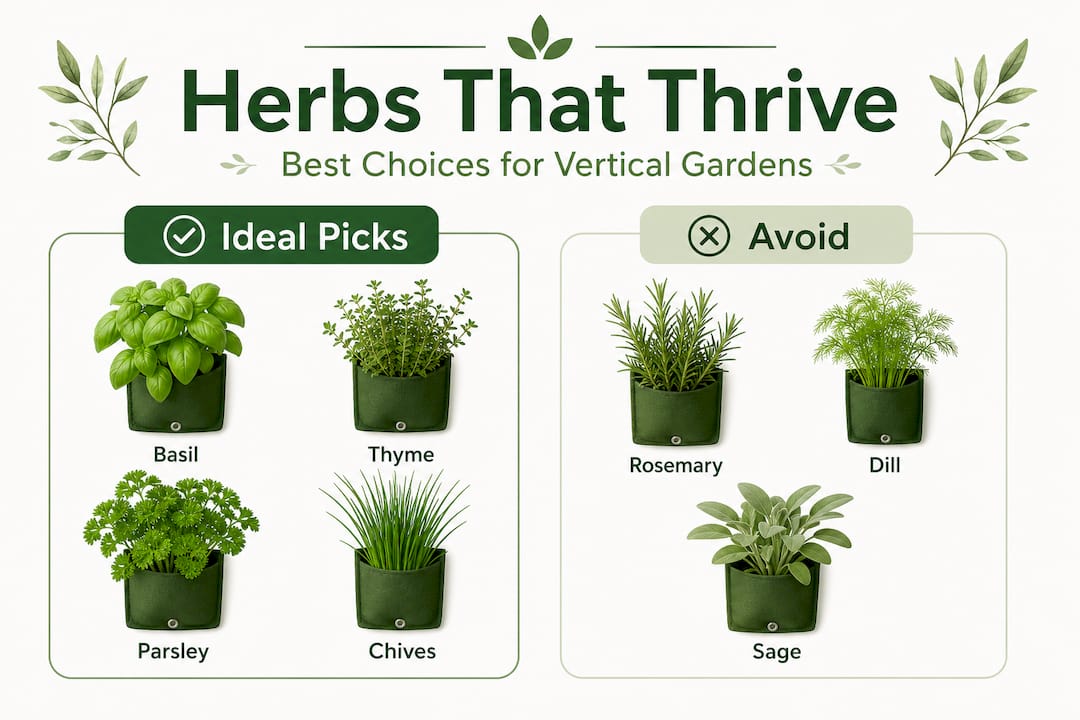
Small root system herbs like basil, thyme, parsley, oregano, and mint are your safest starting picks. These perform well in pockets and cups that are 4 to 6 inches deep, which covers most standard vertical planters.
Top 5 herbs for vertical gardens (in order of ease):
- Mint grows vigorously with minimal fuss and tolerates lower light better than most herbs. Keep it in its own pocket since it spreads aggressively if given shared space.
- Basil loves warmth and 6-plus hours of sun. It’s a fast grower and rewards frequent harvesting, which also keeps it bushy rather than tall and leggy.
- Thyme is drought-tolerant and forgiving. It fits in a 4-inch pocket with room to spare and pairs beautifully with oregano in adjacent slots.
- Parsley takes a few weeks to establish but is reliable once settled. Choose curly parsley for tighter pockets and flat-leaf varieties for slightly deeper containers.
- Oregano spreads horizontally rather than vertically, which makes it a natural fit for the wider felt pockets common in vertical systems.
Herbs to approach with caution:
- Rosemary has a woody, deep root system and prefers dry conditions. It can work in a large pocket, but struggles in small felt pouches.
- Dill grows tall fast and its taproot needs at least 8 inches of depth to perform well.
- Cilantro bolts quickly in warm conditions, making it a short-season crop rather than a consistent producer.
Pairing tips that actually matter: Don’t mix a thirsty herb like basil with a drought-tolerant one like thyme in the same tier if your watering is uniform. They have conflicting moisture preferences, and one will always suffer. Group herbs by water needs instead. You’ll find detailed growing guides at growing fresh herbs and seasonal planning ideas in our herb garden tips collection.
Pro Tip: Swap in seasonal herbs when one harvest winds down. Replace summer basil with cool-season cilantro or chives in fall to keep every pocket productive year-round instead of leaving it empty.
Watering, drainage, and avoiding common vertical garden mistakes
After choosing your herbs, proper watering and maintenance secure your garden’s health and harvest.
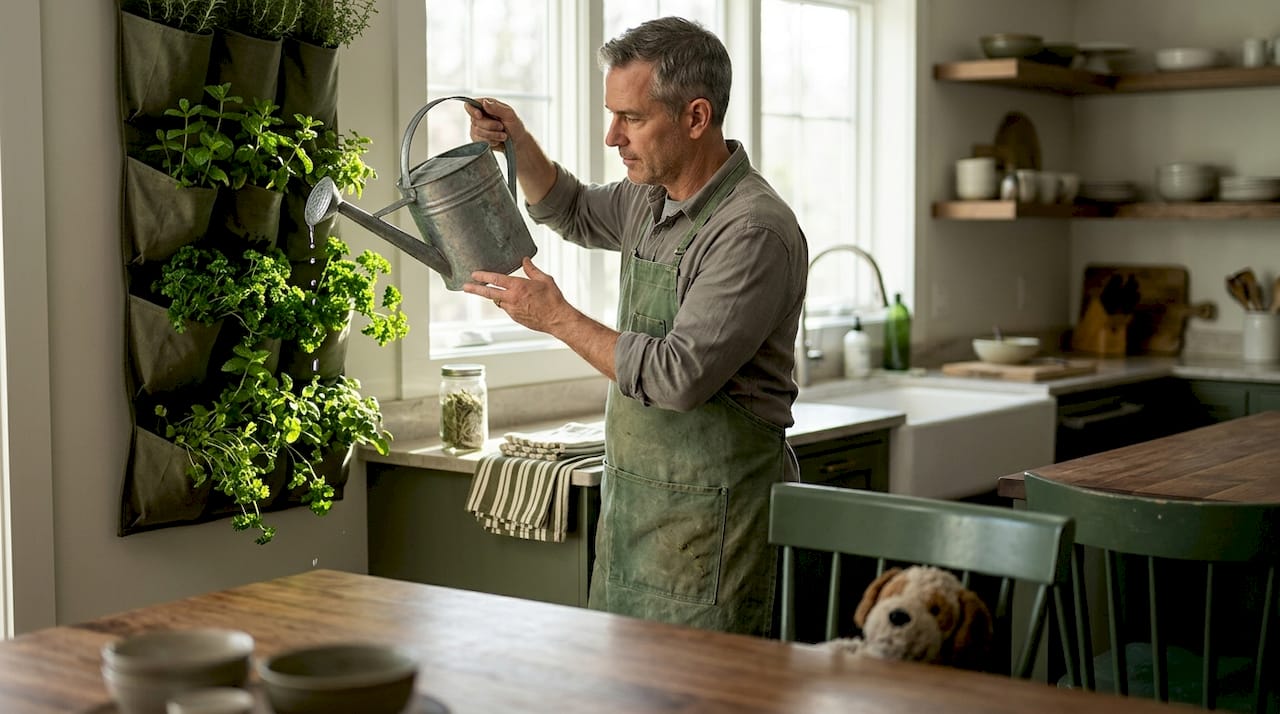
Watering a vertical herb garden is not the same as watering a row of pots on a windowsill. Gravity pulls moisture downward through the tiers, which means your bottom pockets tend to stay wetter than the top ones. This uneven moisture distribution is responsible for a lot of the problems gardeners blame on other causes.
How to water correctly, step by step:
- Water the top pockets slowly, allowing moisture to absorb before you add more. Flooding causes runoff rather than absorption.
- Check drainage at the base after watering. If water pools instead of draining within a few minutes, your mix is too dense or the drainage holes are blocked.
- Press your finger an inch into the soil of the middle and lower pockets. If it’s already damp, skip those pockets that session.
- Water less frequently in cooler months and during overcast stretches, since herbs in shaded conditions use far less water than those in full sun.
Watch for these warning signs: Yellowing lower leaves usually signal overwatering or poor drainage. A musty smell from the pockets means fungal growth is starting. Structural stains on your wall or fence below the planter indicate that water is pooling instead of draining.
Drainage management is not optional. Constantly damp soil creates perfect conditions for fungal diseases like root rot and powdery mildew, and dripping water leaves mineral stains on walls that are genuinely hard to remove. Always use containers with drainage holes, and place a splash guard or tray at the base of your structure.
Pro Tip: For multi-tier systems with six or more pockets, a simple drip irrigation kit with a timer removes the guesswork entirely. Many kits cost less than $30 and make sure every pocket gets consistent moisture without overflow. See more detailed strategies in these watering tips from Lushy Gardens.
Boosting growth: when and how to use grow lights in vertical gardens
If light remains a challenge for your vertical garden, smart supplemental strategies ensure your herbs keep thriving.
Here’s a situation a lot of indoor gardeners find themselves in: the top row of their vertical garden is lush and fragrant, but the bottom two rows look pale, stretched, and barely edible. That’s not a watering problem or a soil problem. It’s a light problem, and it’s extremely common in multi-tier setups.
Sun quantity is the deciding factor for edible vertical growing. Lower pockets and tiers that sit below the light source can lag far behind their upper neighbors unless you either rotate the structure or add supplemental lighting.
When to add grow lights:
- Your window receives fewer than 4 hours of direct sun per day.
- Lower tiers consistently produce pale or elongated herb stems.
- You’re growing through winter when natural day length drops below 10 hours in most of the US.
- You’re in a north-facing room or a space surrounded by taller buildings.
Choosing the right grow light for vertical setups:
LED strip lights are the most practical choice for vertical gardens. They run cool, use very little electricity, are flexible enough to mount along the sides of a frame, and cover a long, narrow growing footprint that matches the shape of most vertical planters. Compact fluorescent bulbs (CFLs) work well for smaller setups but generate more heat, so keep them at least 6 inches from leaf surfaces.
When installing lights, position strips at the same height as each tier rather than mounting a single bulb above the whole unit. This prevents the top plants from getting blasted with excess light while the bottom plants remain in shadow. Our full breakdown on LED grow lights explains wattage, spectrum choices, and positioning in detail.
Pro Tip: Use a simple plug-in timer to run your grow lights for 14 to 16 hours per day. This simulates a long summer day and maximizes growth without leaving lights running around the clock. Most culinary herbs respond better to consistent light cycles than to sporadic, variable exposure.
Why space-saving doesn’t mean cutting corners: our hard-won lessons from vertical herb gardens
After spending time with vertical herb gardens in apartments, on shaded patios, and in sun-soaked backyard fences, one truth stands out clearly: the people who succeed long-term are not the ones with the fanciest setup. They’re the ones who pay attention and adjust.
There’s a temptation when building a vertical garden to focus on aesthetics first. A gorgeous wall of cascading greenery looks great on a phone screen. But if you mounted it on a north-facing wall because it photographs better, you’ve already made the most expensive mistake in urban gardening.
Light and roots are genuinely non-negotiable. Every other variable, soil mix, watering frequency, fertilizer choice, is adjustable. Light availability and container depth are structural constraints. Ignoring them at the planning stage means rebuilding at the harvest stage.
Mistakes with water placement or plant choice do more teaching than any guide ever will. When your oregano wilts while your mint drowns, you learn the exact moisture balance your space requires. That knowledge sticks. The deeper insights on building a truly sustainable setup live inside our vertical herb gardening insights collection, which draws on real trial-and-error experience rather than ideal-condition theory.
Most importantly, resist the urge to chase every new trend in vertical gardening. A simple pallet garden you fully understand and maintain well will always outperform an automated hydroponic tower you don’t. Patience and close observation transform any setup, no matter how basic, into a genuinely productive garden.
Take your vertical garden to the next level with Lushy Gardens
Ready to level up? Lushy Gardens has the resources and community to help your space flourish.
Whether you’re just getting started or troubleshooting a stubborn patch of poor performers, Lushy Gardens has practical, experience-based guidance at every step. Build strong daily habits with our plant care checklist and fill in any knowledge gaps using our gardening basics guide. For everything specific to growing herbs vertically, including seasonal rotation strategies, pocket sizing comparisons, and indoor light management, our vertical herb garden tips section is the most detailed resource we offer. Your freshest, most productive herb wall is one well-placed planter away.
Frequently asked questions
What herbs grow best in vertical gardens indoors?
Herbs with shallow roots like basil, thyme, parsley, mint, and oregano thrive in vertical gardens, since small root systems match the limited pocket depth of most vertical planters. Avoid deep-rooted herbs like rosemary or dill unless your pockets are at least 8 inches deep.
How much sunlight does a vertical herb garden need?
Aim for 6 hours of sunlight daily to maximize herb flavor and yield, but most culinary herbs can manage with 4 hours as a working minimum. Below that threshold, supplemental grow lights make a significant difference.
How do I prevent water damage or stains when watering my vertical herb garden?
Always use containers with drainage holes, and place a tray or splash guard at the base of your structure to catch runoff. Pooled water and constant dampness not only stain building surfaces but also promote fungal disease in your herbs.
Can increasing plant density in my vertical garden increase my herb harvest?
Yes, higher planting density increases total fresh yield per square foot, as studies with basil and lettuce confirm. However, if light is limited, individual plant size drops because a dense canopy reduces how much light each plant receives.
Do lower rows or pockets in my vertical garden need extra lighting?
Lower pockets often receive significantly less sun than upper tiers, and reduced light availability in those tiers can drag down your overall harvest. Adding LED strip lights at each tier level or rotating the entire structure regularly corrects this imbalance effectively.
Recommended
- Vertical Herb Garden: Growing Fresh Herbs Indoors – Lushy Gardens
- 7 Smart Indoor Herb Garden Tips for Home Gardeners – Lushy Gardens
- Hydroponics for Home Gardeners: Grow Fresh Herbs Indoors – Lushy Gardens
- 7 Smart Small Space Gardening Ideas for Apartments – Lushy Gardens

I’m Eleanor, a seasoned gardener with over three decades of experience tending to Mother Nature’s creations. Through Lushy Gardens, I aim to share my wealth of knowledge and help fellow plant enthusiasts uncover the wonders of gardening. Let’s dive into this journey together, one leaf at a time.


