
Table of Contents
TL;DR:
- Most indoor plants thrive at 50–60% relative humidity, but many homes are drier, especially in winter.
- Monitoring vapor pressure deficit with a hygrometer and managing humidity with a humidifier help prevent common problems like leaf tip burn and fungal infections.
Humidity is defined as the amount of water vapor in the air surrounding your plants, and it directly controls transpiration, nutrient uptake, and overall plant vitality. The role of humidity in plant care is not a minor detail. It is the invisible force that determines whether your monstera thrives or your fern slowly crisps at the edges. Most tropical houseplants thrive at 50–60% relative humidity, yet the average American home sits closer to 30–50%, and winter heating pushes that even lower. Understanding this gap is the first step toward fixing it.
How does humidity affect plant physiology and growth?
Humidity governs transpiration, the process by which plants pull water and dissolved nutrients up from roots through stems and out through leaf pores called stomata. When air moisture is right, stomata stay open, photosynthesis runs efficiently, and calcium moves freely to new growth. When humidity drops too low, stomata close to conserve water. That shutdown also cuts off carbon dioxide intake, slowing photosynthesis and starving developing leaves of calcium.
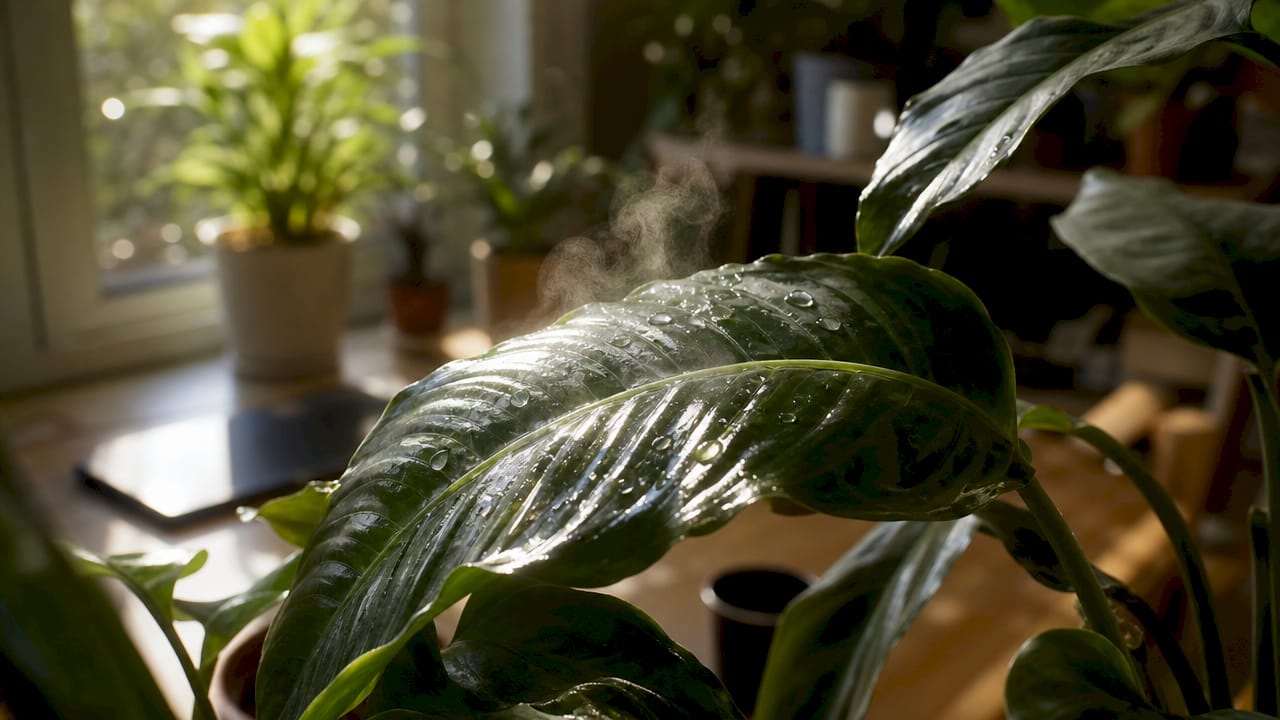
Indoor humidity below 30% stresses transpiration and directly impairs nutrient transport. The consequence shows up as tip burn, stunted new leaves, and distorted growth. High humidity creates the opposite problem. When moisture in the air is excessive and airflow is poor, fungal pathogens thrive on leaf surfaces and root zones.
The metric that captures both sides of this balance is Vapor Pressure Deficit, or VPD. VPD measures the difference between the moisture the air currently holds and the maximum it could hold at a given temperature. Optimal plant health occurs between 0.8–1.2 kPa VPD. Below 0.4 kPa, growth stalls. Above 1.5 kPa, stomata close to prevent runaway water loss. Relative humidity alone does not account for temperature, which is why two rooms at 50% RH can produce very different plant responses depending on how warm each room is.
Key humidity effects on plant health at a glance:
- Stomatal closure at low humidity reduces CO2 intake and slows photosynthesis
- Calcium deficiency in new leaves results from interrupted transpiration pull
- Fungal disease risk rises when humidity is high and air circulation is poor
- Wilting under bright light can signal low humidity rather than underwatering
Pro Tip: Place a digital thermometer and hygrometer together. VPD is calculated from both temperature and humidity, and reading them together gives you a far more accurate picture of your plant’s actual stress level than humidity alone.
What are the signs of humidity stress in houseplants?
Crispy brown leaf tips on an otherwise healthy plant with moist soil are the clearest signal of low humidity, not underwatering. This distinction matters because the instinct to water more actually worsens the situation. Overwatering a plant that is already stressed by dry air raises root rot risk without solving the moisture deficit in the air.
Maintaining 40–60% relative humidity with a humidifier corrects these symptoms over time. Misting offers only momentary relief and does not raise ambient room humidity in any meaningful way. Species like calathea, fittonia, and maidenhair fern show humidity stress faster than most. Their leaves curl inward, develop brown margins, or drop entirely when air moisture falls below their threshold.
A trickier diagnosis involves salt accumulation in the soil. Low humidity combined with high soil salt causes leaf tip browning that looks identical to humidity deficit. Flushing the soil with distilled water and then observing whether new growth improves helps separate the two causes. If browning continues after flushing, low humidity is the likely culprit.
Seasonal timing is another clue. Symptoms that appear in december or january and improve in spring almost always point to winter heating as the cause. Central heating systems strip indoor air of moisture rapidly, and indoor air often runs 20–30% drier than outdoor air during the heating season.
- Curling leaf edges on calathea or prayer plants signal humidity below their comfort zone
- Slow or distorted new growth in ferns and orchids often reflects chronic low moisture
- Sudden leaf drop in ficus or gardenias frequently follows a drop in ambient humidity
Pro Tip: Before adjusting your watering schedule, check your hygrometer. Many plant problems blamed on watering are actually humidity problems in disguise, especially in winter.
How do you measure and monitor indoor humidity accurately?
Relative humidity (RH) tells you what percentage of the air’s maximum moisture capacity is currently filled. VPD tells you how hard the air is pulling moisture out of your plant. Both numbers matter, but VPD is the more accurate measure for understanding actual plant transpiration stress.
Digital hygrometers costing $10–$15 are the right tool for measuring indoor humidity. Weather apps report outdoor conditions and do not reflect what is happening inside your home, especially near heating vents or in rooms with poor ventilation. Place your hygrometer at plant level, not on a high shelf, because humidity stratifies in a room.
| Humidity level | Plant response | Recommended action |
|---|---|---|
| Below 30% RH | Leaf tip burn, stomatal closure, nutrient stress | Run a humidifier; move plants away from vents |
| 30–50% RH | Acceptable for most succulents and cacti | Monitor; adequate for low-demand species |
| 50–60% RH | Ideal for most tropical houseplants | Maintain with humidifier or grouping |
| 60–70% RH | Required by ferns, orchids, calathea | Use a dedicated humidifier with good airflow |
| Above 70% RH | Fungal and mold risk increases | Improve air circulation; reduce humidifier output |
EPA and ASHRAE guidelines recommend 30–50% RH for human occupancy comfort. That range limits the upper end of what you can safely maintain indoors without risking mold or dust mite growth. For most common houseplants, this overlap works well. For high-humidity species, a dedicated plant room or enclosed cabinet with a small humidifier is the practical solution.
What are the most effective strategies for managing humidity indoors?
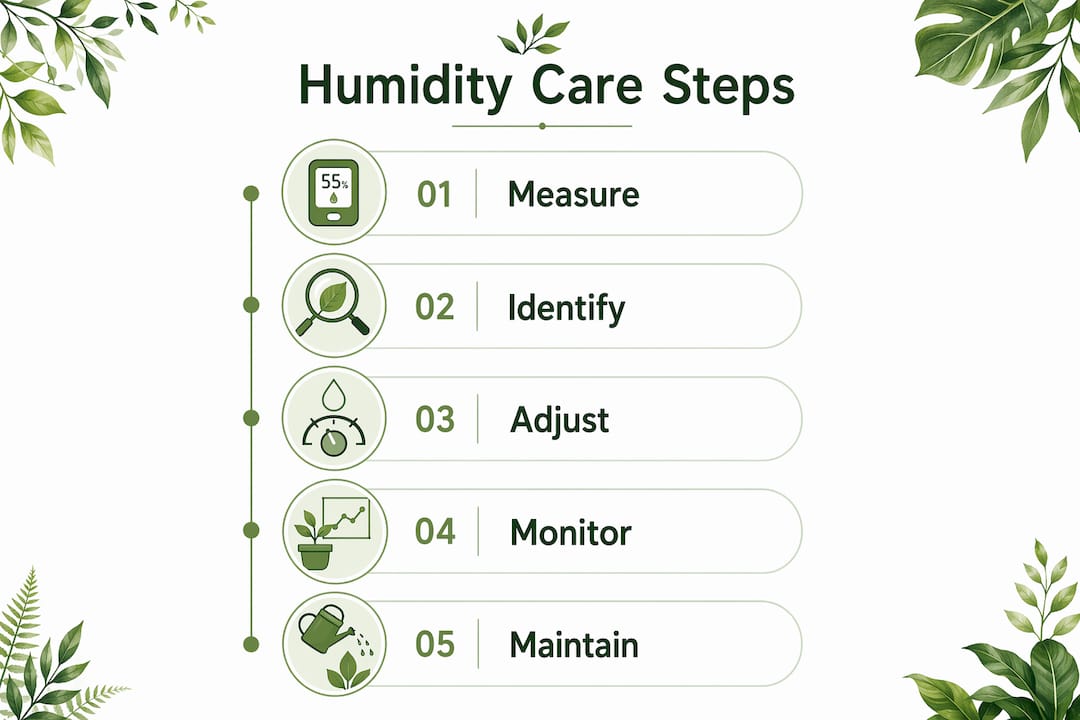
Raising and maintaining the right moisture level for your plants requires more than guesswork. These steps work in order of effectiveness:
- Buy a digital hygrometer. Measure before you act. Knowing your actual baseline prevents over-correcting and saves money on equipment you may not need.
- Use an ultrasonic humidifier. Ultrasonic humidifiers in the $30–$80 range are the only reliable mechanical method for raising ambient room humidity. Place the unit at plant level and point the mist toward your collection, not at walls or furniture.
- Group plants together. Plants release moisture through transpiration, and clustering them creates a small zone of elevated humidity. This works best in a corner or alcove with limited air movement.
- Adjust your watering schedule by season. In winter, low humidity causes faster soil surface drying even as roots stay wet. Check soil moisture at depth, not just the surface, before watering.
- Skip pebble trays and misting. Pebble trays are largely ineffective at raising room humidity. Misting wets leaf surfaces temporarily and can encourage fungal spots on susceptible species like African violets and begonias.
- Improve airflow when humidity is high. A small fan running on low prevents stagnant air pockets where fungal spores accumulate. Good airflow and adequate humidity are not opposites. They work together.
- Match plants to your home’s natural conditions. Succulents, snake plants, and ZZ plants tolerate 30–40% RH without complaint. If your home runs dry, choosing species adapted to lower moisture is more sustainable than fighting your environment year-round.
For winter plant care, the combination of a humidifier, reduced watering frequency, and moving plants away from heating vents covers most of the seasonal humidity challenge without complicated interventions.
Key Takeaways
Maintaining 40–60% relative humidity, verified with a digital hygrometer and managed with a humidifier, is the single most effective approach to preventing humidity-related plant health problems indoors.
| Point | Details |
|---|---|
| VPD beats RH alone | Track Vapor Pressure Deficit for accurate plant stress readings, not just relative humidity. |
| 50–60% RH is the target | Most tropical houseplants need this range; sensitive species like ferns require 60–70%. |
| Misting does not work | Misting raises surface moisture briefly but does not increase ambient room humidity. |
| Hygrometers are non-negotiable | A $10–$15 digital hygrometer gives you real data; weather apps reflect outdoor conditions only. |
| Match plants to your home | Choosing species suited to your natural humidity level is more reliable than constant correction. |
Why I think most gardeners are solving the wrong humidity problem
Most beginners I talk to are focused on the wrong end of the humidity equation. They buy spray bottles, set up pebble trays, and mist their calatheas twice a day. None of it moves the needle. The real problem is almost always that they have never actually measured their indoor humidity. They are treating a symptom they have not confirmed.
The other mistake I see constantly is blaming watering when the culprit is dry air. A plant sitting in perfectly moist soil can still show crispy tips and curling leaves if the air around it is at 25% RH. Adding more water at that point creates root rot risk without solving anything. A $12 hygrometer would have told them the answer in five minutes.
The VPD concept intimidates people, but you do not need to calculate it manually. Free online VPD calculators take your temperature and humidity readings and tell you exactly where you stand. Once you know your number, the fix becomes obvious. The gardeners who get this right are not the ones with the most expensive equipment. They are the ones who measured first and acted second.

Plant care resources worth bookmarking at Lushygardens
Getting humidity right is one piece of a larger picture. Lushygardens covers the full range of indoor plant care, from beginner gardening basics to seasonal maintenance strategies that keep your collection healthy through every month of the year. The seasonal plant care guide walks through how to adjust watering, light, and humidity as conditions change, which is exactly where most indoor plant problems start. Whether you are troubleshooting a struggling fern or building your first plant care routine, Lushygardens has the practical, no-filler guidance you need to get it right.
FAQ
What is the ideal humidity level for most houseplants?
Most tropical houseplants thrive at 50–60% relative humidity. Sensitive species like ferns, orchids, and calathea require 60–70% for healthy growth.
Why are my plant’s leaf tips turning brown even though the soil is moist?
Brown leaf tips on moist soil typically signal low ambient humidity, not underwatering. Raising room humidity to 40–60% with a humidifier corrects this over time.
Does misting actually help with plant humidity?
Misting does not raise ambient room humidity in any meaningful way. It wets leaf surfaces briefly and can promote fungal disease on susceptible species.
What is VPD and why does it matter for plant care?
Vapor Pressure Deficit (VPD) measures how strongly the air pulls moisture from your plant. Optimal plant health occurs between 0.8–1.2 kPa VPD, a range that relative humidity alone cannot capture.
How do I measure indoor humidity accurately?
A digital hygrometer costing $10–$15 placed at plant level gives accurate indoor readings. Weather apps report outdoor conditions and do not reflect indoor air quality.
Recommended
- Indoor plant care guide: healthier, happier plants at home – Lushy Gardens
- Watering houseplants guide for healthy, thriving plants – Lushy Gardens
- Humidity for Houseplants: Creating Healthy Indoor Environments – Lushy Gardens
- Indoor plant humidity guide: 40-60% RH for healthy growth – Lushy Gardens

I’m Eleanor, a seasoned gardener with over three decades of experience tending to Mother Nature’s creations. Through Lushy Gardens, I aim to share my wealth of knowledge and help fellow plant enthusiasts uncover the wonders of gardening. Let’s dive into this journey together, one leaf at a time.


