
Table of Contents
Finding your indoor plants wilting or browning despite careful watering is a familiar frustration for many urban dwellers. The challenge goes beyond soil moisture, as most city apartments and heated homes maintain humidity levels far below what tropical houseplants require to thrive. By recognizing the impact of humidity on plant health and learning practical ways to raise it, you can transform dry air environments into lush, vibrant spaces where your favorite plants flourish.
Key Takeaways
| Point | Details |
|---|---|
| Humidity is crucial for plant health | Indoor plants require higher humidity than typical home levels to thrive and avoid stress. |
| Different plants have varied humidity needs | Tropical plants prefer 70-90% humidity, while succulents thrive in 20-40% humidity. |
| Monitoring humidity is essential | Using a hygrometer allows for accurate measurement and management of indoor humidity levels. |
| Natural methods are limited | While grouping plants together can help, mechanical humidifiers are often necessary for consistent humidity in urban environments. |
What Humidity Means for Houseplants
Humidity directly affects how well your indoor plants survive and grow. When air lacks moisture, your plants struggle to absorb water through their roots and lose it rapidly through their leaves.
Most city apartments and heated homes drop below the humidity levels that tropical plants actually need. Your heating system pulls moisture from the air, especially in winter, creating an environment hostile to anything except cacti and succulents.
Why Plants Struggle in Dry Air
Low humidity causes stress by forcing leaves to release water faster than roots can replace it. Think of it like your skin drying out in winter, except your plant can’t just apply lotion.
You’ll notice browning leaf edges, crispy tips, and stunted new growth. Leaves may drop prematurely, and buds fail to open. Some plants simply refuse to thrive no matter how much you water them.
The problem worsens during heating season. Most homes maintain 30-40% humidity indoors, but ferns, orchids, and monstera plants prefer 50-70% humidity.
Most indoor plants need humidity levels higher than typical heated homes provide during winter to truly thrive.
What Humidity Actually Does
When humidity is adequate, your plants:
- Absorb water more efficiently through their roots
- Reduce water loss through leaf pores called stomata
- Maintain firm, vibrant leaf texture and color
- Produce larger, healthier new growth
- Flower and fruit more reliably
- Show better resistance to pests and diseases
Humidity works alongside watering, not instead of it. You still need proper watering practices, but adequate moisture in the air reduces the stress on your plant’s water transport system.
The Real Impact on Different Plants
Tropical houseplants suffer most from dry indoor air. Philodendrons, pothos, peace lilies, and anthuriums all evolved in humid rainforests and struggle in typical American homes.
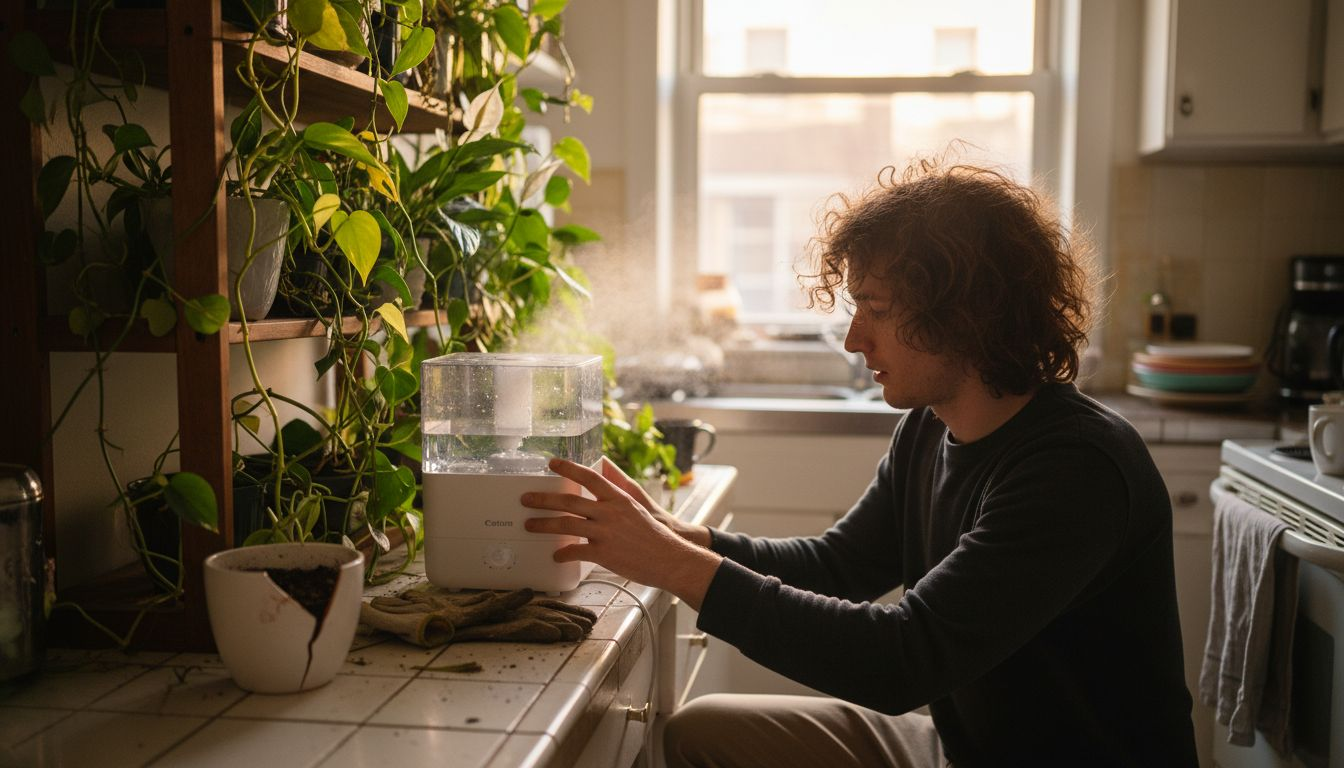
Succulents and cacti actually prefer dry conditions. Your snake plant or echeveria thrives in low humidity. The problem occurs when you try growing humidity-loving plants without addressing their air moisture needs.
Understanding how overwatering and underwatering affect plants helps you see that humidity is a separate factor from soil moisture. A plant can have wet soil but still suffer from dry air if humidity is too low.
Pro tip: Group plants together in one area of your home rather than spacing them throughout. As plants release moisture through transpiration, they humidify the air around each other, creating a naturally more humid microclimate than isolated plants can achieve.
Ideal Humidity Ranges by Plant Type
Different plants evolved in different climates, and their humidity needs reflect where they naturally come from. A monstera from the Amazon rainforest has completely different requirements than a cactus from the Sonoran Desert.
Understanding what your specific plant needs prevents wasted effort and disappointment. You might be providing too much humidity to some plants while under-delivering for others.
Tropical Plants Love High Humidity
Tropical indoor plants flourish in humidity of 70% to 90%, matching their native rainforest environments. These plants evolved in warm, wet conditions where moisture hangs in the air constantly.
Your tropical houseplants include:
- Orchids
- Philodendrons
- Pothos
- Aroids (anthuriums, peace lilies)
- Ferns
- Calathea
- Monstera species
These plants struggle visibly when humidity drops below 50%. Leaf tips brown, edges curl, and growth slows dramatically. Orchids refuse to bloom. Calathea leaves develop crispy edges within days of exposure to dry air.
Tropical plants evolved expecting moisture in the air, and dry indoor conditions stress their entire physiology.
Subtropical Plants Need Moderate Humidity
Subtropical plants adapted to seasons with occasional dry periods. They handle 50-70% humidity comfortably but perform best closer to 60%.
Plants in this category include:
- Citrus trees
- Begonias
- Rubber plants
- Bird of paradise
- Schefflera
- Hoya
These species tolerate normal home humidity better than tropical plants. However, they still show improvement with moderate humidity increases. Leaves become fuller, growth accelerates, and flowering improves.
Succulents and Cacti Prefer Dry Air
Arid-region plants have adapted to survive with minimal water in soil and air. These plants actually struggle with humidity above 40-50%.
Your low-humidity plants include:
- Echeveria and other succulents
- Cacti
- Aloe
- Jade plants
- Sansevieria (snake plants)
- Haworthia
Dry indoor air suits these plants perfectly. Providing extra humidity creates conditions for root rot and fungal disease. Your winter heating actually creates ideal conditions for these plants.
Moderate-Humidity Plants
Some houseplants prefer conditions between the extremes. They thrive in 40-60% humidity, which is achievable in many homes without special equipment.
Plants that prefer moderate humidity include:
- Dracaena
- Fiddle leaf fig
- Boston fern variants
- Prayer plants
- Peperomia
- ZZ plant
These plants show improvement with slightly elevated humidity but won’t die in typical home conditions. They’re forgiving middle-ground plants.
Here’s a quick guide to matching plant types with their ideal humidity and common symptoms of incorrect levels:
| Plant Type | Ideal Humidity | Signs of Low Humidity | Signs of High Humidity |
|---|---|---|---|
| Tropical | 70-90% | Leaf browning, slowed growth | Fungal spots, mold risk |
| Subtropical | 50-70% | Droopy leaves, dull color | Root rot, leaf yellowing |
| Moderate-Humidity | 40-60% | Mild tip browning | Wilting, sticky residue |
| Succulents/Cacti | 20-40% | Wrinkled leaves, poor growth | Rot, soft leaves |
Matching Humidity to Your Plant’s Origin
Check where your plant naturally grows. Rainforest plants need high humidity. Desert plants need low humidity. Seasonal forest plants need moderate humidity.
Understanding your plant’s watering needs works alongside humidity because tropical plants needing high humidity often also need more consistent moisture in soil.
Pro tip: Group tropical plants together in one corner or shelf, succulents in another, and moderate-humidity plants separately. This lets you target humidity adjustments to each group’s needs without overcomplicating your plant care routine.
How to Measure and Achieve Proper Humidity
You can’t improve what you don’t measure. Knowing your current humidity level is the first step toward creating conditions your plants actually need.
Don’t rely on guessing or feeling the air with your hand. Your perception of moisture is unreliable. A hygrometer gives you exact numbers.
Measuring Humidity Accurately
A reliable hygrometer should be used to measure the moisture content in your home’s air. These inexpensive devices take the guesswork out of humidity management.
Hygrometers come in two main types:
- Analog hygrometers use mechanical needles and cost five to fifteen dollars
- Digital hygrometers display exact percentages and usually include temperature readings
Place your hygrometer near your plants, not by a window or heating vent where readings won’t represent the actual plant environment. Leave it in that spot for at least five minutes before reading it.
Check humidity at different times of day. Morning readings differ from evening readings because indoor moisture levels fluctuate naturally.
Measure humidity where your plants actually live, not in the middle of the room where conditions differ significantly.
Simple Ways to Raise Humidity
Once you know your current humidity, you can adjust it. Start with the easiest methods before investing in equipment.
Try these low-cost approaches first:
- Group plants together so they create a humid microclimate through transpiration
- Place water trays beneath pots to slowly evaporate moisture into the air
- Mist plants in early morning (though this provides temporary relief only)
- Move plants away from heating vents and air conditioning units
- Keep bathroom humidity by running the exhaust fan less frequently
Grouping plants together works surprisingly well. As each plant releases moisture through its leaves, the surrounding air becomes more humid. This clusters effect can raise humidity by 10-15% in a small area.
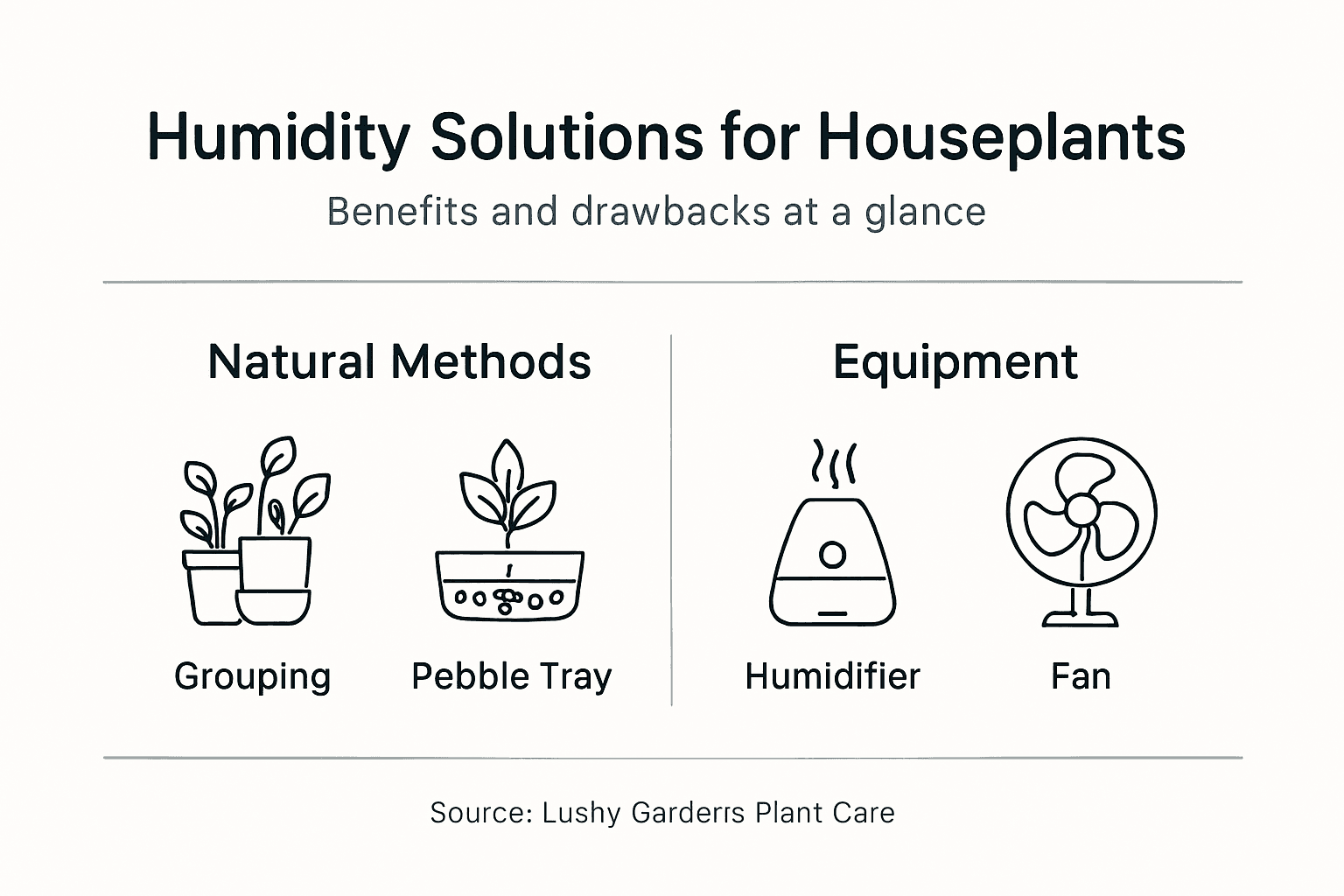
Below is a comparison of common humidity-raising methods for houseplants:
| Method | Effectiveness | Maintenance Required | Typical Drawbacks |
|---|---|---|---|
| Grouping plants | Moderate | Minimal | Limited to local area |
| Water trays | Low | Occasional refilling | Minimal impact beyond one plant |
| Mist spraying | Low | Frequent | Only temporary relief |
| Mechanical humidifier | High | Daily cleaning/refill | Cost, maintenance |
When to Use Equipment
If your humidity stays below 40% despite these methods, a humidifier becomes the practical choice. Portable humidifiers designed for small spaces work well for plant areas.
Place humidifiers near plant clusters rather than running them throughout your entire home. This targets humidity where plants actually live.
Ultrasonic humidifiers work quietly and efficiently. Cool-mist humidifiers are safer around electronics than steam versions.
Seasonal Humidity Adjustments
Winter heating dramatically lowers indoor humidity. Your home might drop from 50% humidity in fall to 25% by January.
Adjust your humidity strategy seasonally:
- Fall and spring require minimal intervention
- Winter demands active humidity management for tropical plants
- Summer usually provides adequate natural humidity
Pro tip: Set your hygrometer to alert you when humidity drops below your target range, or check it weekly at the same time each day. This removes the need to remember and creates a simple maintenance routine that prevents humidity problems before they damage your plants.
Common Pitfalls and Mistakes to Avoid
Humidity management sounds simple until you start trying it. Most people make the same mistakes repeatedly, wasting time and money on ineffective methods.
Knowing what doesn’t work saves you from frustration and protects your plants from harm.
The Misting Myth
Misting leaves feels productive but delivers almost no humidity benefit to your plants. The water evaporates too quickly to meaningfully increase air moisture.
Worse, misting can harm plants with fuzzy or hairy leaves like African violets and begonias. Water droplets trapped on fuzzy leaves promote fungal diseases. Leaves develop spots and rot.
Misting also leaves mineral residue on leaves if you use tap water. This blocks light absorption and looks unattractive.
If you enjoy misting, do it occasionally for cleaning purposes only. Don’t count it as your humidity strategy.
Pebble Trays Don’t Raise Humidity Much
The classic “pebble tray” sits beneath your pot with water that supposedly evaporates to create humidity. In reality, pebble trays have minimal impact on room-level humidity.
The evaporating water only benefits the plant directly above it. Nearby plants receive almost no benefit. You’re spending effort for almost no result.
Pebble trays work best as a visual reminder to water your plant, not as a humidity solution.
The Bathroom Gamble
Moving plants to bathrooms sounds smart because bathrooms are humid during showers. But recognizing different humidity needs means avoiding the bathroom trap completely.
Bathroom humidity is inconsistent and temporary. After showers, humidity drops rapidly. The rest of the day, bathrooms are dry. Plus, bathroom lighting is usually terrible for plants.
Your bathroom humidity solves neither the humidity problem nor the lighting problem.
Over-Humidifying Creates New Problems
Humidity above 70% invites fungal diseases, root rot, and mold growth. You can damage plants by making the air too wet.
Stagnant, overly humid air without airflow creates dangerous conditions. Mold spores thrive. Fungal infections spread rapidly through your plant collection.
High humidity requires excellent air circulation. Running a small fan prevents stagnant air pockets that encourage disease.
Ignoring Plant-Specific Needs
Treating all plants the same humidity way fails because different plants need different conditions. Applying high humidity to succulents causes root rot. Leaving tropical plants in dry air causes leaf damage.
Common gardening mistakes happen when you ignore what each plant actually needs rather than what you assume all plants prefer.
Check your plant’s origin before adjusting humidity. Rainforest plants need high humidity. Desert plants need low humidity. Match conditions to the plant.
Over-humidifying damages plants as severely as under-humidifying, but in different ways—fungal disease instead of leaf damage.
Pro tip: Pair humidity increases with better air circulation by running a small oscillating fan on low speed nearby. This prevents stagnant air and fungal disease while allowing humidity to benefit your plants without creating a dangerous environment.
Comparing Humidity Solutions for Urban Homes
Urban apartments and condos present unique humidity challenges. Heating and air conditioning systems actively remove moisture from the air, especially in winter.
You need solutions that fit apartment living without requiring major changes or excessive maintenance. The right choice depends on your space, budget, and plant collection size.
Understanding Your Urban Humidity Problem
Urban homes suffer from low humidity because heating systems pull moisture from indoor air constantly. Winter humidity in cities often drops to 25-30%, creating harsh conditions for tropical plants.
Air conditioning compounds the problem in summer by cooling and dehumidifying simultaneously. Your apartment fights against you naturally.
This means passive solutions alone rarely succeed. You need active humidity management strategies.
Natural Methods: Low Cost, Limited Results
Natural humidity solutions cost nothing but deliver limited effectiveness in urban spaces.
Natural approaches include:
- Grouping plants creates localized humidity through transpiration
- Pebble trays provide moisture directly beneath individual pots
- Bathroom placement relies on shower steam (inconsistent and unreliable)
- Drying laundry indoors releases moisture into the air
These methods work best combined together for small plant collections. However, they rarely raise room-level humidity significantly in apartments with forced heating and cooling.
Use natural methods as supplementary approaches, not primary solutions.
Mechanical Humidifiers: Reliable and Effective
Mechanical humidifiers provide consistent humidity control and work reliably in urban environments. Different humidifier types including cool mist, warm mist, or dual mist options are all effective for houseplants.
Ultrasonic humidifiers are quiet and energy-efficient. They work by vibrating a membrane to create a fine mist.
Evaporative humidifiers use a wick to slowly release moisture. They’re safer around electronics than ultrasonic models.
Mechanical humidifiers require regular cleaning to prevent mineral buildup and mold growth. You need to refill water regularly, usually daily in winter.
Mechanical humidifiers are most effective for urban homes but require consistent maintenance and monitoring.
Choosing the Right Approach for Your Situation
Small plant collections benefit from natural methods combined with strategic placement. Group plants together and place them away from heating vents.
Large tropical plant collections need mechanical humidifiers. The investment pays off through improved plant health and reduced pest problems.
For urban apartments specifically:
- Studio or one-bedroom apartments start with natural methods, upgrade to a small humidifier if needed
- Multi-room apartments place a humidifier in your plant zone, use natural methods elsewhere
- Shared walls consider humidifier noise when choosing ultrasonic versus evaporative models
Your lifestyle matters too. If you travel frequently, natural methods work better because humidifiers require daily attention.
Pro tip: Start with grouping plants together and monitoring humidity with a hygrometer for two weeks. If humidity stays below 45% consistently, invest in a mechanical humidifier for one concentrated plant area rather than trying to humidify your entire apartment.
Boost Your Indoor Plants’ Health by Mastering Humidity
Struggling to create the perfect environment for your tropical or delicate houseplants can be frustrating. The challenge lies in managing indoor humidity levels that directly impact plant vitality and growth. Without proper moisture in the air, houseplants can suffer from drying leaves, stunted growth, and even pest problems as described in the article. Understanding concepts like transpiration, ideal humidity ranges, and seasonal adjustments is key to preventing these issues.
Discover comprehensive guidance and practical tips at Plant Care – Lushy Gardens and explore the best Indoor Plants – Lushy Gardens suited for your home’s environment. Whether you need advice on measuring humidity or selecting the right tools, our Garden Tools & Equipment – Lushy Gardens section offers curated product insights to support your efforts.
Don’t let dry indoor air destroy your plant dreams. Take control now by visiting Lushy Gardens and start building a healthy, thriving indoor jungle today.
Frequently Asked Questions
How does humidity affect houseplants?
Humidity directly impacts your plants’ ability to absorb water and maintain their health. Low humidity can cause leaf damage, stunted growth, and poor flowering, while adequate humidity helps with nutrient absorption and pest resistance.
What are the ideal humidity levels for different types of houseplants?
Tropical plants thrive in humidity levels of 70-90%, subtropical plants prefer 50-70%, and succulents and cacti thrive in dry air at 20-40% humidity. Knowing your plant’s origin helps ensure proper care.
How can I measure the humidity levels for my indoor plants?
Using a hygrometer is the best way to accurately measure humidity levels. Place it near your plants for an accurate reading, avoiding locations near windows or heating vents.
What are some effective ways to increase humidity for houseplants?
You can raise humidity by grouping plants together, using water trays beneath pots, and investing in a mechanical humidifier. Avoid misting as it only provides temporary relief and may lead to fungal issues.
Recommended
- Indoor House Plants: Enhance Air Quality Safely – Lushy Gardens
- Indoor Plants for Wellbeing: Enhancing Air Quality and Healthy Living – Lushy Gardens
- Essential Indoor Gardening Tips for Urban Dwellers – Lushy Gardens
- 8 Essential Indoor Plant Care Tips for Every Gardener – Lushy Gardens
- How to Keep Pets Safe Indoors: 5 Essential Steps – iPupPee
- Kunstwerke richtig pflegen: Ihre Kunst erstrahlen lassen – Curiocanvas
- Interior Renovations: Key Steps for Ontario Homeowners

I’m Eleanor, a seasoned gardener with over three decades of experience tending to Mother Nature’s creations. Through Lushy Gardens, I aim to share my wealth of knowledge and help fellow plant enthusiasts uncover the wonders of gardening. Let’s dive into this journey together, one leaf at a time.


