
Table of Contents
Overwatering and underwatering are two of the most common headaches for urban gardeners caring for houseplants. Getting plant hydration wrong can quickly lead to yellowing leaves, wilting, and poor growth that leave you unsure what went wrong. Recognizing the subtle differences between these issues and understanding the signs each produces is the gateway to healthier, happier indoor plants. This guide highlights how watering issues impact your greenery and explains what symptoms to watch for, helping beginners master the basics of indoor plant care.
Key Takeaways
| Point | Details |
|---|---|
| Understanding Plant Hydration | Both overwatering and underwatering can lead to serious stress and health risks for houseplants, requiring careful observation. |
| Symptoms Identification | Look for distinct symptoms like yellowing for overwatering and crisp edges for underwatering to accurately assess plant health. |
| Watering Practices | Avoid rigid watering schedules; instead, adapt to individual plant needs and environmental conditions for effective moisture management. |
| Prevention Strategies | Utilize moisture meters, ensure proper drainage, and observe changes in environmental conditions to maintain optimal plant health. |
Defining Overwatering and Underwatering Issues
Understanding the delicate balance of plant hydration is crucial for maintaining healthy houseplants. Watering issues can create significant stress for indoor plants, with both overwatering and underwatering presenting complex challenges that can compromise plant health. Indoor plant watering techniques require nuanced knowledge and careful observation.
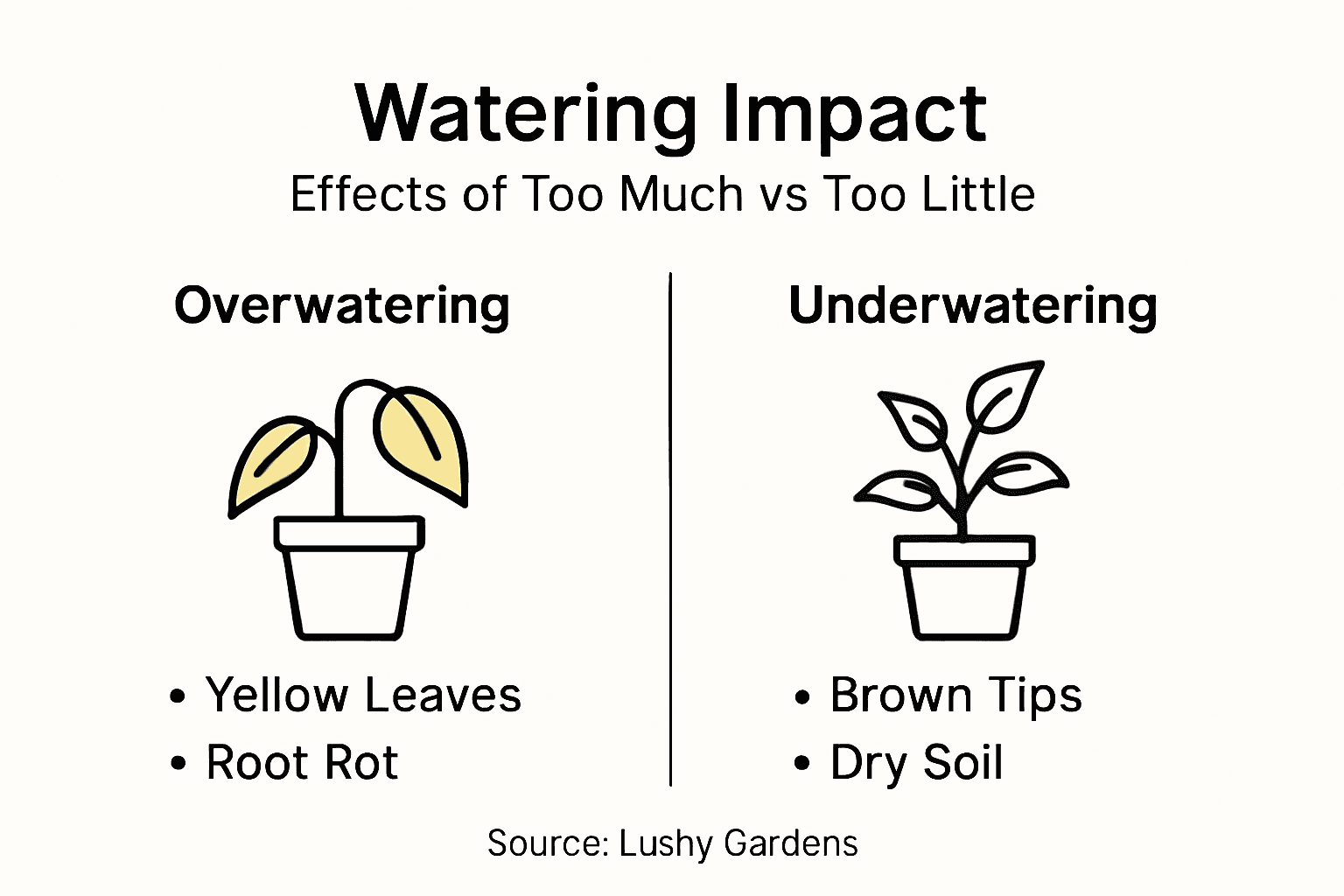
Overwatering occurs when plants receive more water than their roots can effectively absorb, leading to critical problems in the plant’s root system. When soil remains consistently saturated, oxygen cannot circulate, causing roots to suffocate and potentially rot. This environment creates perfect conditions for harmful fungal growth and bacterial infections that can destroy plant tissues.
Key symptoms of overwatering include:
- Yellowing leaves
- Wilting despite wet soil
- Mold growth on soil surface
- Soft, mushy stem bases
- Stunted growth
Underwatering, conversely, happens when plants do not receive sufficient water to maintain their physiological processes. Without adequate hydration, plant cells cannot maintain structural integrity, leading to wilting, leaf drop, and potential permanent damage. The Missouri Botanical Garden notes that watering indoor plants requires understanding each plant’s unique environmental needs.
Key symptoms of underwatering include:
- Crispy, brown leaf edges
- Drooping or wilting leaves
- Dry, compacted soil
- Slow or halted growth
- Leaf loss
Interestingly, overwatering and underwatering can produce remarkably similar symptoms, making precise diagnosis challenging for many gardeners. Both conditions can cause leaf yellowing, wilting, and stunted growth, which means careful investigation is necessary to determine the exact issue.
Pro tip: Always check soil moisture at multiple depths before watering to ensure you’re providing exactly what your plant needs.
Here’s a side-by-side overview of how overwatering and underwatering affect different aspects of plant health:
| Aspect Affected | Overwatering Impact | Underwatering Impact |
|---|---|---|
| Root Condition | Roots rot and turn mushy | Roots dry and shrink |
| Soil State | Stays soggy and compacted | Becomes dusty and contracts |
| Leaf Texture | Soft, limp, may turn see-through | Brittle, curls, browns at edges |
| Disease Risk | High fungal infection risk | Prone to pest outbreaks |
| Recovery Potential | May recover with quick action | Slower recovery, risk of cell death |
Common Signs and Key Differences
Identifying the subtle nuances between overwatering and underwatering requires careful observation and understanding of plant physiology. Watering techniques for indoor plants play a critical role in maintaining plant health, with seemingly similar symptoms often masking distinct underlying issues.
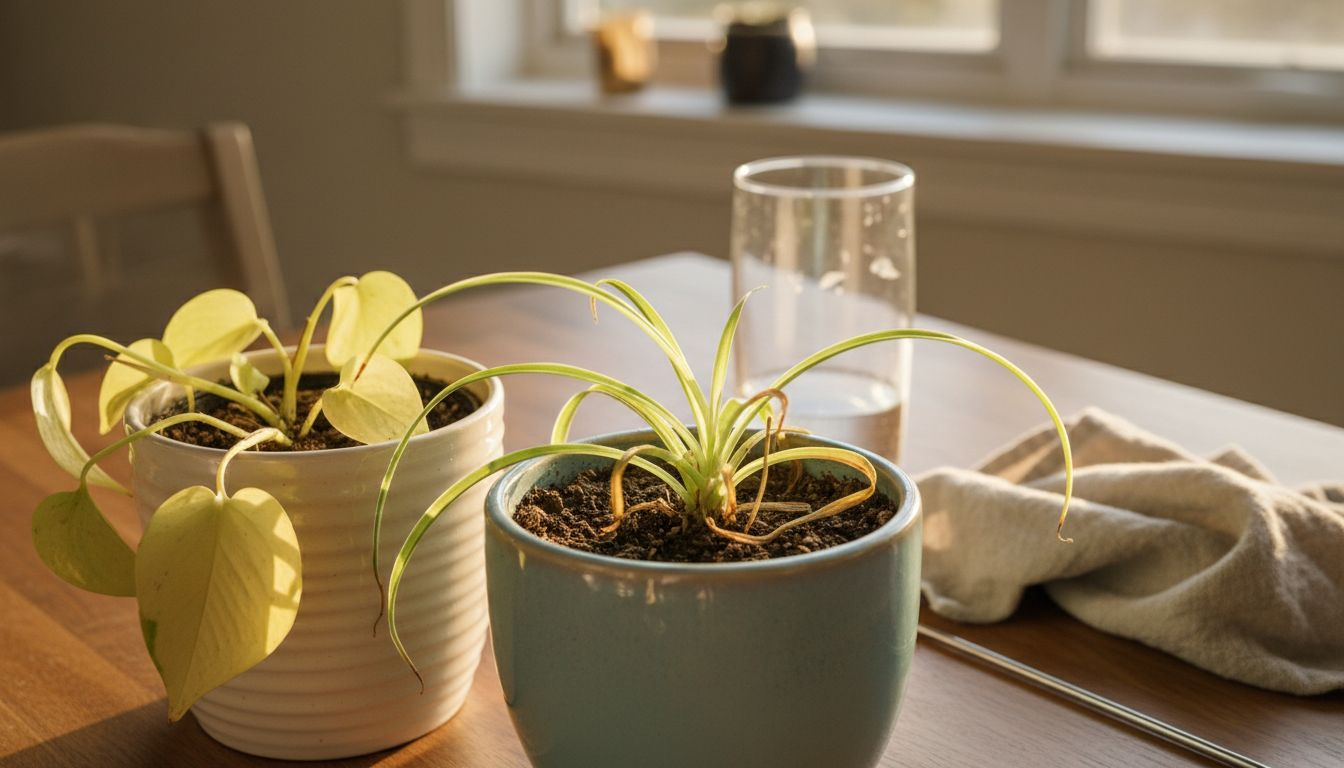
The primary diagnostic challenge lies in the remarkable similarity of symptoms between overwatering and underwatering. Both conditions can cause leaves to yellow, wilt, and display signs of stress, making visual identification tricky for even experienced gardeners.
Key Root Differences:
- Overwatered roots: Brown, mushy, and soft
- Underwatered roots: Dry, white or grayish, brittle
- Soil condition for overwatering: Consistently wet, compacted
- Soil condition for underwatering: Extremely dry, pulls away from container edges
Root health symptoms provide the most reliable method for distinguishing between these two watering extremes. Overwatered plants typically exhibit root rot characterized by dark, soft roots that easily break apart when touched. In contrast, underwatered plant roots appear desiccated and lose their robust structural integrity.
Detailed Symptom Comparison:
- Leaf Appearance
- Overwatering: Yellowing, soft, potentially translucent
- Underwatering: Crisp, brown edges, dry and brittle
- Soil Moisture
- Overwatering: Constantly wet, potential mold growth
- Underwatering: Extremely dry, hard, cracked soil
- Plant Response
- Overwatering: Stunted growth, potential fungal issues
- Underwatering: Wilting, leaf drop, reduced metabolism
Pro tip: Invest in a moisture meter to accurately assess soil hydration levels and prevent guesswork in plant watering.
Major Causes Behind Watering Mistakes
Plant watering is a nuanced art that requires more than simple routine. House plant care techniques reveal that most watering mistakes stem from fundamental misunderstandings about plant needs and environmental conditions.
Several critical factors contribute to improper watering practices. Gardeners often fall into predictable patterns that compromise plant health, such as adhering to rigid watering schedules instead of responding to individual plant requirements. This one-size-fits-all approach ignores the unique characteristics of different plant species and their specific environmental needs.
Primary Causes of Watering Mistakes:
- Lack of understanding specific plant water requirements
- Incorrect pot size causing moisture retention issues
- Rigid watering schedules disconnected from plant demand
- Inadequate soil moisture monitoring
- Misinterpreting plant stress signals
Environmental factors play a significant role in determining plant hydration needs. Indoor plant care strategies demonstrate that light exposure, humidity levels, temperature, and pot configuration dramatically influence a plant’s water absorption and retention capabilities.
Detailed Watering Mistake Breakdown:
- Emotional Watering
- Overwatering from excessive care
- Treating all plants identically
- Misinterpreting plant signals
- Neglectful Practices
- Forgetting plant watering needs
- Assuming drought tolerance
- Inconsistent moisture monitoring
- Environmental Mismanagement
- Ignoring light and humidity impacts
- Using inappropriate soil mixes
- Failing to adjust watering with seasonal changes
Successful plant care requires observation, adaptation, and understanding individual plant needs.
Pro tip: Create a personalized watering journal to track each plant’s unique moisture requirements and environmental responses.
For quick reference, see how common environmental and care mistakes relate to typical watering issues:
| Mistake Type | Often Leads to | Example Consequence |
|---|---|---|
| Fixed schedule watering | Overwatering | Persistent wet roots |
| Ignoring environmental changes | Underwatering | Wilting in dry conditions |
| Oversized pots | Overwatering | Water trapped, root rot |
| Inadequate soil aeration | Overwatering | Fungal growth in soil |
| Grouping all plant types | Both | Mismatched water needs |
Risks and Long-Term Effects on Plants
Undertanding the profound consequences of watering imbalances requires deep insight into plant physiology. Underwatering houseplant risks reveal a complex chain of biological stress that can permanently compromise plant health.
Chronic watering mistakes trigger cascading physiological responses that gradually erode a plant’s fundamental survival mechanisms. When plants experience prolonged water stress, their internal systems begin to shut down, creating a domino effect of cellular damage that can ultimately lead to irreversible decline.
Long-Term Risks of Watering Mistakes:
- Permanent root system damage
- Reduced nutrient absorption capacity
- Compromised photosynthetic processes
- Weakened plant immune responses
- Stunted growth and development
The most significant threat emerges from sustained stress conditions. Underwatered plants experience progressive root deterioration, where continuous lack of moisture causes root cells to collapse and lose their ability to transport water and nutrients effectively. This systematic breakdown means that even when watering improves, some damage remains permanent.
Damage Progression Stages:
- Initial Stress Response
- Leaf wilting
- Reduced cellular turgor pressure
- Minimal metabolic functioning
- Intermediate Decline
- Root structure degradation
- Nutrient absorption interruption
- Compromised cellular repair mechanisms
- Critical Breakdown
- Complete root system failure
- Irreversible physiological damage
- Potential plant death
Consistent, mindful watering is the foundation of plant survival and long-term health.
Pro tip: Develop a plant-specific watering strategy that considers individual species’ unique environmental and hydration requirements.
Practical Solutions and Prevention Strategies
Effective plant care requires a strategic approach to water management. Indoor plant watering techniques provide critical insights into maintaining optimal plant hydration without risking damage.
Prevention starts with understanding individual plant requirements and creating a personalized watering strategy. Different plant species have unique moisture needs, making a one-size-fits-all approach counterproductive. Careful observation and adaptability become key tools in successful plant care.
Key Prevention Strategies:
- Use moisture meters for precise hydration tracking
- Select pots with adequate drainage holes
- Choose soil mixes specific to plant types
- Group plants with similar water requirements
- Monitor environmental conditions regularly
Indoor plant care strategies emphasize the importance of understanding seasonal variations and plant dormancy periods. Temperature, humidity, and light exposure significantly impact water absorption and retention, requiring dynamic watering approaches.
Watering Best Practices:
- Check Soil Moisture
- Use finger test (1-2 inches deep)
- Utilize digital moisture meters
- Observe drainage patterns
- Water Quality Considerations
- Use room temperature water
- Allow chlorinated water to sit overnight
- Consider filtered or rainwater options
- Drainage and Container Selection
- Ensure drainage holes are clear
- Use terracotta or breathable pots
- Add pebble layers for improved drainage
Consistent, mindful observation is the most powerful tool in preventing watering-related plant stress.
Pro tip: Create a plant care journal to track individual plant responses and develop personalized watering schedules.
Master Your Houseplant Hydration with Expert Guidance from Lushy Gardens
Struggling to find the perfect watering balance for your indoor plants because of overwatering or underwatering confusion? You are not alone. Many plant lovers face the challenge of recognizing symptoms like yellowing leaves or wilting despite moist soil, which can feel overwhelming. Understanding key concepts such as root condition and soil moisture is essential to prevent long-term damage and keep your houseplants thriving.
At Lushy Gardens, our Plant Care section offers clear, practical advice to help you identify watering mistakes and tailor your routine to each plant’s unique needs. Explore our detailed tips on moisture monitoring and container selection plus discover trusted tools in our Garden Tools & Equipment category to make informed watering decisions every time. Don’t let uncertainty stress your green friends—visit Lushy Gardens now and unlock the secret to healthy, vibrant houseplants. Take control today and watch your indoor garden flourish!

Frequently Asked Questions
What are the signs of overwatering in houseplants?
Key symptoms of overwatering include yellowing leaves, wilting despite wet soil, mold growth on the soil surface, soft or mushy stem bases, and stunted growth.
How can I tell if my plant is underwatered?
Signs of underwatering include crispy, brown leaf edges, drooping or wilting leaves, dry, compacted soil, slow or halted growth, and leaf loss.
What are the main differences between overwatering and underwatering?
While both conditions can cause leaf yellowing and wilting, overwatering typically results in mushy, brown roots and consistently wet soil, whereas underwatering leads to dry, brittle roots and extremely dry soil.
How can I prevent overwatering or underwatering my houseplants?
To prevent these issues, use moisture meters for precise hydration tracking, select pots with adequate drainage, choose appropriate soil mixes for your plants, and monitor environmental conditions regularly.
Recommended
- Overwatering Signs – How They Impact Plant Health – Lushy Gardens
- Signs of Overwatering: What Every Gardener Should Spot – Lushy Gardens
- How Often to Water Snake Plant: Ultimate Watering Guide – Lushy Gardens
- Watering Indoor Plants Made Easy: Your Step-by-Step Guide – Lushy Gardens
- Bodenpflege Rund Um Bäume: Der Komplette Leitfaden – SPEZ AG – Spezialist im grünen Bereich

I’m Eleanor, a seasoned gardener with over three decades of experience tending to Mother Nature’s creations. Through Lushy Gardens, I aim to share my wealth of knowledge and help fellow plant enthusiasts uncover the wonders of gardening. Let’s dive into this journey together, one leaf at a time.


