
Table of Contents
More than eighty percent of American gardeners accidentally kill plants through overwatering instead of neglect. This silent mistake threatens even the most beautiful houseplants, turning containers into soggy traps that rob roots of oxygen. Understanding what overwatering really means helps plant lovers avoid costly errors, catch early signs of trouble, and keep their green spaces thriving from roots to leaves.
Key Takeaways
| Point | Details |
|---|---|
| Understanding Overwatering | Overwatering occurs when plants receive more moisture than they can absorb, leading to root suffocation and plant distress. |
| Recognizing Symptoms | Leaf yellowing, wilting, and soft stem bases are key indicators of overwatering that should be closely observed. |
| Assessing Soil Health | Consistently wet soil and signs of fungus gnats indicate excessive moisture, which can harm plant health. |
| Prioritizing Root Health | Checking root condition is essential; healthy roots are white and firm, while overwatered roots are brown and mushy. |
What overwatering really means
Overwatering represents a critical gardening mistake that goes far beyond simply adding too much water. At its core, overwatering is a complex process where plants receive more moisture than their root systems can effectively absorb or process. When soil becomes saturated, it displaces essential oxygen needed for healthy root function, creating a dangerous environment for plant survival.
The fundamental problem with overwatering stems from root physiology. Healthy plant roots require a delicate balance of water and air to function properly. When soil remains constantly wet, fine root hairs begin to suffocate and deteriorate, dramatically reducing the plant’s ability to uptake water and nutrients. This process creates a paradoxical situation where a plant appears to be drowning despite being surrounded by water, leading to symptoms like leaf yellowing, wilting, and potential plant death.
Professional gardeners understand that overwatering is not just about quantity, but about understanding each plant’s unique moisture requirements. Different plant species have varying water needs based on factors like their native environment, root structure, and growth stage. Succulents, for instance, require dramatically less water compared to tropical plants. By recognizing these nuanced differences and allowing topsoil to dry between waterings, gardeners can prevent the devastating consequences of chronic overhydration and maintain plant health.
Recognizing leaf and stem symptoms
Leaf and stem symptoms are critical indicators of plant health, providing early warning signs of potential overwatering damage. When roots become waterlogged, plants exhibit distinctive visual cues that signal distress. Edema, a condition caused by excessive water absorption, manifests as unusual physical changes on leaves, including brown, corky, scab-like spots that appear primarily on lower leaf surfaces.
Specific visual symptoms of overwatering include leaf yellowing, particularly in lower and inner leaves, and a characteristic wilting that might seem counterintuitive. Despite abundant water, plants begin to display signs of dehydration because their root systems can no longer effectively transport nutrients. Leaf edges might turn brown or develop chlorosis (yellowing) with reduced overall growth, indicating the plant’s struggle to manage excessive moisture.
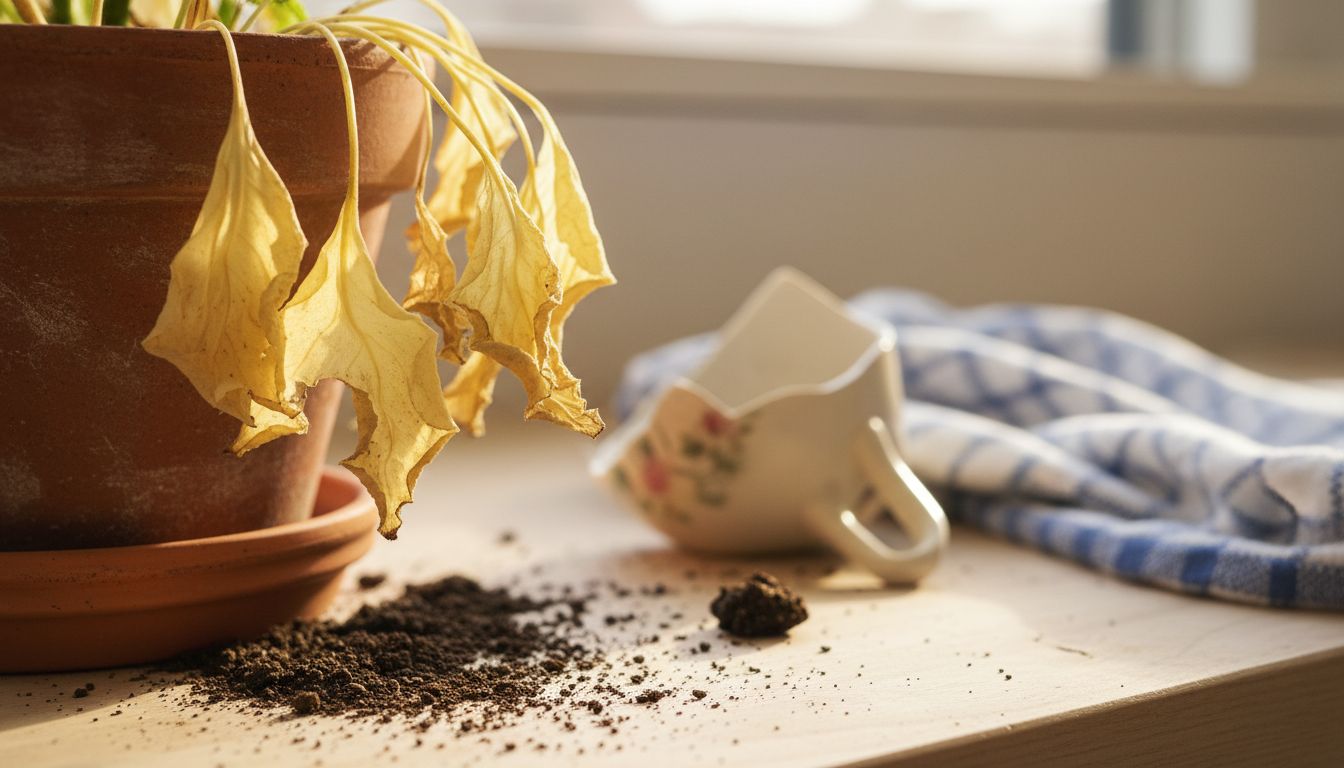
Stem symptoms are equally telling. Overwatered plants often develop soft, mushy stem bases, and the stems might feel weak or start to show discoloration. Dark or black spots near the soil line can indicate root rot, a severe consequence of prolonged overwatering. Gardeners should pay close attention to these subtle changes, as early detection can mean the difference between saving a plant and losing it completely. Understanding plant diseases helps prevent long-term damage and supports healthier plant growth.
Spotting soil and surface indicators
Spotting early signs of overwatering requires a keen eye for subtle changes in soil condition and plant surface characteristics. Consistently wet soil is a primary warning signal that suggests potential moisture problems. When soil remains saturated for extended periods, it creates an environment hostile to healthy plant growth, preventing essential oxygen from reaching root systems.
One of the most telling indicators of overwatering is the emergence of fungus gnats hovering around plant bases. These tiny insects thrive in overly moist environments and serve as a clear warning that your soil contains excessive moisture. Additionally, gardeners should pay attention to soil texture and smell. Healthy soil should feel slightly damp but not waterlogged, and any persistent musty or rotten odor indicates potential root decay. Diagnosing houseplant problems often involves examining these subtle environmental changes.
Surface indicators extend beyond soil conditions. Mold or algae growth on the soil surface, white crusty mineral deposits, and an unusually compacted soil structure all suggest chronic overwatering. Professional gardeners recommend using a moisture meter or performing a simple finger test by inserting your digit about an inch into the soil to check moisture levels. If the soil feels consistently wet or shows signs of compaction, it’s time to adjust your watering routine and potentially improve drainage to prevent long-term plant damage.
Uncovering root and growth issues
Root health represents the most critical indicator of plant vitality, and overwatering can devastate these delicate underground systems. Root rot develops when excessive moisture causes roots to become brown and mushy, dramatically impairing the plant’s ability to absorb essential water and nutrients. This cellular breakdown occurs quickly, transforming healthy white roots into decaying, fragile structures that can no longer support plant growth.
The systemic impact of root damage extends far beyond the soil line. When root systems deteriorate, plants experience stunted growth and reduced nutrient transportation. Drowning root systems struggle to uptake water and nutrients effectively, leading to a cascade of visible symptoms including wilting, yellowing leaves, and dramatically reduced plant vigor. Gardeners might observe that despite abundant water, plants appear increasingly weak and unhealthy.

Uncovering these hidden root issues requires careful investigation. Gently removing a plant from its container can reveal the true extent of damage. Healthy roots appear firm and white, while overwatered roots turn brown, soft, and may even emit a foul, rotting odor. Why plants wilt becomes clearer when examining these root structures, as the underground damage directly correlates with above-ground plant distress. Experienced gardeners know that early detection and intervention can mean the difference between saving a plant and losing it completely.
Why overwatering harms plants
Overwatering represents a complex biological assault on plant health, disrupting fundamental physiological processes that sustain life. Reduced oxygen availability in soil creates a catastrophic environment for root systems, preventing critical gas exchange necessary for nutrient absorption and cellular respiration. When soil becomes saturated, roots essentially suffocate, losing their ability to function effectively and support overall plant metabolism.
The cascading consequences of overwatering extend far beyond initial root damage. Saturated soils create perfect breeding grounds for destructive pathogens, including fungal and bacterial organisms that rapidly colonize weakened root structures. These opportunistic microorganisms accelerate root decay, transforming once-healthy underground networks into mushy, ineffective tissues that can no longer transport water or nutrients to the plant’s above-ground structures.
Ultimately, overwatering triggers a systematic breakdown of plant defenses. Symptoms like wilting, yellowing leaves, and stunted growth are not just cosmetic issues, but clear signals of profound internal stress. Saving dying plants requires understanding this intricate biological response, recognizing that each drop of excess water can push a plant closer to complete metabolic failure. Gardeners must approach watering as a precise science, balancing moisture with the delicate respiratory needs of their green companions.
Take Control of Overwatering and Save Your Plants Today
Overwatering can quietly sabotage your plants by causing root rot, wilting leaves, and stunted growth. Identifying the early signs like soggy soil, leaf yellowing, or mushy stems is crucial for restoring your plants’ health. If you want to protect your garden and understand the precise moisture needs of each plant, exploring expert advice can make all the difference.
Discover practical solutions and tailored plant care strategies at Plant Care – Lushy Gardens. Dive into detailed guides on spotting overwatering symptoms and adjusting your watering habits. Don’t wait until your plants start showing distress. Visit Lushy Gardens now and empower your green thumb with trusted tips and step-by-step advice. Your thriving garden starts here.

Frequently Asked Questions
What are the common signs of overwatering a plant?
Common signs of overwatering include yellowing leaves, wilting despite moist soil, soft and mushy stems, and the presence of mold or algae on the soil surface.
How can I tell if my plant is getting too much water?
You can tell if your plant is getting too much water by checking for consistently wet soil, the emergence of fungus gnats, and the presence of root rot, which can be identified by brown, mushy roots when the plant is removed from its pot.
What should I do if I suspect my plant is overwatered?
If you suspect your plant is overwatered, reduce your watering frequency, allow the topsoil to dry out, and check the drainage of the pot to ensure excess water can escape.
Can overwatering permanently damage my plants?
Yes, overwatering can permanently damage your plants by causing root rot and depriving roots of essential oxygen, which can lead to stunted growth and even plant death.
Recommended
- Why Plants Wilt: Complete Guide for Gardeners – Lushy Gardens
- Watering Indoor Plants Made Easy: Your Step-by-Step Guide – Lushy Gardens
- 7 Essential Container Gardening Tips for Success – Lushy Gardens
- Can You Revive a Dead Plant – Lushy Gardens
- Amazing soil-less farming – AMAZING GARDEN
- Baumpflege im Frühling Guide: Bäume sicher und gesund erhalten – SPEZ AG – Spezialist im grünen Bereich

I’m Eleanor, a seasoned gardener with over three decades of experience tending to Mother Nature’s creations. Through Lushy Gardens, I aim to share my wealth of knowledge and help fellow plant enthusiasts uncover the wonders of gardening. Let’s dive into this journey together, one leaf at a time.


