
Table of Contents
Every indoor gardener has faced the frustration of yellow leaves or stunted growth without knowing exactly what went wrong. Recognizing these setbacks matters because most mistakes come from misunderstanding your plant’s actual needs. By exploring common gardening mistakes and persistent myths, you’ll gain practical guidance for avoiding preventable errors and promoting healthier plants in your unique home environment.
Key Takeaways
| Point | Details |
|---|---|
| Understand Plant Needs | Recognize that each plant species has unique light, water, and soil requirements to thrive. Research each plant’s specific needs before care begins. |
| Avoid Common Watering Mistakes | Consistency in watering is crucial; check soil moisture regularly and avoid fixed schedules to prevent overwatering or underwatering. |
| Establish Stable Conditions | Maintain consistent temperature and humidity levels to reduce plant stress and promote growth. Regularly monitor for environmental changes. |
| Early Pest Detection | Inspect plants weekly, particularly the undersides of leaves, to catch pest infestations early before they escalate into larger problems. |
Defining Gardening Mistakes and Common Myths
Gardening mistakes aren’t always obvious failures. Most stem from misunderstanding plant needs, not from carelessness or bad luck.
A gardening mistake is any action or inaction that prevents your plant from thriving in its current environment. This includes incorrect watering, poor lighting choices, temperature swings, or picking the wrong plant for your space.
What makes these mistakes tricky is that they don’t announce themselves loudly. Your plant won’t fail overnight. Instead, you’ll notice slow decline: yellowing leaves, stunted growth, or sudden leaf drop. By then, the damage has been building for weeks.
Improper care practices cause most houseplant problems, from inadequate lighting to inconsistent watering schedules. These aren’t mysterious failures. They’re preventable.
Breaking Down Common Mistakes
The biggest culprits in beginner gardening are:
- Inconsistent watering – Plants crave routine, but not always the routine you think they need
- Overfertilizing – More nutrients sound helpful; they actually burn roots and create salt buildup
- Poor temperature management – Drafts, heat sources, and cold windows stress plants constantly
- Wrong lighting decisions – Natural window light is often insufficient for tropical houseplants
- Unsuitable space selection – Picking rooms without considering light consistency or temperature stability
Each of these mistakes is fixable once you recognize it.
Separating Myth from Reality
Gardening myths persist because they sound logical. A window gets sunlight, so it must be good enough for plants. Indoor plants purify your air significantly, so you can skip other air quality measures. Plants are either hardy or finicky with no middle ground.
None of these are true.
Myths about houseplant care often stem from assumptions rather than botanical reality; understanding your plant’s actual needs beats following generic advice.
Common myths that lead beginners astray include:
- “Natural window light is always enough” – Many indoor plants need supplemental grow lights
- “All houseplants need the same care” – Care varies dramatically by species
- “Plants thrive indoors with the same routine as outdoors” – Indoor conditions differ fundamentally
- “If my plant survives, I’m doing fine” – Surviving isn’t thriving
Selecting unsuitable spaces with poor lighting remains a core indoor gardening error, yet most beginners don’t realize their chosen spot lacks sufficient light until problems emerge.
The difference between a myth and reality is understanding why your plant needs what it needs. Light isn’t just about visibility; it powers photosynthesis. Temperature isn’t arbitrary; it affects metabolism and water uptake. Once you shift from following rules to understanding reasons, mistakes become obvious before they damage your plants.
Pro tip: Start documenting what happens to your plants weekly—leaf color, new growth, soil moisture—and correlate changes with your care routine. Patterns reveal which practices work for your specific setup.
Types of Mistakes Among Indoor Gardeners
Indoor gardeners encounter a predictable set of mistakes. Understanding each type helps you spot problems before they spiral into plant death.
Mistakes fall into distinct categories based on care routines. Some involve too much attention; others involve neglect. The tricky part is that the same symptom can stem from different mistakes.
Yellowing leaves might signal overwatering, underwatering, poor lighting, or nutrient imbalance. That’s why identifying the mistake type matters more than treating the symptom.
Here’s a quick reference comparing the effects, causes, and solutions for common indoor plant problems:
| Problem Symptom | Possible Cause | Distinguishing Feature | Effective Solution |
|---|---|---|---|
| Yellowing leaves | Overwatering | Soggy soil, wilting despite water | Let soil dry, improve drainage |
| Brown leaf tips | Low humidity | Crispy edges, otherwise healthy | Increase air moisture, group plants |
| Leaf drop | Sudden temperature shift | Happens after drafts or cold nights | Move plant, stabilize temperature |
| Stunted growth | Insufficient light | Small, pale new leaves | Add grow light, move closer to source |
| White crust on soil | Over-fertilizing | Visible salt deposit on surface | Flush soil, reduce feeding |
Watering Mistakes
Watering dominates the mistake list for indoor gardeners. This is where most beginners go wrong repeatedly.
Overwatering and underwatering rank as the most frequent errors, each causing distinct damage patterns. Overwatering suffocates roots by keeping soil perpetually wet, encouraging root rot and fungal issues. Underwatering stresses plants by withholding the moisture they need for nutrient transport and photosynthesis.
The problem isn’t that watering is complicated. It’s that beginners follow rigid schedules instead of checking soil moisture first.
- Watering on a fixed schedule – Your plant doesn’t care what day it is
- Not checking soil before watering – Wet soil means the plant doesn’t need water yet
- Using water that’s too cold – Temperature shock stresses tropical plants
- Watering foliage instead of soil – Wet leaves invite fungal problems
Lighting and Placement Errors
Light mistakes are equally common but often invisible until damage appears. Many beginners assume a sunny window is sufficient for all plants.
It’s not. Tropical houseplants evolved in forest understories, not on sun-exposed windowsills. A single window direction provides only a fraction of the light these plants need indoors. North-facing windows receive minimal light. South-facing windows might provide too much direct sun, scorching sensitive foliage.
Placement mistakes extend beyond light. Drafty windows, heating vents, and radiators create temperature swings that stress plants constantly.
- Assuming one window works for all plants – Light needs vary dramatically
- Placing plants near heating or cooling sources – Temperature fluctuations damage growth
- Overcrowding plants – Poor air circulation invites pests and disease
- Ignoring seasonal light changes – Winter provides less light; plants need adjustment
Soil and Fertilization Problems
Wrong soil type and over-fertilizing create compounding problems that take time to reveal themselves.
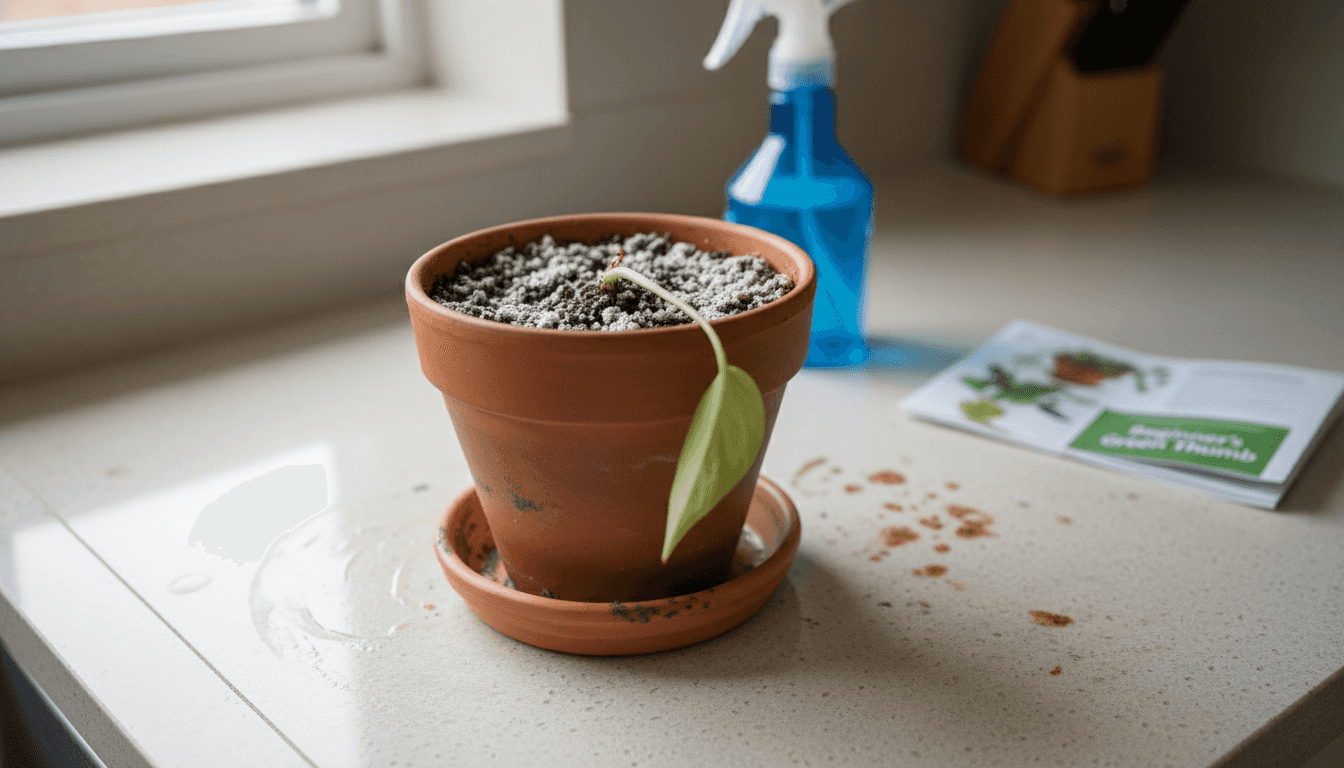
Using garden soil instead of potting mix causes drainage issues. Garden soil compacts indoors and holds too much moisture. Potting mixes are engineered for container drainage and root health.
Over-fertilizing is equally problematic. More nutrients don’t equal healthier plants. Excess fertilizer builds up as salt deposits in soil, burning roots and preventing water absorption.
- Using garden soil instead of potting mix – Indoor pots need fast drainage
- Overfertilizing regularly – This creates salt buildup and root damage
- Using soil without proper aeration – Roots need oxygen in addition to water
- Ignoring soil refresh – Old, depleted soil needs annual replacement
The most common mistake isn’t a single error; it’s failing to adjust care based on what your plant actually shows you through its condition.
Pest and Health Neglect
Mistakes also include ignoring early pest signs and failing to adjust care when problems emerge. Indoor pests spread rapidly in enclosed spaces.
Detecting spider mites, mealybugs, or scale insects early makes treatment manageable. Missing them allows populations to explode.
Pro tip: Inspect the undersides of leaves weekly during the growing season. Pests hide there first, giving you a two-week head start before visible damage spreads to the rest of your plant.
How Plant Care Routines Impact Growth
Your care routine is the foundation of everything. It’s not about perfection; it’s about consistency and understanding how each action ripples through your plant’s biology.
Think of plant care like a daily medicine schedule. Missing doses occasionally isn’t catastrophic, but erratic timing stresses the system. The same principle applies to watering, light exposure, and feeding.
The Science Behind Consistency
Proper care routines regulate key physiological processes like photosynthesis and nutrient absorption, directly influencing how fast and healthy your plants grow. When you water inconsistently, your plant shifts between survival mode and growth mode repeatedly. This exhausts it.
Consistency creates predictability. Your plant stops wasting energy on stress responses and channels it toward new leaves, stronger stems, and expanded root systems.
Think of it this way: a plant in stable conditions can focus on thriving. A plant in fluctuating conditions is just surviving.
Watering Patterns and Root Development
Watering frequency matters far less than watering consistency. The key is matching water availability to your plant’s actual needs.
Inconsistent watering and neglecting environmental lighting significantly impact plant health by creating stress that prevents normal nutrient uptake. Roots absorb water and nutrients more efficiently when soil moisture remains relatively stable. Alternating between soggy and bone-dry soil interrupts this process.
Establish a watering routine that works for your schedule, then stick to it:
- Check soil moisture before watering – Feel the top inch with your finger
- Water thoroughly but not excessively – Soil should be moist, not waterlogged
- Use the same time window each week – Morning watering is ideal
- Adjust for seasonal changes – Plants need less water in winter dormancy
Light Exposure and Growth Rate
Lighting routines directly control growth speed. More consistent light means faster photosynthesis and more energy for development.
Plants grown near stable light sources develop stronger, fuller shapes. Plants moved between low and bright spots become leggy as they stretch searching for light.
Establish a predictable light exposure:
- Place plants in consistent light locations – Avoid moving them weekly
- Extend winter light with supplemental grow lights – Seasonal light drops dramatically
- Monitor seasonal window light changes – South-facing exposure shifts with seasons
- Rotate plants quarterly – This prevents one-sided growth patterns
Temperature Stability and Metabolic Health
Constant temperature ranges support steady growth. Temperature swings trigger stress responses that slow development.
Keep your plants away from drafts, heating vents, and cold windows. Stable indoor temperatures between 65-75°F support most tropical houseplants perfectly.
A predictable care routine removes environmental guesswork; your plant’s energy goes toward growth instead of stress management.
Measuring Success Through Routine
A reliable routine lets you detect problems early. When you know your plant’s baseline appearance and behavior, deviations become obvious immediately.
You’ll spot yellowing leaves faster. You’ll notice pest infestations earlier. You’ll catch nutrient deficiencies before they cause serious damage.
Pro tip: Photograph your plants every two weeks under consistent lighting. Comparing images month-to-month reveals growth patterns and problems far more clearly than daily observation ever could.
Key Factors: Water, Light, and Soil Selection
Three factors control indoor plant success. Master these, and most other problems disappear.
Water, light, and soil aren’t separate concerns. They interact constantly. Wrong soil makes watering harder. Insufficient light reduces water needs. Poor drainage causes root rot regardless of your watering discipline. Get these three right, and your plants transform.
This table summarizes the interaction between water, light, and soil and their impact on plant health:
| Factor | Main Function | If Insufficient | If Excessive |
|---|---|---|---|
| Water | Delivers nutrients | Wilting, leaf curl | Root rot, fungus |
| Light | Drives photosynthesis | Pale, slow growth | Leaf scorch, bleaching |
| Soil | Anchors & nourishes roots | Poor growth, compaction | Waterlogging, root suffocation |

Water Management: Finding the Sweet Spot
Watering seems simple until you realize plants need different amounts at different times. The goal isn’t to water frequently; it’s to keep soil appropriately moist.
Proper drainage is non-negotiable. Pots must have drainage holes. Soil must dry slightly between waterings. Without drainage, water accumulates and suffocates roots. Proper water management and well-draining soil prevent most common houseplant problems, from root rot to fungal infections.
The rule is simple: water when the top inch of soil feels dry to your touch. This timing varies by season, plant species, and container size. That’s why rigid schedules fail. Adjust based on what you feel, not what a calendar says.
- Feel the soil before watering – Stick your finger one inch into the soil
- Water until it drains from the bottom – This ensures thorough soil saturation
- Empty saucers after 10 minutes – Standing water promotes root rot
- Reduce watering in winter – Plants need less moisture during dormancy
Light Intensity: The Energy Source
Light directly powers photosynthesis, which drives all growth. Insufficient light creates stunted, weak plants that never develop properly.
Light intensity and duration directly affect plant growth; inadequate light produces poor development. Most tropical houseplants need bright, indirect light for 12-14 hours daily. A single window rarely provides enough.
This is where beginners stumble. They assume one sunny window covers everything. It doesn’t. North-facing windows provide minimal light. South-facing windows work better but still may fall short depending on season and building shade.
Consider these light realities:
- Window light changes seasonally – Summer provides more light than winter
- Room distance matters – Light decreases dramatically 6 feet from a window
- Supplemental grow lights are practical – They’re affordable and adjustable
- Some plants thrive in lower light – But growth slows considerably
Soil Selection: The Growing Medium Foundation
Soil isn’t just dirt. Indoor potting mixes are engineered for container plants. Garden soil compacts indoors, holds too much moisture, and causes drainage problems.
Choosing the right soil mixture and adjusting watering accordingly support optimal plant health. Quality potting soil provides structure for roots, retains appropriate moisture, and drains excess water quickly.
Look for potting mixes containing peat moss or coconut coir, perlite, and orchid bark. These components create air pockets roots need while maintaining moisture balance.
Soil quality matters more than most beginners realize:
- Use potting mix, not garden soil – Indoor containers need fast drainage
- Refresh soil annually – Old soil becomes depleted and compacted
- Add perlite for heavy potting mixes – This improves drainage without disrupting moisture retention
- Match soil type to plant species – Succulents need sandier mixes than ferns
The strongest indoor plants thrive when water, light, and soil work together; mastering one without the others leaves you fighting an uphill battle.
Pro tip: Before repotting, always check your current potting mix for compaction by squeezing a handful after watering—if it stays compressed and doesn’t crumble, it’s time for fresh soil regardless of how long it’s been.
Practical Tips to Prevent Common Pitfalls
Prevention beats treatment. Once a problem develops, recovery takes weeks or months. Small preventive actions taken now save enormous effort later.
The good news is that most mistakes are preventable with awareness and simple habits. You don’t need special equipment or expertise. You need consistency and attention.
Know Your Plant’s Specific Needs
Each plant is different. Treating all houseplants identically guarantees failure. A succulent thrives on neglect while a fern demands consistent moisture.
Understanding each plant’s specific needs and ensuring consistent environmental conditions reduce common pitfalls that waste your time and kill plants. Before bringing a plant home, research its light requirements, humidity preferences, and watering frequency.
Spend five minutes learning specifics about your plants:
- Check the plant tag or research online – Most plants come with basic care information
- Group plants by similar needs – This simplifies watering and placement
- Adjust care seasonally – Growth slows in winter; plants need different conditions
- Track what works for your home – Your apartment isn’t the same as a greenhouse
Maintain Consistent Environmental Conditions
Plants hate surprises. They thrive on stability. Temperature swings, inconsistent watering, and variable light stress them continuously.
Consistency doesn’t mean perfection. It means establishing a routine your plants can depend on. When conditions stay relatively stable, plants focus energy on growth instead of survival.
- Keep temperatures between 65-75°F – Avoid locations near heating vents or drafts
- Water on a predictable schedule – Check soil regularly rather than watering randomly
- Position plants in stable light – Avoid moving them frequently between bright and dim spots
- Maintain consistent humidity – Tropical plants appreciate 40-60% humidity; group them together
Pest Detection and Disease Management
Early detection saves plants. By the time you notice visible pest damage, infestations have often spread significantly.
Inspect plants weekly, particularly the undersides of leaves where pests hide first. Catching spider mites, mealybugs, or scale insects early makes treatment simple. Missing them allows populations to explode across your collection.
- Inspect leaf undersides weekly – This is where pests establish first
- Isolate affected plants immediately – Prevent spread to nearby plants
- Treat promptly with appropriate methods – Neem oil works for many common pests
- Monitor treated plants for relapse – Repeat treatments are often necessary
Sanitation Prevents Compounding Problems
Using clean pots and fresh soil reduces disease and pest issues that accumulate over time. Old soil loses its structure and becomes a breeding ground for fungal spores and pest eggs.
Clean equipment sounds tedious, but it’s your cheapest insurance.
- Sterilize pots before reuse – Wash with hot soapy water or dilute bleach
- Replace soil annually – Old soil compacts and depletes naturally
- Remove dead leaves promptly – These decay and invite fungal problems
- Disinfect pruning tools between plants – This prevents disease transmission
The simplest prevention is attention: a five-minute weekly plant inspection catches 90% of problems before they become serious.
Fertilization Strategy
Over-fertilizing causes more damage than under-fertilizing. Plant roots burn from excess nutrients accumulating as salt deposits in soil.
Use diluted fertilizer at half strength during growing season, then stop entirely in winter. Most indoor plants need minimal feeding because they’re not producing fruit or flowers.
Pro tip: Create a simple calendar reminder for the first of each month during growing season (spring and summer) to inspect plants for pests, check soil moisture, and rotate them one quarter turn for even growth on all sides.
Master Indoor Plant Health by Avoiding Common Gardening Mistakes
Struggling with yellowing leaves or inconsistent watering routines can leave any indoor gardener feeling frustrated and uncertain. This article breaks down key challenges like improper watering, insufficient light, and unsuitable soil—issues that often cause slow plant decline rather than sudden failure. Understanding these pain points such as overfertilizing, temperature stress, or pest neglect is essential to help your plants not only survive but thrive.
For personalized guidance and practical solutions, explore our collection of Gardening Tips – Lushy Gardens and tailored advice for novices in Gardening for Beginners – Lushy Gardens. Don’t wait until your plant shows signs of distress. Visit Lushy Gardens now to build a consistent care routine that fosters healthy growth and vibrant indoor greenery.
Frequently Asked Questions
What are common mistakes to avoid when watering indoor plants?
Inconsistent watering is a major mistake. Always check the soil moisture before watering, and avoid following a rigid schedule. Water thoroughly, but ensure the soil has good drainage to prevent root rot.
How can I determine if my indoor plant is getting enough light?
Observe your plant’s growth and leaf color. If the leaves are pale or the plant is stretching towards the light, it likely needs more light. Consider using supplemental grow lights if natural light is insufficient.
What type of soil should I use for my indoor plants?
Always use a high-quality potting mix specifically designed for indoor plants. Avoid garden soil as it can compact and hold too much moisture, leading to drainage issues. Look for mixes containing peat moss, perlite, and organic matter.
How often should I fertilize my indoor plants?
Use a diluted fertilizer at half strength during the growing season (spring and summer) and refrain from fertilizing in the winter when plants are typically dormant. Over-fertilizing can cause salt buildup and burn the roots.
Recommended
- Garden Planning Mistakes: Avoiding Common Pitfalls – Lushy Gardens
- Essential Indoor Gardening Tips for Urban Dwellers – Lushy Gardens
- Indoor House Plants: Enhance Air Quality Safely – Lushy Gardens
- Pruning Indoor Plants Naturally for Healthy Growth – Lushy Gardens
- How to Keep Pets Safe Indoors: 5 Essential Steps – iPupPee

I’m Eleanor, a seasoned gardener with over three decades of experience tending to Mother Nature’s creations. Through Lushy Gardens, I aim to share my wealth of knowledge and help fellow plant enthusiasts uncover the wonders of gardening. Let’s dive into this journey together, one leaf at a time.


