
Table of Contents
TL;DR:
- Biodynamic gardening treats the garden as a self-sustaining organism by integrating soil, plants, and animals. It emphasizes closed-loop fertility, biodiversity, and calendar-based planting, exceeding organic standards. Practitioners focus on soil health first, observing the garden daily to enhance ecological balance and resilience.
Biodynamic gardening is defined as a closed-loop ecological farming method that treats the garden as a self-sustaining living organism, integrating soil, plants, animals, and natural rhythms to build long-term fertility. Developed by Rudolf Steiner in 1924, it is widely recognized as “beyond organic” because it relies on on-farm resources rather than imported inputs. Demeter International certifies biodynamic operations in over 60 countries, requiring at least 10% of farm land to be set aside for biodiversity. If you practice organic gardening and want to go deeper into soil health and ecosystem thinking, biodynamic agriculture offers a structured, proven framework to do exactly that.
What is biodynamic gardening and how does it work?
Biodynamic gardening works by managing your garden as one interconnected system rather than a collection of individual plants. Soil, insects, water, compost, and even the timing of tasks are treated as parts of a single living whole. The goal is a garden that feeds itself over time, reducing dependence on anything brought in from outside.
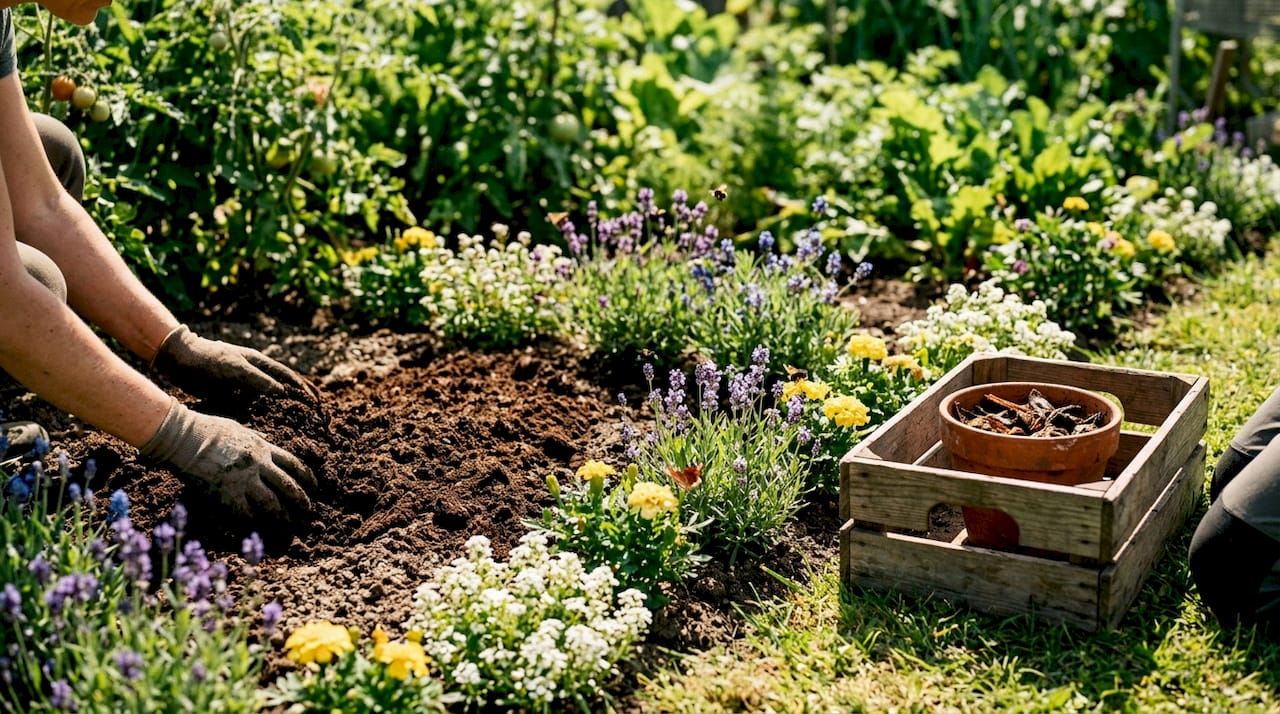
Demeter International describes this as the “farm organism” concept. Every element on the property, from earthworms to hedgerows, contributes to the balance and productivity of the whole. This philosophy separates biodynamics from most other gardening systems, which tend to manage soil, pests, and fertility as separate problems.
The method also incorporates biodynamic preparations, numbered 500–508, made from herbs, minerals, and animal manures. These are used in small amounts to stimulate biological activity in soil and plants. Think of them as bio-regulators rather than fertilizers. They do not feed the plant directly. They signal the soil ecosystem to become more active and self-regulating.
Key principles of biodynamic farming
The principles of biodynamic farming form a layered system. Each one reinforces the others, which is why practitioners say the whole is greater than the sum of its parts.
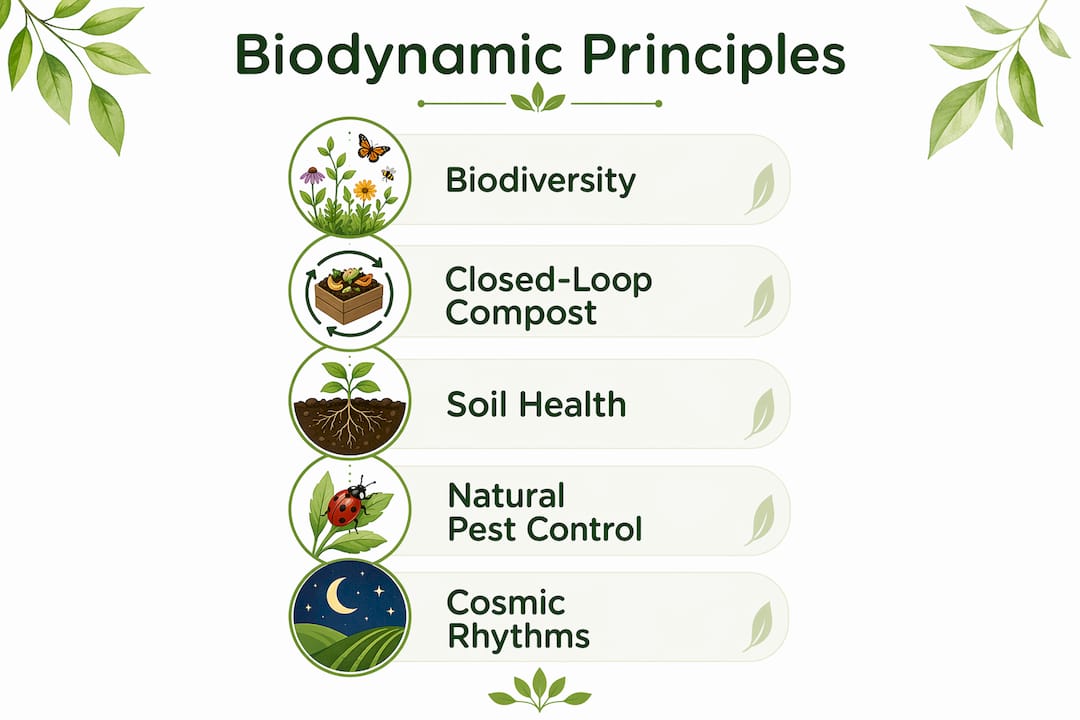
- Farm as a living organism. Soil, plants, animals, and people are treated as one integrated system. Decisions about one element always consider the effect on the others.
- Closed-loop nutrient cycling. Fertility comes primarily from on-farm resources: compost, cover crops, and animal manures. Limiting imported inputs builds soil vitality and resilience over time rather than creating dependency on external products.
- Biodiversity as infrastructure. Biodynamic certification requires at least 10% of farm area dedicated to biodiversity preserves such as wetlands, hedgerows, or insectaries. This is not optional. It is a structural requirement that supports pest control, pollination, and water management.
- Biodynamic preparations. The 500–508 preparations act as bio-regulators, used in minute doses to stimulate self-regulation in soil and plant systems. Preparation 500, made from cow manure fermented in a cow horn, is the most widely used field spray.
- Cosmic rhythms and lunar planting. Biodynamic practitioners plant, cultivate, and harvest according to a lunar calendar that categorizes days as root, flower, fruit, or leaf days. The planting calendar increases observation frequency, which aids early pest and disease detection regardless of how you view the astronomical theory behind it.
These principles work together. Biodiversity supports pest control. Closed-loop composting feeds soil biology. Healthy soil biology makes plants more resistant to disease. The calendar keeps you in the garden regularly enough to notice problems early.
How does biodynamic gardening differ from organic gardening?
Organic gardening and biodynamic agriculture share a rejection of synthetic pesticides and fertilizers. Beyond that shared foundation, the two systems diverge in meaningful ways.
Organic gardening focuses on avoiding harmful inputs and maintaining soil health through approved amendments. It does not prescribe a specific farm structure, biodiversity requirement, or timing system. You can run a certified organic operation while importing large quantities of approved fertilizers from off-site.
Biodynamics goes further on every front. Demeter certification standards exceed organic requirements by mandating stricter controls on imported fertility, water conservation, and biodiversity support. The farm must function as a largely self-sufficient system. That is a fundamentally different standard.
| Feature | Organic gardening | Biodynamic gardening |
|---|---|---|
| Synthetic inputs | Prohibited | Prohibited |
| Imported fertility | Permitted (approved sources) | Strictly limited |
| Biodiversity requirement | Not mandated | 10% land set-aside required |
| Specialized preparations | Not used | Preparations 500–508 required |
| Timing system | No requirement | Lunar planting calendar |
| Certification body | USDA NOP, others | Demeter International |
The scientific community holds mixed views on biodynamic preparations and lunar planting. Skepticism exists due to limited controlled research, but many growers report tangible horticultural benefits from the ecological management focus. The biodiversity requirements, composting standards, and closed-loop fertility practices have strong ecological science behind them regardless of the debate over preparations.
Pro Tip: If you are new to biodynamics, treat the lunar calendar as a scheduling tool first. It gets you into the garden on a consistent rhythm, which alone improves plant observation and early problem detection.
How to start biodynamic gardening
Starting with biodynamic gardening does not require certification or specialized preparations on day one. Experienced practitioners consistently recommend building soil first before layering in more complex practices.
- Build a quality compost pile. A single, well-aerated aerobic compost pile is the foundation of the entire system. Focus on carbon-to-nitrogen balance, consistent moisture, and regular turning. Get this right before anything else.
- Map your garden as a system. Sketch your space and identify where you can add biodiversity elements: a hedgerow along a fence, a small wildflower patch, or a water feature. Think about how air, water, and insects move through the space.
- Plant insectary flowers throughout the garden. Insectary flowers and hedgerows attract beneficial insects and support natural pest control. Space them every 6–10 feet within growing areas for consistent coverage.
- Start using a biodynamic planting calendar. The Maria Thun Biodynamic Calendar is the most widely used reference. Begin by simply noting which type of day it is (root, flower, fruit, or leaf) and observe whether your plants respond differently over a season.
- Establish a weekly maintenance rhythm. Consistent weekly observation is one of the most recommended practices in biodynamic systems. It keeps you attuned to changes in soil, plant health, and pest pressure before problems escalate.
- Introduce cover crops and crop rotation. Crop rotation reduces disease cycles and builds soil structure. Cover crops add organic matter and fix nitrogen without importing fertility.
Pro Tip: Start your compost pile with a mix of kitchen scraps, garden trimmings, and a small amount of finished compost as a microbial starter. A well-made home compost pile can reach the quality needed for biodynamic soil building within three to four months.
What are the benefits and challenges of biodynamic gardening?
Biodynamic gardening produces measurable ecological benefits, but it also demands more from the gardener than conventional or standard organic methods.
Benefits:
- Improved soil structure. Closed-loop nutrient cycling builds organic matter and microbial diversity over multiple seasons. Soil becomes more water-retentive and aerated without external amendments.
- Greater biodiversity. The mandatory biodiversity set-asides create habitat for beneficial insects, birds, and soil organisms. This reduces pest and disease pressure naturally over time.
- Stronger plant vitality. Practitioners report that plants grown in biodynamically managed soil show greater resistance to stress, disease, and pest damage. This aligns with the ecological principle that healthy soil biology supports healthy plants.
- Growing consumer demand. Consumer interest in biodynamic products is rising, driven by interest in ecological sustainability and food quality. Biodynamic wine, in particular, has become a recognized market category.
Challenges:
- Labor intensity. Biodynamic gardening requires more hands-on time than conventional methods. Compost management, insectary maintenance, and calendar-based scheduling all add to the workload.
- Specialized knowledge. Understanding the preparations, reading a biodynamic calendar, and designing a garden as an integrated system takes time to learn. The learning curve is steeper than standard organic practice.
- Certification complexity. Demeter certification involves detailed record-keeping, farm inspections, and compliance with biodiversity requirements. For home gardeners, formal certification is rarely the goal, but understanding the standards helps you apply the principles correctly.
- Limited scientific validation for some practices. The ecological management components of biodynamics have solid scientific support. The preparations and lunar calendar remain areas of active debate. Gardeners who want evidence-based confidence on every practice will find some gaps.
The sustainable gardening practices that underpin biodynamics, such as composting, biodiversity planting, and reduced external inputs, deliver real results even if you adopt them without the full biodynamic framework.
Key Takeaways
Biodynamic gardening is the most ecologically structured form of sustainable gardening available, combining closed-loop fertility, mandatory biodiversity, and whole-system design into a single coherent practice.
| Point | Details |
|---|---|
| Closed-loop fertility | Build soil health using on-farm compost and cover crops before importing any amendments. |
| Biodiversity requirement | Dedicate at least 10% of your garden space to insectaries, hedgerows, or wildflower areas. |
| Start with compost | Improve compost quality first; add preparations and lunar scheduling only after soil health improves. |
| Beyond organic | Demeter certification exceeds organic standards with stricter fertility, water, and biodiversity controls. |
| Practical calendar use | Use a biodynamic planting calendar as a scheduling tool to increase observation frequency and catch problems early. |
Why I think most gardeners underestimate biodynamics
Most people who dismiss biodynamic gardening do so because of the lunar calendar and the cow-horn preparations. That is understandable. Those elements sound esoteric, and the scientific evidence for them is thin. But focusing on those details misses the point entirely.
The core of biodynamics is ecological systems thinking. You design a garden that feeds itself, controls its own pests, and builds fertility over time. That is not mysticism. That is sound ecology. The biodiversity requirements alone, the 10% set-aside for insectaries and hedgerows, represent a level of ecological rigor that most organic gardens never reach.
What I have found, working with gardeners who apply biodynamic fundamentals without full certification, is that the results show up fastest in the soil. Within two seasons of serious compost work and cover cropping, the texture and smell of the soil changes noticeably. Plants root deeper. Pest pressure drops. That is not the preparations doing the work. That is the closed-loop system working as designed.
The lunar calendar is worth using for a different reason entirely. It gets you into the garden on a schedule. Regular observation, tied to a daily plant care routine, catches problems before they become crises. Whether the moon influences plant growth or not, the habit of consistent observation absolutely does.
My honest recommendation: start with the soil and the biodiversity. Build those two elements seriously for a full growing season before worrying about preparations or calendar days. You will see enough results to decide whether you want to go deeper into the full biodynamic system.

Lushygardens and your path to biodynamic practice
Biodynamic gardening rewards gardeners who build strong fundamentals first. Lushygardens offers the practical resources to do exactly that. The gardening basics for beginners guide covers soil preparation, composting, and garden layout in clear, step-by-step terms that align directly with biodynamic principles. For gardeners ready to build a seasonal rhythm, the seasonal garden maintenance guide provides a structured schedule that fits naturally with biodynamic observation practices. Whether you are starting your first compost pile or redesigning your garden as an integrated system, Lushygardens gives you the grounded, practical knowledge to move forward with confidence.
FAQ
What is biodynamic agriculture in simple terms?
Biodynamic agriculture is a farming method that treats the farm as a self-sustaining living organism, using on-farm compost, biodiversity planting, and specialized preparations to build soil health without relying on external inputs.
How does biodynamic gardening differ from organic gardening?
Organic gardening prohibits synthetic inputs but allows imported fertility. Biodynamic gardening goes further by requiring closed-loop nutrient cycling, a 10% biodiversity land set-aside, and the use of specific biodynamic preparations not found in standard organic practice.
What are biodynamic preparations?
Biodynamic preparations are numbered 500–508 and are made from herbs, minerals, and animal manures. They are applied in small amounts to stimulate biological activity in soil and plants, acting as bio-regulators rather than conventional fertilizers.
Do I need Demeter certification to practice biodynamic gardening?
Demeter certification is not required for home gardeners. You can apply biodynamic principles, including composting, biodiversity planting, and lunar calendar scheduling, without formal certification and still see meaningful ecological results.
Is biodynamic gardening scientifically proven?
The ecological management components of biodynamics, such as closed-loop composting, biodiversity set-asides, and reduced external inputs, have strong scientific support. The biodynamic preparations and lunar planting calendar remain areas of limited controlled research, though many practitioners report consistent practical benefits.
Recommended
- What Is Keyhole Gardening? a Practical Eco Guide – Lushy Gardens
- Gardening Basics for Beginners: Complete Guide – Lushy Gardens
- What is Organic Gardening? Understanding Sustainable Practices – Lushy Gardens
- Organic Pest Management: Complete Guide for Gardeners – Lushy Gardens

I’m Eleanor, a seasoned gardener with over three decades of experience tending to Mother Nature’s creations. Through Lushy Gardens, I aim to share my wealth of knowledge and help fellow plant enthusiasts uncover the wonders of gardening. Let’s dive into this journey together, one leaf at a time.


