
Table of Contents
Most American gardeners overlook a simple truth—changing the order of your crops can transform your soil and harvest. Crop rotation does more than keep pests in check. It helps maintain nutrient-rich earth, cuts down on disease, and supports healthier yields with less effort. Studies show that basic crop rotation can boost productivity by up to 25 percent. By clearing up common myths and mastering rotation principles, you can create a stronger, more resilient garden season after season.
Key Takeaways
| Point | Details |
|---|---|
| Importance of Crop Rotation | Crop rotation prevents soil nutrient depletion and enhances soil health by disrupting pest cycles and maintaining crop yields. |
| Effective Rotation Strategies | Gardeners should alternate crops based on botanical families and nutrient needs to optimize soil benefits and avoid planting the same family consecutively. |
| Benefits of Diverse Plant Families | Grouping crops by their families improves resilience against pests and diseases, enhancing overall productivity and soil ecosystem health. |
| Common Mistakes to Avoid | Gardeners must track planting history and avoid neglecting soil nutrient profiles to maintain long-term soil health and prevent crop failures. |
What Are Crop Rotation Principles and Myths
Crop rotation represents a fundamental agricultural strategy where farmers systematically alternate different crop types in the same field across multiple growing seasons. According to research from agricultural experts, this practice prevents soil nutrient depletion and maintains consistent crop yields by disrupting potential pest cycles and improving overall soil health.
The core principles of crop rotation involve strategically selecting crops with diverse characteristics to maximize soil benefits. Key rotation strategies include alternating between deep-rooted and shallow-rooted crops, rotating dicot and monocot plant families, and deliberately following leguminous crops with non-leguminous varieties. Fundamental agricultural research demonstrates that these methods help restore soil structure, manage nitrogen levels, and reduce the risk of crop-specific diseases.
Despite its proven effectiveness, several myths persist about crop rotation. Some gardeners mistakenly believe rotation is only necessary for large-scale farming, when in reality, home gardens can also significantly benefit from this practice. Another common misconception is that crop rotation is overly complicated – in practice, it can be as simple as changing the location of your vegetable families each season. By understanding and implementing basic rotation principles, even small-scale gardeners can improve soil fertility, reduce pest problems, and potentially increase their overall harvest yields.
To successfully implement crop rotation, consider these key guidelines:
- Avoid planting crops from the same family in the same location for consecutive seasons
- Group crops based on their botanical families and nutritional needs
- Incorporate nitrogen-fixing plants like legumes to naturally enrich soil
- Monitor soil health and adjust rotation strategies based on specific garden conditions
Main Crop Rotation Systems Used by Gardeners
Crop rotation systems have evolved significantly over centuries, with different approaches designed to maximize soil health and agricultural productivity. The historic Norfolk four-course system represents one of the most influential early rotation methods, involving a strategic four-year cycle of wheat, turnips, barley, and clover or ryegrass that helped farmers improve soil fertility and manage pest populations without leaving fields fallow.
Sustainable rotation systems have expanded beyond traditional approaches, incorporating modern ecological principles. Agricultural research demonstrates that contemporary rotation strategies now emphasize integrating legumes and cover crops to enhance soil structure, optimize nutrient cycling, and reduce dependence on chemical agricultural inputs. These advanced systems focus on creating a holistic approach that supports long-term soil health and ecosystem balance.
Gardeners can implement several practical rotation systems tailored to their specific needs and garden size. The most common approaches include:
- Three-Year Vegetable Rotation: Dividing garden space into three sections for leafy greens, fruiting crops, and root vegetables
- Four-Course Rotation: Mimicking traditional agricultural methods by cycling through different plant families each season
- Legume-Based Rotation: Strategically incorporating nitrogen-fixing plants to naturally enrich soil fertility
Successful crop rotation requires careful planning and observation. Gardeners should track plant families, monitor soil conditions, and be willing to adjust their approach based on specific garden characteristics and local growing conditions. By understanding and implementing these rotation principles, home gardeners can create more resilient, productive gardens that maintain long-term soil health and minimize pest and disease risks.

Role of Plant Families in Rotation Planning
Understanding crop families is fundamental to effective crop rotation strategies. Different plant families share unique characteristics, including susceptibility to specific pests, diseases, and nutrient requirements. By grouping crops based on their botanical relationships, gardeners can develop more sophisticated rotation plans that minimize disease transmission and optimize soil health.
Botanical diversity plays a critical role in crop rotation planning. Scientific research demonstrates that rotating crops across different plant families enhances soil microbial diversity and functionality, which directly contributes to improved crop productivity and long-term soil ecosystem health. This approach prevents the buildup of family-specific pathogens and helps maintain a balanced nutrient profile in the garden.
Major plant families gardeners should consider in rotation planning include:
- Brassicaceae (cabbage, broccoli, kale)
- Solanaceae (tomatoes, peppers, eggplants)
- Cucurbitaceae (cucumbers, squash, melons)
- Leguminosae (beans, peas, lentils)
- Apiaceae (carrots, parsnips, celery)
Successful rotation requires understanding each family’s unique characteristics and soil interactions. Gardeners should aim to avoid planting crops from the same family in the same location for at least three consecutive years, which helps break pest cycles, reduce soil-borne diseases, and maintain overall garden ecosystem balance. By strategically planning rotations based on plant families, home gardeners can create more resilient and productive growing environments.
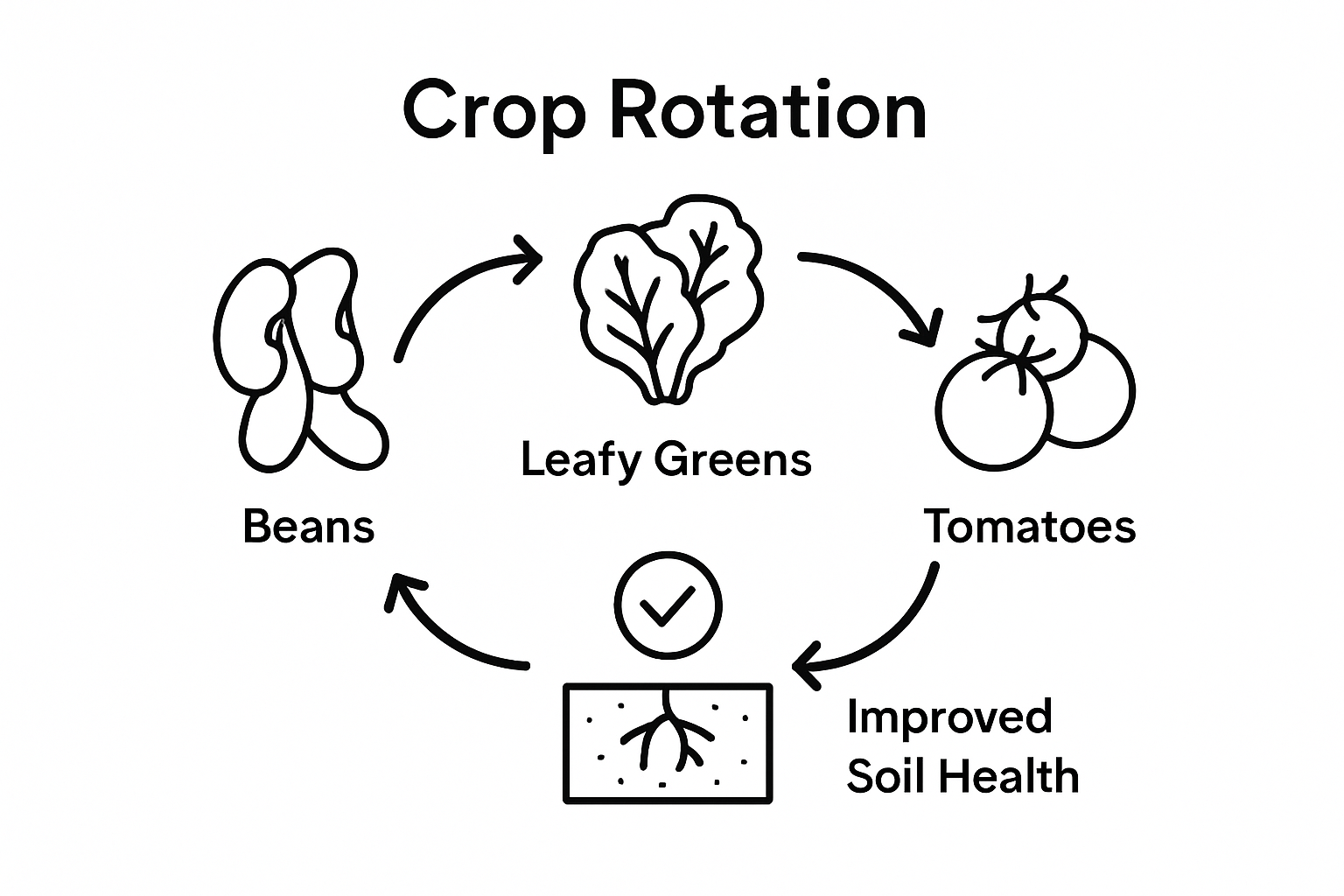
How Crop Rotation Improves Soil and Reduces Pests
Agricultural research reveals that crop rotation is a powerful strategy for disrupting pest life cycles and enhancing soil health. By systematically changing plant species in a specific area, gardeners can create an environment that naturally resists pest infestations and prevents the buildup of specialized insect populations that target specific crops. This dynamic approach interrupts the breeding and survival patterns of potential garden pests, making it significantly harder for them to establish long-term populations.
Soil ecosystem transformation occurs through strategic crop rotation. Scientific studies demonstrate that rotating crops improves soil structure, increases organic matter content, and enhances nutrient availability. Different plants interact with soil microorganisms in unique ways, creating a more diverse and resilient underground ecosystem. Leguminous crops, for instance, can fix nitrogen and improve soil fertility, while deep-rooted plants help break up compacted soil layers and improve water penetration.
Key benefits of crop rotation for pest management and soil health include:
- Breaking continuous pest life cycles
- Reducing reliance on chemical pesticides
- Improving soil structure and water retention
- Balancing nutrient profiles across growing seasons
- Promoting beneficial microbial diversity
Successful pest reduction through crop rotation requires consistent and thoughtful implementation. Gardeners should plan rotations that deliberately interrupt potential pest habitats by introducing plants with different root structures, growth habits, and nutrient requirements. By creating a dynamic and constantly changing garden environment, home gardeners can naturally suppress pest populations while simultaneously improving overall soil health and crop productivity.
Common Crop Rotation Mistakes to Avoid
Agricultural experts consistently highlight several critical errors that can undermine the effectiveness of crop rotation strategies. One of the most prevalent mistakes gardeners make is repeatedly planting crops from the same family in consecutive seasons, which creates an environment that allows pests and diseases to establish persistent populations. This practice not only weakens soil health but also increases the risk of crop failure and reduces overall garden productivity.
Nutrient management represents another crucial aspect where gardeners often make significant mistakes. Principles of effective rotation planning emphasize the importance of understanding each crop’s unique nutrient requirements and contributions. Failing to consider the specific nutritional demands of different plant families can lead to soil nutrient depletion, reduced crop yields, and long-term soil health degradation.
Common crop rotation mistakes gardeners should avoid include:
- Planting crops from the same family in consecutive seasons
- Ignoring soil nutrient profiles and crop-specific requirements
- Prioritizing short-term profits over long-term soil health
- Neglecting the role of cover crops and green manures
- Failing to track and document crop placement year after year
Successful crop rotation requires a holistic approach that balances immediate gardening needs with long-term soil ecosystem health. Gardeners should maintain detailed records of their planting history, understand the unique characteristics of different crop families, and be willing to adapt their strategies based on observed soil conditions and crop performance. By avoiding these common mistakes and approaching crop rotation as a dynamic, evolving process, home gardeners can create more resilient and productive growing environments.
Unlock the Full Potential of Your Garden with Expert Crop Rotation Tips
Mastering crop rotation principles is key to transforming your soil health and boosting your yields. This article highlights the challenges gardeners face, such as nutrient depletion, pest build-up, and the common myths surrounding crop rotation. If you want to avoid mistakes like planting the same crop family repeatedly or ignoring soil nutrient balance, you need guidance that simplifies these concepts and helps you apply them effectively.
At Lushy Gardens, we understand the goals of both beginner and experienced gardeners who want to revitalize their garden’s ecosystem through smart crop rotation. Our practical plant care guides and expert insights break down the complexities of plant families, rotation cycles, and pest management. You can explore valuable tips and tools to plan your vegetable cultivation or troubleshoot common crop rotation problems for a healthier garden.
Get started today to protect your soil and enhance your garden’s productivity. Visit Lushy Gardens for a comprehensive resource that will help you make crop rotation an easy and rewarding part of your growing routine.
Frequently Asked Questions
What is the principle of crop rotation?
Crop rotation is a farming practice where different crop types are alternated in the same field across growing seasons to enhance soil health, prevent nutrient depletion, and reduce pest cycles.
How does crop rotation improve soil health?
Crop rotation improves soil health by restoring soil structure, enhancing organic matter content, managing nitrogen levels through legumes, and promoting beneficial microbial diversity.
What are the common mistakes to avoid in crop rotation?
Common mistakes include planting the same crop family in consecutive seasons, neglecting soil nutrient profiles, ignoring the role of cover crops, and failing to document planting history.
How can I implement a successful crop rotation plan in my garden?
To implement a successful plan, avoid planting the same family of crops in the same spot for at least three years, group crops based on their botanical families, incorporate nitrogen-fixing plants, and monitor soil health regularly.
Recommended
- Why Rotate Crops: Boosting Soil Health and Yields – Lushy Gardens
- Understanding the Best Soil for Vegetables: Key Insights – Lushy Gardens
- No Dig Gardening Explained: Principles and Benefits – Lushy Gardens
- Understanding Mulching Vegetable Gardens for Healthier Growth – Lushy Gardens
- Understanding Eco Friendly Routines for Modern Families – The Zoofamily

I’m Eleanor, a seasoned gardener with over three decades of experience tending to Mother Nature’s creations. Through Lushy Gardens, I aim to share my wealth of knowledge and help fellow plant enthusiasts uncover the wonders of gardening. Let’s dive into this journey together, one leaf at a time.


