
Table of Contents
TL;DR:
- Winterizing vegetable gardens involves applying soil amendments, mulching, and frost protection to safeguard crops and maintain soil health through cold months. Starting in October with bed cleanup, cover crop planting, and proper mulching ensures better soil quality and pest management for the next growing season. Proper timing, correct mulch depth, and frost protection strategies are essential for a productive and resilient winter garden.
Winterizing vegetable gardens is defined as the process of applying soil amendments, protective mulches, and frost barriers to safeguard crops and preserve soil health through cold months. Done right, it also functions as a proactive pest and disease management strategy, not just a seasonal cleanup. A standard 3–4 inch mulch layer forms the foundation of any solid winter prep plan. Gardeners who start in october and work through december protect both their soil structure and their investment in next year’s harvest.
What does winterizing vegetable gardens actually involve?
Winterizing is not a single task. It is a sequence of actions spread across fall that protects your beds from freeze damage, erosion, and pest buildup. The core steps are bed cleanup, soil amendment, mulching, cover cropping, and frost protection. Each step builds on the last, and skipping one creates a gap that shows up in spring as poor germination, disease pressure, or compacted soil.
The term “winterizing” is the common gardening shorthand. Horticulturalists often call it “winter garden preparation” or “fall bed management,” but the goal is the same: keep soil alive and crops protected until the next growing season. Lushygardens covers this process in depth because the decisions you make in fall directly determine how productive your beds are in april and may.
When should you start preparing your garden for winter?
Timing is the most underrated part of fall vegetable garden maintenance. Starting too late means missing critical windows for mulching, cover crop establishment, and frost protection.
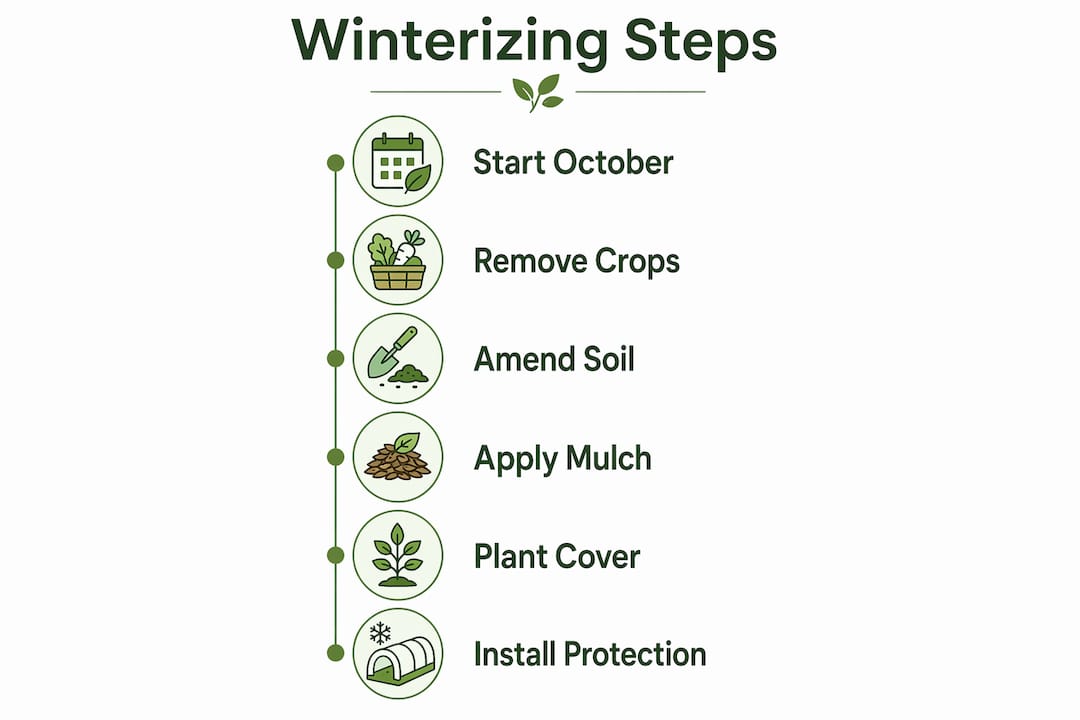
A practical three-phase timeline works for most home gardeners:
- October: Bring in tender plants and any container vegetables before the first frost. Cut back spent annuals and pull out finished crops like tomatoes and squash. This is also the time to plant cover crops before the ground gets too cold.
- November: Apply mulch to all vegetable beds. Check pond pumps and water features if you have them. Move any borderline-hardy perennials to sheltered spots.
- December: Clean, sharpen, and oil your garden tools before storing them. Do any late pruning on woody plants and check that mulch layers are still intact after early storms.
The winterizing timeline starting in October gives you a staggered approach that prevents the panic of trying to do everything at once when the first hard frost hits. Waiting until after that first freeze means your cover crops will not establish, and your mulch will not protect roots from the freeze-thaw cycles that heave crowns out of the ground.
Pro Tip: Set a calendar reminder for the first week of October. Check your local frost date and count back six weeks. That date is when your winter prep should begin, not when the leaves start falling.
How do you clean and prepare vegetable beds before winter?
Bed preparation is where winter garden care tips pay off most directly. A clean bed going into winter means fewer pests, less disease, and better soil structure in spring.
The key tasks are:
- Remove all dead and diseased plant material. Leaving dead foliage in place increases overwintering pest risk and raises the likelihood of blight and fungal disease returning next season. Bag diseased material and dispose of it. Do not compost it.
- Pull every weed you can find. Winter annual weeds set seed in fall and germinate early in spring. Pulling them now cuts your spring workload significantly.
- Cut back healthy plant debris. Healthy stems and leaves from non-diseased plants can go straight into your compost pile. They break down over winter and feed your soil.
- Loosen compacted soil gently. Use a fork, not a spade, to open up the top few inches without destroying the soil structure beneath.
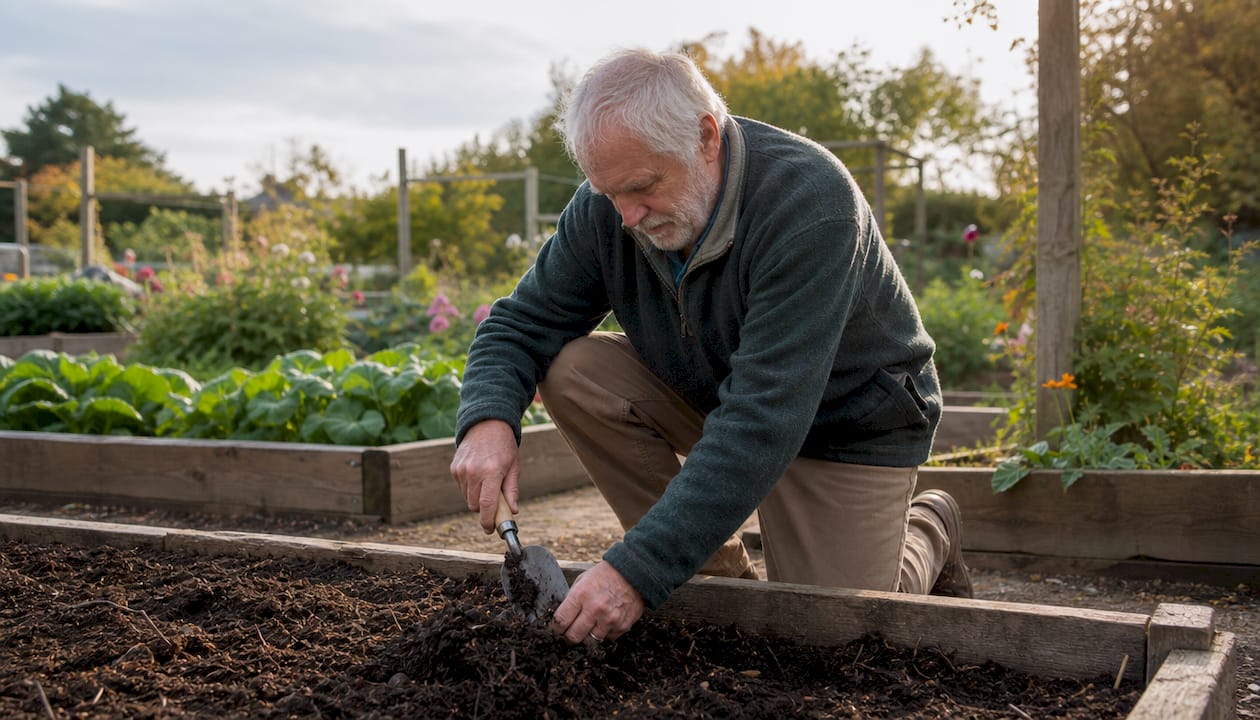
- Add compost or aged manure. Spread a 2–3 inch layer across the bed surface. Soil microbes will work it in slowly over winter, and you will have richer, more fertile beds by spring.
Soil health is the primary goal of the entire winterizing process. Cover crops and organic mulch feed soil microbes, maintain structure, and prevent erosion when beds sit bare for months.
Pro Tip: Never add diseased plant material to your compost pile. Home compost piles rarely get hot enough to kill fungal spores or bacterial pathogens. One infected tomato plant can contaminate an entire batch of compost.
What mulch and cover crops work best for winter protection?
Mulching is the single most protective thing you can do for your vegetable beds in winter. It insulates roots, retains moisture, suppresses weeds, and prevents the freeze-thaw heaving that damages crowns and shallow root systems.
Choosing the right mulch depth
Apply 3–4 inches of organic mulch as your starting layer before the ground freezes. In USDA hardiness zones 5 and colder, increase that to 6–12 inches after the ground has frozen solid. The initial layer protects roots from early cold. The deeper layer added after freezing locks in that cold temperature and prevents the damaging thaw-refreeze cycles that come with warm spells in january and february.
One critical rule: mulch must never touch woody stems. Direct contact traps moisture against the stem and causes collar rot, one of the most common causes of winter plant loss. Leave a clear gap of at least two inches around every stem and trunk.
Cover crops by region and benefit
| Cover Crop | Best For | Key Benefit |
|---|---|---|
| Winter rye | Cold zones, zones 3–7 | Fast establishment, strong erosion control |
| Crimson clover | Zones 6–9 | Nitrogen fixation, pollinator support |
| Field peas | Zones 5–8 | Nitrogen fixation, quick biomass |
| Hairy vetch | Zones 4–9 | Heavy nitrogen fixation, weed suppression |
| Buckwheat | Zones 5–9 | Fast growth, phosphorus scavenging |
Plant cover crops 4–6 weeks before your first hard frost so they establish before the ground freezes. Cover crops not only prevent erosion but also improve fertility through nitrogen fixation, which means you add less fertilizer in spring. Organic mulch and cover crops also suppress winter annual weeds, which is a benefit most gardeners do not think about until they are pulling chickweed in march.
For a deeper look at mulching vegetable beds, Lushygardens has a dedicated guide covering material choices and layering techniques.
What frost protection strategies actually work?
Protecting plants from frost requires knowing two temperature thresholds and acting before you hit them.
- 32°F (0°C): Light frost. Tender crops like basil, beans, and cucumbers will die without cover. Use horticultural fleece or frost cloth draped loosely over plants.
- 28°F (–2°C): Hard freeze. Below this threshold, frost cloths alone are not enough for most vegetables. Move container plants indoors and add supplemental protection like cold frames or straw bales around raised beds.
The most common frost protection mistakes:
- Using plastic sheeting in direct contact with plants. Plastic conducts cold and damages any foliage it touches. Always suspend plastic on hoops or frames so it does not touch leaves.
- Leaving covers on during the day. Frost covers work best when placed in the evening before a frost and removed the next morning to allow light, air circulation, and pollination.
- Forgetting to water before a frost. Moist soil holds heat and releases it slowly overnight, raising the temperature around roots by a few degrees on marginal freeze nights.
Pro Tip: Keep a roll of horticultural fleece in your shed from september onward. Frost forecasts can change overnight, and having fleece on hand means you can cover beds in ten minutes instead of scrambling to find a substitute.
For gardeners in harsh winter regions, the winter vegetable gardening guide at Lushygardens covers cold frame construction and insulation methods in detail.

How do you maintain a winterized garden through spring?
A winterized garden still needs attention between december and march. Neglecting it during this period can undo the work you did in fall.
- Check mulch after storms. Heavy snow or wind can shift or compress mulch layers. Top them up if they drop below 3 inches.
- Avoid walking on beds. Foot traffic compacts soil and damages cover crop root systems. Use boards or stepping stones if you need to access beds.
- Plan your crop rotation now. Winter is the best time to map out which beds will grow which crops next season. Rotating plant families reduces disease buildup and balances soil nutrients.
- Order seeds early. Popular varieties sell out by february. Use your winter planning time to order seeds and check germination rates on anything you saved from last year.
- Service your tools. Clean soil off blades, sharpen edges, and apply a light coat of oil to metal parts. Store tools in a dry location to prevent rust. Lushygardens has a practical guide on garden tool maintenance that covers sharpening and storage.
The seasonal vegetable planting chart at Lushygardens is useful for mapping out your spring planting schedule during winter downtime.
Key Takeaways
Winterizing vegetable gardens requires timely bed cleanup, correct mulch depth, cover crop selection, and active frost protection to protect soil health and maximize next season’s yield.
| Point | Details |
|---|---|
| Start in October | Begin winter prep before the first hard frost to protect tender plants and establish cover crops. |
| Mulch depth matters | Apply 3–4 inches initially; increase to 6–12 inches in cold zones after the ground freezes. |
| Keep mulch off stems | Leave a 2-inch gap around all stems and trunks to prevent collar rot from trapped moisture. |
| Use frost covers correctly | Place covers at night, remove them during the day, and never let plastic touch plant foliage. |
| Plan during winter | Use the off-season to rotate crops on paper, order seeds, and service tools before spring. |
What I have learned after years of winterizing beds
Every fall, I see the same mistake repeated: gardeners wait until the first hard frost to start thinking about winter prep. By then, cover crops will not germinate, mulch cannot protect roots from the heaving that has already started, and diseased plant material has had weeks to drop spores into the soil.
The gardeners who get the best spring results are the ones who treat october like the start of a new season, not the end of one. They pull spent crops while the soil is still warm enough to work. They get cover crops in the ground with enough time to establish. They mulch before the freeze, not after.
The other thing I have seen trip people up is the mulch-to-stem contact issue. Collar rot is quiet. You do not notice it until a plant that looked fine in march is dead by may. Leaving that two-inch gap around every stem costs nothing and saves plants consistently.
The organic matter piece is also worth taking seriously beyond just frost protection. Beds that get a layer of compost in fall and a cover crop turned in spring are measurably more productive than beds that get neither. The soil biology that drives plant growth needs feeding year-round, and winter is when that feeding happens slowly and steadily under the mulch.
If you do one thing differently this fall, make it timing. Start earlier than feels necessary. Your spring self will thank you.
Lushygardens resources for seasonal garden care
Lushygardens publishes practical, season-specific guides built for home gardeners who want clear steps without guesswork. The seasonal garden maintenance guide walks through every major task from fall cleanup to spring planting, with timing recommendations and material lists you can follow directly. Whether you are managing raised beds, in-ground rows, or container vegetables, the site covers the full range of winter care scenarios. For gardeners who are newer to vegetable growing, the gardening basics guide provides the foundational knowledge that makes seasonal prep easier to understand and execute.
FAQ
When should I start winterizing my vegetable garden?
Start in october, roughly six weeks before your first expected hard frost. This gives you time to pull spent crops, plant cover crops, and apply mulch before the ground freezes.
How deep should mulch be in a vegetable garden for winter?
Apply 3–4 inches of organic mulch before the ground freezes. In cold climates (zones 5 and below), increase to 6–12 inches after the initial freeze to prevent damaging thaw-refreeze cycles.
Can I leave dead plants in my vegetable garden over winter?
No. Dead and diseased plant material harbors overwintering pests and fungal spores that increase disease pressure next season. Remove and dispose of it rather than leaving it in place.
What temperature requires frost protection for vegetables?
Cover tender crops at 32°F (0°C) using horticultural fleece or frost cloth. Below 28°F (–2°C), move container plants indoors and add supplemental protection like cold frames or straw insulation.
Do cover crops really make a difference in a home vegetable garden?
Yes. Cover crops like winter rye, clover, and hairy vetch fix nitrogen, prevent soil erosion, and suppress winter weeds, reducing the fertilizer and weeding work you face in spring.
Recommended
- Master Fall Vegetable Gardening for a Bountiful Harvest – Lushy Gardens
- Master Winter Vegetable Gardening for Abundant Harvests – Lushy Gardens
- Seasonal Garden Maintenance: Step-by-Step Success Guide – Lushy Gardens
- Seasonal Vegetable Planting Chart for Midwest Gardens – Lushy Gardens

I’m Eleanor, a seasoned gardener with over three decades of experience tending to Mother Nature’s creations. Through Lushy Gardens, I aim to share my wealth of knowledge and help fellow plant enthusiasts uncover the wonders of gardening. Let’s dive into this journey together, one leaf at a time.


