
Table of Contents
TL;DR:
- Wicking in plant pots uses capillary action to automatically supply water from a reservoir to plant roots. This passive system is effective for plants that prefer consistent moisture and requires proper wick material, sizing, and soil type to function properly. Regular inspection and soil refreshment help maintain efficiency and prevent common issues like wick failure or soil compaction.
Wicking in plant pots is defined as a passive, self-watering irrigation method that uses an absorbent wick to pull water from a reservoir up into the soil through capillary action. The system has four core components: a water reservoir, a growing bed, a wicking mechanism, and a fill port or overflow hole. Together, these parts deliver water to plant roots on demand, without you lifting a watering can every day. Gardeners who struggle with overwatering, underwatering, or inconsistent moisture will find that a wicking system in pots solves all three problems at once. Lushygardens covers this technique in depth because it works for beginners and experienced growers alike.
What is wicking in plant pots and how does it work?
Wicking works through capillary action, the same physical force that pulls water up a paper towel when you dip its corner into a glass. Water molecules cling to the fibers of the wick and to each other, creating a continuous upward flow against gravity. The plant’s roots then draw moisture from the soil as they need it, which means the system self-regulates based on actual plant demand.
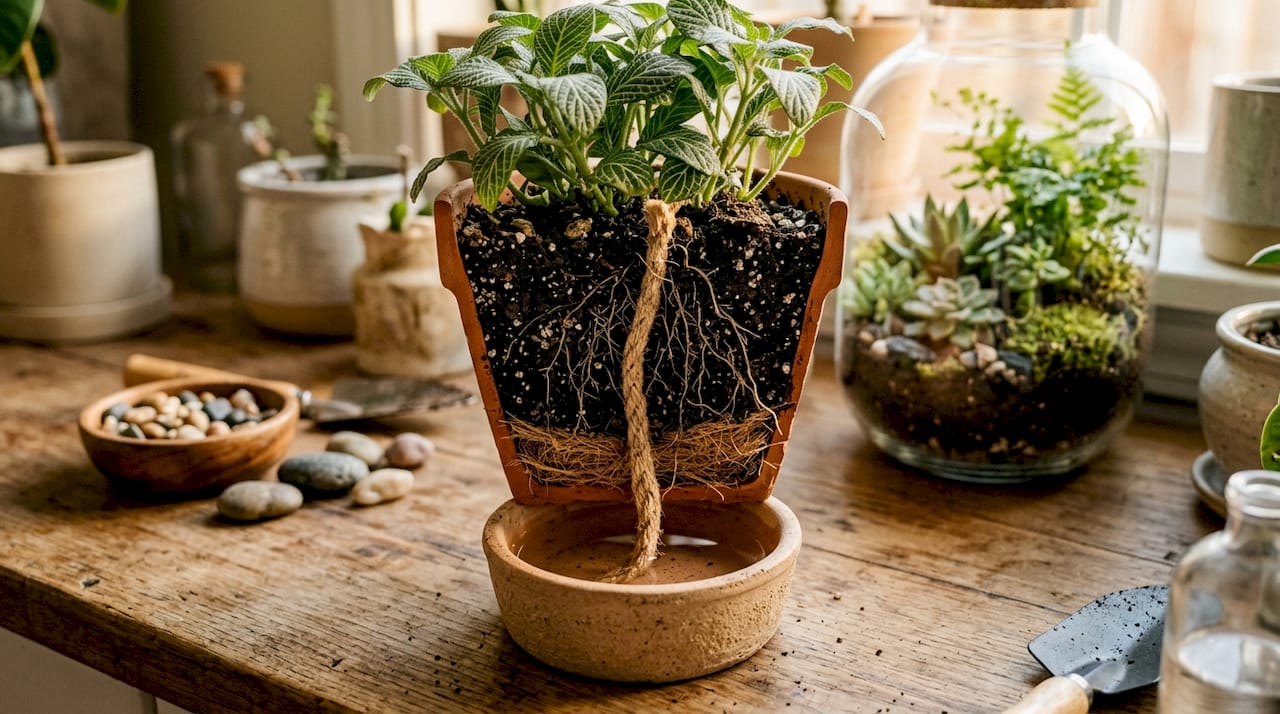
The four components work together in a specific sequence. Water sits in the reservoir below the growing bed. The wick runs from the reservoir base up through a hole in the growing bed and into the potting mix. As the soil dries slightly, capillary tension increases and pulls more water up the wick. This cycle continues until the reservoir empties or the plant stops drawing moisture.
A critical detail: uninterrupted wick contact between the reservoir, wick, and soil is required for the system to function. Any air gap or dry patch breaks the capillary chain. Pre-moistening the soil before you start the system is not optional. Dry substrate stops water transport immediately, and the wick cannot restart flow on its own.
Pro Tip: Fill the reservoir and thoroughly water the soil from the top the first time you set up a wicking pot. This saturates the substrate and primes the wick so capillary action begins without interruption.
Think of the system as a slow, steady groundwater supply. Correctly designed wicking systems mimic groundwater delivery, reducing both overwatering and underwatering risks. The plant controls how much it drinks, which is a fundamentally different relationship than top-down watering.
What materials and wick setups work best?
Wick material is the single most important choice you make when building a wicking system. Synthetic wicks made from polyester or nylon outperform cotton in every practical category. Cotton degrades quickly in moist soil and can become a breeding ground for mold and bacteria. Polyester and nylon hold their structure, resist microbial growth, and deliver consistent moisture for far longer.
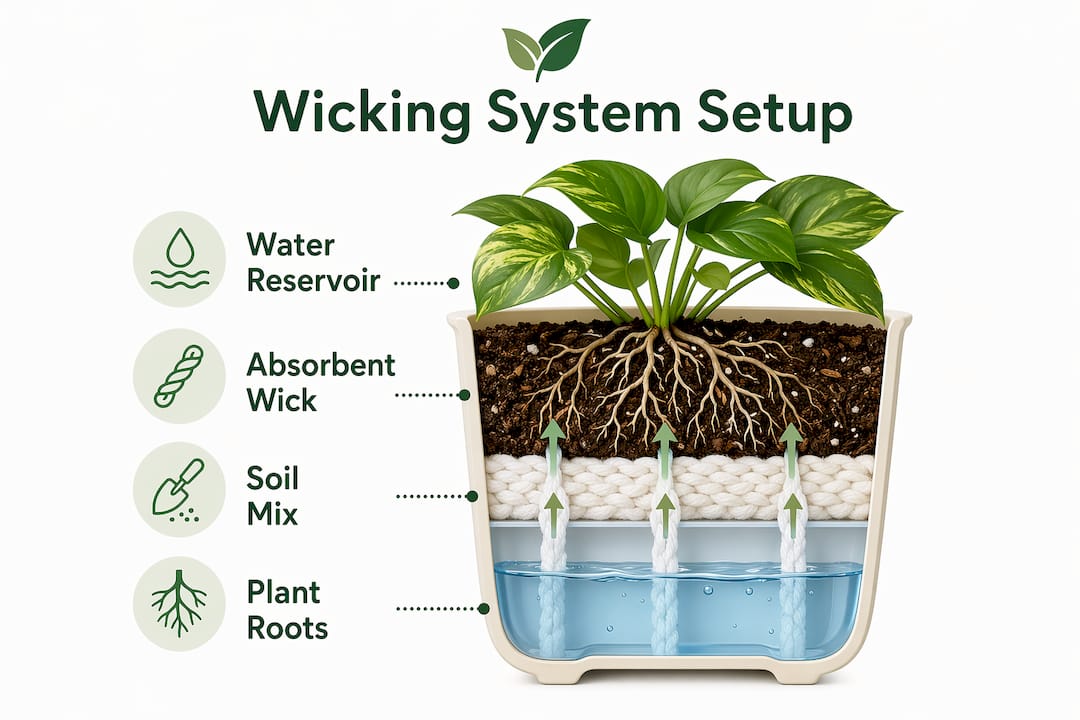
Wick sizing matters just as much as material. The wick should reach the base of the reservoir and extend 3 to 5 inches into the potting mix above the growing bed. Standard wick lengths run from 6 to 24 inches depending on pot depth. A wick that is too short will not reach the reservoir. A wick that is too long without proper placement creates wet pockets rather than even moisture.
Common mistakes to avoid when setting up your wick:
- Kinking the wick at the point where it passes through the growing bed. A kinked wick blocks water flow the same way a bent garden hose blocks water.
- Using a single central wick in a wide pot. One straight line of wick leaves the outer root zone dry.
- Skipping pre-moistening. Dry soil cannot initiate capillary flow, so the system sits idle even with a full reservoir.
- Choosing cotton rope from a craft store. It looks identical to synthetic rope but degrades within weeks in wet conditions.
- Undersizing the wick for a large pot. Bigger pots need thicker or multiple wicks to move enough water.
Weaving or looping the wick through the lower half of the potting mix distributes moisture more evenly than a single vertical line. This technique targets the lower to middle root zone and prevents dry spots at the pot’s edges. For pots wider than 8 inches, use two wicks placed at opposite sides of the growing bed.
Pro Tip: Soak your synthetic wick in water for 10 minutes before installation. A pre-saturated wick starts capillary flow faster and reduces the time your plant spends waiting for moisture after the first reservoir fill.
Which plants and soils are best suited for wicking pots?
Not every plant belongs in a wicking pot. The system works best for plants that prefer consistent moisture levels rather than wet-dry cycles. Herbs like basil, mint, and parsley thrive with steady hydration. Leafy vegetables such as lettuce, spinach, and kale perform well in wicking containers. Many tropical houseplants, including pothos, peace lilies, and ferns, also benefit from the steady supply.
Soil mix is equally important. Heavy or compacted soils block capillary flow. Peat moss, perlite, and vermiculite all support water movement through the substrate. A mix of peat moss and perlite in roughly equal parts gives roots both moisture retention and enough air space to stay healthy.
| Plant type | Wicking suitability | Reason |
|---|---|---|
| Herbs (basil, mint, parsley) | Excellent | Prefer consistent moisture, grow fast |
| Leafy vegetables (lettuce, spinach) | Excellent | High water demand, shallow roots |
| Tropical houseplants (pothos, ferns) | Good | Tolerate steady moisture, no dry cycle needed |
| Succulents and cacti | Poor | Require dry periods between waterings |
| Mediterranean herbs (rosemary, lavender) | Poor | Native to dry conditions, rot in wet soil |
Succulents, cacti, rosemary, and lavender need dry periods between waterings. A wicking system keeps the soil too moist for these plants and causes root rot within weeks. This is the most common mistake gardeners make when switching to self-watering pot setups. Matching the system to the plant’s natural water preference is non-negotiable.
Heavy clay-based potting mixes also fail in wicking pots. Clay compacts around the wick and blocks capillary movement. If you are repotting into a wicking system, replace any dense, garden-style soil with a purpose-mixed substrate that includes perlite or vermiculite.
What are common wicking system problems and how do you fix them?
Wicking systems are low maintenance, but they are not zero maintenance. Problems fall into two categories: wick degradation and soil issues. Catching either one early prevents plant stress.
Monitoring and troubleshooting steps
- Check the reservoir weekly. A reservoir that empties faster than expected signals high plant demand or a leak. One that never empties may mean the wick has failed or the plant is dormant.
- Inspect the wick every 4–6 weeks. Pull the wick out slightly and look for discoloration, sliminess, or brittleness. A degraded wick needs immediate replacement.
- Refresh the potting mix annually. Soil compaction reduces wicking efficiency over time. Old, compacted mix loses its capillary structure and leaves roots dry even with a full reservoir.
- Flush the system every few months. Pour water through the top of the pot to wash out mineral deposits and salt buildup from the reservoir water.
- Adjust wick length as the plant grows. A plant with a larger, denser root system may need a second wick to meet increased water demand.
Signs of a misconfigured or failing system include:
- Yellowing leaves despite a full reservoir (too much moisture, poor drainage)
- Wilting despite a full reservoir (wick failure or soil compaction)
- White crust forming on the soil surface (mineral buildup from hard water)
- Mold on the soil surface (poor air circulation combined with excess moisture)
Regular wick and soil checks prevent all of these issues from becoming serious. A five-minute monthly inspection is all the system needs to stay effective. Pair this habit with your regular watering houseplants routine and you will rarely lose a plant to moisture mismanagement.
Key Takeaways
Wicking in plant pots delivers consistent, demand-driven hydration through capillary action, making it one of the most reliable passive watering methods available to home gardeners.
| Point | Details |
|---|---|
| Capillary action drives the system | Water moves from reservoir to roots through the wick without any pump or manual effort. |
| Synthetic wicks outperform cotton | Polyester and nylon resist mold and last far longer than cotton in moist soil conditions. |
| Pre-moistening is required | Dry soil breaks capillary flow, so always saturate the substrate before filling the reservoir. |
| Plant suitability determines success | Moisture-loving plants thrive; succulents and drought-tolerant herbs will suffer in wicking pots. |
| Annual soil refresh maintains performance | Compacted potting mix blocks capillary movement and must be replaced to keep the system working. |

Why I changed how I think about wicking pots
Most gardening advice treats wicking systems as a convenience tool, a way to water less often while you travel. That framing undersells what the method actually does and oversells how hands-off it really is.
My first wicking pot setup failed within a month. I used cotton rope from a hardware store, skipped pre-moistening, and planted a rosemary cutting in a peat-heavy mix. The rosemary rotted, the cotton turned black, and I assumed the whole concept was flawed. It was not. Every single failure traced back to a setup error I could have avoided with better information.
When I rebuilt the system with polyester cord, a proper perlite-heavy mix, and a moisture-loving herb, the results were genuinely different. The basil grew faster and more evenly than anything I had grown in a standard pot. I refilled the reservoir every 10 days instead of watering daily. The roots stayed healthy because the soil never swung between soaking wet and bone dry.
The honest limitation of wicking pots is that they reward plant-specific thinking. You cannot use one setup for every plant on your windowsill. A wicking pot that keeps your pothos thriving will kill your succulent collection. The system works best when you treat it as a tool for specific plants rather than a universal solution. For anyone managing multiple indoor plant care situations, I recommend running wicking pots alongside standard containers rather than replacing everything at once.
Wicking pots fit into a bigger picture of plant care
Getting wicking right is one piece of a broader approach to keeping plants healthy. Understanding watering frequency, soil selection, and seasonal plant needs all connect directly to how well a wicking system performs. Lushygardens has put together a beginner gardening guide that covers these fundamentals in plain language, from choosing the right soil mix to reading plant signals. If you want to go deeper on watering strategy specifically, the optimal watering guide on Lushygardens walks through hydration techniques that pair well with wicking setups. Both resources are free and written for gardeners at every level.
FAQ
What is the main benefit of wicking in plant pots?
Wicking delivers water to plant roots on demand through capillary action, preventing both overwatering and underwatering. The plant controls how much moisture it draws, which produces more consistent growth than manual watering.
How long does a wick last in a plant pot?
Synthetic wicks made from polyester or nylon last significantly longer than cotton, which degrades within weeks in moist soil. Inspect your wick every 4–6 weeks and replace it if it shows discoloration or brittleness.
Can I use any soil in a wicking pot?
Heavy or compacted soils block capillary flow and reduce wicking effectiveness. Use a mix that includes peat moss, perlite, or vermiculite to support water movement through the substrate.
Do all plants work well in wicking pots?
Plants that prefer consistent moisture, such as herbs, leafy vegetables, and tropical houseplants, perform well. Succulents, cacti, and drought-tolerant Mediterranean herbs need dry periods and will suffer in a wicking system.
Why is my wicking pot not drawing water?
The most common cause is dry soil breaking the capillary connection between the wick and the substrate. Thoroughly water the soil from the top to re-establish contact, and check that the wick reaches the reservoir base without kinking.
Recommended
- Watering Houseplants Tips That Keep Plants Thriving – Lushy Gardens
- Watering houseplants guide for healthy, thriving plants – Lushy Gardens
- How to Measure Plant Pots – Lushy Gardens
- Container Garden Drainage Tips for Thriving Plants – Lushy Gardens

I’m Eleanor, a seasoned gardener with over three decades of experience tending to Mother Nature’s creations. Through Lushy Gardens, I aim to share my wealth of knowledge and help fellow plant enthusiasts uncover the wonders of gardening. Let’s dive into this journey together, one leaf at a time.


