
Table of Contents
TL;DR:
- Proper preparation and testing of watering systems ensure houseplants remain healthy during extended vacations. Grouping plants and adjusting light and humidity conditions help maintain moisture and prevent stress. Clear, detailed instructions for plant sitters minimize the risk of overwatering and plant decline while you’re away.
Keeping plants alive on vacation is fully achievable with the right preparation, watering systems, and environmental adjustments before you leave. Most houseplants tolerate 1–3 weeks without water, but anything beyond a week requires active planning. The difference between plants that thrive and plants that die while you’re away comes down to three things: soil moisture management, smart placement, and clear communication with anyone helping you. This guide covers every step, from pre-trip health checks to wick-watering setups and plant-sitter instructions, so you can travel without worrying about what you’ll come home to.
How to prepare your plants before your vacation
Preparation is the single most important factor in keeping houseplants hydrated during trips. Plants that go into a vacation stressed, dry, or recently fertilized are far more likely to fail. A few targeted steps in the days before you leave make a real difference.
- Do a full health check. Remove dead or yellowing leaves, check for pests, and trim any damaged stems. A stressed plant uses more water and is more vulnerable to decline during your absence.
- Water deeply, 24 hours before departure. Watering 24 hours ahead allows the soil to absorb moisture fully and drain excess water before you leave. Watering right before you walk out the door risks waterlogged roots and root rot within days.
- Skip the fertilizer. Avoid fertilizing in the week before your trip. Fertilizer triggers new growth, which increases water demand. That extra demand is the last thing you want when no one is watering.
- Move plants away from direct sun. Windows that get intense afternoon sun will dry out soil in 24–48 hours. Shifting pots to a shadier spot slows transpiration and keeps moisture in the soil longer.
- Group your plants together. Clustering pots in one area creates a localized microclimate with higher humidity. Plants release moisture through their leaves, and grouped plants share that moisture rather than losing it to dry room air.
Pro Tip: Move your plants to an interior room with indirect light two days before you leave. This gives them time to adjust to lower light levels before the absence begins, reducing the shock of a sudden change.
What watering methods work best when you’re away?
The right watering method depends on how long you’ll be gone and what types of plants you have. Short trips of 3–5 days need minimal intervention. Trips of 7–14 days require a reliable system. Anything beyond two weeks calls for a plant sitter or automated equipment.
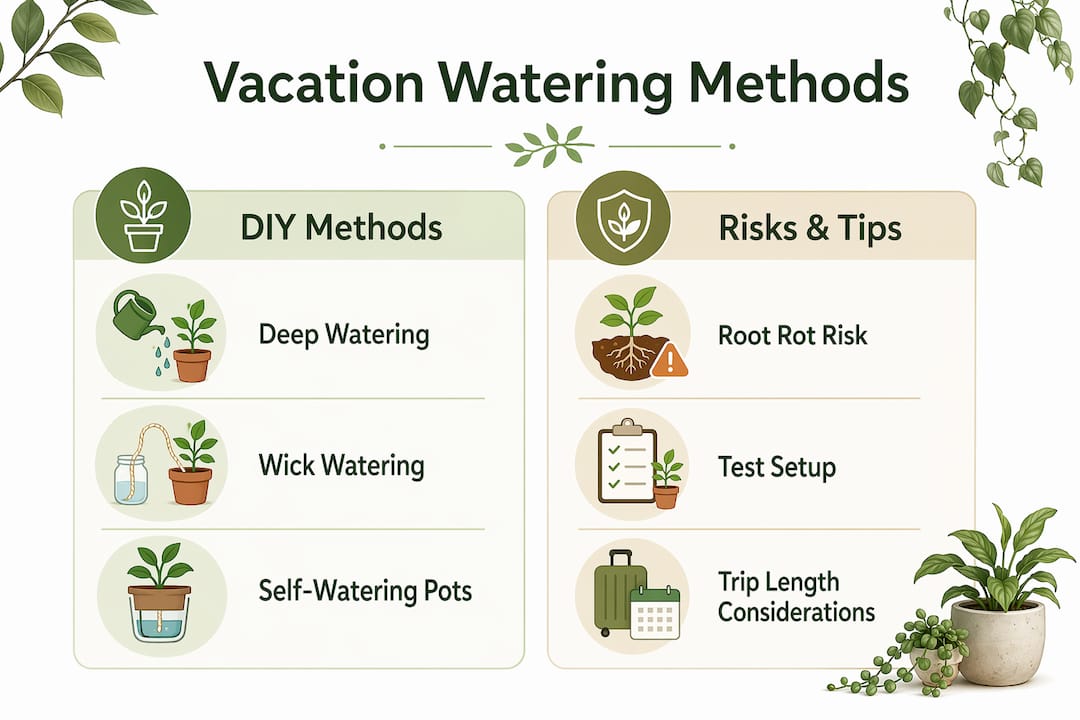
Comparing the most common vacation watering methods
| Method | Best for | Trip length | Key risk |
|---|---|---|---|
| Deep watering before leaving | Hardy plants, succulents | Up to 5 days | Overwatering if done too close to departure |
| Plastic bottle drip | Most houseplants | 5–10 days | Inconsistent flow rate |
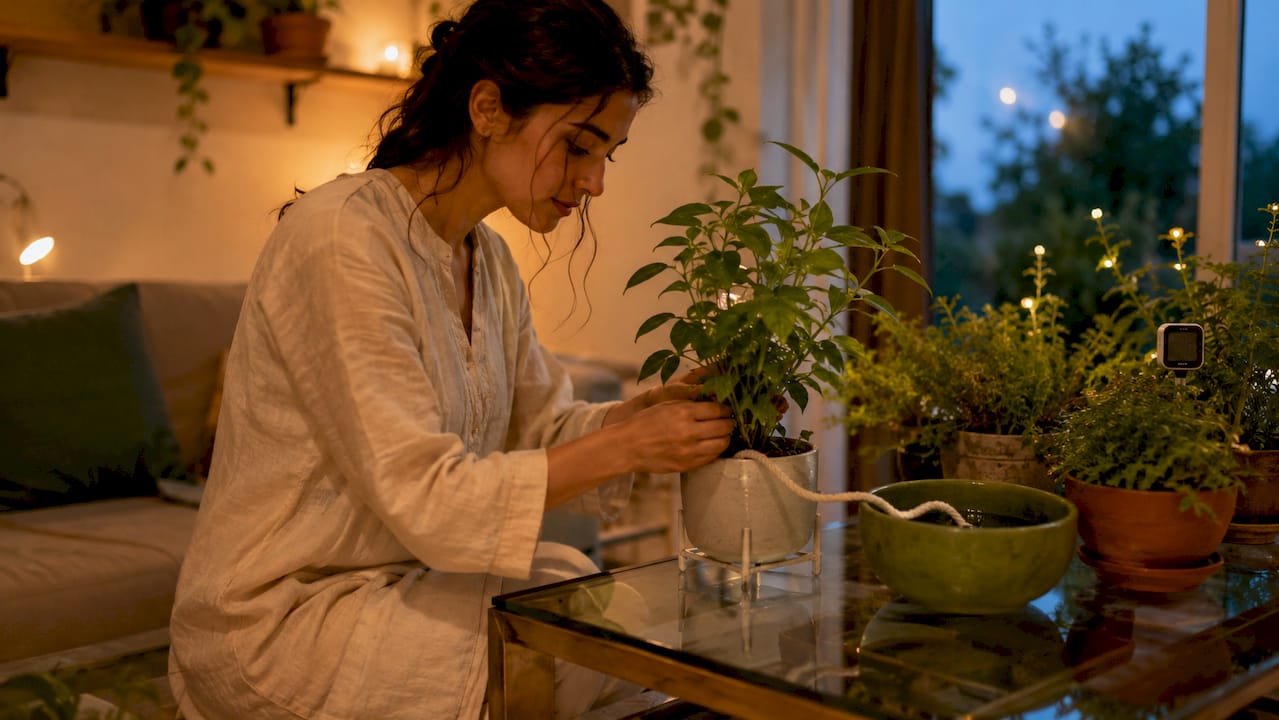
| Wick-watering system | Tropical and thirsty plants | Up to 14 days | Wick drying out if reservoir runs empty |
| Self-watering pots | All houseplants | 10–21 days | Upfront cost and setup time |
| Automated drip system | Large collections | 14+ days | Requires power source and calibration |
Wick-watering is the most reliable DIY method for trips in the 1–2 week range. A 1-liter water reservoir sustains a medium-sized houseplant for about 10–14 days when the wick is set up correctly. That means a standard 1-liter bottle per pot covers most vacations without any help from a sitter.
Self-watering pots work well for longer absences. They hold a water reservoir in the base and deliver moisture directly to the roots through capillary action. Brands like Lechuza and Elho make reliable self-watering containers that are widely available.
One method to avoid entirely is bathtub soaking. Leaving plants in standing water causes root rot within the first week. The roots suffocate without oxygen, and the damage is often irreversible by the time you return. It feels like a generous solution, but it kills more plants than it saves.
Pro Tip: Test your DIY watering setup at least two days before departure. Run it for 48 hours and check that the flow rate is consistent and the reservoir is the right size. A system that fails on day one leaves your plants dry for the entire trip.
How to manage light, humidity, and placement while you’re away
Environmental control is the part of vacation plant care most people overlook. Watering gets all the attention, but light exposure and humidity have an equal impact on how long your plants stay healthy.
- Move plants away from south and west-facing windows. These windows receive the most intense light and heat. Direct sun through glass can raise soil temperature significantly, accelerating moisture loss and stressing leaves.
- Turn off fans and close heating vents near plants. Moving air pulls moisture from leaves and soil faster than still air. Even a ceiling fan running on low will dry out a pot noticeably faster over two weeks.
- Place pots on pebble trays filled with water. The water in the tray evaporates slowly and raises humidity around the plant without wetting the roots. This works especially well for tropical plants like ferns, calatheas, and peace lilies.
- Adjust grow light timers if you use them. If your plants rely on a grow light, set the timer to run for 10–12 hours per day. Leaving lights on continuously stresses plants and dries soil faster.
- Avoid putting plants in the bathroom for humidity. Bathrooms seem like a good idea because of the moisture, but most bathrooms have no natural light. A week in a dark bathroom does more damage than a week in a slightly dry living room.
The RHS advises that most houseplants tolerate 1–3 weeks without water depending on species and conditions. That tolerance window expands significantly when you reduce light exposure and air movement. A fiddle-leaf fig in a sunny window may need water every 5 days. The same plant moved to a shaded corner can go 10–12 days without issue.
How to use a plant sitter without causing more harm than good
A plant sitter is the most reliable backup for trips over two weeks, but a poorly briefed sitter causes more damage than no sitter at all. Vague instructions lead directly to overwatering, which is the number one cause of plant death during owner absences.
The fix is specificity. Do not tell someone to “water when it looks dry.” Instead, label each pot with a sticky note that says exactly what to do.
- Write the plant name and watering frequency on each label (for example: “Pothos, water every 7 days, 200ml”).
- Add a finger-test instruction: “Only water if the top 2 inches of soil feel dry.”
- Note any plants that should not be watered at all, like cacti or succulents on a 10-day trip.
- Group plants with the same watering schedule together. This makes the sitter’s job simpler and reduces the chance of missed or doubled waterings.
- Leave a measuring cup or small pitcher with a marked fill line so quantities are consistent.
For longer absences of three weeks or more, consider asking someone with plant experience rather than a well-meaning neighbor. The watering houseplants guide at Lushygardens covers the core principles your sitter should understand before they start.
Pro Tip: Take a photo of each plant before you leave and share it with your sitter. A visual reference helps them spot early signs of stress and gives them confidence that they’re doing the right thing.
One more thing worth knowing: even experienced plant owners sometimes return to signs of overwatering after a trip. Knowing what to look for, yellowing lower leaves, soggy soil, and a musty smell, helps you act fast and save the plant before the damage becomes permanent.
Key takeaways
Keeping plants alive while traveling comes down to deep preparation, a tested watering system, and precise instructions for anyone helping you.
| Point | Details |
|---|---|
| Water 24 hours before leaving | This timing allows full absorption and drainage, preventing root drowning. |
| Use wick systems for 1–2 week trips | A 1-liter reservoir per medium pot sustains most houseplants for up to 14 days. |
| Group plants to raise humidity | Clustering pots creates a shared microclimate that slows moisture loss. |
| Skip fertilizer before departure | Fertilizing increases water demand at exactly the wrong time. |
| Label pots with specific instructions | Precise labels prevent sitters from overwatering and causing root damage. |
What I’ve learned from years of leaving plants behind
I used to think the bathtub trick was clever. Fill the tub with an inch of water, set all the pots in, and let them soak while I was gone. I came home to three dead plants and one barely surviving. Root rot moves fast, and standing water gives it everything it needs.
The shift that actually worked was treating pre-trip prep like a checklist, not a feeling. Two days before leaving, I run every watering system I’ve set up and watch it for 24 hours. If a wick is delivering too much or too little, I catch it before it matters. That single habit has saved more plants than any product I’ve bought.
Grouping plants is the other thing most people underestimate. I moved 14 pots into one corner of my living room before a 10-day trip and came back to every single one in good shape. No sitter, no automated system. Just proximity and a shaded spot away from the west-facing window.
The honest truth about plant care while traveling is that most plants are more resilient than their owners give them credit for. Preparation removes the anxiety. Testing removes the guesswork. And if something does go wrong, most plants can be brought back with the right response. The goal is not perfection. It’s a system you can trust.
Keep your plants thriving all year with Lushygardens
Vacation prep is just one part of a healthy plant care routine. Lushygardens offers a full plant care routine checklist that covers daily, weekly, and seasonal tasks to keep your indoor plants in top condition year-round. If you want to go deeper on watering technique, the hydration tips guide breaks down exactly how much water different plant types need and when. Whether you’re heading out for a long weekend or a three-week trip, the resources at Lushygardens give you the knowledge to come home to healthy plants every time.
FAQ
How long can houseplants go without water?
Most houseplants survive 1–3 weeks without water, depending on the species and environment. Succulents and cacti last longer; tropical plants like ferns and calatheas need more frequent moisture.
What is the best watering method for a two-week vacation?
A wick-watering system with a 1-liter reservoir per medium-sized pot reliably sustains plants for 10–14 days. Test the setup two days before departure to confirm the flow rate is correct.
Should I water my plants right before I leave?
Water your plants 24 hours before departure, not immediately before. Watering the day before allows the soil to absorb moisture and drain excess water, which prevents root rot during your absence.
Is it safe to leave plants in the bathtub with water?
No. Standing water causes root rot within the first week. Roots need oxygen as well as moisture, and submersion cuts off the air supply entirely.
How do I stop a plant sitter from overwatering my plants?
Label each pot with the plant name, exact watering frequency, and the quantity of water to use. Specific written instructions are the most effective way to prevent overwatering by well-meaning helpers.
Recommended
- Plant Care During Holidays: Keep Plants Alive – Lushy Gardens
- Seasonal plant care tips: year-round guide for gardeners – Lushy Gardens
- Houseplants for beginners: easy care tips (68% saved) – Lushy Gardens
- How to Save Dying Plants Naturally: Step-by-Step Guide – Lushy Gardens

I’m Eleanor, a seasoned gardener with over three decades of experience tending to Mother Nature’s creations. Through Lushy Gardens, I aim to share my wealth of knowledge and help fellow plant enthusiasts uncover the wonders of gardening. Let’s dive into this journey together, one leaf at a time.


