
Table of Contents
TL;DR:
- Watering plants on a fixed schedule risks overwatering or underwatering, as soil moisture needs vary seasonally and environment. Using the finger test and deep, thorough watering techniques helps promote healthy root growth and prevent root rot. Adjust watering habits based on soil moisture, season, and plant signals for optimal indoor plant care success.
Most indoor plant owners kill their plants with kindness. Too much water, given too often, on a fixed schedule that ignores what the plant actually needs — that’s the pattern. This watering houseplants guide exists to break that cycle. You’ll learn how to check soil moisture the right way, how to water deeply without drowning your roots, and how to adjust your habits when seasons shift. No rigid schedules, no guesswork. Just observation-based methods that work whether you own one pothos or twenty plants crowding your windowsill.
Table of Contents
- Why timing your watering matters: understanding soil moisture
- How to water your houseplants correctly: step-by-step
- Common watering mistakes and how to avoid them
- Adapting watering to seasons and indoor environments
- Why watering wisdom goes beyond schedules
- Explore expert watering and plant care resources at Lushy Gardens
- Frequently asked questions
Why timing your watering matters: understanding soil moisture
The most common mistake beginners make is watering on a set schedule. Every Tuesday and Friday, regardless of what the plant is actually telling you. The problem is that soil drying speed isn’t consistent. It changes with the season, the pot size, the humidity in your home, how much light your plant gets, and how established the root system is.
A small terracotta pot sitting in a sunny window will dry out in two days. The same plant in a large plastic pot in a dim corner might stay moist for ten. Water both on the same schedule and you’ll either starve one or rot the other.
The fix is the finger test. Push your finger about 1 to 2 inches into the soil near the base of the plant (not the edge of the pot, which dries faster). If the soil feels dry at that depth, it’s time to water. If it still feels cool and damp, wait. As OSU Extension confirms, the reliable rule for most houseplants is to water when the top inch of potting mix is dry to the touch, or dry all the way through for drought-tolerant succulents and cacti.
Here’s what affects how fast your soil dries out:
- Light intensity: More sun means faster evaporation and more water demand from the plant.
- Temperature: Warmer rooms accelerate drying; cooler rooms slow it down.
- Humidity: Low indoor humidity in winter speeds up soil drying considerably.
- Pot material: Terracotta breathes and dries faster than glazed ceramic or plastic.
- Pot size: Smaller pots dry faster; larger pots hold moisture longer.
- Root mass: A root-bound plant drinks water faster than one with room to grow.
Pro Tip: Test soil moisture at the same time each week to build a feel for your plant’s rhythm. After a few weeks, you’ll stop guessing and start knowing.
Seasonal shifts matter too. Plants naturally slow their growth in winter, so they need far less water. You can find more detail on reading your plant’s signals in these beginner houseplant care tips and optimal watering tips for deeper context.
How to water your houseplants correctly: step-by-step
Knowing when to water is only half the equation. How you water determines whether those roots actually thrive or slowly decline. Shallow surface watering is one of the most underrated problems in indoor plant care. It trains roots to stay near the surface instead of growing deep, making plants more fragile and stress-prone over time.
The goal is a deep, slow soak that reaches all the roots and then drains completely.
Follow these steps every time you water:
- Use a narrow-spout watering can. This gives you control and lets you direct water to the soil surface near the plant’s base, not the leaves.
- Pour slowly and steadily. Move the spout around the base of the plant to wet the soil evenly, not just one spot.
- Water until it drains. As Greater Des Moines Botanical Garden advises, pour until water runs out of the drainage holes at the bottom of the pot, then discard any excess so the plant isn’t sitting in leftover water.
- Wait 15 to 30 minutes, then empty the saucer. Let the soil absorb what it needs, but don’t leave standing water underneath.
- Avoid wetting the leaves. Water on foliage, especially overnight, invites fungal disease.
- Water in the morning when possible. The plant absorbs water more efficiently during daylight hours, and any stray moisture on leaves dries before evening.
Pro Tip: If water runs straight through and out the bottom instantly without being absorbed, your soil may be hydrophobic (repelling water). Set the pot in a shallow basin of water for 20 to 30 minutes to let the soil rehydrate from the bottom up, then drain fully.
Here’s a quick reference for how different watering approaches compare:
| Watering method | Root depth reached | Fungal risk | Best for |
|---|---|---|---|
| Narrow-spout top watering | Deep (2+ inches) | Low | Most houseplants |
| Bottom watering (soaking) | Deep | Very low | Orchids, succulents |
| Misting only | Surface only | High | Humidity boost only |
| Splash watering (random) | Shallow | Medium | Nothing, avoid this |
You can find a fuller breakdown in this watering indoor plants guide and a comparison of what goes wrong in overwatering vs underwatering situations.
Common watering mistakes and how to avoid them
Most houseplant deaths aren’t dramatic. They happen slowly, through a pattern of well-meaning but mistaken habits. The number one killer isn’t drought. It’s overwatering. And overwatering usually isn’t about pouring too much water at once — it’s about watering again before the soil has dried out enough, or leaving excess water sitting in the saucer.
The tricky part is that overwatered and underwatered plants can look nearly identical. Both show wilting. Both may develop yellowing leaves. The only reliable way to tell them apart is to check the soil. Dry and pulling away from the pot edges? Underwatered. Dark, wet, and possibly smelling musty? Overwatered.
Watch out for these common errors:
- Watering on autopilot. Ignoring the plant and just watering every few days regardless of soil moisture.
- Leaving water in the saucer. Standing water suffocates roots by cutting off oxygen, which is how root rot starts.
- Shallow watering. Pouring just enough to wet the surface, which fails to reach roots below the top inch.
- Watering at night. Wet leaves in cool, dark conditions are a perfect environment for fungal infections.
- Using ice-cold water. This shocks tropical houseplants. Let tap water sit at room temperature for a bit first.
“Overwatering is usually the bigger risk for beginners. Most watering failures stem from roots sitting in waterlogged soil too long, not from plants going too dry.” — Greater Des Moines Botanical Garden
UW Extension recommends allowing 15 to 30 minutes for water to drain into the saucer before discarding it, and as Chippewa County Extension notes, never leave a plant sitting in water longer than about an hour, or you risk serious root rot damage. For a clear look at what overwatering does to a plant over time, see these overwatering signs and guidance on preventing overwatering.
Adapting watering to seasons and indoor environments
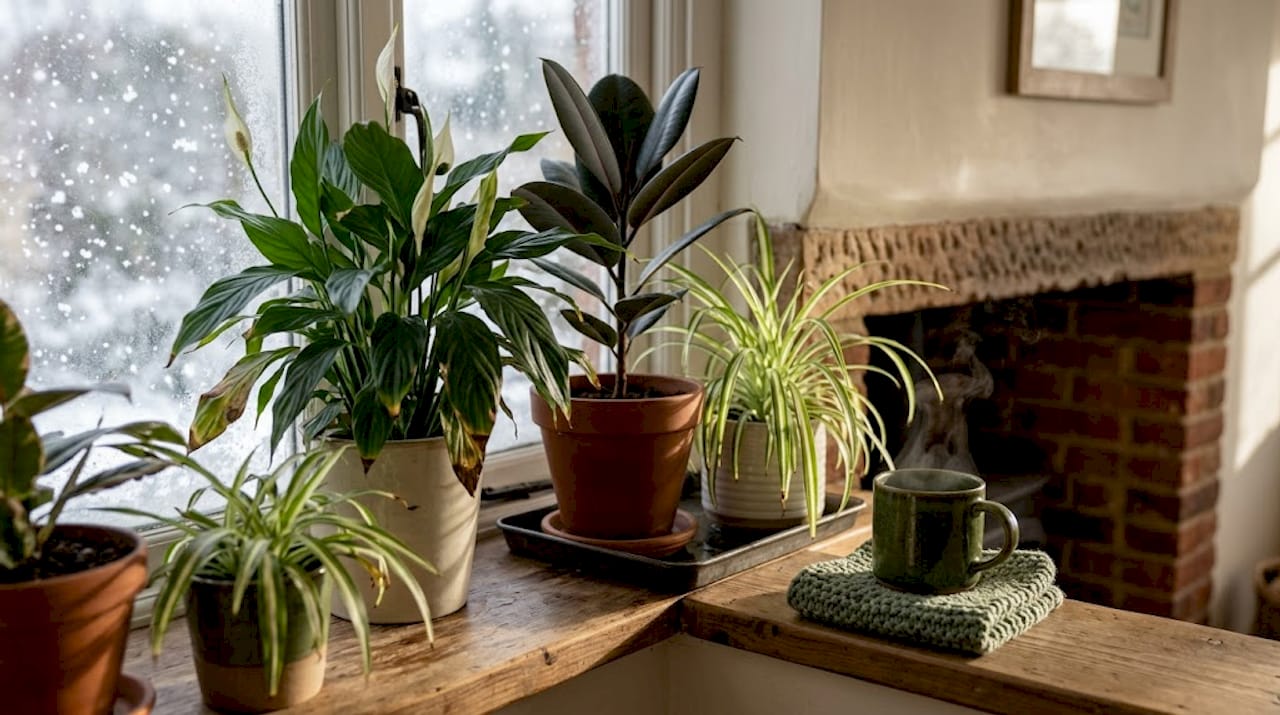
Your home changes throughout the year, and your plants feel every shift. The watering schedule that kept your peace lily perfect in July can drown it in January. Understanding why helps you stay ahead of the problem.
In winter, most houseplants slow their growth significantly. Less light means less photosynthesis, which means less water demand. At the same time, indoor heating systems reduce humidity, which can fool you into thinking the plant needs more water when actually the leaves are just reacting to dry air. As K-State Research and Extension confirms, watering needs shift with every change in season, humidity, light, temperature, and pot or soil type.
| Season | Typical watering frequency | Key environmental factor |
|---|---|---|
| Spring/Summer | Every 5 to 7 days (varies) | High light, warm temps, active growth |
| Fall | Every 7 to 10 days (varies) | Slowing growth, cooling temps |
| Winter | Every 10 to 14 days (varies) | Low light, reduced growth, dry indoor air |
These are ranges, not rules. Always confirm with the finger test before watering.
Soil type matters more than most beginners realize. Sandy soils drain fast and dry quickly. Dense potting mixes with peat retain moisture longer. A cactus mix in a terracotta pot will be bone dry in a day or two; a peat-heavy mix in a plastic pot might stay damp for two weeks.
Here’s how to adapt through the year:
- In spring and summer: Check soil every 3 to 4 days. Growth is active and water demand is higher.
- In fall: Start extending the interval between checks. Watch for the plant to signal slower uptake.
- In winter: Reduce watering significantly. Increase ambient humidity with a pebble tray (a shallow dish of water with pebbles that the pot sits above) or a small humidifier nearby.
- After repotting: Fresh potting mix often retains more moisture than old, compacted soil. Adjust accordingly.
Pro Tip: Group plants together in winter. They collectively release moisture through their leaves (a process called transpiration), creating a microclimate with higher humidity that reduces water stress for all of them. See how seasonal watering adjustments fit into the bigger picture of avoiding common gardening errors.
Why watering wisdom goes beyond schedules
Here’s the perspective that most watering guides skip: the real problem isn’t that beginners don’t water enough. It’s that they water too often and too shallowly, then wonder why the plant declines despite their consistent attention.
Roots need two things: water and oxygen. Constantly wet soil delivers one and cuts off the other. When roots can’t breathe, they begin to rot, which looks almost exactly like drought stress from above. The plant wilts, the owner panics, adds more water, and accelerates the decline. It’s a frustrating loop, and it’s entirely avoidable.
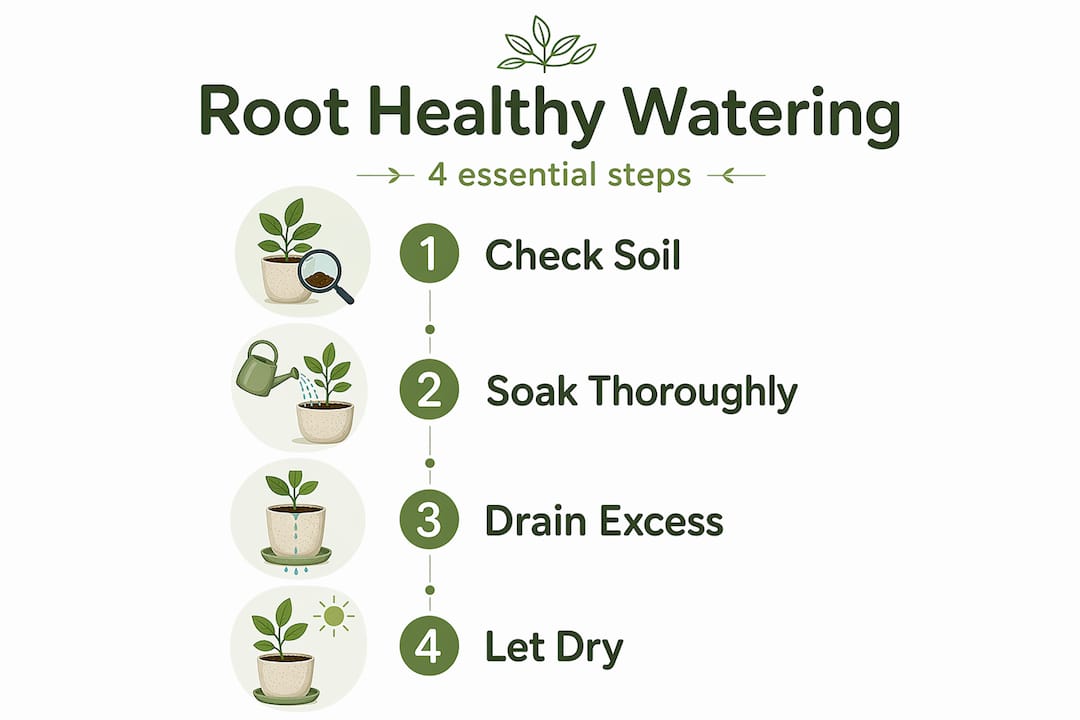
The soak-and-drain method mimics what happens in nature. Rain comes, saturates the soil, then the soil dries out over several days, giving roots cycles of hydration and air. That cycle is what roots evolved in. Constant moisture is artificial and stressful for most plants.
The botanical guidance on watering makes this clear: watering thoroughly but not excessively, and removing excess promptly, is how you prevent root rot and support real growth. It’s not about lavishing attention on a fixed schedule. It’s about paying attention to what the plant and the soil are actually showing you.
One thing most people also overlook: emptying that saucer. It takes ten seconds and it’s the difference between healthy houseplants and rotting ones. Set a timer after you water. Fifteen minutes later, tip the saucer. That single habit change saves more plants than any fancy fertilizer or watering gadget.
Observation-based care builds real plant intuition. After a few months of checking soil before watering, you’ll start reading your plants by posture and leaf color before you even touch the soil. That’s the real goal.
Explore expert watering and plant care resources at Lushy Gardens
If this guide has shifted how you think about watering, there’s plenty more to explore at Lushy Gardens. Whether you’re just starting out or looking to sharpen your routine, our library covers everything from gardening basics for beginners to plant-specific care strategies. Bookmark the top hydration tips for gardeners for a deeper look at getting moisture levels right across different plant types. And if you want a practical daily structure, the plant care routine checklist gives you a clear, simple framework for keeping every plant in your home healthy and thriving all year long.
Frequently asked questions
How do I know when my houseplant needs watering?
Push your finger 1 to 2 inches into the soil near the plant’s base. As Greater Des Moines Botanical Garden recommends, if the soil feels dry at that depth, it’s time to water. If it still feels cool or damp, hold off.
Can I use a fixed watering schedule for my houseplants?
Fixed schedules ignore too many variables. K-State Extension guidance consistently recommends checking soil moisture regularly instead, since watering frequency shifts with season, environment, and plant type.
What are the risks of overwatering houseplants?
Overwatering deprives roots of oxygen, which causes root rot and opens the door to fungal disease. OSU Extension warns that standing water around roots leads to rot and disease, causing symptoms like yellowing leaves and wilting that can be mistaken for drought stress.
Is it okay to water the leaves of my houseplants?
Avoid watering leaves, particularly in the evening. Wet foliage in low light creates ideal conditions for fungal infections. OSU Extension advises directing water to the soil near the base and keeping leaves dry to prevent disease.
How should I adjust watering in winter?
Reduce watering frequency considerably. Chippewa County Extension notes that many houseplants need far less water in winter because of lower indoor light and temperature. Always check soil moisture before watering rather than assuming the plant is due.
Recommended
- Solve common houseplant problems: tips for healthy plants – Lushy Gardens
- Watering Indoor Plants Made Easy: Your Step-by-Step Guide – Lushy Gardens
- Houseplants for beginners: easy care tips (68% saved) – Lushy Gardens
- Humidity for Houseplants: Creating Healthy Indoor Environments – Lushy Gardens

I’m Eleanor, a seasoned gardener with over three decades of experience tending to Mother Nature’s creations. Through Lushy Gardens, I aim to share my wealth of knowledge and help fellow plant enthusiasts uncover the wonders of gardening. Let’s dive into this journey together, one leaf at a time.


