
Table of Contents
TL;DR:
- Lucky bamboo is an easy-care indoor plant that thrives in low to medium light.
- Bamboo’s wellness benefits are mainly stress reduction and aesthetic calm, with modest air purification.
- Choose clumping bamboo or container-grown running bamboo outside to prevent invasiveness and spread.
Bamboo gets a bad reputation. Many home gardeners assume it’s either a sprawling outdoor nightmare or a fragile decorative piece that needs constant attention. Neither is quite true. Bamboo, when chosen and cared for correctly, offers a genuinely rewarding mix of low-maintenance beauty, cultural meaning, and real wellness value. This guide breaks down the evidence-based benefits, the best varieties for your space, honest safety considerations, and practical care tips so you can decide whether bamboo belongs in your home.
Table of Contents
- Understanding bamboo: Types and key characteristics
- Wellness and air quality: Fact versus fiction
- Cultural and symbolic benefits: Bamboo’s role in Feng Shui and home harmony
- Practical cautions: Safety, pet risks, and responsible bamboo care
- A fresh perspective: What most guides miss about bamboo at home
- Bringing bamboo and greenery home: Where to start
- Frequently asked questions
Key Takeaways
| Point | Details |
|---|---|
| Easy-care indoor option | Lucky bamboo thrives with minimal attention, making it a perfect plant for beginners. |
| Symbolic home enhancement | Bamboo brings cultural benefits like luck and harmony when placed thoughtfully in your home. |
| Pet and garden precautions | Some bamboo types can harm pets or spread aggressively outdoors, so choose and position yours carefully. |
| Realistic air and health value | While bamboo offers wellness perks, most air-purifying claims are modest compared to other houseplants. |
Understanding bamboo: Types and key characteristics
Not all bamboo is the same plant, and this distinction matters more than most guides let on. The most popular “bamboo” sold in garden centers and home stores is actually lucky bamboo (Dracaena sanderiana), which is not a true bamboo at all. It belongs to the Dracaena family and happens to share the cane-like look of real bamboo. True bamboo species belong to the grass family Poaceae and behave very differently.
For indoor gardeners, lucky bamboo is the clear winner. It thrives in low-to-medium light, grows happily in a vase of water or a pot of well-draining soil, and tolerates the kind of neglect that would kill most houseplants. It fits naturally alongside other easy-care houseplants and requires very little specialized knowledge to keep healthy.
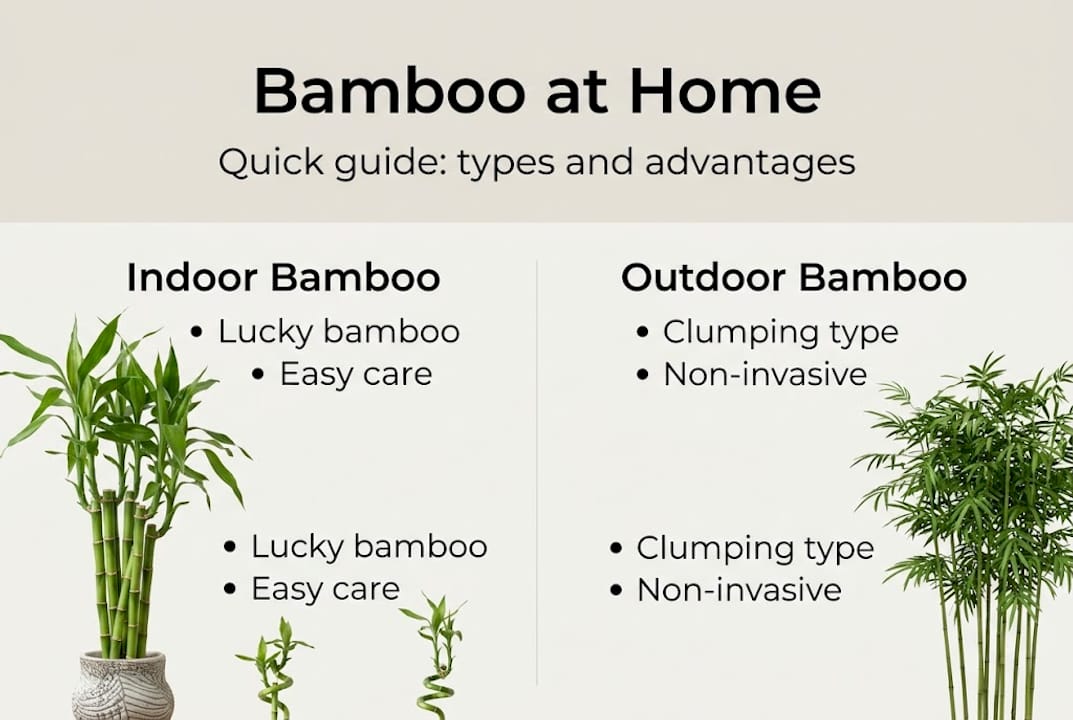
Outdoor true bamboo splits into two main categories: running bamboo and clumping bamboo. Running bamboo spreads aggressively through underground rhizomes and can take over a yard within a few seasons. Clumping bamboo grows in tight, manageable clusters and is far more suitable for home gardens. If you want the look of real bamboo outdoors without the headaches, clumping varieties are the responsible choice.
Here is a quick comparison to help you decide which type fits your situation:
| Feature | Lucky bamboo | True bamboo (running) | True bamboo (clumping) |
|---|---|---|---|
| Best location | Indoors | Outdoor only | Outdoor or large pots |
| Spread risk | None | High | Low |
| Light needs | Low to medium | Full sun | Full sun to partial shade |
| Maintenance | Very low | High (containment) | Moderate |
| Pet safe | No | Generally yes | Generally yes |
Key things to keep in mind when choosing your bamboo:
- Lucky bamboo works perfectly on a desk, shelf, or bathroom counter with minimal fuss.
- Running bamboo requires root barriers or containers to prevent it from spreading into neighboring yards.
- Clumping bamboo is the best outdoor option for most home gardeners who want real bamboo without the invasiveness.
- All bamboo types benefit from consistent watering and protection from extreme temperature swings.
For more detailed guidance on keeping indoor plants healthy, our indoor plant care tips cover everything from watering schedules to light placement.
Wellness and air quality: Fact versus fiction
Bamboo is often marketed as a powerful air-purifying plant. The reality is more nuanced, and it is worth knowing what the science actually says before you buy a dozen stalks expecting hospital-grade air filtration.
Research on bamboo’s air purification potential is mixed. Some studies suggest plants can help reduce certain volatile organic compounds in enclosed spaces, but the effect is modest under real home conditions. You would need an impractical number of plants to see a measurable difference in air quality from plants alone. That said, healthy plants do add humidity and a sense of freshness to a room, which many people find genuinely pleasant.
Where bamboo delivers more clearly is in the area of wellness and stress reduction. The presence of greenery indoors is consistently linked to lower stress levels, improved mood, and better focus. Bamboo’s clean lines and soft green color make it particularly calming as a visual element in a workspace or living room.
Bamboo shoots, the edible kind harvested from certain true bamboo species, are a different story nutritionally. They are high in protein, fiber, and antioxidants and have been shown to help regulate blood sugar. However, raw bamboo shoots contain natural toxins called cyanogenic glycosides and must be properly cooked before eating. This is not a concern with decorative lucky bamboo, which is not edible.
“The psychological benefit of caring for a living plant is real and well-documented. Bamboo, with its minimal care needs, makes that benefit accessible even to the busiest households.”
Here is a summary of bamboo’s wellness profile:
| Benefit | Strength of evidence | Notes |
|---|---|---|
| Air purification | Weak to moderate | Modest effect in real home conditions |
| Stress reduction | Strong | Linked to greenery presence generally |
| Nutritional value (shoots) | Strong | Requires proper preparation before eating |
| Humidity contribution | Moderate | Helps in dry indoor environments |
Pro Tip: The best way to maximize any air quality benefit from your plants is to keep them healthy. A thriving plant transpires more actively and contributes more to your indoor environment than a struggling one. Focus on good light, clean water, and occasional fertilizing. For a broader look at plants that genuinely support indoor air quality, check out our guide to air purification plants.
Cultural and symbolic benefits: Bamboo’s role in Feng Shui and home harmony
Beyond wellness, bamboo carries centuries of cultural meaning that many modern plant owners find genuinely enriching. In both Feng Shui and Vastu Shastra, lucky bamboo symbolizes prosperity, health, and harmony, making it one of the most intentionally gifted plants in the world.
The number of stalks in a lucky bamboo arrangement carries specific meaning:
- 2 stalks: Love and partnership
- 3 stalks: Happiness, wealth, and longevity
- 5 stalks: Balance and health
- 6 stalks: Prosperity and good luck
- 7 stalks: Good health
- 8 stalks: Growth and abundance
- 9 stalks: Good fortune (considered especially lucky)
- 4 stalks: Avoided in many cultures, associated with bad luck
Placement matters too. In Feng Shui, the east area of a room is associated with family and health, making it the ideal spot for a lucky bamboo arrangement. The southeast corner is linked to wealth and abundance. Avoid placing bamboo in the bedroom if you want to follow traditional Feng Shui principles, as the active energy of growing plants can interfere with restful sleep.
“Bamboo does not just decorate a space. It sets an intention. That is a layer of meaning most houseplants simply cannot offer.”
If you want to set up your own lucky bamboo arrangement with purpose, here is a simple process:
- Choose a container that complements your room’s color scheme, whether glass, ceramic, or woven.
- Select the stalk number that matches your intention, such as 3 for happiness or 8 for abundance.
- Place the arrangement in the east or southeast corner of your chosen room.
- Fill with filtered or distilled water, as lucky bamboo is sensitive to fluoride in tap water.
- Tie the stalks loosely with a red ribbon, which is considered to activate positive energy in Feng Shui.
- Refresh the water every 7 to 10 days and keep the roots submerged but not buried.
This kind of intentional placement turns a simple plant into a meaningful part of your home’s atmosphere.
Practical cautions: Safety, pet risks, and responsible bamboo care
Bamboo is easy to love, but a few real risks deserve your attention before you bring it home or plant it in your yard.
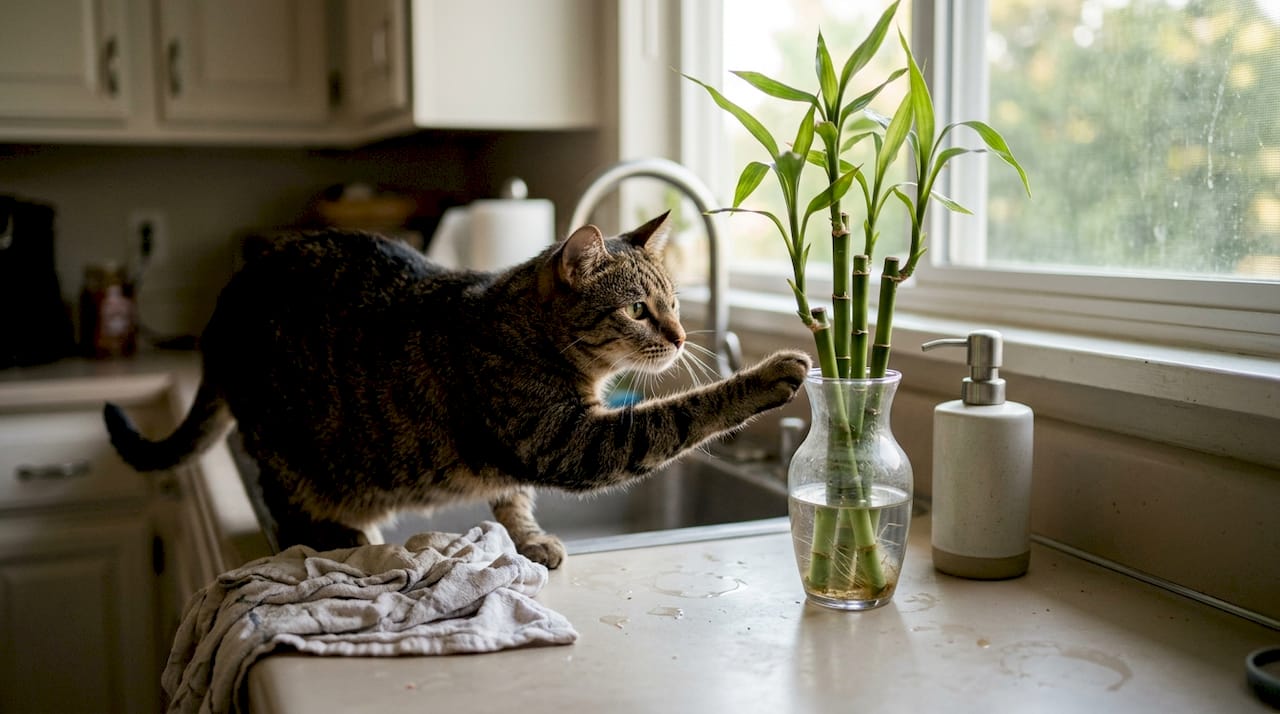
The biggest safety concern for pet owners is toxicity. Lucky bamboo is toxic to cats and dogs and can cause symptoms including vomiting, drooling, weakness, and loss of coordination if ingested. It is not considered highly toxic to humans, but it is not edible either. If you have curious pets at home, keep lucky bamboo on high shelves or in rooms your pets cannot access. Our guide on toxic houseplants to avoid covers this topic in much more detail, and it is worth reading before expanding your plant collection.
For outdoor gardeners, running bamboo is the main concern. It spreads through underground rhizomes that can travel several feet in a single season, pushing through fences, under patios, and into neighboring properties. Removing established running bamboo is a serious undertaking that often requires professional help.
Here is how to enjoy bamboo responsibly:
- Never plant running bamboo directly in open garden beds without a heavy-duty root barrier installed at least 24 inches deep.
- Choose clumping bamboo for outdoor spaces where you want the aesthetic without the risk.
- Grow bamboo in large containers on patios or balconies to enjoy the look with zero spread risk.
- Dispose of bamboo cuttings carefully since even small rhizome fragments can root and spread if composted improperly.
- Check local regulations because some regions have restrictions on planting certain bamboo species.
For more on keeping your garden safe for both pets and people, our resource on plants toxic to pets is a practical starting point.
Pro Tip: If you love the look of outdoor bamboo but worry about invasiveness, grow a clumping variety like Fargesia in a large, undrilled planter. You get the full visual effect with zero risk of it escaping into your yard or your neighbor’s.
A fresh perspective: What most guides miss about bamboo at home
Most bamboo articles spend a lot of energy on air purification, and honestly, that is the least compelling reason to grow it. The real value of bamboo at home is something quieter: it is one of the few plants that looks intentional and sophisticated while asking almost nothing from you in return.
Busy gardeners often abandon plants because the care routine becomes a source of stress rather than joy. Lucky bamboo sidesteps that entirely. It thrives on neglect, looks good in almost any room, and carries enough cultural weight to make it a genuinely thoughtful addition to your space.
Our take is that the smartest approach is to pair lucky bamboo indoors with a clumping bamboo in a large outdoor pot. You get the full range of bamboo’s benefits, from the calm indoor presence to the dramatic outdoor texture, without any of the invasiveness headaches. This combination works especially well for people who are just starting to build their plant collection and want beginner-friendly plants that deliver visible results quickly. Bamboo is not just a plant. It is a low-effort, high-reward choice that earns its place in any home.
Bringing bamboo and greenery home: Where to start
Ready to try bamboo for yourself? Here’s where to dig deeper and grow your indoor garden with confidence.
If you are just getting started, our full guide to indoor plant benefits explains why adding greenery to your home is one of the best things you can do for your daily well-being. If improving your air quality is a priority, our dedicated resource on plants for air quality will help you build a smarter plant lineup. And if you are brand new to gardening and want a structured starting point, our beginner gardening guide walks you through everything from soil selection to watering schedules. Start with lucky bamboo, build your confidence, and expand from there.
Frequently asked questions
Does bamboo really clean indoor air?
Research on air purification by plants, including bamboo, shows only modest benefits under real home conditions, so while bamboo contributes to a fresher indoor feel, it is not a substitute for proper ventilation.
Is lucky bamboo safe for pets?
Lucky bamboo is toxic to cats and dogs and should always be placed well out of their reach to prevent ingestion and potential illness.
Can I grow bamboo outdoors without it becoming invasive?
Yes. Choosing clumping varieties or growing any bamboo in a large container are both reliable ways to enjoy outdoor bamboo without the risk of it spreading rapidly through your yard.
What should I look for when buying a bamboo plant for my home?
Look for firm, vibrant green stalks with no yellowing or soft spots, and confirm whether you are buying low-maintenance lucky bamboo for indoors or a clumping true bamboo variety for outdoor pots.
Recommended
- Aloe Vera Plant Benefits – Why Every Home Needs One – Lushy Gardens
- The Essential Guide to Benefits of Indoor Plants – Lushy Gardens
- Houseplants for beginners: easy care tips (68% saved) – Lushy Gardens
- Understanding the Benefits of Houseplants for Your Home – Lushy Gardens

I’m Eleanor, a seasoned gardener with over three decades of experience tending to Mother Nature’s creations. Through Lushy Gardens, I aim to share my wealth of knowledge and help fellow plant enthusiasts uncover the wonders of gardening. Let’s dive into this journey together, one leaf at a time.


