
Table of Contents
TL;DR:
- Most plant owners harm their plants by overwatering rather than neglect, relying on fixed schedules that ignore environmental cues.
- Adjust watering based on soil moisture checks, environmental factors, and proper drainage to keep plants healthy and prevent root rot.
Most plant owners kill their plants with kindness, not neglect. The most common plant care questions people ask, whether about watering schedules, soil types, or yellowing leaves, share one thing in common: the answers are rarely as simple as a fixed rule. Plants respond to their environment, and that environment changes constantly. This guide cuts through the guesswork by answering the plant care FAQs that trip up beginners and experienced growers alike, with practical, adaptable advice you can use today.
Table of Contents
- Key takeaways
- 1. How often should you water indoor plants?
- 2. What is the right way to water?
- 3. Why does soil type and mix matter so much?
- 4. What causes hydrophobic soil, and how do you fix it?
- 5. How do light, temperature, and humidity affect plant care?
- 6. How do you tell if a plant is overwatered or underwatered?
- 7. Do plants need fertilizer, and when should you use it?
- 8. How do you choose the right pot size?
- 9. How do you manage common pests on houseplants?
- My take on plant care rules and why I ignore most of them
- Keep learning with Lushygardens
- FAQ
Key takeaways
| Point | Details |
|---|---|
| Skip fixed watering schedules | Check soil moisture with your finger before every watering to avoid overwatering or underwatering. |
| Drainage determines root health | Always use pots with drainage holes or apply the double potting method to protect roots. |
| Environment drives care decisions | Light, temperature, and humidity directly affect how often your plant needs water. |
| Symptoms need soil context | Match leaf symptoms with a soil moisture check before assuming any cause or treatment. |
| Soil mix is not one-size-fits-all | A ratio of 2 parts soil, 2 parts peat moss, and 1 part perlite suits most container plants well. |
1. How often should you water indoor plants?
This is the most common plant care question of all, and the honest answer is: it depends. Fixed watering schedules fail to accommodate environmental changes, so soil moisture checks should govern your watering decisions every single time.
The finger test is your best tool. Push your finger about one to two inches into the soil. If it feels dry at that depth, water your plant. If it still feels moist, wait another day or two and check again. This one habit replaces the need for any watering calendar.
- Bright, warm rooms dry soil faster. Cool, low-light rooms slow it down.
- Terracotta pots dry out faster than plastic or glazed ceramic pots.
- Smaller pots dry out faster than large ones with the same plant.
- Actively growing plants in spring and summer need more water than dormant ones in winter.
Pro Tip: Water slowly across the entire soil surface rather than dumping water in one spot. Even moisture distribution means all the roots get access, not just the ones near the center.
2. What is the right way to water?
Watering technique matters as much as frequency. Water slowly across the soil surface until you see water draining from the bottom holes, then empty the saucer within an hour. Letting plants sit in standing water is one of the fastest paths to root rot.
Top watering works for most plants and helps flush out mineral salt buildup from the soil over time. Bottom watering, where you set the pot in a tray of water and let the soil absorb it from below, works well for plants that dislike wet leaves, like African violets, or for pots where the soil has become so dry it pulls away from the edges.
Neither method is universally better. Match the method to the plant and the situation.
3. Why does soil type and mix matter so much?
Container horticulture requires distinct care from in-ground gardening because the soil in a pot cannot drain or breathe the same way ground soil does. Potted soil becomes compacted over time, restricts airflow to roots, and can retain water unevenly.
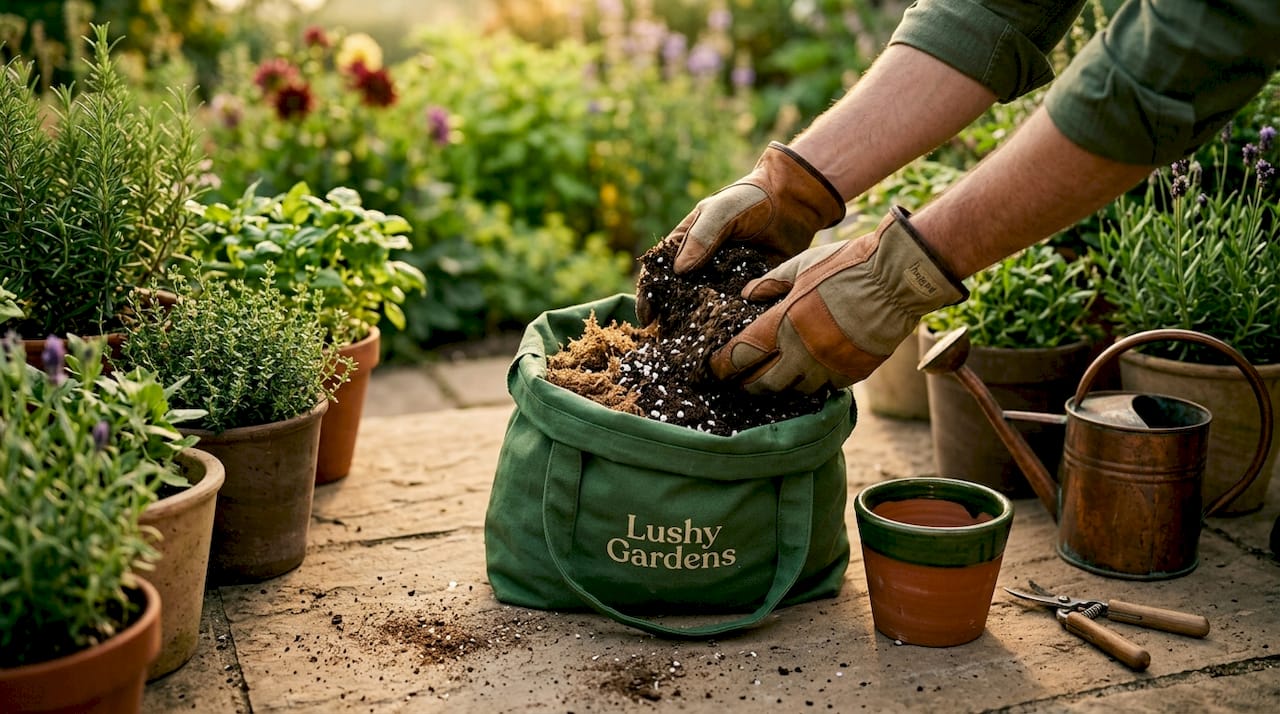
A well-balanced potting mix for most indoor plants follows a 2 parts soil, 2 parts peat moss, and 1 part perlite ratio. The peat moss retains some moisture while the perlite keeps the mix airy and free-draining. Without perlite, overly peat-heavy mixes hold water too long and create conditions where root rot thrives.
| Mix component | Role | Risk if overused |
|---|---|---|
| Potting soil | Provides structure and nutrients | Compaction over time |
| Peat moss | Retains moisture | Prolonged wetness, hydrophobia |
| Perlite | Improves drainage and aeration | Mix dries too fast |
Pro Tip: If you use a decorative pot without drainage holes, use the double potting method. Place your plant in a plain nursery pot with holes, then set that inside the decorative one. When you water, lift the inner pot out, water properly, let it drain, then place it back.
4. What causes hydrophobic soil, and how do you fix it?
You water your plant, the water races straight through to the saucer, and the soil still feels bone dry. That is hydrophobic potting mix at work. When peat-based soil dries out completely, it repels water instead of absorbing it, causing roots to stay thirsty even though you just watered.
The fix is slow, repeated watering. Set the pot in a basin of water for 20 to 30 minutes, letting the soil rehydrate from the bottom up. You can also water the surface slowly several times in a row, giving each pass time to absorb before adding more. Going forward, never let that mix dry out completely.
Salt buildup from tap water or fertilizer is a related problem. It accumulates in the soil and eventually blocks water absorption. Periodic deep watering that flushes the soil thoroughly prevents this from becoming a long-term issue.
5. How do light, temperature, and humidity affect plant care?
Light drives nearly everything. High light means faster growth, faster water uptake, and faster soil drying. Low light slows all of it down. Light, temperature, and humidity directly influence how much water a plant consumes and how quickly the soil dries. A single watering schedule cannot account for all of that.
Take pothos as a practical example. They do well in bright indirect light and prefer humidity between 50% and 70% with temperatures ranging from 60°F to 85°F. Move them to a darker corner in winter, and the soil will stay wet twice as long. Water on the same schedule regardless, and you will almost certainly overwater.
- Seasonal changes matter. Water less in fall and winter even if your routine says otherwise.
- Heating vents and air conditioners reduce humidity and dry out soil faster.
- Grouping plants together raises ambient humidity around them naturally.
Pro Tip: Place a tray filled with pebbles and water beneath tropical plants to raise local humidity. The water evaporates upward without letting roots sit in it. It is a simple solution that costs almost nothing. You can find more strategies at Lushygardens’ indoor plant care tips guide for managing environments in tight spaces.
6. How do you tell if a plant is overwatered or underwatered?
This is one of the most frequent plant care FAQs because the symptoms overlap. Both overwatering and underwatering can cause wilting and yellowing leaves. The difference is in the soil. Moist soil with wilting points to overwatering. Dry soil with wilting points to underwatering.
Always check the soil one to two inches deep before drawing any conclusions. Leaf color alone is not a reliable diagnosis.
| Symptom | Likely cause | Immediate action |
|---|---|---|
| Yellow leaves, wet soil | Overwatering or poor drainage | Let soil dry; check drainage holes |
| Wilting, dry soil | Underwatering | Water thoroughly until runoff |
| Brown crispy leaf tips | Low humidity or inconsistent watering | Mist or add a pebble tray |
| Mushy stems at soil level | Root rot from overwatering | Remove affected roots; repot |
| Yellowing lower leaves, moist soil | Nutrient deficiency | Resume light fertilization |
For a deeper look at diagnosing plant distress, Lushygardens has a thorough indoor plant troubleshooting guide that covers symptoms from root to tip.
7. Do plants need fertilizer, and when should you use it?
Potted plants eventually exhaust the nutrients in their mix. Potted soil cannot supply all the nutrients a plant needs across its life cycle, which means fertilizing is not optional if you want steady, healthy growth.
The most common mistake is fertilizing stressed, wilted, or recently repotted plants. Fertilizing a struggling plant adds salt stress to an already compromised root system. Instead, fertilize only when the plant is actively growing and looking otherwise healthy, typically spring through early fall. Reduce or stop in late fall and winter when growth naturally slows.
Use a balanced liquid fertilizer diluted to half strength for most houseplants. Less is more when you are unsure.
8. How do you choose the right pot size?
Bigger is not always better. When you move a plant into a pot that is too large, the excess soil around the roots holds moisture the plant cannot use, and that unused wet soil becomes a breeding ground for root rot. Pot up only one size at a time, typically two inches larger in diameter than the current pot.
Signs a plant needs repotting include roots circling the bottom of the pot or emerging from drainage holes, soil drying out within a day or two of watering, or visibly stunted growth during the growing season. Check out Lushygardens’ guidance on container soil and drainage to make smarter pot decisions from the start.
9. How do you manage common pests on houseplants?
Good airflow and attentive care reduce pest infestations significantly. Most indoor pests, including spider mites, fungus gnats, and mealybugs, thrive when plants are stressed, soil stays overly wet, or air circulation is poor.
Neem oil and diluted soapy water are effective first-line treatments for most soft-bodied insects. Wipe down leaves with a damp cloth weekly to remove early infestations and keep surfaces clean. For fungus gnats specifically, letting the top two inches of soil dry completely between waterings eliminates their breeding environment. Indoor air quality also plays a role. Poor air circulation and humidity imbalances accelerate both pest and mold problems.
My take on plant care rules and why I ignore most of them
I’ve watched people follow the same “water every Sunday” routine and wonder why their plants keep dying. In my experience, the single most damaging idea in plant care is the fixed watering schedule. It gives you the feeling of control without the results.
What I’ve learned after years of growing plants is that the soil tells you everything. I stopped using calendars and started using my hands. The moment I made that shift, I stopped losing plants to overwatering.
I’ve also seen the consequences of ignoring drainage. People spend money on beautiful pots with no drainage holes, pot their plants directly into them, and then wonder why the roots rot. Proper soil drainage is not a minor detail. It is the foundation everything else rests on. The double potting method is not a workaround; it is the right answer for using decorative pots.
My practical mindset tip: observe your plant for 30 seconds every time you walk past it. Note leaf color, soil surface moisture, and stem firmness. That habit, done consistently, catches problems before they become crises. Plant care is not complicated. It just requires attention.
— Povilas
Keep learning with Lushygardens
The answers to common plant care questions are a solid starting point, but confident plant care comes from building a consistent routine. Lushygardens has put together a daily plant care checklist that walks you through exactly what to check and when, without overcomplicating your day. If watering is still your sticking point, the complete watering guide covers every method and scenario in detail. New to growing things altogether? The beginner gardening guide at Lushygardens gives you the core knowledge without burying you in theory. Whether you have one pothos on a windowsill or a full indoor garden, there is a resource at Lushygardens built for exactly where you are right now.
FAQ
How do I know when to water my plant?
Stick your finger one to two inches into the soil. If it feels dry at that depth, water your plant. If it still feels moist, wait and check again the next day.
What are the signs of overwatering vs. underwatering?
Wilting with moist soil typically signals overwatering, while wilting with dry soil signals underwatering. Always check soil moisture before drawing conclusions from leaf symptoms alone.
Why is my plant’s soil repelling water?
Your potting mix may be hydrophobic, which happens when peat-based soil dries out completely and stops absorbing water. Soak the pot in a basin of water for 20 to 30 minutes to rehydrate it from the bottom up.
Do all indoor plants need fertilizer?
Yes. Potted plants cannot get all their nutrients from the soil alone over time. Use a balanced liquid fertilizer at half strength during the growing season, and stop fertilizing in late fall and winter.
How does light affect how often I need to water?
Plants in bright, warm spots dry out their soil much faster than plants in low-light or cool environments. Adjust your watering frequency with the seasons and your plant’s location rather than following a fixed schedule.
Recommended
- Solve common houseplant problems: tips for healthy plants – Lushy Gardens
- Plant care routine checklist: your daily guide for healthy gardens – Lushy Gardens
- Seasonal plant care tips: year-round guide for gardeners – Lushy Gardens
- Indoor plant care guide: healthier, happier plants at home – Lushy Gardens

I’m Eleanor, a seasoned gardener with over three decades of experience tending to Mother Nature’s creations. Through Lushy Gardens, I aim to share my wealth of knowledge and help fellow plant enthusiasts uncover the wonders of gardening. Let’s dive into this journey together, one leaf at a time.


