
Table of Contents
TL;DR:
- Lily exposure can cause rapid, irreversible kidney failure in cats even in tiny amounts.
- Many common houseplants like Pothos and Dieffenbachia cause oral irritation but are less deadly.
- Immediate vet contact and identification are crucial if a cat ingests a toxic plant.
A single brush against a lily can deposit enough pollen on your cat’s fur to trigger acute kidney failure by the time you notice something is wrong. Lily toxicity in cats is so severe that even lapping at vase water can be fatal. Yet many cat owners keep lilies on the kitchen table without a second thought. This guide is built to change that. We will walk you through which houseplants put your cat at serious risk, why certain plants are so much more dangerous than others, and how to build a genuinely safe, green home your cat can share without incident.
Table of Contents
- Why some houseplants are dangerous to cats
- Top poisonous plants to keep away from your cat
- What to do if your cat eats a poisonous plant
- Cat-safe alternative plants and prevention strategies
- Rethinking houseplants: What every cat owner should really know
- Cultivate a thriving, cat-safe indoor garden with Lushy Gardens
- Frequently asked questions
Key Takeaways
| Point | Details |
|---|---|
| Some houseplants are highly toxic | Even a little exposure to lilies or sago palm can be fatal for cats. |
| Know your plant risks | Not all irritating plants are deadly, but true lilies and sago palms require urgent action. |
| Prevention is best | Choose non-toxic plants and use barriers or deterrents to keep curious cats safe. |
| Act fast in emergencies | Immediate vet care can save your cat’s life if severe toxins are ingested. |
Why some houseplants are dangerous to cats
Cats are not small dogs. Their livers lack certain enzymes that allow dogs and humans to process and neutralize many plant compounds. This metabolic gap means a toxin that gives a dog mild stomach upset can send a cat into organ failure within hours. Add in the fact that cats are meticulous groomers, and you have a recipe for hidden exposure. A cat that brushes past a plant, gets pollen on its coat, and then grooms itself has essentially ingested that pollen directly.
Understanding how plant toxins actually harm cats helps you prioritize your response. There are three main mechanisms to know about:
- Acute organ failure: Certain plants target specific organs at the cellular level. True lilies, for example, destroy kidney tubule cells through a toxin specific to cats. Lilies cause kidney failure via an unidentified compound that leaves dogs with nothing worse than an upset stomach. This species-specific vulnerability is why lily exposure is always a veterinary emergency for cats, even in tiny amounts.
- Oral and gastrointestinal irritation: Plants loaded with insoluble calcium oxalate crystals, including Dieffenbachia, Pothos, Peace Lily, and Philodendron, cause oral irritation and drooling when chewed. Microscopic needle-like crystals pierce the soft tissues of the mouth, throat, and stomach lining, producing immediate pain and swelling. While rarely fatal, the symptoms are intense and distressing.
- Mild systemic upset: Many other common plants cause general nausea, lethargy, or loose stools without permanent damage. These are concerning but rarely life-threatening in small exposures.
Symptoms that demand immediate attention include sudden lethargy, refusal to eat, urination changes, seizures, and collapse. Excessive drooling, repeated vomiting, and stumbling can indicate either severe irritation or early organ involvement. You should always treat unknown plant ingestions as urgent until you know exactly what plant is involved.
Lilies can cause kidney failure in cats. Dogs exposed to the same plant get nothing more than mild GI upset.
You can explore the full range of plants toxic to pets to understand how different species affect different animals, which is useful knowledge before you shop for anything new.
Pro Tip: “Peace Lily” sounds harmless and is not even a true lily, but it still causes painful mouth and throat irritation in cats due to its calcium oxalate content. Never assume a plant is safe just because it has a friendly common name. Cross-reference every plant you own against the ASPCA toxic plant database before bringing it indoors.
Checking plant safety before purchase is far easier than managing a poisoning crisis afterward. Make it a firm rule in your household, especially if your cat has free run of every room.
Top poisonous plants to keep away from your cat
Some plants are so commonly grown indoors that they appear in nearly every home and garden center. Unfortunately, several of the most popular ones are among the most dangerous to cats. The table below gives you a fast reference for the biggest offenders.
| Plant | Toxic part | Main symptoms | Severity |
|---|---|---|---|
| Easter/Asiatic Lily | All parts, pollen, water | Vomiting, lethargy, kidney failure | Critical |
| Sago Palm | All parts, especially seeds | Vomiting, liver failure, seizures | Critical |
| Dieffenbachia | Leaves, stems | Drooling, mouth pain, swelling | Moderate |
| Pothos | Leaves, stems | Oral irritation, vomiting | Moderate |
| Peace Lily | Leaves, flowers | Drooling, oral pain | Moderate |
| Philodendron | All parts | Oral irritation, drooling | Moderate |
| Oleander | All parts | Heart arrhythmia, collapse | Critical |
True lilies, specifically plants in the Lilium and Hemerocallis genera, including Easter Lily, Asiatic Lily, Tiger Lily, and Daylily, are highly toxic to cats and can cause acute kidney failure from exposures as small as a few pollen grains or a sip of water from the vase. There is no safe threshold. Any exposure should be treated as a medical emergency.
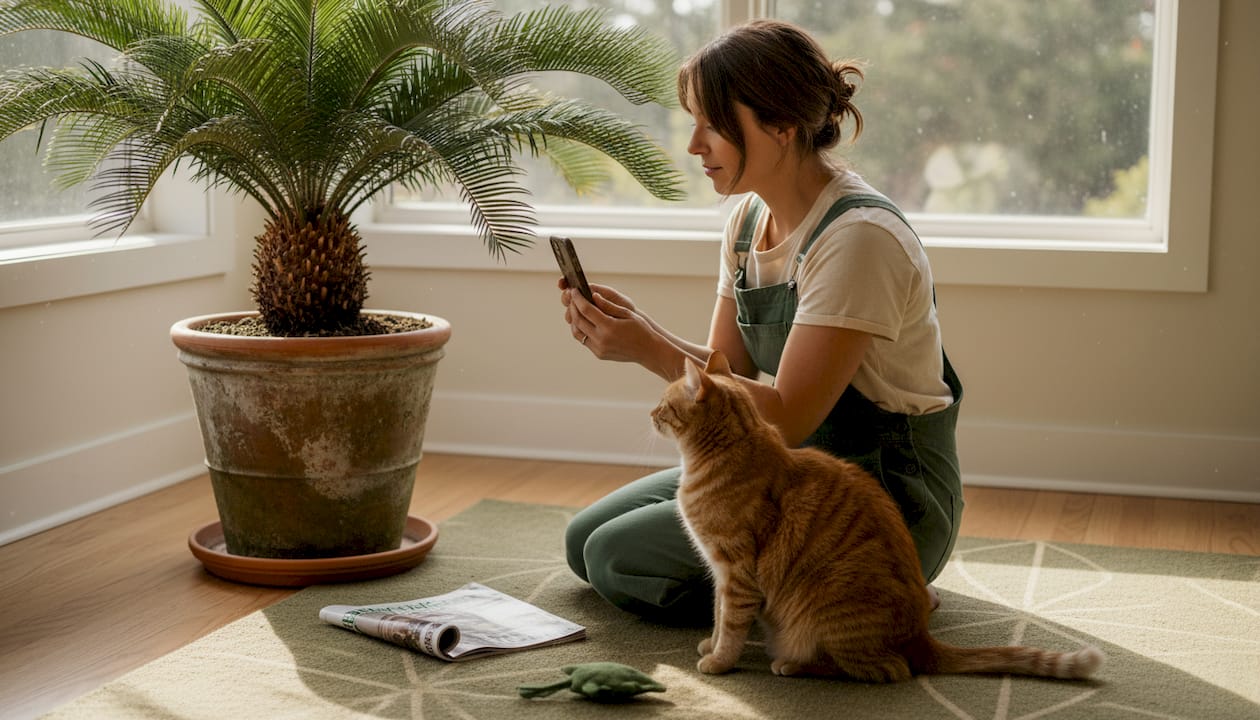
Sago Palm is arguably the most lethal plant an owner could accidentally keep indoors or in a patio pot. All parts of the plant are toxic, but the seeds carry the highest concentration of cycasin, a compound that destroys liver cells. Sago Palm causes severe liver failure with a mortality rate between 50 and 75 percent even with aggressive veterinary treatment. That statistic alone should make Sago Palm a plant you never bring home.
A critical distinction worth making: not every plant with “lily” in its name belongs to the dangerous Lilium family. Peace Lily (Spathiphyllum) and Calla Lily (Zantedeschia) are not true lilies. They will cause painful oral irritation and vomiting, but they do not cause the kidney failure associated with true lilies. Still harmful, but a different category of harm. You can find a more thorough breakdown of which plants dangerous to cats belong in which risk category and how to tell them apart.
Key symptoms to watch for by plant type:
- True lilies: Vomiting within two hours, followed by apparent recovery, then rapid decline into kidney failure within 24 to 72 hours
- Sago Palm: Severe vomiting, bloody diarrhea, bruising, seizures, and jaundice
- Calcium oxalate plants (Pothos, Philodendron, Peace Lily): Immediate pawing at mouth, drooling, refusing food, mild swelling of lips and tongue
- Oleander: Drooling, abnormal heart rate, weakness, and potential collapse
Explore toxic houseplants to avoid for a more complete list with photos to help you identify plants you may already own.
What to do if your cat eats a poisonous plant
Speed is everything. The window for effective treatment narrows fast with the most serious toxins, and waiting to see if symptoms develop is a strategy that can cost your cat its life. Here is exactly what to do:
- Move your cat away from the plant immediately. Prevent any further contact or ingestion. If there is plant material in the mouth, gently rinse with water but do not attempt to induce vomiting unless your vet explicitly instructs you to.
- Identify the plant. Take a photo of the whole plant, including leaves, flowers, and any berries or seeds. Grab the pot tag or look up the plant name if you are unsure. This information is critical for treatment decisions.
- Call your veterinarian or a poison control hotline right away. The ASPCA Animal Poison Control Center operates 24/7. Do not wait for symptoms to worsen before making that call.
- Watch for escalating symptoms. If your cat is seizing, collapsed, breathing abnormally, or bleeding, skip the phone call and go directly to the nearest emergency animal clinic while someone else calls ahead.
- Bring a plant sample or photo to the clinic. Vets can move faster and make better treatment choices when they know exactly what the cat was exposed to.
With lilies, immediate vet care is essential. Delays beyond 18 hours can lead to irreversible kidney damage that no treatment can reverse.
Do not attempt home remedies for anything beyond the mildest irritants. Milk, hydrogen peroxide, or activated charcoal given without veterinary guidance can make the situation significantly worse. For serious toxins like lilies and Sago Palm, your cat needs IV fluids, monitoring, and possibly dialysis support. That is not something you can replicate at home.
For additional guidance on creating a safer environment before anything goes wrong, visit our pet garden safety guide, which covers both indoor and outdoor hazards in detail.
Pro Tip: Take photos of every plant in your home right now and create a simple photo album labeled “My Plants.” If your cat ever has a poisoning episode, you will be able to show a vet immediately rather than fumbling through identification during a stressful emergency visit.
More background on how to make your space plant-safe is available through ASPCA houseplant toxicity tips, which also covers lesser-known hazards that rarely make it onto basic toxic plant lists.
Cat-safe alternative plants and prevention strategies
Giving up houseplants entirely is not the answer. Plenty of beautiful, lush, interesting plants are completely safe to keep around cats, and designing a green home that works for everyone is absolutely achievable. The key is making intentional choices from the start.
Here is a quick comparison of popular toxic plants and their safer swaps:
| Toxic plant | Safe alternative | Notes |
|---|---|---|
| Easter Lily | Spider Plant | Trailing, easy to grow, non-toxic |
| Pothos | Boston Fern | Similar lush look, ASPCA verified safe |
| Dieffenbachia | Areca Palm | Dramatic, cat-friendly tropical plant |
| Peace Lily | African Violet | Flowering, compact, non-toxic |
| Philodendron | Calathea | Bold patterned leaves, pet-safe |
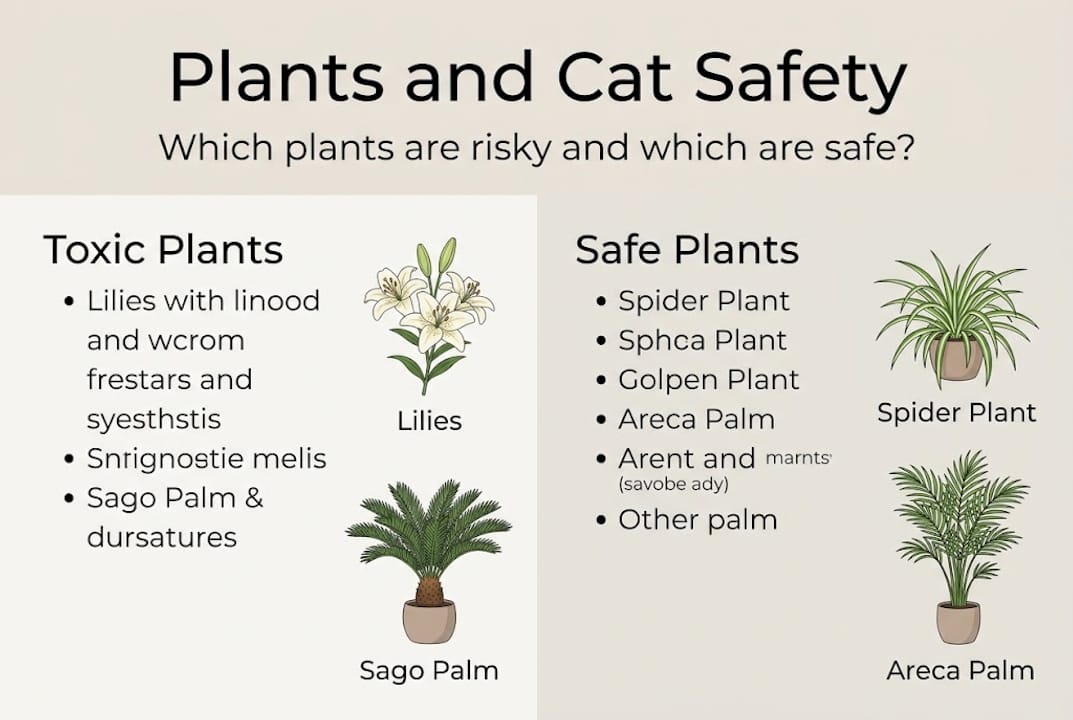
Spider Plant, Boston Fern, and African Violet are all ASPCA-verified non-toxic to cats, meaning they have been evaluated and confirmed safe. These are your go-to starting points when redesigning your plant collection.
Beyond plant selection, prevention strategies matter just as much. Here is what actually works in a home with a curious cat:
- Elevation and barriers: Place plants on high shelves or inside closed terrariums. Cats can jump, so “out of reach” has to mean truly inaccessible, not just inconvenient.
- Scent deterrents: Cats dislike citrus. Placing orange or lemon peel near plant bases can discourage investigation without harming the plant or the cat.
- Macramé hangers: Hanging planters suspended from the ceiling keep trailing plants well away from floor-level exploration.
- Regular plant audits: Every few months, walk through your home and verify each plant against the full ASPCA safety list. New plants may have been gifted, purchased, or propagated by family members without a safety check.
- Cat enrichment: Cats nibble plants partly out of boredom. Providing cat grass, interactive toys, climbing trees, and window perches reduces the appeal of your houseplants as entertainment.
Our guides on pet-safe houseplants and pet safe indoor plants give you curated options by light level and room type so you can build a collection that suits your space. And if you are curious about one plant in particular, our article on spider plants and cat safety covers exactly why this popular trailing plant is one of the best choices for cat owners.
Rethinking houseplants: What every cat owner should really know
Here is something most plant safety articles will not tell you: the generic “toxic vs. non-toxic” list is a starting point, not a finish line. Online lists can be outdated, inaccurate, or apply to plant species that do not match the hybrid sitting in your living room. Common names are inconsistent across regions, and a plant labeled “safe” on one site may cause real irritation in a cat with a sensitive stomach or a known tendency to chew aggressively.
The owners who handle this best are not the ones with the longest memorized list of dangerous plants. They are the ones who know their cat. A cat that ignores every plant in the house presents a completely different risk profile than a cat that bites every leaf it encounters. Your specific cat’s behavior matters more than a generic safety ranking.
Building a relationship with a veterinarian who understands your cat’s baseline health gives you a faster, more reliable resource than any website when a question arises. That said, keeping the ASPCA database bookmarked is still essential.
No list replaces vigilance. Know your plants, know your cat, and keep the ASPCA site bookmarked as your first stop for any new addition.
Confidence in plant selection, rather than fear of every green thing, leads to healthier homes. Start by cat-proofing your plant area with practical barriers, then layer in verified-safe plants one by one. You can have both a thriving plant collection and a safe, happy cat at the same time.
Cultivate a thriving, cat-safe indoor garden with Lushy Gardens
At Lushy Gardens, we believe you should never have to choose between a beautiful home and a safe pet. Our library of plant care guides, curated cat-safe plant lists, and practical plant care routine checklist resources are designed specifically for plant lovers who share their homes with animals. Whether you are starting fresh with a pet-safe collection or auditing what you already own, our indoor house plants guide walks you through the best options room by room. Explore the site, bookmark the guides that matter to you, and build the lush, green, cat-friendly home you have been imagining.
Frequently asked questions
Are all lilies dangerous to cats?
Yes, all true lilies from the Lilium and Hemerocallis genera are highly toxic to cats, and even minimal exposure like inhaling pollen or drinking vase water can trigger acute kidney failure within days.
Is Peace Lily as dangerous as a true lily for my cat?
No, Peace Lily is not a true lily and causes painful mouth irritation rather than kidney failure. It contains calcium oxalate crystals that cause oral irritation and vomiting, which are serious but not life-threatening in the same way.
What is the most common sign my cat has eaten a toxic plant?
Early warning signs include drooling, vomiting, lethargy, or loss of appetite within hours of contact, which are often caused by calcium oxalate irritation from plants like Pothos or Philodendron.
What should I do immediately if my cat eats a poisonous plant?
Remove your cat from the plant, photograph it for identification, and contact your vet or poison control right away. For lily or Sago Palm exposure, immediate vet care is critical because delays beyond 18 hours can make kidney damage irreversible.
Are there safe houseplants I can keep with my cat?
Absolutely. Spider Plant, Boston Fern, and African Violet are all ASPCA-verified non-toxic to cats and make excellent choices for a pet-friendly indoor garden.
Recommended
- Identify and Avoid Plants Dangerous to Cats: Expert Guide – Lushy Gardens
- Are Snake Plants Toxic to Cats? Understanding the Risks and Precautions – Lushy Gardens
- How to Keep Cats Away from Plants – The Definitive Guide – Lushy Gardens
- Are Spider Plants Poisonous to Cats? Separating Fact from Fiction – Lushy Gardens

I’m Eleanor, a seasoned gardener with over three decades of experience tending to Mother Nature’s creations. Through Lushy Gardens, I aim to share my wealth of knowledge and help fellow plant enthusiasts uncover the wonders of gardening. Let’s dive into this journey together, one leaf at a time.


