
Table of Contents
Struggling to find a houseplant that thrives with minimal effort and brightens your space? The mother-in-law plant, known scientifically as Dracaena trifasciata, brings both visual flair and serious resilience to any collection. Whether you call it snake plant or Saint George’s sword, this low-maintenance giant stands out for its sword-shaped leaves and reputation as an air purifier. Discover what makes it so adaptable and why its unique history and care needs attract gardeners around the globe.
Key Takeaways
| Point | Details |
|---|---|
| Hardy and Low-Maintenance | The mother-in-law plant thrives on neglect, requiring minimal care to flourish. It’s ideal for beginners and busy gardeners alike. |
| Air Purification Benefits | This plant acts as an effective air purifier, filtering harmful toxins from the air while producing oxygen, thus improving indoor air quality. |
| Pet Safety Awareness | While mildly toxic to pets, proper placement and care can mitigate the risk of ingestion and health issues for your furry friends. |
| Variety and Aesthetics | Numerous cultivars offer unique colors and patterns, making it easy to find a mother-in-law plant that fits your décor and space requirements. |
Mother Law Plant: Core Definition and Myths
The mother-in-law plant, scientifically known as Dracaena trifasciata (formerly Sansevieria trifasciata), is a striking evergreen perennial native to tropical West Africa. This popular houseplant features distinctive sword-shaped, upright leaves with sharp margins and comes in various color patterns, from solid green to variegated stripes.
You might also hear it called by other names: snake plant, Saint George’s sword, or viper’s bowstring hemp. The nickname “mother-in-law’s tongue” has an interesting backstory that’s worth understanding before you bring one home.
Where the Name Comes From
The plant earned its memorable nickname from a metaphorical connection to sharp tongues. The long, stiff, pointed leaves resemble a sharp-tongued mother-in-law—a humorous reference that originated in mid-20th-century Western culture. Some sources point to the literal sharpness of the leaf margins, which can actually nick your skin if you’re not careful.
Interestingly, the plant contains mild toxins that can cause throat irritation if ingested, adding a layer of truth to the sharp-tongue metaphor beyond just appearance.
Common Myths About Mother-in-Law Plants
Let’s clear up some misconceptions that many beginners believe:
- Myth 1: It requires constant care. Reality: This plant thrives on neglect and handles irregular watering beautifully.
- Myth 2: It needs bright light. Reality: It tolerates low light conditions, making it perfect for offices or shadowy corners.
- Myth 3: It’s toxic to all pets. Reality: While mildly toxic if ingested, it’s far less dangerous than many common houseplants.
- Myth 4: You need special soil. Reality: Standard potting soil works fine; it just needs to drain well.
- Myth 5: Brown leaf tips mean it’s dying. Reality: This usually indicates low humidity, not a serious problem.
The mother-in-law plant’s reputation for being “indestructible” is well-earned—it’s genuinely one of the easiest houseplants to keep alive, even for complete beginners.
Why These Myths Persist
Many false beliefs about plant care stem from outdated gardening advice or misunderstandings about plant biology. What works for tropical rainforest plants doesn’t necessarily work for drought-tolerant desert natives. The mother-in-law plant, originating from arid regions, has adapted to survive with minimal resources.
Gardeners often overcomplicate care routines based on assumptions rather than the plant’s actual needs. This plant rewards a hands-off approach, not micromanagement.
The Truth About Its Hardiness
This plant genuinely lives up to its reputation as a low-maintenance houseplant. It tolerates irregular watering, adapts to various light conditions, and bounces back from neglect. Air-purifying capabilities add bonus value to its already impressive resilience.
Pro tip: If you’re new to gardening, start with a mother-in-law plant to build confidence—its forgiving nature means you’ll succeed, which motivates you to expand your plant collection.
Popular Varieties and Unique Features
The mother-in-law plant comes in more varieties than most beginners realize. While many people picture the classic solid green version, breeders and collectors have developed stunning cultivars with unique patterns, colors, and growth habits. Each variety offers something different for your space.
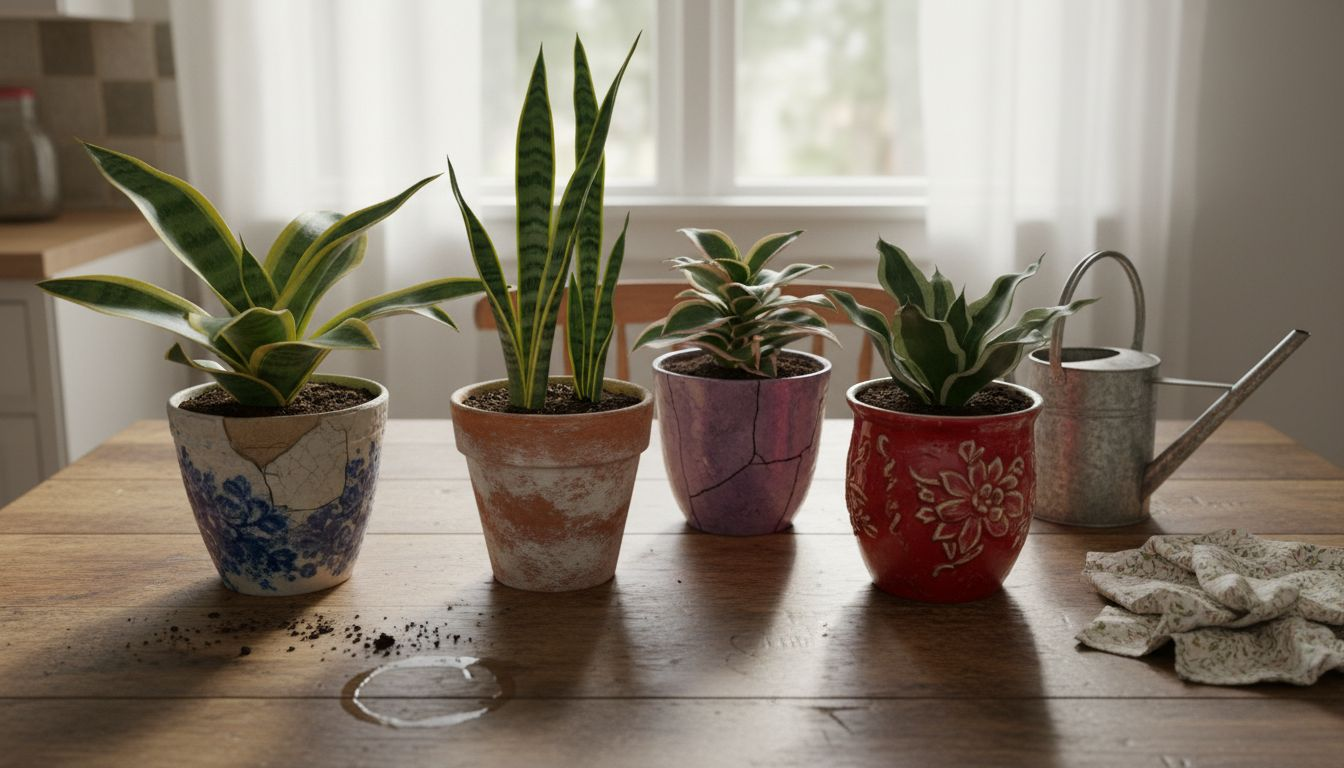
The most widely available is Dracaena trifasciata ‘Laurentii’, which features striking yellow borders along dark green leaves. This variegated beauty adds visual interest to any room and remains incredibly easy to care for. You’ll find it in most garden centers and plant shops.
Popular Cultivars Worth Growing
Here are the varieties you’re most likely to encounter:
- ‘Black Gold’: Dark green leaves with bright yellow edges, creating dramatic contrast in low-light spaces.
- ‘Moonshine’: Nearly solid silver-gray foliage that brightens dim corners beautifully.
- ‘Golden Hahnii’: Compact rosette form with golden-yellow variegation, perfect for small shelves.
- ‘Futura Robusta’: Broader leaves with cream-colored bands running through deep green.
- ‘Silver Queen’: Pale silver leaves with thin green margins, appearing almost ethereal.
- ‘Bantel’s Sensation’: Narrow, delicate white-striped leaves on a slender plant.
Each variety maintains the same low-maintenance care requirements of the species, so choosing between them comes down to aesthetics and space constraints.
Size and Growth Patterns
Varieties range from compact dwarf forms to tall architectural specimens. The standard varieties grow 2 to 4 feet tall, while compact cultivars like ‘Hahnii’ max out around 1 foot. This diversity means you can find a mother-in-law plant for any space—windowsills, shelves, or corner statements.
Growth remains slow regardless of variety. Expect 2 to 3 inches of new growth annually under normal conditions. This measured pace makes these plants perfect for patient gardeners.
Here’s a quick reference comparing popular mother-in-law plant cultivars:
| Variety | Leaf Color & Pattern | Typical Height | Best Room Placement |
|---|---|---|---|
| Laurentii | Dark green, yellow borders | 2–4 feet | Living rooms, bright spots |
| Black Gold | Deep green, bold yellow edges | 2–3 feet | Low-light corners |
| Moonshine | Silver-gray, subtle green margins | Up to 2 feet | Bedrooms, shady areas |
| Golden Hahnii | Golden-yellow variegation, rosette | Under 1 foot | Desks, small shelves |
| Futura Robusta | Cream bands, wide leaves | 2 feet | Entryways, shelves |
| Bantel’s Sensation | Narrow white stripes, upright | Up to 3 feet | Offices, modern décor |
Leaf Texture and Pattern Variations
Beyond color, leaves vary significantly in appearance. Some cultivars display bold horizontal stripes, while others feature delicate vertical lines or solid coloring with subtle banding. Leaf width also varies—narrow, graceful forms contrast beautifully with broad, sculptural specimens.
Pattern intensity depends on light exposure. Brighter conditions intensify variegation, while low light may reduce color contrast slightly.
Which Variety Suits You Best
Choose based on your available space and light conditions. Prefer bright indirect light? Go with vibrant variegated types like ‘Laurentii’ or ‘Black Gold’. Stuck with low light? ‘Moonshine’ practically glows in dim corners. Want something compact? ‘Hahnii’ varieties work perfectly on desks or nightstands.
Pro tip: Start with a variegated variety like ‘Laurentii’—the contrasting colors help you spot watering mistakes and foliage issues earlier than solid green plants would.
Essential Care: Water, Light, and Soil
The mother-in-law plant thrives on neglect, which makes it perfect for busy gardeners. Understanding its three basic needs—water, light, and soil—sets you up for years of success. Get these fundamentals right, and your plant will flourish with minimal effort.
Watering: The Golden Rule
This is where most beginners make their biggest mistake. The mother-in-law plant stores water in its thick, succulent leaves, so it needs far less water than typical houseplants. Think of it as a camel in the plant world.
Wait until the soil is completely dry before watering. Stick your finger 2 inches into the soil—if it feels bone dry, water thoroughly until it drains from the bottom. If it feels slightly damp, wait another week.
Your watering schedule depends on season and humidity. In winter, water even less frequently, sometimes just once monthly. Overwatering causes root rot faster than any other mistake, and these plants can’t recover from soggy soil.
Light: Adaptable But Prefers Brightness
Unlike fussy tropical plants, the mother-in-law plant adapts to various light conditions. It thrives in bright, indirect light but tolerates low light surprisingly well. This flexibility makes it suitable for offices, bathrooms, and corners with minimal natural light.
Place your plant near a north or east-facing window for ideal conditions. South-facing windows work too if you filter direct afternoon sun with a sheer curtain. Even in low light, it survives—just grow more slowly.
Variegated varieties like ‘Laurentii’ show more vibrant colors in brighter spots. If your plant looks pale or losing pattern intensity, it’s asking for more light.
Soil: Drainage Is Everything
Regular potting soil retains too much moisture for this plant. Use a well-draining succulent or cactus soil mix instead. If you can’t find specialized mixes, amend standard potting soil with perlite or coarse sand to improve drainage.
The goal is soil that dries out quickly between waterings. Poor drainage kills more mother-in-law plants than any other factor. Your container must have drainage holes—non-negotiable.
Quick Care Checklist
- Water only when soil is completely dry
- Provide bright, indirect light when possible
- Use well-draining succulent soil
- Choose containers with drainage holes
- Repot only when roots crowd the pot (every 2-3 years)
Root rot from overwatering is nearly irreversible, but underwatering never kills this plant—when in doubt, wait longer between waterings.
Pro tip: Set a watering reminder for every 3 weeks, then check soil moisture before watering—skip it if soil isn’t dry, and your plant will thank you with vigorous growth.
See how the main care factors directly influence plant health:
| Care Factor | Plant Response (Optimal) | Consequence if Ignored |
|---|---|---|
| Watering | Steady, healthy growth | Root rot or shriveled leaves |
| Lighting | Vibrant leaf color & growth | Faded colors, slow growth |
| Soil Drainage | Strong, healthy roots | Soggy roots, rapid decline |
| Pot Size | Compact root development | Pot-bound or stunted plant |
Benefits: Air Purification and Health Perks
The mother-in-law plant does more than look good sitting on your shelf. NASA research and scientific studies have confirmed it’s a powerful air purifier that actively improves your indoor environment. This bonus benefit makes it one of the smartest plants you can bring home.
How It Purifies Your Air
The mother-in-law plant removes harmful toxins through its leaves while simultaneously producing oxygen. This dual action combats indoor air pollution at the source. Unlike passive air fresheners, this plant actually works while you sleep.
Scientific testing shows it effectively removes formaldehyde, benzene, and xylene—common toxins found in household furniture, cleaning products, and new construction materials. Studies placing snake plants in enclosed environments documented measurable reductions in volatile organic compounds.
The plant absorbs these toxins through its leaves and filters them, releasing clean oxygen back into your space. One plant won’t solve all indoor air quality issues, but it noticeably contributes to cleaner air.
Health Benefits Beyond Air Quality
Clean air means better sleep, fewer respiratory irritations, and improved overall wellness. Many people report sleeping better in rooms with snake plants, likely due to the extra oxygen production at night.
Research also reveals antimicrobial and antioxidant properties in the plant itself. These compounds contribute to a healthier indoor ecosystem beyond simple air purification.
Why This Matters for Your Home
Indoor air is often 2 to 5 times more polluted than outdoor air—a problem called sick building syndrome. Your furniture, carpets, and cleaning products constantly release volatile organic compounds into your breathing space.
Adding several mother-in-law plants throughout your home creates a natural filtration system. Bedrooms benefit most from their nighttime oxygen production, improving sleep quality and respiratory health.
Key Pollutants It Removes
- Formaldehyde (found in furniture, carpeting, and new products)
- Benzene (from vehicle exhaust and some paints)
- Xylene (in solvents and some adhesives)
- Trichloroethylene (in some dry-cleaning products)
One mother-in-law plant won’t purify a large room alone, but placing multiple plants throughout your home creates meaningful air quality improvements you’ll actually notice.
Pro tip: Place at least one mother-in-law plant in your bedroom near where you sleep—its nighttime oxygen production directly benefits your sleep quality and respiratory health.
Pet Safety, Common Issues, and Mistakes
The mother-in-law plant’s toxicity level matters if you have curious pets at home. While it’s not deadly, it does contain compounds that can cause gastrointestinal distress. Understanding the risks and prevention strategies keeps your furry friends safe while you enjoy this beautiful plant.
Pet Toxicity: What You Need to Know
The mother-in-law plant contains saponins, natural compounds that act as insect deterrents in nature. When pets ingest the plant, these saponins irritate their digestive systems. The good news: toxicity is mild to moderate, not life-threatening.
If your cat or dog nibbles on leaves, watch for vomiting, diarrhea, and lethargy. Drooling and loss of appetite may also occur. Most pets recover without intervention, but veterinary monitoring prevents complications.
Symptoms of Accidental Ingestion
- Vomiting or retching
- Diarrhea
- Drooling or excessive salivation
- Lethargy or reduced activity
- Decreased appetite
- Nausea and stomach upset
If your pet shows these symptoms after plant contact, call your veterinarian immediately. Don’t wait—early intervention prevents complications and speeds recovery.
Prevention Strategies That Actually Work
The simplest solution is placement. Put your mother-in-law plant on high shelves, hanging planters, or rooms your pets cannot access. Cats are excellent climbers, so choose heights even they can’t reach. Alternatively, use barriers like plant stands with closed sides.
Train curious pets to avoid the plant by gently redirecting them when they approach. Spraying the plant base with pet-safe deterrent sprays discourages chewing. These tactics work better than hoping your pet won’t be interested.
Common Care Mistakes to Avoid
Beyond pet safety, most mistakes involve watering and drainage. Overwatering causes root rot—the plant’s biggest killer. Use well-draining soil and containers with drainage holes, period.
Low-light placement sometimes leads to overwatering because slower growth makes you think the plant needs more water. It doesn’t. Even in low light, wait until soil is completely dry before watering.
Another error: using the wrong soil type. Standard potting soil retains too much moisture. Succulent or cactus soil formulas drain properly and prevent soggy conditions.
The mother-in-law plant is mildly toxic to pets, not deadly—but prevention through smart placement eliminates risk entirely without sacrificing this wonderful air-purifying plant.
Pro tip: Place your mother-in-law plant in a bedroom or office where pets rarely venture, giving you both air purification benefits and complete peace of mind about pet safety.

Discover How to Master Mother-in-Law Plant Care with Lushy Gardens
Struggling to balance watering schedules or choosing the right variety of mother-in-law plant for your space? You are not alone. Many gardeners face challenges like overwatering, low light conditions, and pet safety concerns when bringing this resilient yet sometimes misunderstood plant into their home. At Lushy Gardens, we understand these specific pain points and offer expert guidance that simplifies plant care into easy daily habits. From identifying the best soil mixes to understanding your plant’s air-purifying benefits, our practical advice is designed to build your confidence and help your mother-in-law plant thrive.
Ready to transform your indoor garden experience and support your plant’s health effortlessly? Explore our comprehensive gardening advice and plant care guides for insider tips and solutions tailored to busy plant lovers. Take the next step now by visiting Lushy Gardens and unlock expert insights and tools that make plant care rewarding and stress-free.
Frequently Asked Questions
What is a mother-in-law plant and what are its common names?
The mother-in-law plant, scientifically known as Dracaena trifasciata, is a hardy houseplant with sword-shaped leaves. It’s also known by names like snake plant, Saint George’s sword, and viper’s bowstring hemp.
How often should I water my mother-in-law plant?
Water the mother-in-law plant sparingly—only when the soil is completely dry. Depending on the humidity and season, this may be every 2-3 weeks or even less frequently in winter.
What lighting conditions does the mother-in-law plant prefer?
This plant thrives in bright, indirect light but can tolerate low-light conditions. Ideal placement is near a north or east-facing window, but it will survive in shadier spots as well.
Are mother-in-law plants safe for pets?
While mother-in-law plants are mildly toxic to pets if ingested, they are not deadly. Symptoms may include vomiting or diarrhea. It’s best to keep the plant out of reach of curious pets to prevent any issues.
Recommended
- 7 Best Plants for Beginners to Grow at Home Easily – Lushy Gardens
- 7 Low Maintenance Houseplants for Everyone – Lushy Gardens
- Growing Plants from Cuttings: Easy Step-by-Step Success – Lushy Gardens
- Light Requirements for Plants: Complete Guide – Lushy Gardens

I’m Eleanor, a seasoned gardener with over three decades of experience tending to Mother Nature’s creations. Through Lushy Gardens, I aim to share my wealth of knowledge and help fellow plant enthusiasts uncover the wonders of gardening. Let’s dive into this journey together, one leaf at a time.


