
Table of Contents
Most American gardeners new to permaculture are surprised to learn that more than 40 percent of global food is produced on small-scale home gardens, many using sustainable techniques. For anyone starting out, understanding the basics of permaculture gardening can lead to healthier soil, less waste, and more resilient vegetable and herb patches. This overview clears up common myths and highlights key strategies any home grower can adapt for thriving, nature-inspired results in their own backyard.
Key Takeaways
| Point | Details |
|---|---|
| Permaculture Philosophy | Permaculture is a holistic approach to agriculture that focuses on ecological balance and sustainable land management. |
| Core Ethical Principles | The three guiding principles of permaculture are Earth Care, People Care, and Fair Share, which promote sustainable living and resource equity. |
| Essential Practices | Key strategies include companion planting, no-till farming, and water management techniques that enhance ecosystem health and resilience. |
| Common Mistakes | Beginners should avoid rushing into design changes without thorough observation of their landscape, which is crucial for successful implementation. |
Defining Permaculture Gardening and Common Myths
Permaculture represents a revolutionary approach to sustainable agriculture that reimagines how humans interact with natural ecosystems. Emerging as a comprehensive land management philosophy, permaculture goes beyond traditional gardening techniques by creating regenerative systems that work harmoniously with nature’s inherent patterns.
Originating in the late 1970s through the groundbreaking work of Bill Mollison and David Holmgren, permaculture is fundamentally about designing agricultural systems that mimic the resilience and interconnectedness found in natural environments. Unlike conventional agricultural methods that often deplete soil and require extensive external inputs, permaculture approaches land management through whole-systems thinking, emphasizing ecological balance and sustainability.
Common myths about permaculture often mischaracterize it as a niche or impractical gardening method. In reality, permaculture is a sophisticated design system with three core ethical principles: care for the earth, care for people, and fair distribution of resources. Practitioners use techniques like companion planting, no-till farming, and polyculture to create productive landscapes that regenerate rather than extract from the environment.
Pro tip: Start your permaculture journey by observing your specific landscape for at least one full season, noting sun exposure, water patterns, and existing plant interactions before making any design modifications.
Here’s a comparison of conventional gardening versus permaculture gardening for deeper insight:
| Aspect | Conventional Gardening | Permaculture Gardening |
|---|---|---|
| Main Goal | Maximize crop yield | Build regenerative ecosystems |
| Use of Chemicals | Fertilizers and pesticides typical | Prioritizes natural solutions |
| Plant Arrangement | Monoculture or single crops | Polyculture and companion plants |
| Soil Management | Regular tilling and amendments | No-till, compost, and mulching |
| Resource Input | Relies on external supplies | Closed-loop, resource cycling |
Core Principles and Ethics in Permaculture
Permaculture represents more than just a gardening technique – it’s a comprehensive design philosophy rooted in profound ethical commitments. Foundational ethics guide permaculture practices across multiple scales, from individual gardens to entire community systems, emphasizing our interconnected relationship with the natural world.
The three core ethical principles of permaculture – Earth Care, People Care, and Fair Share – provide a holistic framework for sustainable living. Earth Care focuses on protecting and regenerating natural ecosystems, recognizing that healthy environments are fundamental to human survival. People Care emphasizes creating supportive, collaborative community systems that meet human needs while respecting individual dignity. The Fair Share principle advocates for equitable distribution of resources and reinvestment of surplus into environmental and social restoration.
Practical implementation of these ethics requires a radical reimagining of human interactions with natural systems. Permaculture ethics emphasize personal responsibility for sustainable decision-making, encouraging practitioners to design systems that simultaneously support ecological health and human well-being. This means moving beyond extractive agricultural practices toward regenerative approaches that build soil fertility, preserve biodiversity, and create resilient local food networks.
Pro tip: Begin integrating permaculture ethics into your daily life by conducting a personal resource audit, identifying ways to reduce waste, support local ecosystems, and redistribute surplus resources within your community.
Essential Practices for a Permaculture Garden
Permaculture gardening transforms traditional agricultural approaches by creating dynamic, self-sustaining ecosystems that mimic natural patterns. Practical agricultural practices promote ecosystem robustness through innovative techniques that enhance biodiversity, soil health, and sustainable food production.
Key practices in permaculture gardening include strategic approaches like polyculture, companion planting, and integrated pest management. These methods involve carefully designing garden spaces to maximize symbiotic relationships between plants, animals, and environmental elements. By cultivating diverse plant communities and creating multilayered garden designs, permaculture practitioners can develop resilient growing systems that require minimal external inputs and generate abundant yields.
Urban and home gardeners can implement permaculture principles through thoughtful garden design strategies that optimize available space and resources. Techniques such as vertical gardening, rainwater harvesting, and creating designated planting zones enable gardeners to develop productive landscapes regardless of space limitations. These approaches emphasize observing natural elements, understanding microclimates, and designing systems that work harmoniously with local environmental conditions.
Pro tip: Start your permaculture garden by spending several weeks observing your specific site’s sunlight patterns, water flow, and existing vegetation before making any permanent design modifications.
Designing Plant Guilds and Supporting Diversity
Plant guilds are sophisticated ecological systems that represent the pinnacle of permaculture design, creating intricate networks of mutually supportive plant relationships. Plant guilds mimic natural ecosystem interactions by strategically combining different species that work together to enhance overall garden productivity and resilience.
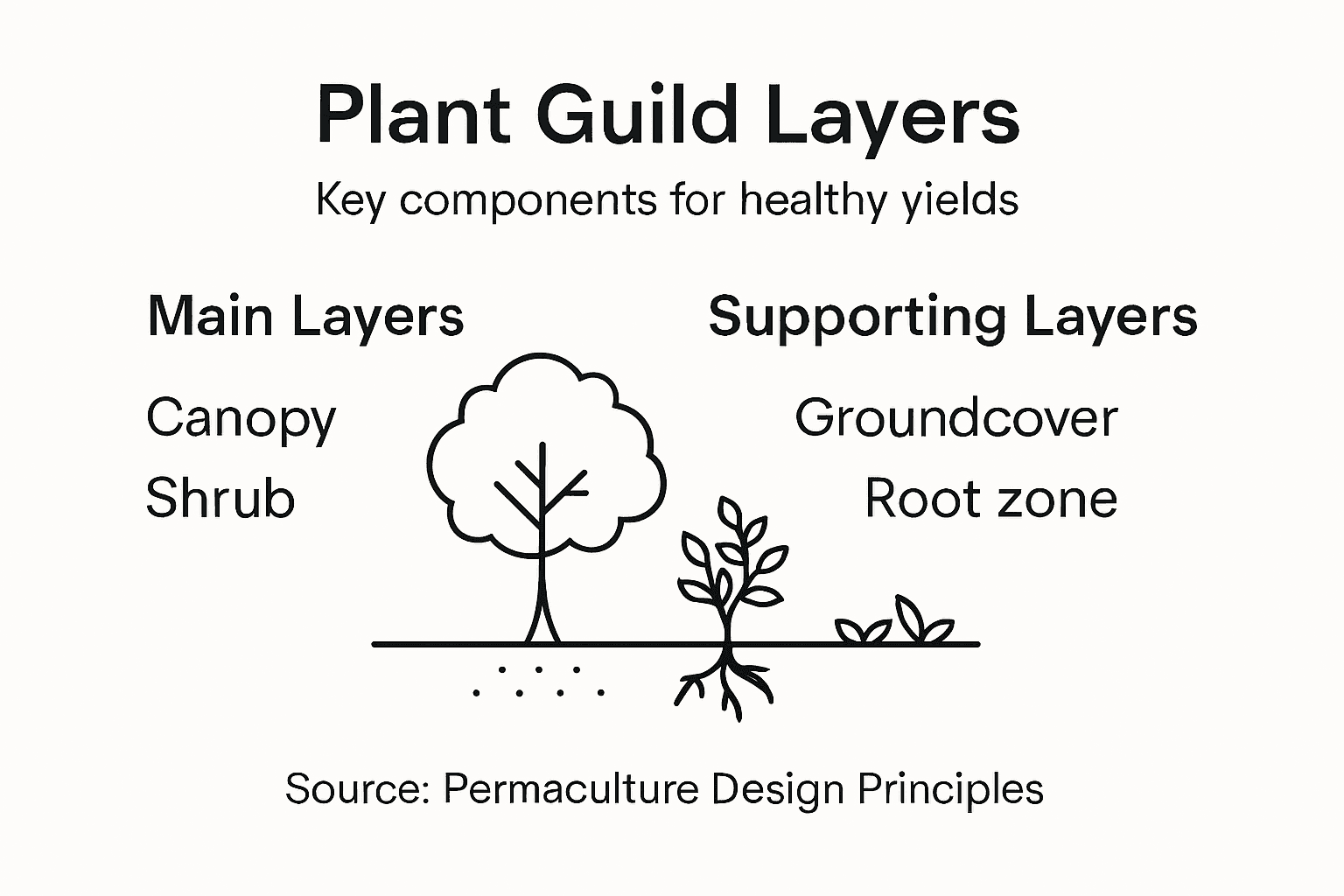
A well-designed plant guild typically centers around a primary plant – often a fruit or nut tree – and incorporates multiple layers of supporting vegetation. These layers include canopy, understory, shrub, herbaceous, groundcover, and root zones, each serving critical functions such as nitrogen fixation, pest deterrence, pollinator attraction, and biomass production. By carefully selecting complementary plants with different ecological roles, gardeners can create self-sustaining systems that require minimal external intervention.
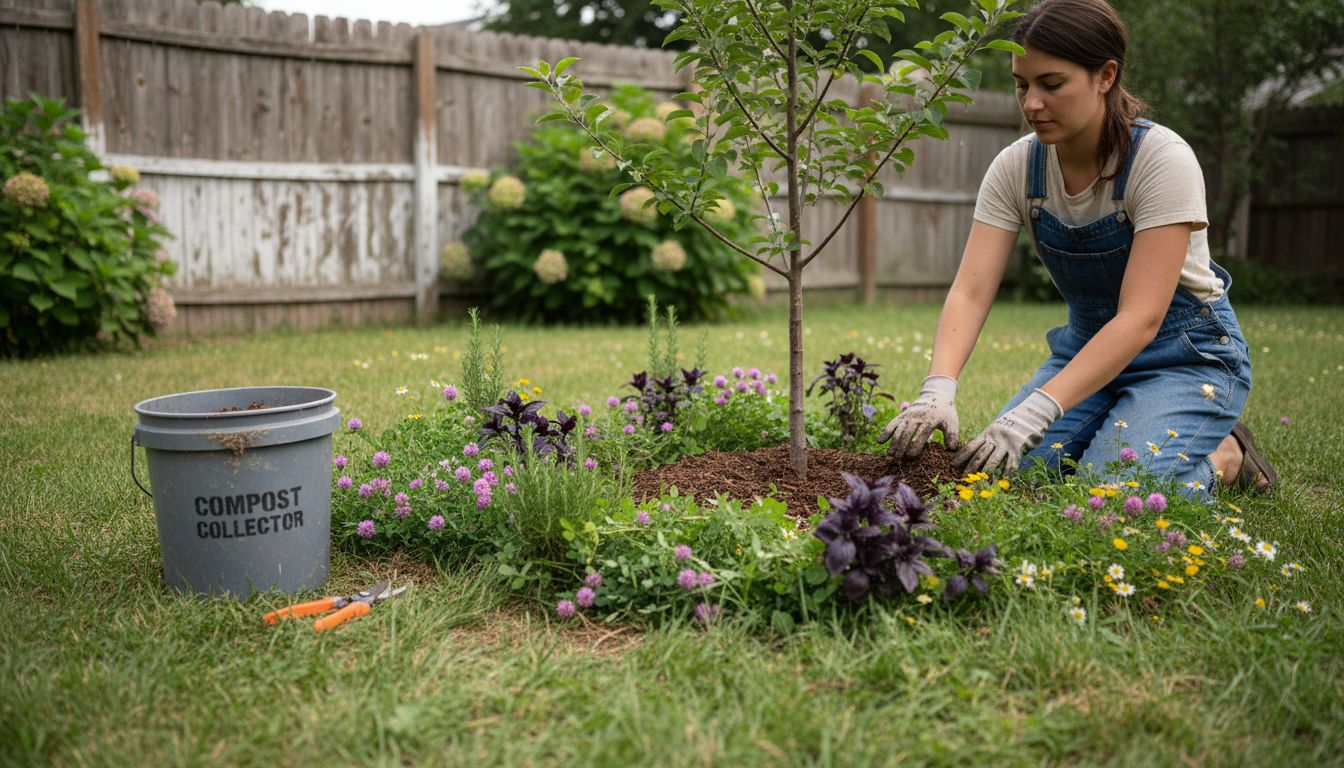
Synergistic plant communities enhance ecosystem functionality through complex interactions that optimize nutrient cycling, soil health, and overall landscape productivity. Successful guild design involves understanding each plant’s unique contributions, such as incorporating nitrogen-fixing plants like legumes, dynamic accumulators that draw nutrients from deep soil layers, and pest-repellent species that naturally protect surrounding vegetation. This approach transforms gardens from simple growing spaces into vibrant, interconnected ecosystems that support biodiversity and sustainable food production.
Pro tip: Begin designing your plant guild by observing local ecosystems and selecting native plants that naturally coexist and support each other’s growth.
The table below summarizes key functions of plant guild layers in permaculture systems:
| Guild Layer | Function in the System | Example Plants |
|---|---|---|
| Canopy | Provides shade, main crop yield | Apple tree, hazelnut |
| Understory | Supports with fruits, fixes N | Serviceberry, bush beans |
| Herbaceous | Attracts pollinators, repels pests | Yarrow, chives |
| Groundcover | Suppresses weeds, retains moisture | Clover, creeping thyme |
| Root Zone | Aerates soil, cycles nutrients | Carrot, comfrey |
Building Healthy Soil and Water Management
Soil health is the cornerstone of sustainable agriculture, representing a complex ecosystem that supports plant growth and environmental resilience. Healthy soil management optimizes water resources by improving infiltration, reducing evaporation, and enhancing the soil’s capacity to store and utilize moisture effectively.
In permaculture design, water management goes beyond simple irrigation strategies. Practitioners employ techniques like swales, rainwater harvesting, and strategic landscape contouring to capture, store, and distribute water naturally. These approaches minimize water waste, support plant growth during dry periods, and create self-regulating systems that reduce dependence on external water sources. By understanding local hydrological patterns and designing landscapes that work with natural water flows, gardeners can create more resilient and productive growing environments.
Water and soil principles drive sustainable landscape design by integrating ecosystem needs into agricultural and garden planning. This holistic approach involves analyzing soil composition, implementing organic matter enrichment techniques, and developing water management strategies that support both plant health and broader environmental sustainability. Techniques such as composting, mulching, and creating bioswales help improve soil structure, enhance water retention, and support beneficial microbial ecosystems.
Pro tip: Conduct a simple water infiltration test in your garden by digging a small hole, filling it with water, and measuring how quickly it drains to understand your soil’s current water management capabilities.
Mistakes to Avoid in Permaculture Gardening
Successful permaculture gardening requires more than enthusiasm – it demands careful planning and strategic implementation. Common permaculture mistakes can undermine sustainable design by compromising the fundamental principles of ecosystem integration and holistic landscape management.
One of the most critical errors novice permaculture gardeners make is rushing into implementation without thorough site observation. Understanding your specific landscape’s microclimates, soil conditions, water flows, and existing vegetation is essential before making any permanent design modifications. Beginners often overlook comprehensive site analysis, which can lead to inefficient garden layouts, poor plant selection, and reduced overall system productivity.
Additional common mistakes include overcomplicating garden designs, neglecting soil health, and failing to create adaptive systems that can evolve with changing environmental conditions. Successful permaculture practitioners understand that complexity should emerge naturally through careful observation and incremental implementation, rather than being forced through elaborate initial designs. This approach requires patience, continuous learning, and a willingness to adapt strategies based on real-world performance and ecosystem feedback.
Pro tip: Start your permaculture journey by spending at least one full growing season observing and documenting your landscape before making any significant interventions or permanent plantings.
Unlock the Full Potential of Your Permaculture Garden Today
Are you ready to move beyond basic gardening techniques and build a thriving permaculture system that truly works with nature’s patterns? The key challenge in permaculture gardening is creating regenerative ecosystems that nurture your soil, water, and plant communities while reducing waste and external inputs. This journey demands a deep understanding of ethical principles like Earth Care and People Care alongside practical skills such as designing plant guilds and managing water naturally.
At Lushy Gardens, we understand these goals and pain points. Our Sustainable Gardening – Lushy Gardens section provides expert advice to help you cultivate resilient, diverse gardens that flourish without harming the environment. If you are new to permaculture design or want to refine your techniques, explore Gardening for Beginners – Lushy Gardens for clear, step-by-step guidance. Plus, our Gardening Tips – Lushy Gardens is packed with practical solutions tailored for sustainable yields.
Start transforming your garden into a self-sustaining ecosystem with confidence. Visit Lushy Gardens now and take the next step toward mastering permaculture gardening that nurtures the planet and your passion.
Frequently Asked Questions
What is permaculture gardening?
Permaculture gardening is a sustainable agricultural approach that designs regenerative systems mimicking natural ecosystems. It focuses on creating productive landscapes that work in harmony with nature’s patterns.
What are the core principles of permaculture?
The three core ethical principles of permaculture are Earth Care, People Care, and Fair Share. These principles guide sustainable practices by emphasizing ecological health, community support, and equitable resource distribution.
How can I improve soil health in my permaculture garden?
Improving soil health can be achieved through composting, mulching, and incorporating organic matter. Techniques like no-till practices and planting cover crops also promote beneficial microbial ecosystems and enhance soil structure.
What are plant guilds, and why are they important in permaculture?
Plant guilds are ecosystems that consist of various plants working together to support each other’s growth. They enhance overall garden productivity by optimizing nutrient cycling, pest control, and biodiversity, resulting in resilient, self-sustaining gardens.
Recommended
- What is Permaculture Gardening? Understanding Sustainable Practices – Lushy Gardens
- Crop Rotation Principles: Boosting Soil Health and Yields – Lushy Gardens
- What is Organic Gardening? Understanding Sustainable Practices – Lushy Gardens
- Essential Sustainable Gardening Practices for Every Home – Lushy Gardens
- Understanding Sustainable Event Planning: The How and Why|CS
- Sustainable and Eco-Friendly Blinds: Discover Green Window Treatments

I’m Eleanor, a seasoned gardener with over three decades of experience tending to Mother Nature’s creations. Through Lushy Gardens, I aim to share my wealth of knowledge and help fellow plant enthusiasts uncover the wonders of gardening. Let’s dive into this journey together, one leaf at a time.


