
Table of Contents
Most American gardeners are surprised to learn that proper timing can boost vegetable yields by up to 40 percent, even in small urban spaces. Navigating city weather patterns and microclimates matters just as much as soil or seed choice when your goal is fresh produce from your own patio or backyard. This step by step guide empowers urban home gardeners in temperate regions to confidently plan, plant, and harvest at exactly the right moments for maximum results.
Quick Summary
| Key Point | Explanation |
|---|---|
| 1. Identify Your Planting Zone | Determine your USDA Plant Hardiness Zone to select suitable plants based on winter temperature predictions. |
| 2. Plan a Strategic Garden Layout | Organize your garden layout to optimize space, sunlight, and plant compatibility for better yields. |
| 3. Choose Vegetables for Your Climate | Select crop varieties that thrive in your local conditions, taking into account temperature and growing season. |
| 4. Prepare and Test Your Soil | Assess soil composition and enhance it with organic matter, ensuring it meets the needs of your vegetables. |
| 5. Monitor Growth Regularly | Observe your garden consistently for signs of stress or pests, adjusting care based on specific plant needs. |
Step 1: Identify Your Planting Zone and Frost Dates
Successfully growing vegetables starts with understanding your local climate conditions. In this step, you’ll learn how to determine your specific planting zone and frost dates to maximize your garden’s potential.
The first crucial task is identifying your USDA Plant Hardiness Zone, which helps predict which plants will survive winter temperatures in your region. Plant hardiness zones map divide geographic areas based on average minimum winter temperatures over a 30 year period. Each zone represents a 10 degree Fahrenheit range, allowing gardeners to select plants most likely to thrive in their specific microclimate.
To find your zone, visit the official USDA Plant Hardiness Zone Map online and enter your zip code. This will reveal your exact zone number, typically ranging from Zone 1 (coldest) to Zone 13 (warmest). Once you know your zone, research local frost dates through your county extension office or regional gardening resources. Typically, your last spring frost and first fall frost dates determine your growing season length and when to plant specific vegetables.
Pro gardening tip: Keep a detailed garden journal tracking your local frost dates and microclimatic variations to develop increasingly precise planting strategies over time.
Step 2: Plan Your Vegetable Garden Layout
Planning your vegetable garden layout is a critical step that determines your garden’s productivity and efficiency. By strategically organizing your growing space, you can maximize yields and create a thriving garden ecosystem.
Start by considering vegetable garden layouts that optimize space and plant compatibility. Traditional row gardening works well for larger spaces, while compact urban gardens might benefit from vertical gardening or raised bed techniques. Measure your available garden area and create a scaled sketch that accounts for sunlight exposure, plant height, and potential shade patterns. Consider companion planting principles where certain vegetables grow better when planted near each other. For instance, tomatoes thrive near basil, while corn and beans complement each other’s growth patterns.
When designing your layout, prioritize crop rotation to maintain soil health and prevent nutrient depletion. Group vegetables with similar water and sunlight requirements together, creating microclimates that support optimal growth. Pay attention to plant spacing recommendations to ensure each vegetable has adequate room to develop fully and receive necessary nutrients.
Pro gardening tip: Invest in graph paper or digital garden planning tools to create precise, scalable layouts that you can easily modify and reference throughout the growing season.
The following table highlights key differences between traditional and alternative vegetable garden layouts:
| Layout Type | Space Efficiency | Maintenance Level | Best Suited For |
|---|---|---|---|
| Traditional Rows | Lower | Moderate | Large open spaces |
| Raised Beds | Medium | Low to moderate | Poor soil areas |
| Vertical Gardening | High | Higher | Urban/small spaces |

Step 3: Select the Right Vegetables for Your Region
Choosing vegetables that thrive in your specific climate is the key to a successful garden. Your local growing conditions will significantly impact which crops will produce abundant harvests and which might struggle.
Start by understanding vegetable selection for local conditions that match your region’s temperature and rainfall patterns. Consider varieties specifically bred for resistance to local pests and environmental stresses. In warmer Southern regions, focus on heat tolerant crops like okra, peppers, and sweet potatoes. Northern gardeners should prioritize cold hardy vegetables such as kale, brussels sprouts, and root crops that can withstand shorter growing seasons. Your local agricultural extension office can provide region specific recommendations for vegetable varieties that perform best in your microclimate.
Beyond temperature considerations, evaluate your soil type, sunlight availability, and typical moisture levels. Some vegetables like tomatoes and squash demand full sun and warm soil, while leafy greens and root vegetables can tolerate partial shade. Crop diversification is crucial plant several different vegetable types to spread risk and ensure some success even if specific crops struggle.
Pro gardening tip: Create a detailed spreadsheet tracking which vegetable varieties perform best in your specific garden each season to refine your selections over time.
Here’s a quick reference of popular vegetable varieties and their ideal USDA hardiness zones:
| Vegetable | Best Zones | Climate Preference | Example Varieties |
|---|---|---|---|
| Tomatoes | 4–11 | Warm, frost free | Roma, Beefsteak |
| Kale | 3–10 | Cool, tolerates frost | Winterbor, Lacinato |
| Sweet Potatoes | 7–11 | Long, warm growing season | Beauregard, Jewel |
| Brussels Sprouts | 2–9 | Cool, moderate temps | Long Island Improved |
Step 4: Check Soil Readiness and Prepare Beds
Successful vegetable gardening begins with understanding and preparing your soil. This critical step will determine the health and productivity of your entire garden throughout the growing season.
Start by examining your soil composition and structure through careful garden bed preparation. Test your soil pH and nutrient levels using a home testing kit or professional soil analysis service. Most vegetables thrive in slightly acidic soil with a pH between 6.0 and 6.8. Remove any rocks, roots, and debris from your garden area. Work organic matter like compost or aged manure into the top 6 to 8 inches of soil to improve drainage, nutrient content, and overall soil structure. Different vegetables have unique soil requirements some prefer sandy loam, while others need clay rich environments with excellent water retention.
Prepare your garden beds by creating raised or mounded areas that promote good drainage and allow root systems to develop easily. If your native soil is heavy clay or extremely sandy, consider bringing in high quality topsoil or creating specialized growing areas. Break up compacted soil using a garden fork or tiller, ensuring you create a loose, well aerated environment that allows roots to spread and access nutrients effectively.
Pro gardening tip: Invest in a comprehensive soil testing kit and perform annual tests to track your soil health and make targeted improvements each growing season.
Step 5: Start Seeds or Transplants at the Right Time
Successfully growing vegetables requires precise timing and understanding of each crop’s unique growth requirements. Knowing when and how to start your seeds or transplant seedlings can significantly impact your garden’s overall productivity.
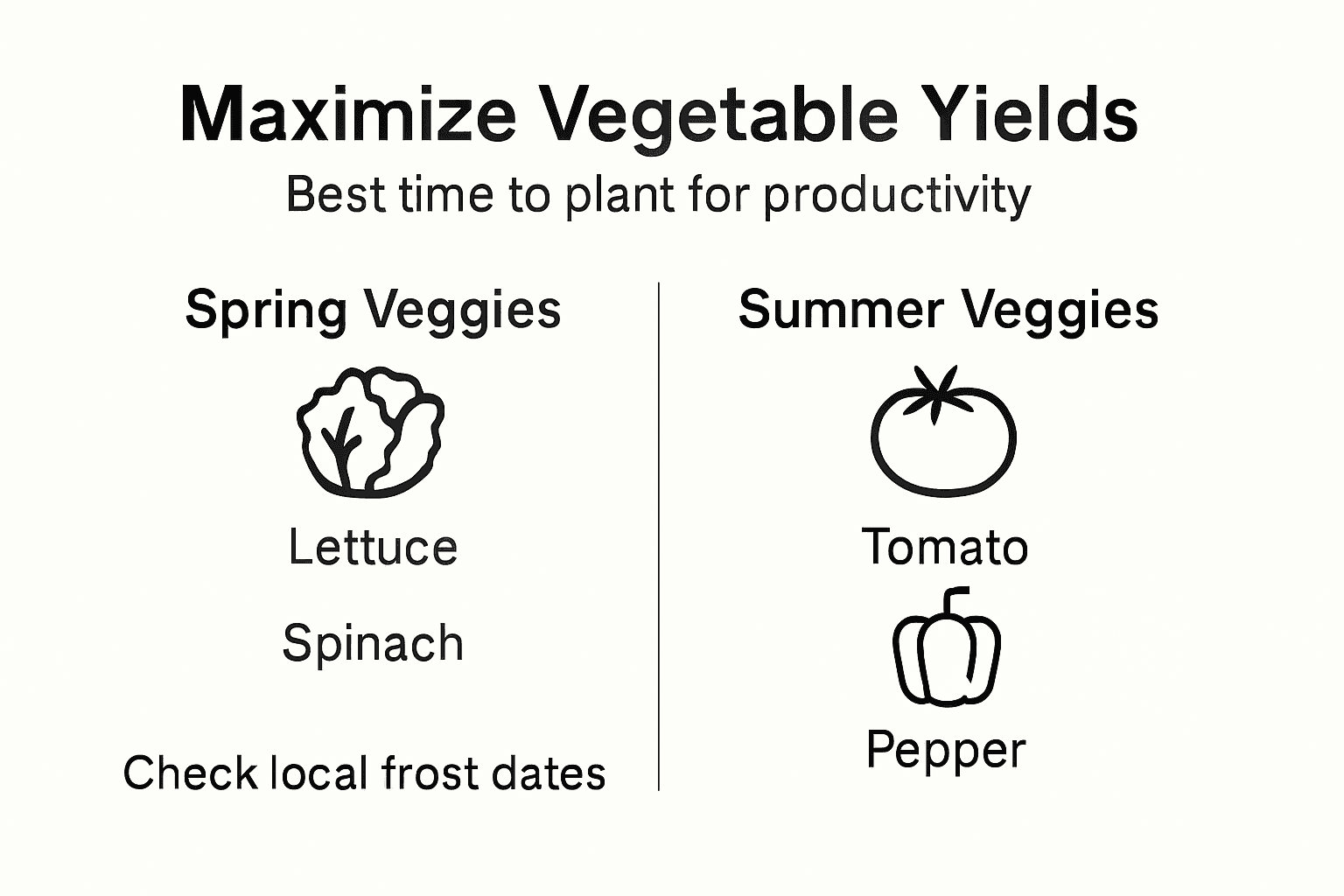
Seed starting strategies are critical for maximizing your growing season. Cool season crops like lettuce, spinach, and kale can be directly seeded into the garden early in spring, while warm season vegetables such as tomatoes, peppers, and eggplants benefit from indoor seed starting. Begin by calculating backwards from your region’s last expected frost date. Most warm season vegetable seedlings should be started indoors 6 to 8 weeks before the anticipated transplant date. Use seed starting trays with high quality potting mix, ensuring consistent moisture and warmth to support germination.
As your seedlings develop, gradually acclimate them to outdoor conditions through a process called hardening off. Place young plants outside for increasing periods each day, starting with 1 hour and incrementally extending exposure over 7 to 10 days. This helps seedlings adjust to temperature fluctuations, wind, and direct sunlight without experiencing transplant shock. When soil temperatures reach the appropriate threshold for each specific crop, carefully transplant your seedlings into prepared garden beds, spacing them according to recommended guidelines.
Pro gardening tip: Invest in a soil thermometer to accurately track ground temperature and ensure optimal planting conditions for each vegetable variety.
Step 6: Monitor Growth and Adjust Planting as Needed
Successful vegetable gardening requires continuous observation and flexibility. Your ability to adapt and respond to your garden’s changing conditions will determine the ultimate success of your growing season.
Start by tracking seasonal garden maintenance through regular monitoring of your vegetable plants. Check your garden daily for signs of stress, pest activity, nutrient deficiencies, or unexpected growth patterns. Look for indicators such as yellowing leaves, stunted growth, pest damage, or uneven plant development. These signals can help you make timely interventions like adjusting watering schedules, adding targeted fertilization, or implementing pest control strategies. Pay special attention to microclimatic variations within your garden space some areas might receive more shade or have different soil conditions that impact plant performance.
Implement a systematic approach to plant management by keeping a detailed garden journal. Record observations about each vegetable variety including germination rates, growth speed, pest resistance, and overall health. This documentation allows you to make informed decisions about future planting strategies, variety selection, and garden layout. If certain plants are underperforming, do not hesitate to remove them and replace with more suitable varieties or adjust their growing conditions. Successful gardening is an ongoing process of learning, observing, and adapting.
Pro gardening tip: Take weekly photographs of your garden from consistent angles to create a visual record that helps you track subtle changes and improvements in plant growth.

Master Your Planting Schedule for Maximum Garden Success
Timing your vegetable planting is one of the biggest challenges for gardeners aiming to achieve abundant yields and healthy plants. This article highlighted key concepts like frost dates, USDA planting zones, and seed starting strategies that can make or break your growing season. If you want to avoid common pitfalls such as missed planting windows or transplant shock, it’s critical to understand your local climate and soil readiness.
At Lushy Gardens, we provide expert advice on these vital gardening steps through our rich collection of Gardening Tips – Lushy Gardens. From selecting the right vegetables for your outdoor space to preparing garden beds effectively, our guides help you build confidence and avoid costly mistakes. Ready to take control of your planting calendar and elevate your garden? Visit Outdoor Plants – Lushy Gardens for region-specific plant recommendations and start growing smarter today. Jump in now at Lushy Gardens and turn your garden into a thriving, vibrant showcase of nature’s best.
Frequently Asked Questions
When is the best time to plant vegetables for maximum yields?
To achieve maximum yields, plant cool season vegetables like lettuce and spinach in early spring, and warm season crops like tomatoes and peppers after the last frost. Start monitoring local frost dates to determine your planting schedule accurately.
How can I determine my planting zone?
Identify your planting zone by using the USDA Plant Hardiness Zone Map and entering your zip code. This information will guide you in selecting vegetables that are well-suited to your local climate conditions.
What are frost dates and why are they important?
Frost dates indicate the last expected frost in spring and the first frost in fall, which significantly affects your growing season. Research these dates for your area to time your planting effectively and protect your crops from cold damage.
How do I know when to start seeds indoors?
Start seeds indoors for warm season vegetables 6 to 8 weeks before your region’s last expected frost date. This advance timing allows your seedlings to grow strong before they are transplanted outdoors.
What should I do if my vegetable plants are underperforming?
If your vegetable plants are not growing well, consider adjusting their watering schedule, checking for pests, or providing additional nutrients. Keep a detailed garden journal to document issues and make informed decisions on improving plant health.
How do I keep track of my planting and gardening progress?
Maintain a garden journal to record planting dates, plant performance, and other observations throughout the growing season. Use this documentation to track what works well and adjust your strategies for future gardens.
Recommended
- 7 Essential Tips for Mastering Your Vegetable Planting Calendar – Lushy Gardens
- Seasonal Vegetable Planting Chart for Midwest Gardens – Lushy Gardens
- 4 Vegetable Garden Layouts to Maximize Your Yield – Lushy Gardens
- Vegetable Garden Planning Made Easy: A Step-by-Step Guide – Lushy Gardens

I’m Eleanor, a seasoned gardener with over three decades of experience tending to Mother Nature’s creations. Through Lushy Gardens, I aim to share my wealth of knowledge and help fellow plant enthusiasts uncover the wonders of gardening. Let’s dive into this journey together, one leaf at a time.


