
Table of Contents
Most american city apartments feature less than 20 percent natural light throughout the day, challenging plant lovers to keep greenery thriving indoors. As more urban dwellers discover the hidden intelligence of houseplants, fascination grows with how these living companions react, adapt, and even make decisions. This article uncovers the science and surprising benefits behind caring for plants, offering practical strategies to help newcomers nurture an indoor jungle that fits modern lifestyles.
Key Takeaways
| Point | Details |
|---|---|
| Plant Intelligence | Plants exhibit cognitive capabilities that allow them to process environmental signals and make adaptive decisions for survival. |
| Psychological Benefits | Engaging with plants can improve emotional well-being, reduce stress, and enhance mindfulness. |
| Indoor Environment Enhancement | Indoor plants contribute to healthier living spaces by improving air quality and creating a calming atmosphere. |
| Effective Plant Selection | Choosing the right plants based on light conditions and care requirements can promote successful indoor gardening in urban settings. |
The Science Behind Loving Plants
Plants are not merely passive organisms, but complex living systems with remarkable cognitive capabilities that fascinate scientists and urban dwellers alike. Plant decision-making behaviors reveal sophisticated mechanisms that challenge our traditional understanding of biological intelligence. Research suggests plants can process environmental signals, adapt strategically, and make sophisticated choices about growth, resource allocation, and survival.
The physiological adaptations of plants demonstrate an intricate relationship between their biological systems and environmental interactions. Shade-loving plants exhibit extraordinary photosynthetic strategies that allow them to thrive in low-light conditions. These specialized adaptations include unique pigmentation, flexible leaf orientation, and metabolic adjustments that enable efficient energy conversion even under challenging circumstances.
Modern urban residents are increasingly drawn to plants not just for aesthetic reasons, but because of their profound biological complexity. The scientific understanding of plant intelligence reveals a world of communication, adaptation, and responsive behavior that resonates with human cognitive patterns. Plants demonstrate decision-making processes analogous to bacterial cognitive systems, suggesting a more dynamic and interactive relationship with their environment than previously understood.
Pro Tip: Select houseplants with adaptive capabilities that match your specific indoor environment to create a more harmonious and resilient indoor ecosystem.

Emotional and Psychological Health Benefits
Plant interactions offer profound psychological benefits that extend far beyond simple aesthetic appreciation. Thematic learning about plants can significantly enhance emotional well-being by increasing cognitive engagement and promoting mental resilience. Research demonstrates that engaging with plants stimulates neural pathways associated with motivation, stress reduction, and positive emotional regulation.
The process of nurturing and caring for plants creates a unique therapeutic experience that connects individuals with natural rhythms and promotes mindfulness. Scientific research reveals how plants respond to environmental stressors, providing insights into emotional regulation techniques. By observing plant growth and understanding their adaptive mechanisms, urban dwellers can develop greater emotional intelligence and develop healthier coping strategies.
Modern psychological studies highlight the transformative power of plant interactions in urban environments. Cultivating indoor plants provides a sense of accomplishment, reduces anxiety, and creates a calming atmosphere that counteracts the high-stress nature of contemporary lifestyles. The repetitive and predictable nature of plant care offers a meditative experience that helps individuals disconnect from digital stimulation and reconnect with natural biological processes.
Pro Tip: Create a dedicated plant care routine that incorporates mindful observation and gentle interaction to maximize the psychological benefits of your indoor garden.
How Plants Enhance Living Spaces
Indoor plants have transformed modern living spaces from sterile environments into dynamic, vibrant ecosystems that promote wellness and aesthetic appeal. Scientific research highlights the ecological potential of plants in urban settings, demonstrating their capacity to dramatically improve environmental quality and living experiences. These green companions do more than decorate rooms they actively contribute to creating healthier, more engaging personal spaces.
Shade-loving plants offer exceptional solutions for transforming indoor environments, particularly in spaces with limited natural light. Their unique physiological adaptations allow them to thrive in challenging indoor conditions, providing aesthetic and functional benefits. These plants can purify air, regulate humidity, and create visual interest in apartments, home offices, and compact urban living spaces.
Modern living spaces increasingly recognize plants as essential design elements that bridge the gap between architectural structure and natural vitality. Beyond their visual appeal, plants serve as dynamic environmental filters, reducing stress, improving air quality, and creating a sense of connection with the natural world. They transform sterile interiors into living, breathing environments that support mental and physical well-being, making them crucial components of contemporary interior design strategies.
Below is a comparison of plant adaptations and their impact on indoor spaces:
| Adaptation | Example Plants | Indoor Benefit |
|---|---|---|
| Unique pigmentation | Snake Plant, ZZ | Enables survival in shade |
| Flexible leaves | Pothos, Philodendron | Adjusts to low light |
| Slow water use | ZZ Plant, Snake | Resists infrequent care |
| Trailing growth | Pothos, String of Pearls | Maximizes small spaces |
Pro Tip: Choose plants with varied heights and textures to create visual depth and maximize the transformative potential of your indoor greenery.
Popular Indoor Plant Types and Their Appeal
Indoor plants have evolved from simple decorative elements to essential components of modern living spaces, each variety bringing unique characteristics and benefits. Ongoing plant science research illuminates the fascinating physiological traits of different indoor plant species, revealing why certain plants have become so popular among urban dwellers. From low-maintenance succulents to dramatic tropical foliage, the world of indoor plants offers something for every aesthetic and lifestyle preference.
Shade-loving plants represent a particularly compelling category of indoor greenery, with remarkable adaptations that make them ideal for interior environments. These plants feature specialized pigmentation and growth strategies that allow them to thrive in limited light conditions, making them perfect for apartments, offices, and homes with minimal natural illumination. Species like snake plants, pothos, and ZZ plants have gained popularity due to their resilience, air-purifying qualities, and minimal care requirements.
Beyond their practical benefits, indoor plants serve as living design elements that reflect personal style and create emotional connections. Different plant types appeal to various sensibilities some people gravitate toward structured, architectural plants like fiddle leaf figs, while others prefer trailing varieties like string of pearls or cascading philodendrons. The diversity of indoor plant options allows individuals to curate personal green spaces that not only improve environmental quality but also express individual personality and design aesthetic.
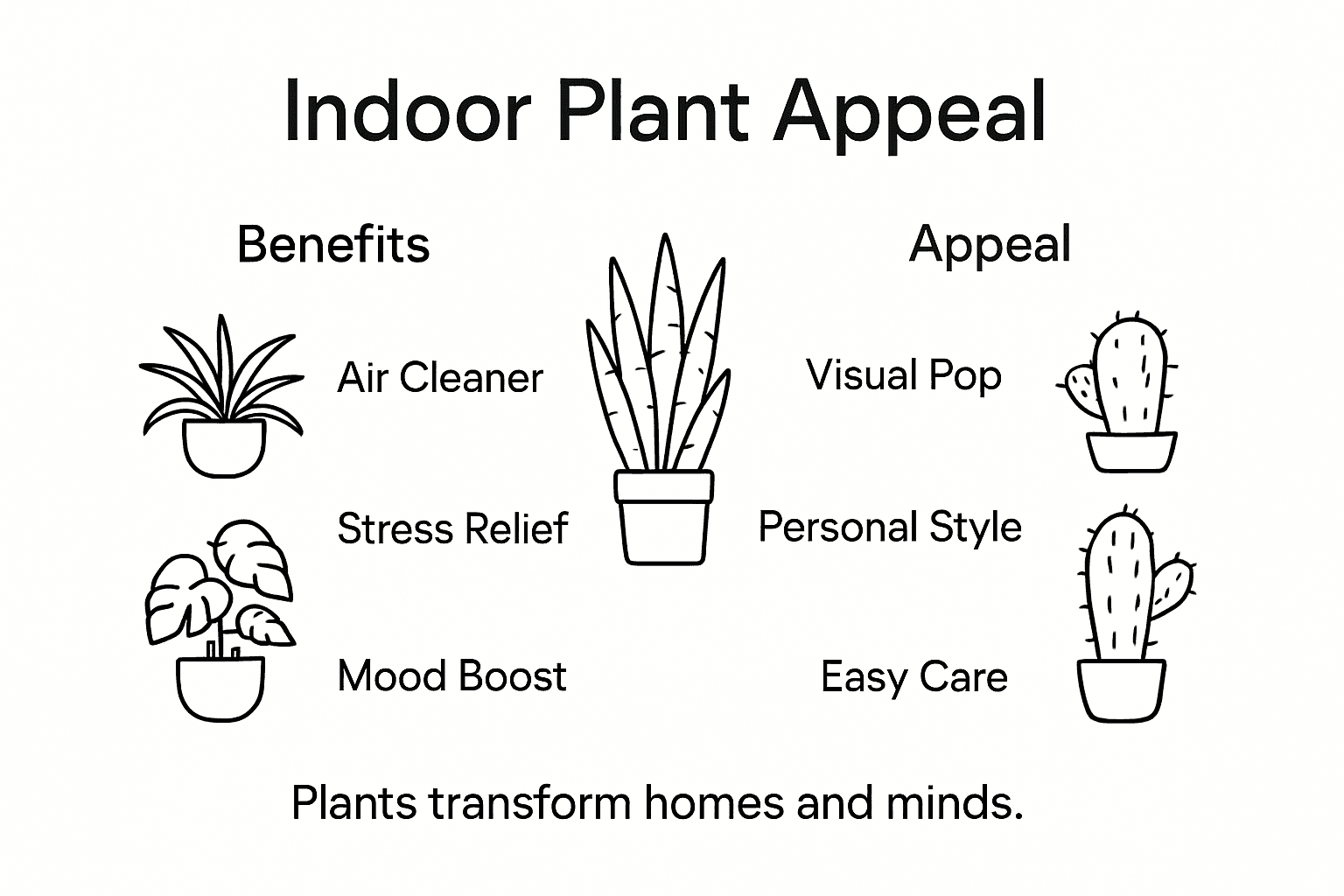
Here’s how popular indoor plant types compare in urban environments:
| Plant Type | Light Requirement | Key Benefit | Care Difficulty |
|---|---|---|---|
| Snake Plant | Low to moderate | Air purifying | Very easy |
| Pothos | Low to bright | Fast growing, trailing | Easy |
| ZZ Plant | Low | Drought tolerant | Very easy |
| Fiddle Leaf Fig | Bright, indirect | Sculptural appearance | Moderate |
| Philodendron | Medium to bright | Versatile shape & size | Easy |
| String of Pearls | Bright, indirect | Unique trailing form | Moderate |
Pro Tip: Mix plant varieties with different leaf textures, growth patterns, and light requirements to create a dynamic and visually interesting indoor garden.
Practical Tips for Urban Plant Enthusiasts
Effective visual learning strategies can dramatically improve plant cultivation skills for urban dwellers with limited gardening experience. Understanding how to observe, interact with, and care for plants transforms them from mere decorative objects into living companions that thrive in compact city environments. Successful urban plant enthusiasts recognize that knowledge and thoughtful approach matter more than extensive space or professional gardening backgrounds.
Selecting the right plants requires strategic consideration of environmental conditions and personal lifestyle. Evidence-based plant selection systems help urban gardeners choose species most compatible with their specific living situations, focusing on factors like light exposure, humidity levels, maintenance requirements, and space constraints. This approach ensures that plant choices are not just aesthetically pleasing but also sustainable and well-suited to urban living environments.
Urban plant cultivation is as much about creating a personal ecosystem as it is about growing green companions. Successful enthusiasts develop an intuitive understanding of their plants’ needs, creating microclimates within apartments and small spaces that support plant health. This involves strategic placement near windows, using reflective surfaces to maximize light, employing humidity trays, and understanding the unique characteristics of different plant species that make them resilient in challenging urban conditions.
Pro Tip: Invest in a small digital hygrometer to monitor humidity levels and create optimal growing conditions for your indoor plants.
Unlock the Full Potential of Your Indoor Garden Today
If you have ever felt overwhelmed by choosing the right plants that truly enhance your living space and well-being you are not alone. This article highlights how important it is to select plants with adaptive abilities that fit your environment and lifestyle to bring psychological benefits and create a thriving indoor ecosystem. Whether you struggle with low light conditions or want to develop a mindful plant care routine understanding these subtle yet powerful factors can transform your relationship with your plants.
At Lushy Gardens we understand these challenges and offer expert guidance tailored to your needs. Dive into our Indoor Plants – Lushy Gardens section for comprehensive plant recommendations ideal for limited light and compact spaces. For actionable care tips that help you nurture resilience and mindful interaction explore our Plant Care – Lushy Gardens category. Finally, discover the science-backed emotional health benefits of gardening in our Gardening & Health – Lushy Gardens page.
Don’t wait to experience the calming and enriching effects of plants in your home. Visit us now at Lushy Gardens to start building your personalized indoor garden that supports your modern living and emotional wellness.

Frequently Asked Questions
What are some psychological benefits of having indoor plants?
Indoor plants can reduce anxiety, enhance emotional well-being, and create a calming atmosphere. Engaging with plants promotes mindfulness and can stimulate neural pathways associated with motivation and stress reduction.
How can I choose the right plants for my indoor environment?
Select plants based on your specific environmental conditions such as light exposure, humidity levels, and overall maintenance needs. Consider species like snake plants and pothos for low-light conditions, or other shade-loving plants that adapt well to indoor environments.
What adaptations do shade-loving plants have that make them ideal for indoor spaces?
Shade-loving plants possess unique pigmentation, flexible leaf orientation, and metabolic adjustments that allow them to thrive in low-light conditions. These adaptations enable efficient energy conversion even in challenging indoor environments.
How can I create a thriving indoor garden in a small urban space?
Focus on selecting plants that fit well within your space and cater to your lifestyle. Develop an understanding of their needs, create microclimates, and ensure strategic placement near light sources to promote healthy growth.
Recommended
- Understanding the History of Houseplants Through Time – Lushy Gardens
- Understanding the Benefits of Houseplants for Your Home – Lushy Gardens
- The Essential Guide to Benefits of Indoor Plants – Lushy Gardens
- Hygge Home With Plants: Coziness for Urban Living – Lushy Gardens
- Understanding the Benefits of a House with Insulation – WorkWearComfort

I’m Eleanor, a seasoned gardener with over three decades of experience tending to Mother Nature’s creations. Through Lushy Gardens, I aim to share my wealth of knowledge and help fellow plant enthusiasts uncover the wonders of gardening. Let’s dive into this journey together, one leaf at a time.


