
Table of Contents
TL;DR:
- Winter plant care involves reducing watering, maintaining humidity, and protecting outdoor plants from frost.
- Proper adjustments help prevent common issues like overwatering, low humidity, and pest infestations during the cold season.
Winter plant care is the practice of adjusting watering, light, humidity, and protection routines to keep plants healthy during cold months. Most plant losses in winter trace back to three mistakes: overwatering, ignoring humidity drops, and skipping frost protection. Whether you grow orchids on a windowsill or hostas in a garden bed, the cold season demands a different approach. These winter plant care tips cover both indoor and outdoor plants so you can adapt your routine with confidence.
1. How should you adjust watering in winter?
Watering less is the single most important shift you make in winter. Soil dries three times more slowly in winter than in summer, so a plant watered every seven days in july may only need water every 12–18 days in january. Sticking to a fixed schedule is the fastest way to kill a plant through root rot.
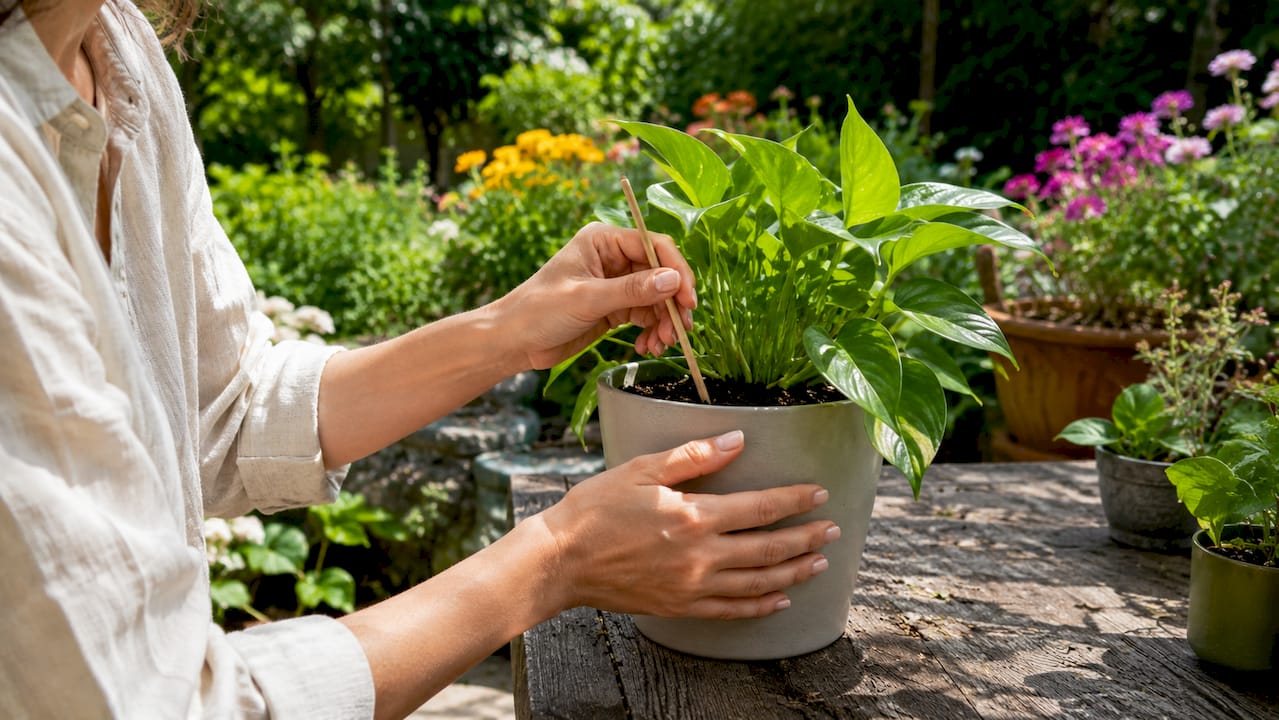
The most reliable method is the chopstick test. Push a wooden chopstick 5 cm into the soil. If soil sticks to it, the plant does not need water yet. A moisture meter works the same way and removes all guesswork for gardeners managing many pots.
Reduce indoor plant watering by 40–60% overall compared to your summer schedule. Outdoor potted plants stored in unheated shelters still need occasional watering, but far less than during the growing season. Check them every two to three weeks rather than weekly.
Pro Tip: Always water at room temperature. Cold tap water shocks tropical plant roots and can cause sudden leaf drop, especially on plants like peace lilies and pothos.
2. How to maximize light and temperature for houseplants in winter
Light is the second major challenge of indoor plant winter care. Days are shorter, the sun sits lower in the sky, and windows let in far less usable light than in summer. Move plants 20–30 cm closer to their light source to compensate for this seasonal shift.
Full-spectrum grow lights from brands like Soltech Solutions or Spider Farmer fill the gap when natural light falls short. Position them 15–30 cm above the plant canopy and run them for 12–14 hours daily to mimic summer conditions. Clean plant leaves monthly with a damp cloth. Dust buildup blocks light absorption and slows photosynthesis noticeably.
Temperature control matters just as much as light. Cold drafts cause chilling injury in tropical plants, leading to leaf blackening or sudden drop within days. Keep plants at least 30 cm from single-glazed windows, exterior door gaps, and air conditioning vents.
- Move plants to south-facing or west-facing windows for maximum winter sun exposure.
- Avoid placing plants directly on cold windowsills. A cork mat or folded towel insulates the pot from the cold glass.
- Keep indoor temperatures between 60°F and 75°F for most common houseplants.
- Do not place plants near heat vents. Forced air dries soil and foliage faster than normal.
Pro Tip: Rotate pots a quarter turn every two weeks so all sides of the plant receive equal light. Uneven light causes lopsided growth that takes months to correct.
3. How to manage indoor humidity during cold months
Indoor humidity drops to 10–20% during winter because heating systems strip moisture from the air. Most houseplants need 40–60% relative humidity to stay healthy. That gap is large enough to cause brown leaf tips, wilting, and increased pest pressure.
A humidifier is the most effective fix. Place it near your plant collection and set it to maintain 50% humidity. For a lower-cost option, set pots on pebble trays filled with water. As the water evaporates, it raises humidity directly around the plants. Keep the pot base above the waterline to prevent root rot.
Grouping plants together also raises local humidity through transpiration. A cluster of five or six plants creates a noticeably more humid microclimate than single pots spread across a room. Misting tropical plants like ferns, calatheas, and orchids two to three times per week reduces spider mite pressure, which spikes in dry air.
- Place a digital hygrometer near your plants to track actual humidity levels.
- Run a humidifier on a timer during heating hours, typically morning and evening.
- Group moisture-loving plants together away from radiators and heat vents.
- Use pebble trays as a passive backup when the humidifier is off.
4. What outdoor plant winter care techniques actually work?
Outdoor cold season plant maintenance starts with mulch. Mulch insulates soil against temperature extremes and protects roots from freeze-thaw cycles that heave plants out of the ground. Apply a 3–4 inch layer of shredded bark, straw, or wood chips around the base of trees, shrubs, and perennials before the first hard freeze.
One critical detail most gardeners miss: keep mulch a few inches away from tree trunks. Mulch piled against bark creates a warm, moist environment that attracts rodents. Mice and voles burrow into it and chew through bark all winter, girdling young trees by spring.
Snow is a natural insulator, but you cannot rely on it. Snow cover protects roots from cold winds and freeze-thaw damage, but snowfall is unpredictable. Mulch provides consistent protection regardless of weather. Use wire mesh or chicken wire cylinders around young trees and shrubs to deter animal damage when snow is absent.
| Technique | Best for | Key detail |
|---|---|---|
| Mulching | All outdoor plants | Keep 3–4 inches deep, away from trunks |
| Wire mesh guards | Young trees and shrubs | Install before first frost |
| Pruning after first frost | Perennials and dead wood | Removes disease entry points |
| Occasional watering | Potted outdoor plants in shelters | Check every 2–3 weeks |
| Salt avoidance near roots | Evergreens and lawn edges | Salt causes root burn and browning |
Prune perennials after the first frost to remove dead material that harbors disease and pests over winter. Avoid heavy pruning of shrubs and trees until late winter, just before new growth begins. Understanding plant dormancy types helps you time these tasks correctly.
5. How to stop winter pests and diseases before they spread
Winter does not eliminate pests. It concentrates them indoors. Common winter pests include spider mites, fungus gnats, aphids, mealybugs, and scale insects, all of which thrive in the warm, dry conditions that heating systems create.
Spider mites are the hardest to spot early. Look for fine webbing on leaf undersides and a dusty, stippled texture on leaves. Fungus gnats signal overwatered soil. Their larvae feed on roots and are far more damaging than the adult flies suggest. Yellow sticky traps placed near pots catch adult gnats and give you an early warning before populations explode.
Preventing pests is simpler than treating them. Clean leaves with a damp cloth every two to three weeks to remove dust, eggs, and early infestations. Inspect new plants thoroughly before bringing them indoors in fall. One infested plant can spread pests to an entire collection within weeks. For persistent problems, Lushygardens covers evidence-based pest control methods that work without harsh chemicals.
- Check leaf undersides weekly for webbing, eggs, or sticky residue.
- Let soil dry appropriately between waterings to prevent fungus gnat larvae.
- Isolate any plant showing pest signs immediately.
- Use neem oil or insecticidal soap for spider mites and mealybugs.
- Avoid over-fertilizing, which produces soft growth that attracts aphids.
Pro Tip: A 70% isopropyl alcohol solution on a cotton swab removes mealybugs on contact. It is faster and more targeted than spraying the entire plant.
6. When should you stop fertilizing plants in winter?
Stop fertilizing from october through february. Fertilizing dormant plants causes salt buildup in the soil that burns roots. A plant damaged by winter feeding takes a full growing season to recover. A plant left unfed simply waits for spring and bounces back quickly.
Plants enter two types of dormancy in winter. Endodormancy is a deep rest triggered by shortening days, where the plant actively resists growth. Ecodormancy is a shallower state where growth pauses due to cold temperatures but resumes as soon as conditions improve. Understanding these dormancy types tells you which plants need more careful monitoring and which can be left alone entirely.
Resume fertilizing in march when you see new growth emerging. Start with a half-strength dose to avoid shocking roots that have been dormant. A balanced liquid fertilizer like a 10-10-10 formula works well for most houseplants at the start of the growing season.
Key Takeaways
Effective winter plant care requires reducing watering, maintaining humidity, maximizing light, and protecting outdoor plants with mulch before the first frost.
| Point | Details |
|---|---|
| Reduce watering by 40–60% | Soil dries three times more slowly in winter; test moisture 5 cm deep before watering. |
| Maintain 40–60% humidity | Use humidifiers, pebble trays, or grouped plants to counter dry indoor heating air. |
| Move plants closer to light | Shift pots 20–30 cm toward windows or add grow lights to offset shorter winter days. |
| Mulch outdoor plants correctly | Apply 3–4 inches of mulch around roots but keep it away from trunks to prevent rodent damage. |
| Stop fertilizing until march | Feeding dormant plants causes root-damaging salt buildup that takes a full season to reverse. |

What I have learned from years of winter plant mistakes
The biggest error I see gardeners make is treating winter like a slower version of summer. It is not. Plants in dormancy are not just growing less. They are operating on a completely different set of rules.
I watered my fiddle-leaf fig on the same schedule in january as I did in august for two full winters before I understood why it kept dropping leaves. The soil looked dry on the surface. It was saturated 4 cm down. The chopstick test changed everything for me. Now I never water without checking first, regardless of the season.
The other mistake I see constantly is skipping humidity management because it feels like extra work. A $30 digital hygrometer and a basic humidifier on a timer is all it takes. The difference in plant health between a room at 20% humidity and one at 50% is visible within two weeks. Leaf tips stay green, new growth is stronger, and pest pressure drops noticeably.
My honest advice: stop trying to keep plants actively growing through winter. Let them rest. Cut back water, stop feeding, and focus on stable conditions rather than pushing growth. The plants that get a proper winter rest come back in spring with far more vigor than those pushed year-round.
Keep your plants thriving all season with Lushygardens
Lushygardens has built a library of practical guides to support your plant care routine through every season. Start with the daily plant care checklist to build consistent habits that carry your plants through winter without guesswork. If you want to go deeper, the year-round seasonal care guide covers outdoor and indoor transitions in detail. For anyone troubleshooting struggling plants right now, the indoor plant troubleshooting guide walks through the most common winter problems and their fixes step by step.
FAQ
How often should I water houseplants in winter?
Water indoor plants every 12–18 days in winter rather than weekly. Always check soil moisture 5 cm deep before watering to avoid root rot.
What humidity level do houseplants need in winter?
Most houseplants need 40–60% relative humidity. Winter heating commonly drops indoor humidity to 10–20%, so active intervention with a humidifier or pebble trays is necessary.
Should I fertilize plants during winter?
Stop fertilizing from october through february. Feeding dormant plants causes salt buildup that damages roots and takes a full growing season to reverse.
How do I protect outdoor plants from frost?
Apply a 3–4 inch layer of mulch around plant roots before the first hard freeze. Keep mulch away from tree trunks to prevent rodent damage, and use wire mesh guards around young trees and shrubs.
What are the most common winter pests for indoor plants?
Spider mites, fungus gnats, aphids, mealybugs, and scale insects are the most common winter houseplant pests. Use yellow sticky traps for early detection and clean leaves regularly to prevent infestations.
Recommended
- Seasonal Garden Maintenance: Step-by-Step Success Guide – Lushy Gardens
- Master Winter Vegetable Gardening for Abundant Harvests – Lushy Gardens
- Plant care routine checklist: your daily guide for healthy gardens – Lushy Gardens
- Plant Care During Holidays: Keep Plants Alive – Lushy Gardens

I’m Eleanor, a seasoned gardener with over three decades of experience tending to Mother Nature’s creations. Through Lushy Gardens, I aim to share my wealth of knowledge and help fellow plant enthusiasts uncover the wonders of gardening. Let’s dive into this journey together, one leaf at a time.


