
Table of Contents
Growing vegetables in the same bed season after season might seem simple, but it often leaves gardeners frustrated by tired soil and persistent pests. For many American and Canadian home gardeners, crop rotation offers a straightforward strategy to break this cycle and create thriving, productive beds year after year. By understanding how and why rotating crops disrupts problems and improves soil naturally, you can sidestep common myths and set your garden on a healthier, more rewarding path.
Key Takeaways
| Point | Details |
|---|---|
| Crop Rotation Importance | Growing different types of crops in succession enhances soil health and reduces pest populations. |
| Rotation Flexibility | A four-year rotation is ideal, but two to three years can also be effective, especially in small spaces. |
| Plant Family Consideration | Group crops by family and avoid planting them in the same location year after year to disrupt pest cycles. |
| Record Keeping | Maintain a garden journal or mapping system to track crops and plan rotations effectively over multiple seasons. |
Crop rotation basics and common myths
Crop rotation is the practice of growing different types of crops in sequence on the same land across growing seasons. Instead of planting tomatoes in the same bed year after year, you might grow legumes one season, then leafy greens the next, followed by root vegetables, then back to tomatoes. This simple shift in what you plant where transforms how your soil functions and what pests decide to call home.
At its core, crop rotation works because different plants have different nutritional demands and pest preferences. A tomato plant hungry for calcium doesn’t need the same nitrogen boost that beans provide. When beans finish growing, they leave behind fixed nitrogen in the soil, ready for hungry tomato plants the next year. Meanwhile, soil borne pests that specifically target tomatoes starve when they find legumes growing instead. Crop rotation reduces reliance on synthetic fertilizers and pests, meaning your garden becomes more self sufficient and less dependent on chemicals you’d rather avoid.
Now let’s talk about what actually works and what doesn’t, because plenty of myths surround this practice. One common misconception is that you need to rotate crops every single year without fail. The reality is more forgiving. A four year rotation plan may be ideal, but many gardeners succeed with two or three year cycles, especially in smaller spaces like raised beds. Your rotation timeline depends on your specific pests, soil conditions, and what you’re actually growing. You’re not locked into some rigid system that demands perfection. Another myth suggests that crop rotation solves all pest problems single handedly. It doesn’t. Crop rotation disrupts pest life cycles effectively, but it works best as part of a broader pest management strategy. Combine it with companion planting, hand picking problematic insects, and good garden hygiene, and you’ve got a solid approach. Rotation alone won’t guarantee a pest free garden, but it gives you a powerful head start.
Here’s what trips up many beginners: they think crop rotation means never planting the same vegetable in one spot. That’s too extreme. The goal is avoiding repeated plantings of the same crop in the same location for consecutive seasons. Plant tomatoes in bed A this year, then move to bed B next year, and rotate to bed C the year after. By year four, bed A has recovered enough that tomatoes can return. This prevents nutrient depletion and breaks the reproductive cycle of pests that survived winter in your soil. The practice doesn’t require perfect organization either. Even if your garden layout stays the same because you’ve got limited space, rotating what you grow in each bed creates the benefits you’re after. Grouping plants by family matters too. Avoid planting tomatoes (nightshade family) where peppers or eggplants grew the previous year. They face similar pest pressures and nutrient demands. Move tomato family crops to different beds in sequence, and you’ll see real improvements in plant health and yield by year two.
Pro tip: Map your garden beds on paper and assign each a number, then create a simple four year rotation schedule showing which crop family goes where each season. Tape it to your shed or save it on your phone so you never forget what grew where, eliminating guesswork and ensuring your rotation strategy actually sticks year after year.
Types of crop rotation for home gardens
When you start rotating crops, you don’t need to reinvent the wheel. Gardeners worldwide have developed proven rotation patterns that work at every scale, from massive commercial farms down to modest backyard beds. The good news is that home gardeners can adopt these same methods on a smaller scale without the complexity. Think of crop rotation as having different strategies in your toolkit, each one suited to different garden situations and goals.
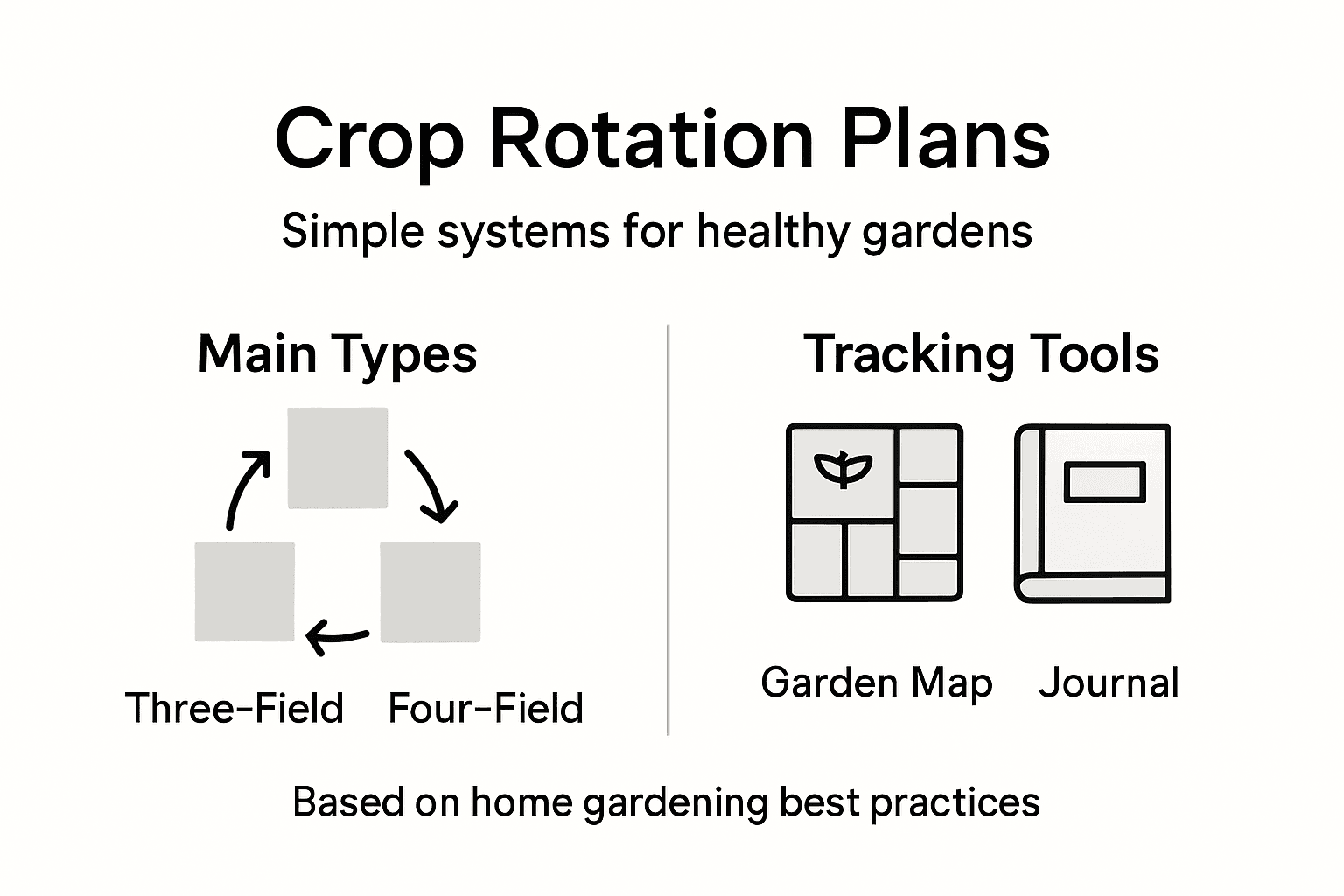
The three-field rotation is probably the simplest system to understand and the easiest one to start with in your first season. You divide your garden into three sections and rotate crops through them over three years. Year one, bed A grows heavy feeders like tomatoes or squash that drain lots of nitrogen. Bed B gets legumes (beans and peas) that actually add nitrogen back into the soil. Bed C grows light feeders like root vegetables or leafy greens. The next year, everything shifts. What was in bed A moves to bed B, what was in bed B moves to bed C, and what was in bed C moves to bed A. By year three, you’ve cycled everything through all three positions. This system works beautifully because legumes naturally replenish what heavy feeders took out, so you’re working with your soil instead of against it.
The four-field rotation builds on this concept but gives you even more flexibility and results. You add a fourth section, typically dedicated to cover crops or a fallow period where nothing grows (or where you plant something purely to build soil health rather than to harvest). This rotation pattern is actually ideal for breaking pest and disease cycles because it stretches out the time before the same crop family returns to the same spot. Most home gardeners find a four-year cycle strikes the perfect balance between effectiveness and manageability. You get better soil recovery and stronger pest interruption without making your garden system so complicated that you abandon it halfway through.
For gardeners working with limited space or container setups, block rotation by plant family offers a practical alternative. Instead of thinking about fields or beds, you group crops by their botanical family. Nightshades (tomatoes, peppers, eggplants) stay together. Brassicas (cabbage, broccoli, kale) form another group. Legumes (peas, beans) are their own category. Root vegetables and leafy greens round out the main families most home gardeners plant. You move entire families to different locations year after year rather than individual crops. This works because pests and diseases typically target specific plant families, so rotating the family unit breaks their cycles just as effectively as rotating individual vegetables.
Another approach gaining popularity among North American home gardeners is intercropping with cover crops during off-season months. You grow your regular vegetables during the main season, then plant cover crops like clover, rye, or hairy vetch in fall or early spring when your main beds sit empty. These cover crops add organic matter back to the soil, suppress weeds, and break pest cycles. When spring arrives, you turn them into the soil and plant your vegetables again. This method improves soil structure and increases organic matter while maximizing what you can produce from your limited garden space throughout the year.
Here’s the reality that trips up beginners: you don’t need to pick one perfect system and stick with it religiously. Start with whatever system matches your garden layout and schedule. If you’ve got four raised beds, try the four-field rotation. If you’ve got three main growing areas, go with the three-field method. If your space is irregular or you garden in containers, use the plant family approach. The specific method matters far less than actually doing something different each year instead of planting the same crops in the same spots repeatedly. Most successful home gardeners tweak their rotation systems over a few seasons as they learn what works best for their specific soil, climate, and pest pressures.
Here’s a side-by-side comparison of common crop rotation systems for home gardens:
| Rotation System | Number of Sections | Main Benefit | Suitability |
|---|---|---|---|
| Three-Field Rotation | 3 | Balances soil nitrogen | Good for small gardens |
| Four-Field Rotation | 4 | Maximizes pest control | Ideal for raised beds |
| Plant Family Rotation | Varies | Simplifies disease breaks | Works for containers |
| Intercropping with Covers | 2-4+ | Boosts organic matter | Suitable for all spaces |
Pro tip: Create a simple spreadsheet or use a garden journal to track which crop family planted in each bed every year, then reference it at the start of each growing season to avoid repeating last year’s layout and to keep your rotation system on track without relying on memory.

How crop rotation supports soil health
Soil isn’t just dirt. It’s a living ecosystem packed with microorganisms, fungi, and bacteria that make plant growth possible. When you plant the same crop in the same spot year after year, you’re essentially farming the same microscopic community into exhaustion. Crop rotation refreshes this ecosystem and rebuilds the soil from the ground up. Think of it as giving your garden’s soil a chance to recover and rebalance itself instead of constantly withdrawing from the same biological bank account.
Here’s what happens at the soil level when you rotate crops: different plants have different root depths, nutrient demands, and relationships with soil organisms. Tomatoes pull heavily from the top 18 inches of soil, particularly depleting nitrogen and calcium. Root vegetables like carrots dig deeper, breaking up compacted layers and accessing nutrients at lower depths. Legumes don’t just take from the soil; they actively give back through a partnership with nitrogen-fixing bacteria living in their root nodules. When you rotate these different crop types through the same bed, you’re distributing nutrient extraction across different soil layers and allowing depleted nutrients to replenish naturally. Legumes especially transform your soil chemistry. Plant beans or peas one season, and soil organic matter increases significantly while nitrogen fixation actively enriches the soil for the heavy feeders coming next. This creates a self-sustaining cycle where your crops actually improve the soil they grow in instead of degrading it.
Beyond nutrient cycling, crop rotation supports massive increases in soil microbial diversity. Different plants host different beneficial microorganisms in their root zones. A tomato plant attracts certain fungi and bacteria, while beans attract a completely different community. When you rotate crops, you’re essentially rotating which microorganisms get to thrive in your beds. This diversity strengthens your soil’s ability to suppress diseases naturally. Specific pathogenic fungi and bacteria that target tomatoes can’t sustain themselves if tomatoes disappear for two or three years. Without their preferred host, populations crash. Meanwhile, the diverse microbial community that builds up during rotation creates competition that prevents any single disease organism from dominating. You’re essentially weaponizing your soil biology against pest and disease problems. Soil structure also improves as this microbial diversity flourishes. The fungi and bacteria in healthy soil produce compounds that bind soil particles together, creating better drainage, improved water retention, and looser soil that plant roots can penetrate more easily. After just two or three years of proper rotation, you’ll notice your soil feels noticeably richer, darker, and crumblier compared to years of monoculture.
The practical result of all this soil health improvement shows up in your harvests. Healthier soil means better nutrient availability, which means stronger plants that produce more food and resist pests more effectively. You’re not adding expensive fertilizers or fighting soil compaction with constant tilling. Instead, you’re working with your soil’s natural systems to build long-term productivity. Gardeners who practice consistent rotation report needing fewer inputs and getting better results by year three or four. The soil does most of the work for you once you establish the rotation pattern.
Pro tip: Add a soil test to your routine every two years to track nutrient levels and pH changes as you rotate crops, giving you concrete data about whether your rotation system is actually improving your soil health and what adjustments might help.
Managing pests and diseases with rotation
Pests and diseases aren’t random visitors to your garden. They’re predictable. Most garden pests and pathogens have specific host plants they target. Tomato hornworms eat tomatoes. Powdery mildew loves squash. Cabbage worms go after brassicas. When you plant the same crop in the same location year after year, you’re essentially rolling out a welcome mat for these problems. Crop rotation cuts off that welcome mat. By moving your plants to different beds, you interrupt the pest and disease life cycles that depend on finding their preferred hosts in familiar locations.
Here’s how this works at a practical level: imagine you grow tomatoes in bed A this year, and soil borne diseases specific to tomatoes establish themselves in that bed. These pathogens can survive winter in the soil, waiting for tomatoes to return next season. When you practice crop rotation and plant beans or lettuce in bed A the following year, those tomato diseases find no suitable host. They can’t feed, reproduce, or establish populations. By the time you rotate tomatoes back to bed A in year three or four, the pathogen populations have crashed. Rotating non-host crops reduces pathogen populations significantly, and this interruption of disease cycles is one of the most effective tools you have as an organic gardener. You’re not using chemicals or fighting nature. You’re simply removing what pests and diseases need to survive.
Insect pests face similar problems under rotation. Many pest species overwinter in soil or plant debris specific to their host plants. Colorado potato beetles lay eggs near potatoes. They expect potatoes to be there when their larvae hatch. If you plant something else entirely, the larvae have nothing to eat and die. Adults searching for potatoes find an empty buffet. When you interrupt breeding cycles by rotating crops, you reduce overwintering populations before they even get started. This is why gardeners who rotate consistently report fewer pest problems by year two and three. The pest populations never reach the critical mass that creates infestations. You’ve essentially starved them out before they could establish themselves.
The key to making rotation work for pest and disease control is understanding which crops share pest and disease problems. This is where plant families matter tremendously. All nightshades (tomatoes, peppers, eggplants, potatoes) attract similar pests and face similar diseases. Don’t plant them consecutively in the same location. All brassicas (cabbage, broccoli, kale, cauliflower) attract cabbage worms and face clubroot. Move them around. All cucurbits (squash, zucchini, cucumbers, melons) face powdery mildew and cucumber beetles. Rotate them too. When you break your garden into these family groups and move each group to a different bed each year, you’re systematically eliminating the conditions that pests and diseases need to thrive. Combined with other organic pest control practices like hand picking and companion planting, rotation becomes a powerful, cost-free defense strategy.
Refer to this quick lookup table for plant families and their typical garden pests:
| Crop Family | Examples | Common Pests |
|---|---|---|
| Nightshades | Tomatoes, peppers, eggplant | Hornworm, blight |
| Brassicas | Cabbage, kale, broccoli | Cabbage worm, clubroot |
| Legumes | Beans, peas | Aphids, root rot |
| Cucurbits | Squash, cucumber, melons | Cucumber beetle, mildew |
The beauty of this approach is that it gets better over time. Year one of rotation might still show some pest pressure because populations haven’t crashed yet. By year two, you’ll notice significant improvements. By year three and four, many gardeners report barely needing to intervene at all. The rotation system itself does most of the heavy lifting. You’re building a healthier garden ecosystem where pests and diseases never get the upper hand because their preferred hosts keep disappearing.
Pro tip: Keep a detailed garden journal noting which pests and diseases appeared in each bed each year, then match this information against your crop locations to identify which rotations were most effective at suppressing specific problems in your garden.

Mistakes to avoid and practical tips
Even with the best intentions, beginners make predictable mistakes with crop rotation that undermine their efforts. The most common error is rotating too quickly. You plant tomatoes in bed A, then move them to bed B the next year, thinking you’ve rotated. But if you only have two beds, you’re back to the same problem: tomatoes return to bed A after just one year, and soil borne pests specific to tomatoes never die off. Effective rotation requires maintaining sufficient time between repeated crops in the same location. Aim for at least two years, ideally three or four, before replanting the same crop family in the same bed. This gap is what actually breaks pest and disease cycles. Without it, you’re just shuffling vegetables around without getting the benefits.
Another trap beginners fall into is rotating crops within the same family. You grow tomatoes in bed A this year, then decide to plant peppers there next year because you need to grow something different. Problem: peppers are nightshades, just like tomatoes. They face the same pests and diseases. You’ve planted a different crop but kept all the same problems. This is why understanding plant families matters so much. Keep a reference list of which crops belong to which family and commit to rotating entire families to different beds, not just swapping individual vegetables. Nightshades together. Brassicas together. Legumes together. Move each entire family to a new location each year. Some gardeners also make the mistake of overcomplexifying their rotation system. They create elaborate plans with seven or eight different bed sections and complex rules that require consulting a spreadsheet every time they plant something. Then they abandon the system after year one because it’s too complicated to manage. Start simple. Three or four beds with a basic rotation sequence is enough for most home gardens. If your system is so complicated you dread consulting it, you won’t stick with it.
Here are practical strategies that actually work: First, map your garden on paper now, before the season starts. Assign each bed a number or letter. Write down exactly what grew there this year. Keep this record simple and accessible, whether that’s a notebook you keep in your shed or a note on your phone. Second, create a one page rotation plan showing where each plant family goes each year for the next three or four years. Don’t overthink it. You’re just making sure nightshades don’t return to the same bed too quickly and brassicas don’t follow brassicas. Third, group your beds by what you’re growing this year, not by size or location. If you have five beds and want to grow four different plant families this year, one family gets two beds. That’s fine. What matters is that each family moves to different beds next year. Fourth, leave notes in your beds at the end of the season. Literally write on a marker board or stake what grew there. Future you will thank present you when you’re planning next year’s layout. Fifth, don’t get discouraged if year one doesn’t show dramatic improvements. Crop rotation is a multi-year strategy. You’re making investments that pay dividends by year three and four.
Common Mistakes at a Glance
- Rotating to the same crop after just one year (need at least two to three years)
- Rotating only individual crops instead of plant families (swap a nightshade for another nightshade)
- Creating overly complex rotation plans that are hard to remember or manage
- Forgetting to track what grew where, then repeating the same location by accident
- Expecting dramatic pest reduction in year one (benefits compound over time)
- Rotating crops but not addressing other garden health issues like soil compaction or poor drainage
- Planting legumes with no intention of actually letting them build soil nitrogen
Pro tip: Take a photo of each bed at the end of the season showing what you grew, then label it with the bed number and year, creating a visual record you can quickly reference when planning next year’s rotation without having to flip through notes.
Elevate Your Garden Health with Expert Crop Rotation Strategies
Understanding the power of crop rotation unlocks your garden’s potential to naturally replenish soil nutrients and minimize pest problems. If you struggle with recurring pests or depleted soil from planting the same crops repeatedly, you are not alone. This article highlights how moving plant families thoughtfully and rotating crops over multiple seasons can help your garden thrive with less reliance on chemicals and heavy fertilizers. The key is combining proven rotation methods with ongoing care to build a self-sustaining ecosystem.
At Lushy Gardens, we bring you expert advice tailored for gardeners just like you who want to master crop rotation and other sustainable practices. Explore our comprehensive gardening tips and plant care guides to learn how to design simple rotation plans, identify compatible plant families, and improve soil health year after year. Start transforming your garden today by visiting Lushy Gardens for clear, actionable guidance and join a community that shares your passion for thriving plants and healthy gardens.
Frequently Asked Questions
What is crop rotation and why is it important?
Crop rotation is the practice of growing different types of crops in sequence on the same land across growing seasons. It’s important because it improves soil health by replenishing nutrients, reducing pest populations, and promoting biodiversity in the soil ecosystem.
How does crop rotation benefit soil health?
Crop rotation benefits soil health by preventing nutrient depletion and promoting the growth of diverse microorganisms that enhance soil structure. Different plants have varying nutrient demands and root depths, which helps to maintain a balanced and rich soil ecosystem.
How often should I rotate my crops?
A four-year rotation plan is ideal, but many gardeners successfully implement two or three-year cycles, especially in smaller spaces like raised beds. The goal is to avoid planting the same crop in the same spot for consecutive seasons to effectively disrupt pest and disease cycles.
Can crop rotation prevent diseases and pests in my garden?
Yes, crop rotation can significantly reduce the prevalence of diseases and pests. By moving crops to different locations, you interrupt the life cycles of pests and pathogens that target specific plants, making it harder for them to establish and thrive in your garden.
Recommended
- Why Rotate Crops: Boosting Soil Health and Yields – Lushy Gardens
- Crop Rotation Principles: Boosting Soil Health and Yields – Lushy Gardens
- Understanding the Benefits of Organic Gardening – Lushy Gardens
- 7 Essential Tips for Mastering Your Vegetable Planting Calendar – Lushy Gardens

I’m Eleanor, a seasoned gardener with over three decades of experience tending to Mother Nature’s creations. Through Lushy Gardens, I aim to share my wealth of knowledge and help fellow plant enthusiasts uncover the wonders of gardening. Let’s dive into this journey together, one leaf at a time.


