
Table of Contents
Spotting yellow leaves and mushy stems in your favorite indoor plant can quickly turn excitement into worry. Root rot is a frequent challenge for American plant owners, fueled by overwatering and poor drainage in North American homes. Fungal pathogens like Phytophthora, Pythium, and Rhizoctonia thrive in wet, oxygen-starved soil, making recovery tricky without expert intervention. Understanding the facts and debunking common myths is crucial for keeping your plants healthy and vibrant.
Key Takeaways
| Point | Details |
|---|---|
| Root rot is caused by excess moisture. | Poor drainage and waterlogged soil create conditions for fungal pathogens to thrive and cause root decay. |
| Early detection is crucial for recovery. | Inspect roots regularly; prompt action can save your plant when symptoms first appear. |
| Sanitation prevents infection spread. | Clean pots and tools with a bleach solution to eliminate fungal spores between uses. |
| Proper watering practices are essential. | Use the finger test to check soil moisture and avoid overwatering, which is the main cause of root rot. |
What Is Root Rot and Common Myths
Root rot is fundamentally a condition where roots decay due to anoxic (oxygen-free) soil conditions, most commonly triggered by excessive moisture. When roots sit in waterlogged potting media, they cannot absorb oxygen, leading to deterioration. The culprits are usually fungal pathogens like Phytophthora, Pythium, and Rhizoctonia that thrive in overly wet environments. These microorganisms attack the root system and basal stems, essentially suffocating your plant from the ground up. The condition is particularly common in indoor plants because controlled environments often trap moisture, creating the exact conditions these fungi love. Without intervention, root rot can be fatal to your plant.
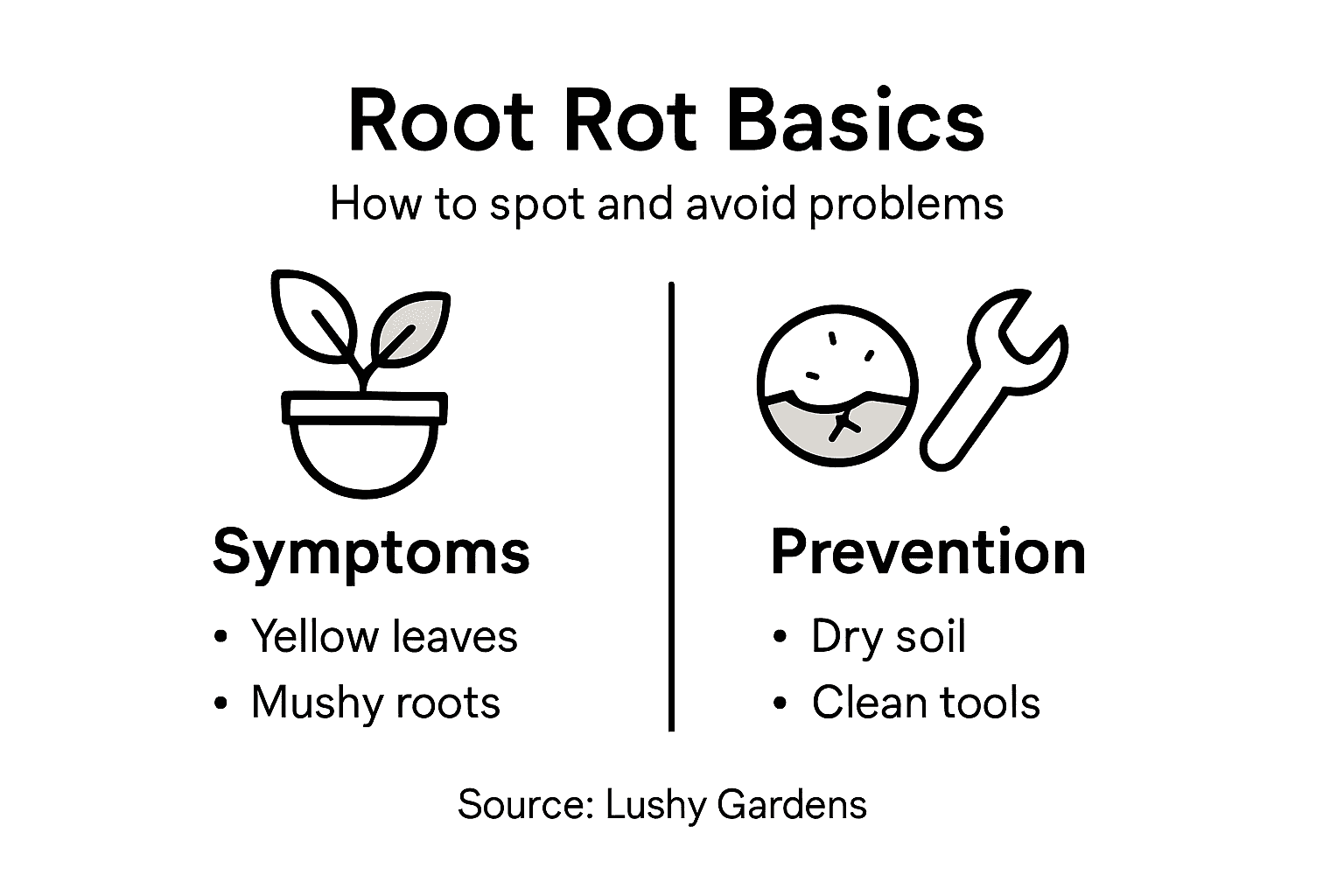
You’ll spot root rot through telltale signs: yellowing leaves that fall off prematurely, stems that feel mushy or soft, a foul smell from the soil, and roots that look dark brown or black instead of firm and white or tan. Some indoor plant owners mistake these symptoms for simple underwatering, which is one of the most dangerous myths circulating in houseplant communities. Another pervasive myth is that all root rot is caused by overwatering alone. The truth is more nuanced. Poor drainage, decomposed potting medium, contaminated soil, and even unsterilized gardening tools spread these pathogens. Some growers believe repotting immediately will save a plant with root rot, but rushing into repotting without addressing the underlying moisture problem just transfers the issue to fresh soil.
Here’s what many people get wrong: they think root rot develops slowly and gives you weeks to notice. It doesn’t. Once fungi take hold in wet soil, decay accelerates rapidly. The condition advances so quickly that a seemingly healthy plant can become severely compromised within 10 to 14 days. Another myth suggests that one thorough watering flush can cure root rot, but additional water is exactly what fungi need to spread further. Similarly, people often believe that large drainage holes alone prevent root rot, ignoring that the frequency and volume of watering matter far more than pot design.
Pro tip: Before assuming root rot, gently remove your plant from its pot and examine the roots directly; healthy roots snap cleanly when bent, while rotted roots feel slimy and pull apart easily, giving you a definitive diagnosis before attempting any treatment.
Types and Causes of Root Rot in Houseplants
Root rot is not a single disease but rather a complex caused by several different fungal pathogens that attack roots in distinct ways. The most common culprits in indoor plant collections are Rhizoctonia, Fusarium, and Pythium species, each with their own destructive patterns. Rhizoctonia typically starts at the root tips and progresses upward, creating brown lesions that eventually girdle the entire root system. Fusarium is particularly nasty because it invades through the roots and clogs the plant’s vascular system, essentially blocking water and nutrient transport from the ground up. This vascular plugging causes sudden wilting even when soil appears adequately moist, which confuses many plant parents into thinking they need to water more. Pythium favors the wettest conditions and spreads rapidly through standing water, making it especially problematic when you overwater or use pots without drainage holes.
The primary cause underlying all these fungal infections is the same: overly wet soil conditions. These pathogens thrive in oxygen-depleted, waterlogged growing media where root systems cannot access air. But moisture alone does not guarantee root rot. Secondary causes accelerate the problem significantly. Poor drainage in your potting mix (clay-heavy soil, compacted medium, or decomposing organic matter) traps water around roots longer than necessary. Unsterilized or contaminated soil introduces fungal spores directly into your pot. Even contaminated gardening tools can spread pathogens from an infected plant to a healthy one. Some indoor gardeners inherit plants or purchase used pots and tools without realizing they may harbor fungal spores. Additionally, cool temperatures and low light slow a plant’s natural defense mechanisms, making it more vulnerable when conditions turn wet.
Another critical distinction: Sclerotium species cause basal and collar rots that attack the plant at soil level, girdling the stem base and crown. This type progresses differently than root-focused rots because it girdles the entire plant structure, essentially strangling nutrient flow at the point where roots meet the stem. Understanding which pathogen you’re dealing with matters because treatment approaches vary. Some respond better to fungicide application, while others require removing infected tissue entirely. Many North American indoor gardeners face multiple pathogens simultaneously, particularly if they have several plants in one humid location or reuse soil without sterilization.
Pro tip: Repot your plants annually into fresh, sterilized potting media and clean your pots and tools with a 10 percent bleach solution between plantings to eliminate dormant fungal spores before they become a problem.
Here’s a quick overview of major fungal pathogens behind root rot and their effects:
| Pathogen Type | Typical Symptoms | Common Triggers | Treatment Challenge |
|---|---|---|---|
| Rhizoctonia | Brown root tip lesions | Poor drainage, compact soil | Requires removal of infected roots |
| Fusarium | Sudden wilting, blocked veins | Contaminated soil/tools | Difficult to treat, quick spread |
| Pythium | Slimy roots, rapid decay | Standing water, no drainage | Recurs unless moisture is controlled |
| Sclerotium | Stem base girdling, collapse | Wet soil at stem level | Attacks plant at soil line |
Key Symptoms and How Root Rot Progresses
Root rot rarely announces itself loudly. Instead, it whispers through subtle signs that many indoor plant owners mistake for other problems. Early symptoms include stunted or poor growth that seems out of proportion to your care efforts, even when you are feeding and lighting your plant correctly. Leaves may begin to yellow, starting from the lower portions of the plant and working upward, but this yellowing looks different from nutrient deficiency because it lacks the characteristic green veining. The stem or petioles might feel softer than normal when you gently squeeze them. Some plants develop a foul, musty smell emanating from the soil, similar to wet basement odor. If you pull the plant from its pot at this stage, the roots appear dark brown or black instead of firm and pale. But here is the critical part: by the time you notice these early signs, the disease has already established itself and is progressing rapidly.
The timeline for progression varies based on temperature and humidity, but root rot worsens quickly once established. What starts as a slight discoloration in a few root tips can spread to the entire root system within 5 to 10 days. The deterioration moves upward from the roots toward the lower stem, affecting the plant’s ability to transport water and nutrients. Wilting becomes more pronounced even immediately after watering because the damaged roots cannot absorb water effectively. Leaves may drop suddenly despite adequate moisture in the soil. This rapid progression is what makes root rot so dangerous: by the time symptoms become obvious to the naked eye, extensive damage has already occurred internally. The fungal pathogens are actively spreading through the root system and potentially into the lower stem tissue, girdling or blocking vascular tissue. Without intervention at this stage, the plant typically enters terminal decline within 7 to 14 days.
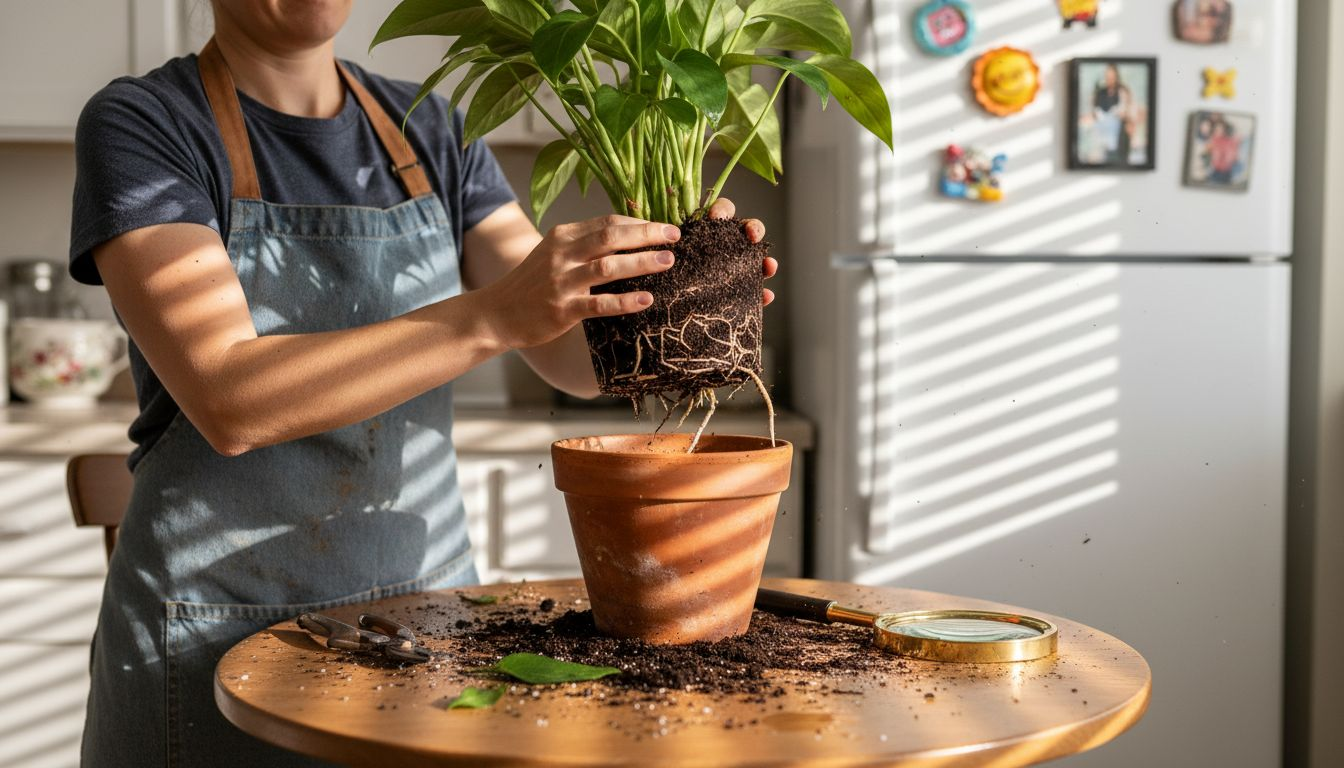
Late-stage symptoms show advanced tissue breakdown that leaves little room for recovery. Stems become mushy and collapse at the soil line. Roots disintegrate into a slimy paste that pulls apart with minimal pressure. Leaves wilt dramatically and may turn completely yellow or brown before dropping. The smell becomes unbearable. At this point, your plant is often beyond saving, though propagation from healthy stem sections may still be possible if any green tissue remains above the rot line. The progression is relentless because each day of delay allows fungal colonization to advance further into healthy tissue.
Pro tip: Check your plant roots monthly by gently removing it from the pot; catching root rot in the first two weeks when only a few roots show discoloration gives you a fighting chance at recovery through repotting and treatment, whereas waiting until stems turn mushy often results in plant loss.
Risks and Mistakes Indoor Plant Owners Make
The biggest risk most North American indoor plant owners face is not a disease or pest outbreak but rather their own watering habits. Overwatering is the leading cause of root rot in houseplants, yet it remains the most common mistake because it stems from good intentions. You see a drooping plant and assume it needs water, not realizing that wilting from root rot looks identical to wilting from dehydration. This confusion leads you to water more frequently, accelerating the fungal infection. The risk intensifies in winter when plants require significantly less water due to reduced light and slower metabolism. Many growers maintain summer watering schedules year-round, creating persistently wet conditions that fungi love. Additionally, keeping your plant in a pot without drainage holes or using dense, water-retaining soil mixtures traps moisture around the roots, eliminating the oxygen they need. Even quality potting mixes break down over time, becoming compacted and hydrophobic, which prevents proper water drainage and aeration.
Another critical mistake is reusing contaminated soil and tools without sterilization. When you repot a plant that died from root rot, fungal spores remain in the soil and on the pot’s interior. If you reuse that soil or pot for a new plant without sterilizing it, you are essentially transferring the infection to your next victim. Similarly, using the same pruning shears, repotting knife, or hands between plants spreads pathogens silently. Many indoor gardeners share plants or tools with friends without realizing they may be passing along fungal spores. The risk multiplies when you cluster multiple plants together in high humidity with poor air circulation. Fungi thrive in warm, humid, still air, making that beautiful plant shelf in your bathroom an ideal incubator for root rot. Practicing proper indoor plant care fundamentals reduces this risk significantly.
You also increase root rot risk by ignoring your plant’s specific watering needs. Succulents and cacti prefer drier conditions and minimal watering, yet many owners treat them like tropical plants that need frequent hydration. Orchids, conversely, prefer drying out between waterings but still need excellent drainage. Using the same watering schedule for all your plants guarantees problems because each species and growing condition requires different approaches. Underestimating the risks of cool temperatures compounds the issue. When plants sit in temperatures below 60 degrees Fahrenheit, their metabolic rate drops dramatically, but the soil dries more slowly. Combining cool conditions with regular watering creates a perfect storm for root rot development. The fungal pathogens slow down too, but they still colonize roots at a manageable rate for the plant’s weakened defenses.
Pro tip: Before watering, stick your finger 1.5 inches into the soil; if it feels damp or wet, skip watering that day, because most indoor plants only need water when the top 1 to 2 inches of soil are completely dry, not visibly moist.
Effective Prevention and Recovery Techniques
Prevention is infinitely easier than recovery when it comes to root rot. The foundation of prevention rests on three pillars: proper soil composition, appropriate watering practices, and rigorous sanitation. Start with light, well-draining potting media specifically formulated for your plant type. Avoid garden soil or dense mixes that compact over time and trap moisture. A quality indoor potting mix typically contains peat moss or coconut coir, perlite, and bark chips, all working together to retain some moisture while allowing air circulation around roots. Repot your plants annually to refresh this medium before it breaks down completely. Choose containers with adequate drainage holes and never use pots without them, no matter how attractive they appear. When watering, use the finger test: insert your finger 1.5 inches into the soil, and only water if it feels completely dry. Most indoor plants in moderate light conditions need watering only once every 7 to 10 days, not daily.
Sanitation prevents fungal spores from spreading between plants and establishing new infections. Clean your pots thoroughly between uses, wiping them with a 10 percent bleach solution to eliminate any remaining spores. Sterilize all pruning tools by wiping them with rubbing alcohol or dipping them in a 10 percent bleach solution before moving between plants. When you notice root rot symptoms, isolate that plant immediately to prevent the fungus from spreading to healthy neighbors through contaminated water droplets or shared tools. Managing root rot requires prompt removal of infected plants to contain the problem and protect your collection. Do not compost infected plant material; dispose of it in sealed bags in your trash.
Recovery from root rot demands swift action combined with the right approach. If caught early, gently remove the plant from its pot and rinse away all soil from the root system under lukewarm running water. Examine the roots closely: healthy roots are firm and light colored, while infected roots appear dark, mushy, and slimy. Using a sterile knife, remove all soft, rotted roots by cutting back to healthy tissue. Discard the contaminated soil entirely and wash the pot with a 10 percent bleach solution. Repot the plant into fresh, dry medium, then wait 5 to 7 days before watering. This drying period gives you time to assess whether the plant will recover. If root rot has progressed significantly up the stem, propagate any healthy green sections by taking cuttings and rooting them in moist sand or propagation mix. Fungicide applications can help, though rotating different fungicide materials prevents resistance issues. However, no fungicide works effectively without addressing the underlying moisture problem that created conditions for infection.
Pro tip: Keep a small spray bottle of 10 percent bleach solution and paper towels near your plant collection; clean your tool blades and hands between handling plants to prevent spreading fungal spores, which is more effective than treating infections after they establish.
For easy reference, here are top recommended prevention strategies and their benefits:
| Prevention Practice | Key Benefit | Recommended Frequency |
|---|---|---|
| Use sterile potting media | Reduces pathogen risk | Every repotting |
| Clean pots/tools with bleach | Stops cross-contamination | After each use |
| Monitor soil moisture | Avoids waterlogging | Weekly or before watering |
| Provide drainage holes | Improves oxygen availability | Every new pot |

Protect Your Indoor Plants from Root Rot with Expert Guidance
Root rot poses a serious threat to the health of your indoor plants. This condition arises when roots sit in waterlogged soil, leading to fungal infections that can quickly destroy your plant’s root system. If you have noticed yellowing leaves, mushy stems, or a foul smell from your potting soil, you may be facing root rot. It can be frustrating to see a beloved plant struggle despite your care. Avoid common mistakes like overwatering and poor drainage by understanding the critical signs and prevention methods discussed in our article “Root Rot Explained: How It Impacts Indoor Plants.”
At Lushy Gardens, we are dedicated to helping you nurture thriving houseplants with practical plant care advice and easy-to-follow tips. Explore our comprehensive plant care guides to learn how to maintain the right soil moisture levels and repot effectively. Take control of your plant’s health today before root rot spreads beyond repair. Visit our site now and empower yourself with the knowledge to save your plants and build a resilient indoor garden.
Frequently Asked Questions
What is root rot?
Root rot is a condition where plant roots decay due to oxygen-free soil, usually caused by excessive moisture and fungal pathogens like Phytophthora, Pythium, and Rhizoctonia.
How can I tell if my plant has root rot?
Signs of root rot include yellowing leaves, mushy or soft stems, a foul smell from the soil, and dark, slimy roots instead of firm, white roots.
What causes root rot in indoor plants?
Root rot is primarily caused by overly wet soil conditions, poor drainage, decomposed potting media, contaminated soil, and unsterilized gardening tools that can introduce fungal pathogens.
How can I prevent root rot in my houseplants?
To prevent root rot, use well-draining potting media, ensure pots have adequate drainage holes, monitor soil moisture with the finger test, and practice sanitation by cleaning pots and tools between uses.
Recommended
- Understanding the Best Indoor Plant Soil for Healthy Growth – Lushy Gardens
- 8 Essential Indoor Plant Care Tips for Every Gardener – Lushy Gardens
- Overwatering Signs – How They Impact Plant Health – Lushy Gardens
- Indoor Plant Care Basics: Everything You Need to Know – Lushy Gardens

I’m Eleanor, a seasoned gardener with over three decades of experience tending to Mother Nature’s creations. Through Lushy Gardens, I aim to share my wealth of knowledge and help fellow plant enthusiasts uncover the wonders of gardening. Let’s dive into this journey together, one leaf at a time.


