
Table of Contents
TL;DR:
- Fungus gnats thrive in moist soil, with larvae being the primary target for control.
- Drying soil, physical traps, and biological controls effectively eliminate infestations over several weeks.
- Consistent, layered treatment is essential as most solutions require ongoing effort to prevent recurrence.
Those tiny flies swarming every time you water your houseplants are more than just annoying. They’re a sign that something in your soil environment has tipped out of balance. For most indoor gardeners, the culprit is fungus gnats, a persistent pest that breeds in damp potting mix and seems to multiply overnight. Getting rid of them isn’t about one clever trick. It’s about understanding their lifecycle and cutting off each stage systematically. This guide walks you through a proven, step-by-step approach to identify, trap, and eliminate indoor plant flies for good.
Table of Contents
- Understanding indoor plant flies: What are you dealing with?
- Step 1: Dry out the soil to break the breeding cycle
- Step 2: Trap and reduce adult flies physically
- Step 3: Safe biological controls and when to use chemicals
- What most guides miss about controlling indoor plant flies
- Next steps for thriving, fly-free plants
- Frequently asked questions
Key Takeaways
| Point | Details |
|---|---|
| Target the larvae | Drying out soil and treating larvae are key to stopping indoor plant flies at the source. |
| Trap adult flies | Sticky traps and physical barriers cut down breeding adults and monitor progress. |
| Use safe solutions first | Choose cultural, physical, and biological controls before considering chemical options indoors. |
| Stay consistent | An integrated, step-by-step approach works best; skipping steps may prolong infestations. |
Understanding indoor plant flies: What are you dealing with?
To take control, you first need to understand your tiny adversary. Not every fly hovering around your plants is the same pest, and misidentifying them leads to wasted time and money.
Fungus gnats are by far the most common offenders. They’re small, dark, and mosquito-like in appearance, roughly 1/8 inch long, and they love hovering near the soil surface. If you see tiny flies that seem sluggish and mostly stay near your pots, you’re almost certainly dealing with fungus gnats. Fruit flies, by contrast, are attracted to ripe or rotting produce and tend to cluster near your kitchen rather than your plant soil. Whiteflies are pale, waxy, and usually found on the underside of leaves where they feed on plant tissue.
Here are the common symptoms to watch for with fungus gnats:
- Tiny dark flies emerging from the soil when you water
- Yellowing or wilting leaves despite adequate moisture
- Stunted growth in seedlings or young plants
- Visible small white larvae in the top layer of potting mix
- Roots showing signs of rot or damage on inspection
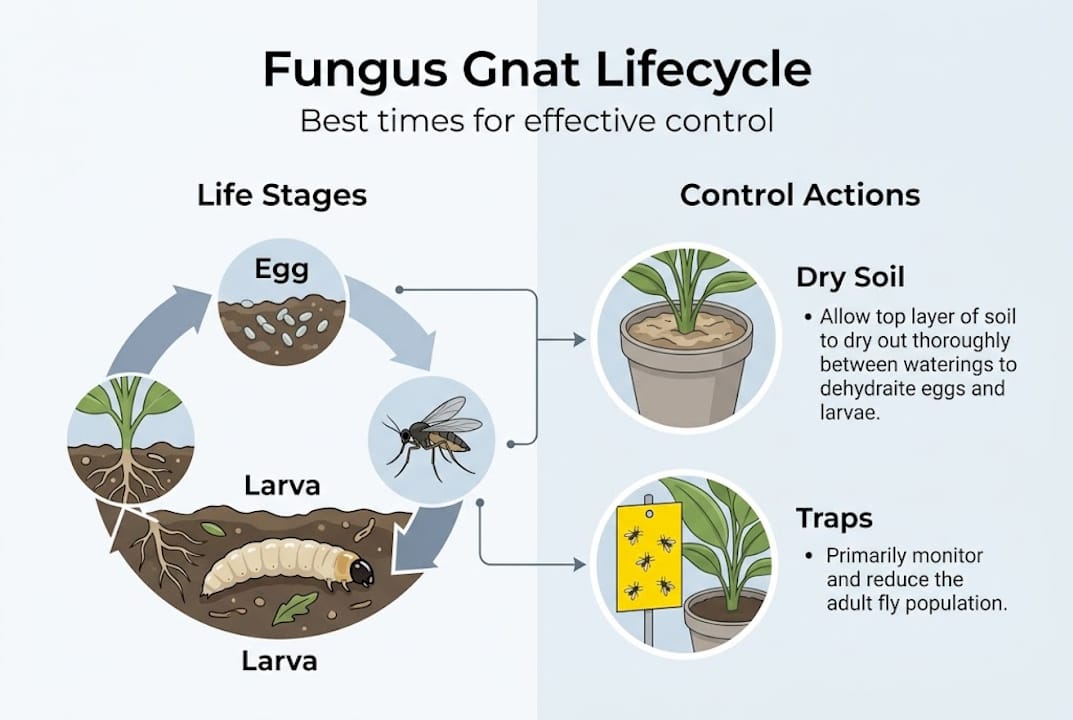
The reason fungus gnats are so persistent is their lifecycle. Female gnats lay up to 300 eggs in moist soil. Those eggs hatch into larvae that feed on organic matter and plant roots for about two weeks. Then they pupate and emerge as adults in about a week. The whole cycle repeats every three to four weeks.
| Life stage | Duration | Vulnerability |
|---|---|---|
| Egg | 3-6 days | Very low (protected in soil) |
| Larvae | 12-14 days | High (exposed to soil treatments) |
| Pupa | 5-7 days | Low (cocooned) |
| Adult | 7-10 days | Moderate (trappable) |
As you can see, the larval stage is both the longest and most vulnerable. The fungus gnats lifecycle confirms that larvae control is the key to breaking the cycle, since adults only live about a week and don’t directly harm roots. Targeting the soil is where your real leverage lies. Understanding fungus gnats alongside other common indoor plant pests helps you build a smarter overall defense for your indoor garden.
Step 1: Dry out the soil to break the breeding cycle
Now that you know the enemy, you can start with the most effective cultural control. Moisture is everything to fungus gnats. Without it, their eggs fail to hatch and their larvae die off quickly.
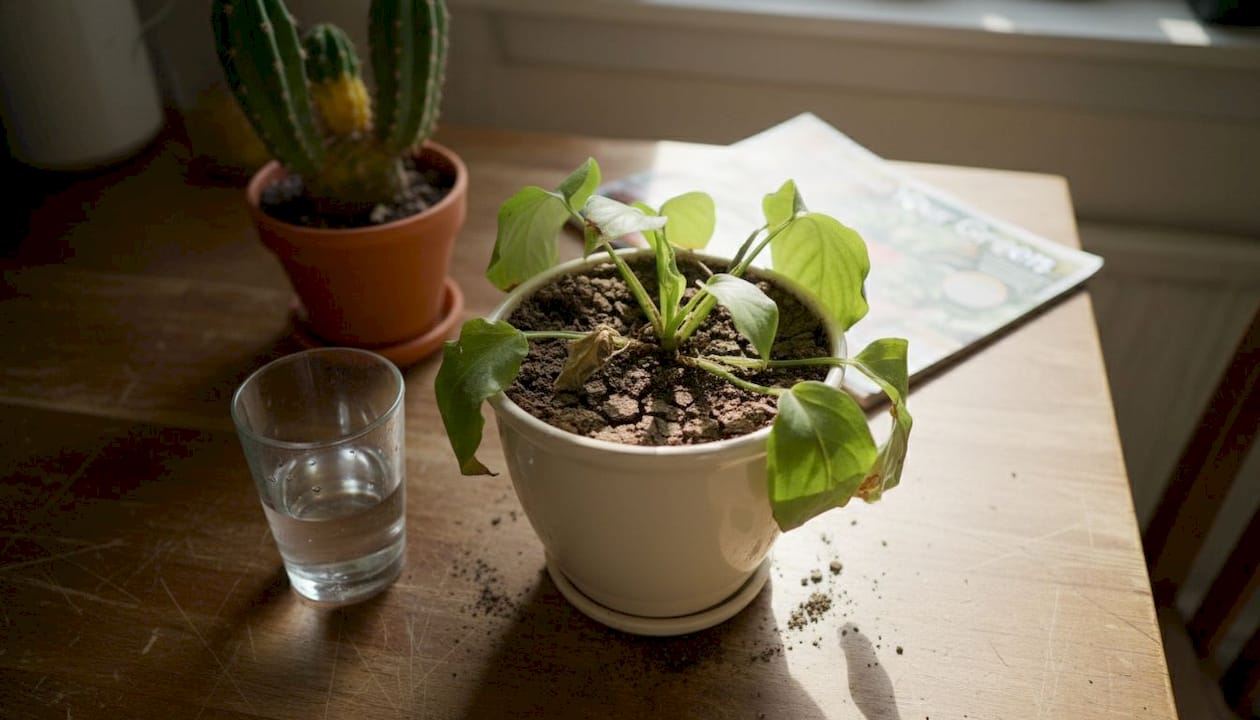
Most indoor gardeners overwater without realizing it. The soil surface looks dry, so they add more water. But just a few inches below the surface, the growing medium stays wet for days. That’s prime breeding territory. Fungus gnat females specifically seek out moist soil to deposit their eggs, so a consistently damp pot is basically an open invitation.
Here’s how to adjust your watering routine step by step:
- Check before you water. Press your finger about 1-2 inches into the soil. If it feels moist at all, wait another day.
- Use a moisture meter if you have one. These inexpensive tools give you a reading so you’re not guessing.
- Wait until the top layer is dry. The goal is for the top 1-2 inches to feel dry to the touch before you add any water.
- Water deeply but less often. When you do water, soak the soil thoroughly and let the excess drain out. Then wait for the next dry period.
- Adjust for seasonal changes. Plants use less water in winter, so watering frequency should drop noticeably.
This method works because drying the top 2 inches of soil kills existing larvae and deters egg-laying by adults. You’re not just fighting the bugs you already have. You’re making your pots inhospitable for future generations.
Pro Tip: After the soil dries out, add a thin layer of coarse horticultural sand or fine gravel to the top of the pot. This creates a physical barrier that adult flies find unappealing for egg-laying, and it dries out even faster than potting mix.
If you’re struggling with water-related plant issues beyond just gnats, the troubleshooting indoor plant problems guide at Lushy Gardens covers the full picture. Adjusting your watering habit alone can dramatically reduce an infestation within one to two gnat lifecycles, roughly four to eight weeks.
Step 2: Trap and reduce adult flies physically
With fewer larvae maturing, it’s time to focus on stopping adults before they lay more eggs. Physical traps are a simple, chemical-free way to reduce the adult population and monitor how bad your infestation really is.
Yellow sticky traps are the gold standard. Fungus gnats are visually attracted to the color yellow, so they fly straight toward these cards and get stuck. Place them at soil level, not up in the air where they’re less effective. Yellow sticky traps capture adults efficiently and also help you track whether your control methods are working over time.
Here’s how to set up traps for maximum effect:
- Place one sticky trap per medium-sized pot, inserted vertically into the soil surface
- Position traps near entryways or windows if gnats are spreading through your home
- Check and replace traps every 1-2 weeks or sooner if they fill up quickly
- Count the gnats caught each week to track your progress
The potato slice method is a surprisingly effective larval monitor that many gardeners overlook. Cut a raw potato into slices about half an inch thick. Press a slice face-down onto the soil surface and leave it for 24-48 hours. When you lift it, look for tiny white larvae clinging to the moist underside. If you see them, you know larvae are still active in that pot. Discard the potato slice in the trash (not compost) and repeat regularly until you stop finding larvae.
| Trap type | Cost | Best for | Effectiveness |
|---|---|---|---|
| Yellow sticky traps | Low | Adults | High |
| Potato slices | Very low | Larvae monitoring | Moderate |
| Sticky tape near soil | Low | Adults near pot | Moderate |
| Sand/gravel layer | Low | Egg prevention | High |
Pro Tip: Top your potting mix with a one-inch layer of horticultural sand after you’ve dried the soil. This blocks adult gnats from accessing the soil to lay eggs and makes larvae far easier to spot.
For more strategies around solving indoor plant problems, physical trapping paired with soil management is almost always the fastest path to visible results.
Step 3: Safe biological controls and when to use chemicals
Once physical and cultural measures are in place, reinforce control with targeted biological solutions. These are especially useful for stubborn infestations that don’t respond fully to drying and trapping alone.
Beneficial nematodes are microscopic roundworms that seek out and kill fungus gnat larvae in the soil. You water them in like a liquid treatment, and they get to work within 3-4 days. They’re completely safe for your plants, pets, and people. Bacillus thuringiensis israelensis, known as Bti, is a naturally occurring soil bacterium that specifically kills gnat and mosquito larvae when they ingest it. Biological controls like nematodes and Bti target larvae without harming beneficial soil life or posing any risk to humans.
| Method | Speed | Safety | Cost | Best for |
|---|---|---|---|---|
| Nematodes | 3-4 days | Very high | Moderate | Active larval infestation |
| Bti drench | 1-3 days | Very high | Low | Ongoing prevention |
| Insecticidal soap | 1-2 days | High (if labeled) | Low | Adults on contact |
| Pyrethrin-based spray | Fast | Moderate | Low | Severe adult outbreaks |
“The integrated pest management approach works best: combine cultural controls like drying soil, physical traps, and biological agents before considering any chemical intervention.”
Chemicals should genuinely be your last resort. Most indoor chemical insecticides don’t reach deep into the soil where larvae live, so they’re less effective than biologicals anyway. If you must use one, choose a product labeled specifically for indoor use and follow the directions carefully.
Best practices for safe application:
- Always read the label fully before applying anything to indoor plants
- Keep children and pets out of treated rooms until fully dry
- Never mix biological and chemical treatments at the same time
- Apply any drench treatment in the evening to minimize plant stress
- Repeat treatments as directed, since one application rarely breaks the full lifecycle
Explore organic pest control methods and natural pest control solutions for additional product options. If you’re looking for specific product picks, the natural pesticides guide at Lushy Gardens is a solid starting point.
What most guides miss about controlling indoor plant flies
Here’s an uncomfortable truth most pest control articles won’t tell you: the reason your gnats keep coming back isn’t because the treatment failed. It’s because you stopped too soon.
Most people try one method, see some improvement after a week, and go back to their old watering habits. Two weeks later, the gnats are back. The lifecycle of a fungus gnat means you need to sustain pressure for at least four to six weeks to catch every generation. That includes adults currently flying, larvae already in the soil, and eggs not yet hatched.
What experienced gardeners do differently is layer their approach from day one and stay consistent. They dry the soil, add sand, set traps, apply Bti every two weeks, and don’t declare victory until they’ve had three consecutive gnat-free weeks. That’s not obsessive. That’s how the biology actually works.
We’ve seen plant owners eliminate gnats completely after weeks of frustration simply by committing to the full integrated process. It’s not glamorous advice, but patience is genuinely your most powerful tool. If you want to master natural pest control across your whole indoor garden, that same mindset of consistency over shortcuts applies to virtually every pest challenge you’ll face.
Next steps for thriving, fly-free plants
Now that you have a systematic strategy, take your plant care to the next level. If your fly problem persists beyond four to six weeks of consistent treatment, it may point to a deeper issue with your soil, drainage, or watering environment. Lushy Gardens has detailed resources to help you work through those scenarios. Start with the fix indoor plant problems guide for step-by-step troubleshooting across a wide range of plant issues. For ongoing prevention and healthier plants overall, the indoor plant care guide is packed with practical advice. You can also browse indoor plant care tips for quick wins you can apply today.
Frequently asked questions
What causes indoor plant flies in the first place?
Overwatering and persistently damp soil are the primary triggers, since larvae thrive in wet media and female gnats actively seek moisture when choosing where to lay eggs.
Are household remedies like vinegar traps effective for plant flies?
Vinegar traps can catch some adult flies, but they don’t touch the larvae in your soil. Since addressing larvae in soil is essential for real control, vinegar alone won’t solve the problem.
How long does it take to get rid of indoor plant flies with natural methods?
Most infestations show major improvement in two to four weeks with an integrated approach. Beneficial nematodes kill larvae in as little as three to four days, making them one of the fastest biological options available.
Are chemical insecticides safe for use indoors?
Chemical insecticides should only be used indoors as a last resort. Always choose products specifically labeled for indoor plant use to minimize risks to people, pets, and your plants.
Recommended
- Organic Pest Control Methods for Healthier Gardens – Lushy Gardens
- Natural pest control: eco-friendly solutions for healthy gardens – Lushy Gardens
- Master Natural Pest Control for a Thriving Garden – Lushy Gardens
- Solving Indoor Plant Problems: Expert Solutions – Lushy Gardens

I’m Eleanor, a seasoned gardener with over three decades of experience tending to Mother Nature’s creations. Through Lushy Gardens, I aim to share my wealth of knowledge and help fellow plant enthusiasts uncover the wonders of gardening. Let’s dive into this journey together, one leaf at a time.


