
Table of Contents
Most gardeners assume that a serious pest problem demands a serious chemical response. That assumption is costing your garden more than you realize. Integrated Pest Management can reduce reliance on synthetic chemicals by 40 to 60% in many garden systems, and the results speak for themselves. Natural pest control is not a compromise. It is a smarter, safer approach that works with your garden’s biology instead of against it. This guide breaks down the most effective natural methods, from cultural practices to biological controls, so you can protect your plants without reaching for a spray can.
Key Takeaways
| Point | Details |
|---|---|
| Prevention is key | Strengthening plant health and soil reduces pest problems before they start. |
| Integrate multiple methods | Combining cultural, mechanical, and biological strategies delivers better pest control without chemicals. |
| Protect beneficial insects | Use treatments sparingly and monitor pest levels to avoid harming garden helpers. |
| Tailor methods to your space | Indoor and outdoor plants need slightly different, targeted natural solutions. |
| Monitor regularly | Weekly plant checks catch issues early and promote healthy, resilient gardens. |
Understanding natural pest control: core principles and why they work
Natural pest control is the practice of managing garden pests through prevention, ecosystem balance, and targeted interventions rather than routine chemical applications. The goal is not to eliminate every insect in sight. It is to keep pest populations below the level where they cause real damage.
The philosophy rests on a few core ideas:
- Prevention first: Healthy plants in healthy soil resist pests far better than stressed ones.
- Monitoring: Regular scouting lets you catch problems early, before they spiral.
- Ecosystem balance: Encouraging natural predators keeps pest populations in check naturally.
- Targeted action: When intervention is needed, choose the least disruptive method first.
Integrated Pest Management, or IPM, is the framework that ties all of this together. It is a flexible, evidence-based system used by professional growers and home gardeners alike. The results are impressive: IPM pest suppression reaches 85 to 95% compared to chemical-only approaches.
“A garden that supports biodiversity is a garden that largely takes care of itself.” This is the core promise of natural pest management.
For a deeper look at how this plays out in practice, the thriving garden pest control guide at Lushy Gardens walks through real-world applications. You can also explore the organic pest management guide for a broader overview of chemical-free strategies.
Cultural controls: build a pest-resistant garden ecosystem
Cultural controls are the habits and design choices that make your garden naturally less inviting to pests. Think of them as your long-term investment in garden resilience.
Soil health is the foundation. Compost added annually improves nutrient availability, moisture retention, and microbial activity. Healthy soil grows strong plants, and strong plants are simply harder for pests to damage. Organic pest management research consistently shows that soil-focused gardens experience fewer severe pest outbreaks.
Crop rotation breaks the cycle of soil-dwelling pests and diseases. When you move plant families to different beds each season, pests that overwintered in the soil find their preferred host gone. Learn more about crop rotation principles and why rotate crops to get the most from this practice. The garden health rotation resource also covers timing and planning.
Companion planting adds another layer of protection. Basil planted near tomatoes confuses thrips and aphids. Marigolds release compounds that repel nematodes and whiteflies. Nasturtiums act as trap crops, drawing aphids away from your vegetables.
| Companion plant | Target pest | Benefit |
|---|---|---|
| Marigold | Whiteflies, nematodes | Repels through root compounds |
| Basil | Aphids, thrips | Confuses and deters |
| Nasturtium | Aphids | Acts as a trap crop |
| Dill | Caterpillars | Attracts predatory wasps |
| Lavender | Moths, fleas | Strong scent deters |
Mulch is another underrated tool. Reflective mulch reduces aphid landings by up to 70% by disorienting flying insects with reflected light. Even standard organic mulch suppresses weeds that harbor pests and keeps soil moisture stable.
Pro Tip: Rotate your mulch type each season. Alternating between straw, wood chips, and reflective film keeps conditions unpredictable for overwintering pests.
Mechanical controls: barriers, traps, and hands-on removal
Cultural steps are your garden’s first line of defense, but when pests appear, mechanical methods offer hands-on, immediate action.
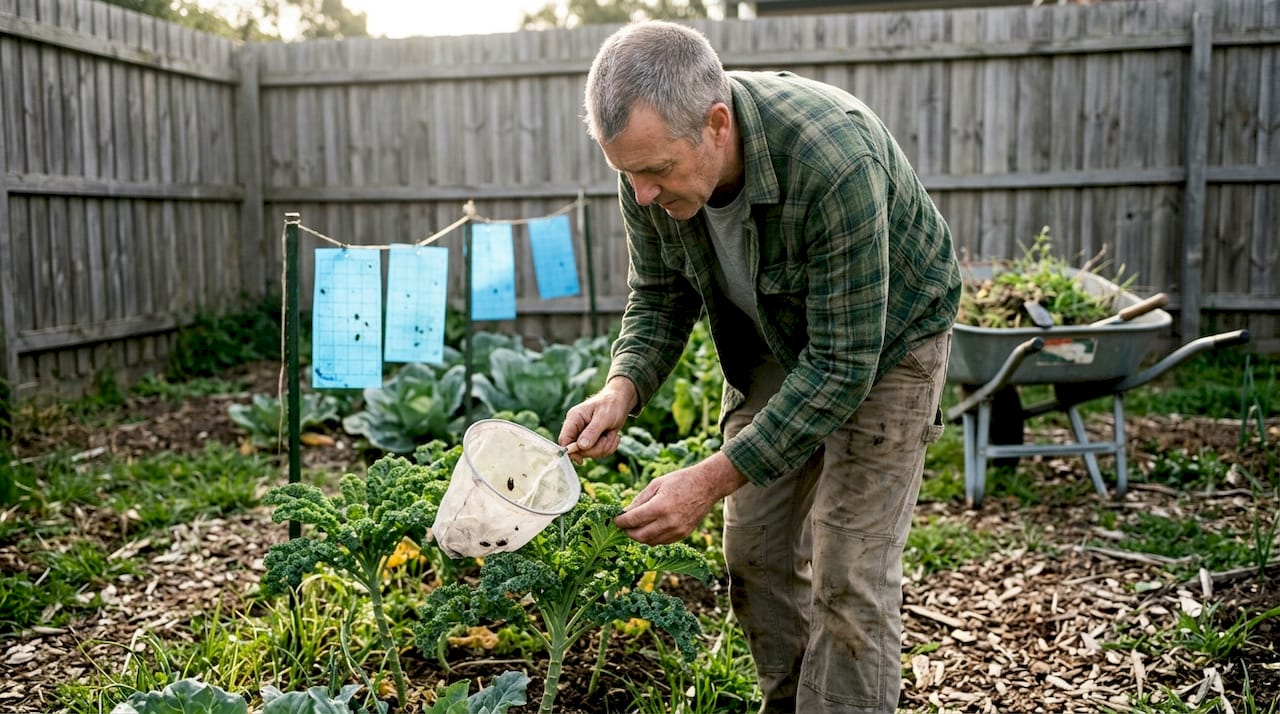
Physical barriers are among the most reliable tools available. Row covers made from lightweight fabric block insects from reaching plants entirely. Row covers block 100% of egg-laying by moths and beetles when properly secured at the edges. Copper tape around pots and raised beds deters slugs and snails through a mild electrical reaction on contact.
Traps work well for monitoring and reducing populations:
- Yellow sticky traps catch fungus gnats, whiteflies, and aphids. Hang them at plant height for best results.
- Beer traps placed at soil level attract and drown slugs overnight.
- Pheromone traps target specific moths and beetles, useful for identifying which pests are active.
- Cardboard collars placed around seedling stems stop cutworms from reaching young plants.
Hand-picking is surprisingly effective for larger pests. Hornworms, caterpillars, and squash bugs are easy to spot and remove by hand in the early morning when they are sluggish. Drop them into soapy water to finish the job.
Pro Tip: Check the undersides of leaves during your weekly scouting. Most pest eggs and early-stage larvae hide there, and removing them early prevents a full outbreak.
For a broader look at how these fit into a complete strategy, the organic pest control methods guide covers the full range of natural pest control strategies in one place.
Harnessing nature: biological pest control with beneficial insects and organisms
Beyond blocking or removing pests, successful gardens encourage beneficial organisms that do the work for you.
Beneficial insects are your most powerful allies. Here are the ones worth knowing:
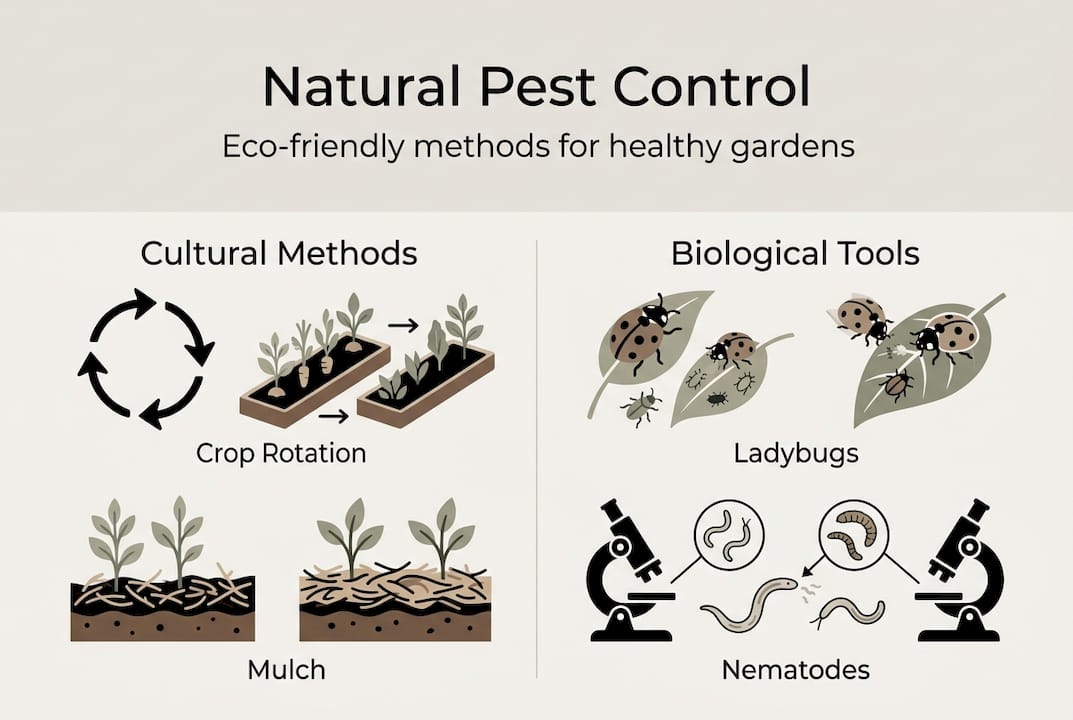
- Ladybugs: Ladybugs control 65 to 90% of aphids and whiteflies in treated areas.
- Lacewings: Their larvae consume aphids, thrips, and small caterpillars at a remarkable rate.
- Parasitic wasps: Tiny and harmless to humans, they lay eggs inside caterpillars and aphids, eliminating them from the inside.
- Ground beetles: Active at night, they hunt slugs, cutworms, and soil-dwelling larvae.
You can attract these insects by planting nectar-rich flowers like fennel, yarrow, and sweet alyssum near your vegetable beds. You can also purchase beneficial insects from reputable suppliers and release them in the evening when they are less likely to disperse.
“Biological control is not about introducing chaos. It is about restoring the balance that intensive gardening disrupts.”
Nematodes deserve special mention. These microscopic organisms are applied as a soil drench and target grubs, vine weevils, and slugs underground. They are completely safe for plants, pets, and humans. For detailed guidance on sourcing and applying them, the RHS biological control resource is excellent.
Pro Tip: Avoid using any sprays, even natural ones, when you have recently released beneficial insects. Give them at least a week to establish before treating nearby plants.
The best natural pesticides guide pairs well with this section if you want to know which treatments are safe to use alongside biological controls.
Natural sprays and dusts: safe-for-plants solutions for common pests
Sometimes, tackling outbreaks requires targeted, natural treatments. Here is how to use sprays wisely while protecting plant and pollinator health.
Three products stand out for home gardeners:
- Neem oil: Pressed from the neem tree, this oil disrupts pest feeding and reproduction. Neem oil targets over 200 pest species, including aphids, whiteflies, and spider mites. It also has antifungal properties, making it a two-in-one treatment.
- Insecticidal soap: A diluted solution of potassium salts that breaks down the outer coating of soft-bodied insects. It works on contact and leaves no residue.
- Diatomaceous earth: A fine powder made from fossilized algae. Sprinkled around plant bases, it damages the exoskeletons of crawling insects and dehydrates them.
A simple DIY spray combines one tablespoon of neem oil, one teaspoon of mild dish soap, and one liter of warm water. Shake well and apply to affected plants in the early evening.
Pro Tip: Never spray neem oil in direct sunlight or on heat-stressed plants. The oil can concentrate on leaves and cause burning. Early evening application gives it time to absorb before the next day’s sun.
For safe garden sprays and application rates, extension research provides solid guidance. You can also browse natural pesticide choices for product comparisons.
Smart strategies for indoor plants: pest prevention and control at home
While gardens face distinct pest pressures, indoor plant lovers need tailored, space-sensitive natural control tactics.
Prevention is everything indoors. A single infested plant brought home from a nursery can spread pests to your entire collection within weeks. Always quarantine new plants for at least two weeks before placing them near others.
Key indoor pest prevention habits:
- Inspect new plants thoroughly, checking stems, soil surface, and leaf undersides before purchase.
- Use yellow sticky traps near plants to catch fungus gnats and whiteflies early.
- Wipe leaves monthly with a damp cloth to remove dust, eggs, and early-stage pests.
- Improve air circulation with a small fan to deter fungus gnats and reduce humidity pockets.
- Maintain humidity above 65% in rooms with tropical plants. High humidity above 65% actively deters spider mites, one of the most common indoor plant pests.
For biological control indoors, predatory mites like Phytoseiulus persimilis are commercially available and safe to use in enclosed spaces. They target spider mites specifically and die off naturally once the food source is gone.
Pro Tip: Group plants with similar humidity needs together. This makes it easier to maintain ideal conditions and spot pest activity across multiple plants at once.
The indoor gardening tips guide covers environment management in detail, and the indoor pest control options page compares the most effective treatments for common houseplant pests.
Expert guidance: avoiding common pitfalls with natural pest management
With all these methods, a few critical nuances ensure your efforts truly support long-term garden health and success.
Correct pest identification is non-negotiable. Treating for aphids when you actually have spider mites wastes time and can harm beneficial insects in the process. Take a clear photo and use a plant identification app or your local extension service before acting.
Key principles to keep in mind:
- Spot-treat, do not blanket spray. Apply treatments only to affected plants or sections, not the entire garden.
- Monitor for beneficial activity before and after any treatment. If ladybugs or lacewings are present, hold off on sprays.
- Accept some visible damage. A few chewed leaves are a sign of a functioning ecosystem, not a crisis.
- Time your treatments carefully. Nematodes work within 2 to 7 days at soil temperatures between 55 and 85°F, but overusing diatomaceous earth in the same area can harm the beneficial insects you are trying to protect.
“The goal is not a perfect garden. It is a resilient one that bounces back on its own.”
Pro Tip: Keep a simple garden journal. Note what pests you see, when you see them, and what you did. Patterns emerge quickly, and you will be able to act faster each season.
For more nuanced strategies, the advanced pest control tips guide and the natural pest management pitfalls resource are both worth bookmarking.
Cultivate a healthy, thriving garden with our expert resources
Now that you have a solid toolkit of natural pest control methods, the next step is putting them into practice with confidence. At Lushy Gardens, we have built a library of practical, beginner-friendly resources to help you do exactly that. Whether you are just getting started with the gardening basics guide or troubleshooting a struggling houseplant with our indoor plant troubleshooting guide, there is something here for every stage of your gardening journey. The indoor plant care basics guide is especially useful if you want to build strong foundational habits that naturally reduce pest pressure year-round. Healthy plants, well-cared-for and properly sited, are simply the best pest prevention there is.
Frequently asked questions
What is the most effective natural pest control method for gardens?
Integrated Pest Management combining cultural, mechanical, and biological controls is the most effective approach, with IPM pest suppression reaching 85 to 95% compared to chemical-only methods.
How do I safely use neem oil on my plants?
Apply neem oil in the early evening or on overcast days, and avoid spraying open blooms or areas where beneficial insects are active. Neem oil misapplied in direct sun can burn leaves and harm pollinators.
What are some natural pest control tips for indoor plants?
Quarantine new plants for two weeks, use yellow sticky traps, and keep humidity above 65% to deter spider mites. High humidity above 65% is one of the simplest and most effective deterrents for common indoor pests.
Can natural pest control harm beneficial insects?
Yes, products like diatomaceous earth and insecticidal soap can harm helpful insects if overused or applied broadly. Overusing diatomaceous earth in active areas disrupts the very predators keeping your pest populations in check.
How often should I check my plants for pests?
A weekly scouting routine of 10 to 15 minutes is enough to catch most problems before they escalate. Scouting weekly is one of the highest-return habits any gardener can build.
Recommended
- Organic Pest Control Methods for Healthier Gardens – Lushy Gardens
- Master Natural Pest Control for a Thriving Garden – Lushy Gardens
- Organic Pest Management: Complete Guide for Gardeners – Lushy Gardens
- Best Natural Pesticides: Complete Guide for Gardeners – Lushy Gardens

I’m Eleanor, a seasoned gardener with over three decades of experience tending to Mother Nature’s creations. Through Lushy Gardens, I aim to share my wealth of knowledge and help fellow plant enthusiasts uncover the wonders of gardening. Let’s dive into this journey together, one leaf at a time.


