
Table of Contents
TL;DR:
- Staking is a proactive gardening step that supports healthy, upright plant growth and prevents damage. It enhances airflow, light exposure, and fruit cleanliness, benefiting both indoor and outdoor plants. Proper staking techniques, materials, and timing ensure plants thrive without causing harm or environmental waste.
Many home gardeners watch their plants lean, flop, or snap under their own weight and assume something is wrong with the soil, the light, or the watering schedule. The real issue is often simpler: the plant needs physical support. Understanding what is staking plants gives you a tool that prevents breakage, encourages upright growth, and keeps both indoor and outdoor plants looking their best. This guide covers exactly what plant staking is, which plants need it, the best materials to use, and how to do it properly without damaging your plants in the process.
Table of Contents
- What is staking plants and why does it matter?
- Common types of stakes and supports for your plants
- How to stake your plants correctly: a step-by-step guide
- Staking in practice: common plants and garden scenarios
- Why staking plants is an often overlooked key to thriving gardens and homes
- Enhance your garden confidence with expert staking and plant care guides
- Frequently asked questions
Key Takeaways
| Point | Details |
|---|---|
| Staking provides essential plant support | Adding stakes helps plants grow upright, prevents damage, and encourages healthy development. |
| Choose the right stake type | Select from simple stakes, moss poles, cages, or natural pea brush depending on plant size and growth habits. |
| Stake plants early | Insert stakes while plants are young to minimize root damage and foster natural growth around the support. |
| Tie loosely and adjust often | Use soft ties that allow growth and adjust them regularly as your plant develops. |
| Staking boosts garden health and beauty | Proper staking improves airflow, reduces disease risk, and enhances the aesthetics of your garden or indoor space. |
What is staking plants and why does it matter?
Staking a plant means inserting a physical support, usually a stick, pole, or cage, next to the plant and attaching the stem to it so the plant grows upright. It sounds simple, but the impact on plant health is significant. Some plants are naturally weak-stemmed. Others produce heavy fruits or flowers that pull the stem sideways. Climbing vines need something to grip. Without support, all of these plants are at risk of bending, snapping, or growing in twisted, inefficient directions.
The benefits of staking plants go well beyond keeping things tidy. Better posture means better airflow around the leaves, which directly reduces the risk of fungal disease. Plants that grow upright also get more even light exposure across their foliage. For fruiting plants like tomatoes and peppers, staking keeps developing fruit off the soil, protecting it from rot and pests.
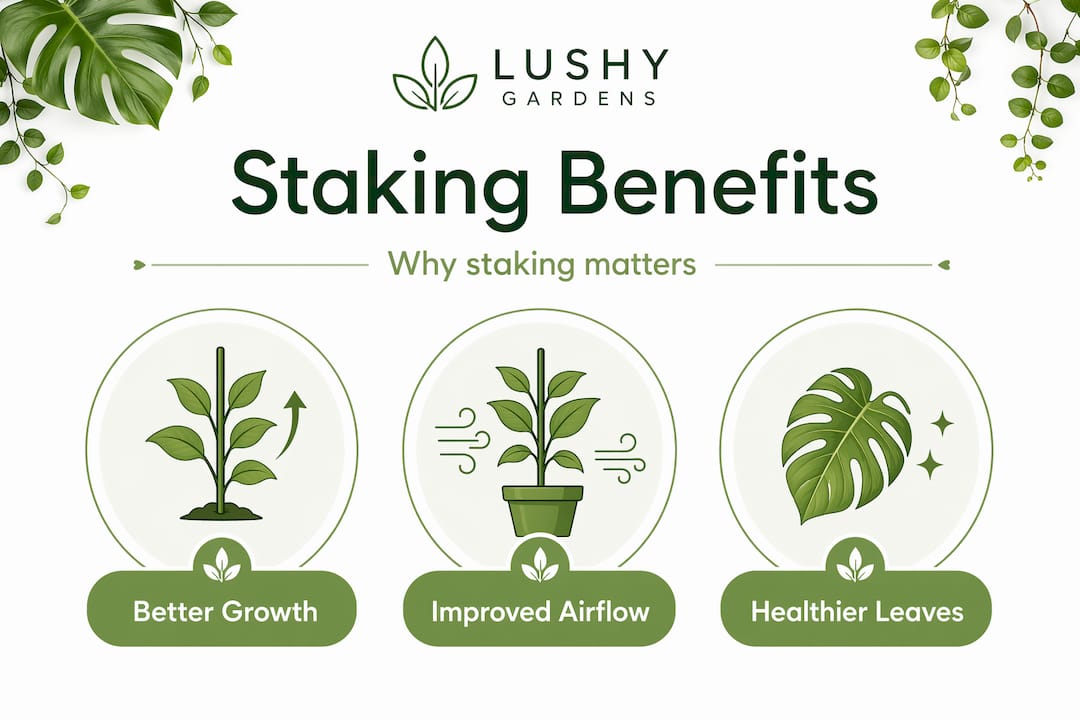
Indoor plants benefit just as much. A monstera growing sideways is not just an eyesore. It is also under physical stress. As the team at plnts.com puts it, supporting your indoor plants “helps your plant grow stronger, prevents damage from bending or snapping, and encourages healthy, upward growth.” That applies whether you’re growing a pothos on a shelf or a delicate orchid on a windowsill.
Here is a quick summary of the main benefits of staking plants:
- Prevents stem breakage from wind, fruit weight, or rapid growth spurts
- Improves airflow around foliage, reducing mold and fungal issues
- Supports even light distribution across the plant
- Keeps fruiting plants cleaner and safer from soil contact
- Guides climbing plants to grow in a specific, intentional direction
- Improves the visual appearance of indoor and outdoor spaces
Staking is not a sign your plant is failing. It is a proactive step that helps many healthy plants reach their full potential.
Now that we understand why staking matters, let’s look at the common types of plant supports you can use.
Common types of stakes and supports for your plants
Not all stakes are created equal, and the type you choose matters as much as whether you stake at all. According to Lowe’s plant staking guide, simple stakes, moss poles, and plant cages are popular and practical options, particularly for potted plants.
Here is a comparison of the most widely used plant support methods:
| Support type | Best for | Material | Indoor or outdoor |
|---|---|---|---|
| Simple bamboo stake | Single-stem plants, orchids | Bamboo or wood | Both |
| Moss pole | Climbers, aerial-root plants | Sphagnum moss on PVC | Indoor |
| Plant cage | Tomatoes, peppers, hydrangeas | Metal or plastic | Outdoor |
| Pea brush | Mixed border plants, peas | Natural woody branches | Outdoor |
| Trellis | Climbing vines, cucumbers | Wood, metal | Both |
Simple stakes are the most beginner-friendly option. A bamboo stick pushed into the soil next to a wobbly stem does the job for most indoor houseplants and single-stemmed garden flowers. They are cheap, reusable, and easy to find.
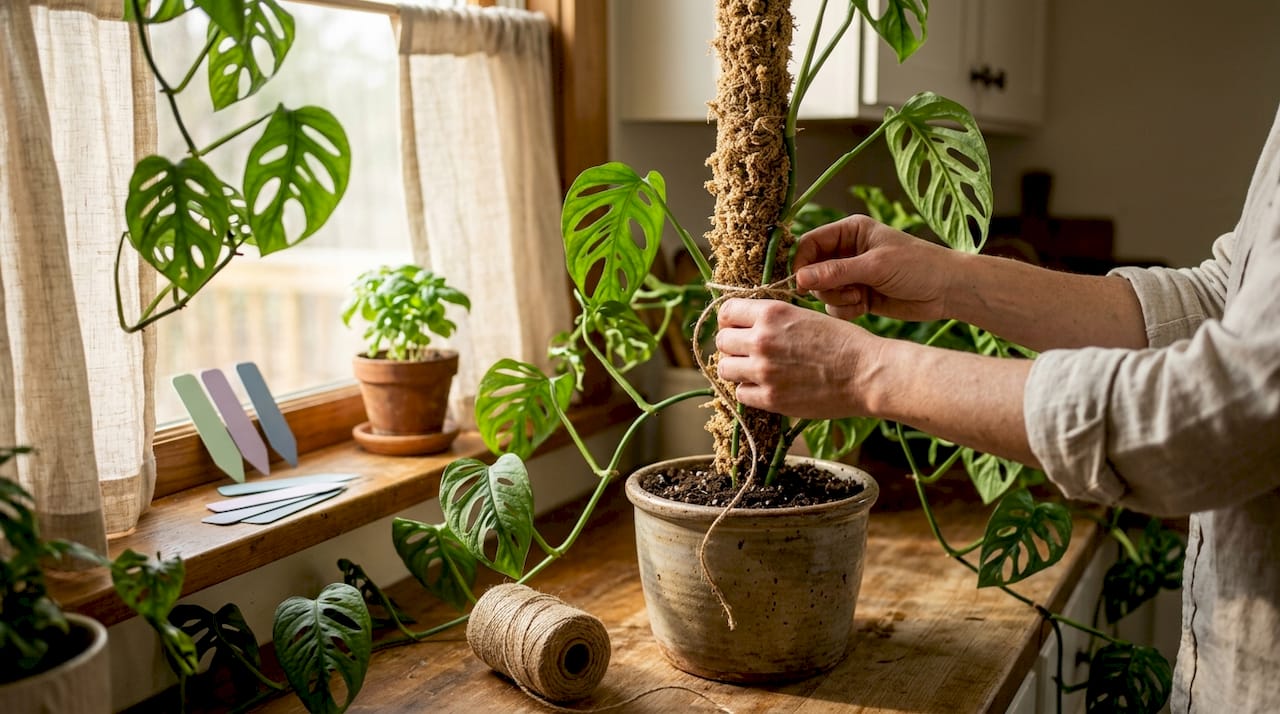
Moss poles are a different story entirely. The moss pole is essential for climbers like Monstera and pothos because it provides a soft, moisture-retaining surface that aerial roots can actually grip and grow into. This is not just physical support. It mimics how these plants grow in nature, climbing tree trunks in tropical forests. A well-rooted monstera on a moss pole will produce noticeably larger leaves.
Pea brush is an old-school technique worth reviving. It involves pushing small, branching woody stems into the ground around young plants so they grow up through the branches naturally. It originates from traditional kitchen gardens, and as noted by Garden Preserve, it is more environmentally friendly than manufactured wood, metal, or plastic stakes. If you grow peas, beans, or cottage-style perennials, pea brush is both functional and beautiful.
Pro Tip: When choosing a stake height, pick one that is roughly two-thirds the expected mature height of the plant. A stake that is too short becomes useless once the plant outgrows it.
For gardeners growing vegetables in smaller spaces, container gardening for vegetables opens up staking possibilities even on balconies and patios. And if you’re spacing your garden beds, reviewing vegetable spacing tips will help you plan where stakes and cages can actually fit.
Understanding your options lets you pick the right support. Next, learn how to stake your plants the correct way step-by-step.
How to stake your plants correctly: a step-by-step guide
Knowing which stake to use is only half the job. How you install it matters just as much. Driving a stake through a root ball or tying a stem too tightly are mistakes that cause the exact problems staking is meant to prevent. Here is a practical, step-by-step method that works for both indoor and outdoor plants.
- Choose the right stake and prepare your materials. Pick a stake taller than the current plant height with room for future growth. Gather soft tying materials: cloth strips, garden twine, or commercial plant clips.
- Time it right. The best moment to add support is while your plant is still young and actively growing. Young stems are flexible and guide more easily. Waiting until a plant has already flopped creates more risk during installation.
- Insert the stake close but carefully. Push the stake into the soil 1 to 2 inches away from the base of the stem, angled slightly toward the plant. Go slowly to avoid snapping roots. If you’re repotting, add the stake before the plant goes in for zero root disturbance.
- Tie loosely, not tightly. Attach the stem to the stake using a figure-eight loop: one loop around the stake, one around the stem. This prevents the stem from rubbing directly against the stake. Leave enough slack for the plant to move slightly in the breeze. Movement actually strengthens stems over time.
- Check every two to three weeks. As your plant grows, ties can become too tight. Adjust them before they cut into the stem. Add additional ties higher up the stake as the plant gains height.
- Water after installation. If you disturbed the soil while inserting the stake, water gently to help roots settle back into place.
As noted by The Charlotte News, putting support in place while the plant is still small allows it to grow into the structure naturally and reduces the risk of breaking stems or roots during installation.
Pro Tip: Use old cotton t-shirt strips as ties. They’re soft, stretchy, and free. They also decompose naturally, so if you miss one in the garden at the end of the season, it won’t cause problems.
Building staking into your regular plant care routines makes it far less daunting. If you’re newer to keeping plants in general, the indoor plant care guide at Lushy Gardens walks through the fundamentals that make everything else, including staking, click.
Having learned how to stake your plants, let’s explore some common staking uses and special considerations for garden veggies and houseplants.
Staking in practice: common plants and garden scenarios
Different plants have very different staking needs. Knowing what each type of plant actually requires saves time, money, and a lot of frustration mid-season.
| Plant | Recommended support | When to stake | Stake height |
|---|---|---|---|
| Indeterminate tomatoes | Tall cage or strong stake | At planting | 5 to 6 feet |
| Determinate tomatoes | Cage or single stake | At planting | 3 to 4 feet |
| Peppers | Small stake or cage | When fruiting starts | 2 to 3 feet |
| Monstera | Moss pole | When first aerial roots appear | 2 to 4 feet |
| Pothos | Stake or trellis | When stems exceed 12 inches | Variable |
| Delphiniums | Tall bamboo stake | At 6 to 8 inches of growth | Equal to plant height |
Tomatoes are the classic staking scenario. Cages work well for indeterminate varieties because they support the vining habit without requiring constant tying. Determinate types, which stop growing at a fixed height, do fine with a single sturdy stake.
Peppers and eggplants are often overlooked when it comes to staking. A loaded pepper plant in a strong wind will snap at the base without warning. A simple cage or two bamboo stakes in a cross pattern installed when fruit first appears will prevent season-ending damage.
Climbing indoor plants like pothos and heartleaf philodendron are interesting cases. Plants like golden pothos need to be tied to poles for support since they don’t have the same aerial root grip strength as monsteras. Tying them loosely every few nodes up the stake encourages upward, vigorous growth.
Pro Tip: For tomatoes, install your cage or stake on the day you plant the seedling. Waiting even a few weeks means roots will have spread into the zone where you need to drive the stake, and you’ll inevitably damage them.
For more on growing vegetables well from the start, the vegetable gardening basics guide covers soil prep, timing, and spacing in one place. If you’re planning a fall planting, check out fall vegetable gardening for season-specific advice.
With a strong grasp on practical staking, we now turn to a fresh perspective on why staking matters beyond basic care.
Why staking plants is an often overlooked key to thriving gardens and homes
Most gardening advice treats staking as a reactive fix. The plant falls over, and then you stake it. That thinking costs you more than you realize.
Staking early, before a problem develops, does something that reactive staking cannot: it invites you to spend time with your plant at a formative stage. Inserting a stake and tying a young stem means you’re looking closely at the base of the plant, noticing the soil condition, spotting early pest damage, and getting a feel for how fast the plant is growing. That attention, repeated every few weeks when you adjust the ties, builds the kind of observational habit that separates gardeners who lose plants from those who don’t.
There is also an aesthetic argument that nobody seems to make loudly enough. A plant trained upward onto a beautiful moss pole or guided through a natural pea brush frame looks intentional. It looks like someone cares. The visual impact of a well-staked monstera in a living room versus one sprawled across a side table is enormous. Staking is as much a design tool as it is a care practice.
The sustainability angle matters too. Using essential indoor plant care tips alongside natural staking materials like pea brush or untreated bamboo means your garden produces less plastic waste over time. Manufactured cages and plastic stakes break down over years and end up in landfills. Natural alternatives often go straight into the compost at the end of the season.
Finally, consider the confidence boost. Gardeners who stake correctly and see their plants respond, the monstera climbing, the tomatoes holding heavy fruit without snapping, feel capable in a way that keeps them gardening longer. Pairing staking with good seasonal garden maintenance makes the whole garden feel manageable rather than overwhelming. Staking is small, but its ripple effects are real.

Enhance your garden confidence with expert staking and plant care guides
If this guide has sparked your interest in giving your plants better support, Lushy Gardens has the resources to keep your momentum going. Whether you’re just getting started or building on years of experience, the gardening basics for beginners guide gives you a solid foundation in everything from soil to seasonal timing. For your indoor plants, the indoor plant care guide breaks down exactly what your houseplants need to thrive year-round. And when the seasons shift, the seasonal garden maintenance guide walks you through how to keep your outdoor spaces productive and healthy from spring through fall. Explore these trusted guides and start staking with confidence today.
Frequently asked questions
When is the best time to stake a plant?
The best time to stake is while the plant is still young and actively growing, so it can grow into the support without risking stem or root damage.
Can all plants benefit from staking?
Not all plants need it. Staking mainly benefits plants with weak or heavy stems, those producing large fruits, or climbers that need support to grow upright rather than sprawling.
What materials are best for tying plants to stakes?
Soft materials work best. Use soft clips or binders that hold the stem without cutting into it, and always leave a little slack so the stem has room to thicken as it grows.
Are there eco-friendly staking options for outdoor gardening?
Yes. Pea brush staking is a sustainable natural method that uses woody branches as support, making it more environmentally friendly than plastic or manufactured stakes, and it composts at the end of the season.
Recommended
- Plant nodes explained: The key to healthier, bushier plants – Lushy Gardens
- Interplanting: Boost Garden Health and Yields Today – Lushy Gardens
- Caring for Snake Plant: A Step-by-Step Guide to Healthy Growth – Lushy Gardens
- Master Plant Propagation Methods for Thriving Gardens – Lushy Gardens

I’m Eleanor, a seasoned gardener with over three decades of experience tending to Mother Nature’s creations. Through Lushy Gardens, I aim to share my wealth of knowledge and help fellow plant enthusiasts uncover the wonders of gardening. Let’s dive into this journey together, one leaf at a time.


