
Table of Contents
TL;DR:
- Successful vegetable gardening requires adequate sunlight, rich soil, and consistent watering.
- Proper planning and small-scale setups help beginners learn faster and avoid overwhelm.
- Embracing mistakes and ongoing learning are key to developing gardening skills over time.
Starting a vegetable garden feels exciting until you’re standing in the yard wondering where to actually begin. Should you dig up the lawn? Buy seeds or seedlings? What if the soil is terrible? These questions stop a lot of would-be gardeners before they ever plant a single seed. The good news is that growing your own vegetables does not require a lot of space, money, or experience. What it does require is a clear plan and a willingness to learn as you go. This guide walks you through every stage, from picking the right spot and preparing your soil to planting, caring for your crops, and avoiding the mistakes that trip up most beginners.
Key Takeaways
| Point | Details |
|---|---|
| Start with the right site | Choose a sunny, accessible spot with well-drained soil to set up your vegetable garden for success. |
| Plan and plant smart | Begin with a small, well-organized layout and rotate crops to prevent disease and maximize yields. |
| Consistent care is key | Water, fertilize, and mulch regularly for healthy plants and better harvests. |
| Use natural solutions | Practice companion planting and scout for pests to reduce problems naturally without harsh chemicals. |
| Learn from experience | Don’t expect perfection; small wins and trial-and-error will make you a better gardener each season. |
What you need to start a vegetable garden
Knowing why you want to garden is key, but the right setup makes or breaks your success. Before you dig in, let’s get practical about what you actually need.
The foundation of any productive vegetable garden comes down to three non-negotiables: light, soil, and water. A sunny site with 6-8 hours of direct sunlight daily is essential, along with well-drained soil and easy access to water. Without these three things working together, even the best seeds will struggle.
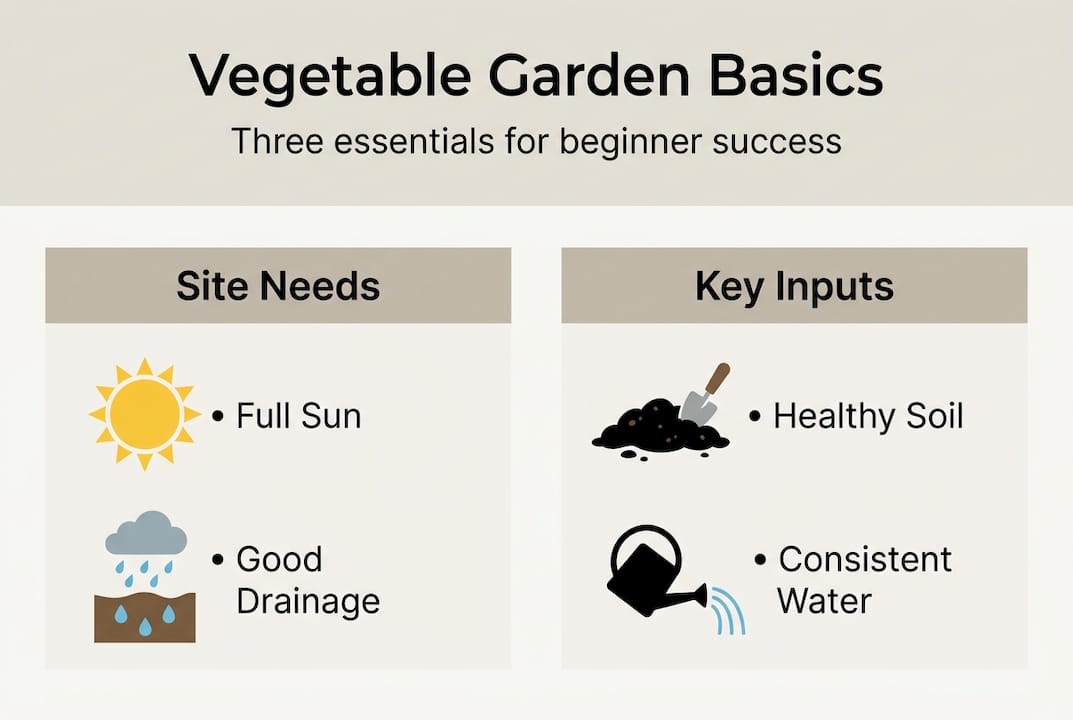
For soil preparation, the goal is a loose, nutrient-rich growing medium. Testing pH and amending with 2 to 4 inches of compost or organic matter brings your soil into the ideal 6.0 to 7.5 range. Skipping this step is one of the biggest reasons first-time gardens underperform.
Here is a quick checklist of what you need before your first planting day:
- Sunlight: At least 6 hours of direct sun per day
- Soil amendments: Compost, aged manure, or organic fertilizer
- Tools: Trowel, garden fork, watering can or hose
- Seeds or seedlings: Choose beginner-friendly crops like lettuce, zucchini, or tomatoes
- Mulch: Straw or wood chips to retain moisture and suppress weeds
- Raised bed or in-ground space: Even a 4×4 foot plot works to start
For beginners weighing their options, here is a simple comparison:
| Feature | Raised bed | In-ground |
|---|---|---|
| Cost | Higher upfront | Lower upfront |
| Soil control | Full control | Depends on existing soil |
| Drainage | Excellent | Varies |
| Best for | Small spaces, poor soil | Larger plots, deep-rooted crops |
| Maintenance | Slightly easier | More weeding |
For more garden location tips and spacing guidance, it helps to read up before you commit to a spot. You can also find solid garden layout advice to help visualize your setup.
Pro Tip: Start with a 4×8 foot raised bed or a 10×10 foot in-ground plot. Smaller gardens are easier to manage, water, and troubleshoot, and you will learn faster with less overwhelm.
How to plan your vegetable garden layout
With your essentials gathered, it’s time to move from vision to blueprint. Planning saves time and maximizes your future harvest.
A garden drawn on paper before a single seed goes in the ground is a garden that actually produces. Starting small and mapping by height means placing tall crops like corn or tomatoes on the north side so they do not shade shorter plants. Grouping by sun needs keeps everything thriving without constant adjustment.
Crop rotation is another tool worth understanding early. Moving plants from the same family to a different bed each season prevents soil-borne disease buildup. You can read more about crop rotation benefits and why it matters even in small gardens.
Here is a simple process for mapping your first garden:
- Sketch your available space on paper with rough measurements
- Mark where the sun hits longest during the day
- Assign tall crops to the north side and low growers to the south
- Group plants with similar water needs together
- Label each bed by plant family to track rotation next season
For inspiration on shapes and configurations, check out these garden layout ideas and follow a clear set of garden planning steps to move from sketch to reality. If you are deciding between growing options, a raised beds comparison from the University of Georgia Extension breaks down the tradeoffs clearly.
Planting and maintenance essentials
Now that you have a blueprint and your beds are ready, let’s get some crops in the ground and keep them thriving.
Every seed packet is a mini instruction manual. Seed packets tell you timing, planting depth, spacing, and whether to direct sow or start indoors. Matching your planting dates to local frost dates is critical. Planting too early in cold soil wastes seeds and stunts growth.
Succession planting, which means sowing small batches every two weeks, keeps salad greens and radishes coming all season instead of producing one giant glut. Check out planting schedules and a beginner-friendly guide to outdoor seed planting to get the timing right for your region.
Follow these steps for a strong planting start:
- Read the seed packet for depth and spacing before opening the bag
- Loosen soil 6 to 8 inches deep before sowing or transplanting
- Water gently right after planting to settle the soil
- Label each row or bed immediately so you remember what is where
- Thin seedlings once they sprout to avoid overcrowding
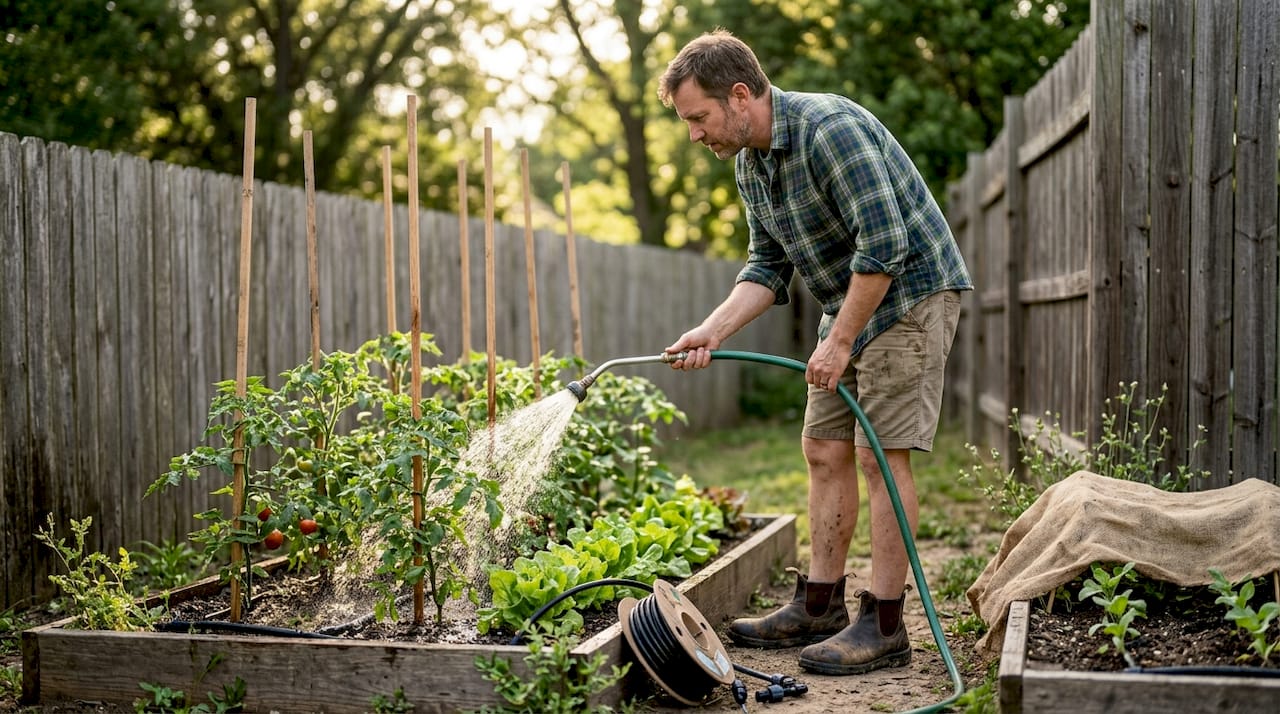
For watering, the target is 1 to 1.5 inches per week, applied deeply but less frequently. Drip irrigation and soaker hoses deliver water directly to the roots, which reduces disease and cuts waste. Overhead watering wets the leaves and invites fungal problems. Compare your options with this watering methods breakdown.
For fertilizing, a soil test guides your approach. A balanced fertilizer like 10-10-10 at planting, followed by a nitrogen side-dressing during active growth, covers most vegetables. Heavy feeders like tomatoes and peppers need more frequent feeding than root crops. Check timing recommendations to align feeding with growth stages.
Pro Tip: Apply 2 to 3 inches of straw mulch around your plants after transplanting. It holds moisture, keeps roots cool, and cuts down on the weeding you would otherwise spend hours doing.
Pest management, companions, and troubleshooting common mistakes
Good maintenance means more than just watering. It’s staying ahead of problems. Here’s how experienced gardeners protect their harvest and learn from slip-ups.
Companion planting means placing compatible crops side by side to help each other grow. Beans with corn, basil with tomatoes, and marigolds throughout the garden are three combinations worth trying right away. Marigolds in particular deter nematodes, which are microscopic soil pests that attack roots. You can explore a full companion planting guide to find pairings that suit your crop list.
Integrated Pest Management, or IPM, is a practical approach that prioritizes prevention over reaction. Scouting daily, rotating crops, using row covers, and handpicking insects before populations explode keeps chemical use to a minimum. Choosing disease-resistant seed varieties adds another layer of protection. For a deeper look at natural solutions, the organic pest management guide covers IPM strategies in detail.
Here are the most common beginner mistakes and how to sidestep them:
- Overplanting: More plants do not mean more food if they compete for space and nutrients
- Poor soil prep: Skipping compost leads to weak plants and low yields
- Inconsistent watering: Irregular moisture causes blossom drop and cracked fruit
- Ignoring early pest signs: Catching pests early is far easier than managing an infestation
- Using synthetic pesticides too quickly: These kill beneficial insects that would have solved the problem naturally
“The gardeners who improve fastest are the ones who walk their beds every single day. You cannot fix what you do not notice.”
Pro Tip: Mulch around your plants and place taller crops strategically to create shade and airflow barriers. This simple step cuts down on aphid pressure and fungal issues without any spraying.
How to check your progress and enjoy the harvest
With sound practices in place, here’s how to know if you’re on track and why every little success is worth celebrating.
Year one is about learning, not perfection. Beginners typically yield 25 to 50% below average without prior experience, and that is completely normal. The gap closes fast once you understand your specific soil, microclimate, and timing. Every season builds on the last.
Here are realistic yield benchmarks for a home garden to help you set expectations:
| Vegetable | Expected yield per 10 ft row | Notes |
|---|---|---|
| Tomatoes | 15 to 20 lbs | More with staking and pruning |
| Green beans | 5 to 8 lbs | Bush types easier for beginners |
| Carrots | 7 to 10 lbs | Need loose, deep soil |
| Zucchini | 10 to 20 lbs | Very productive in small spaces |
| Lettuce | 3 to 5 lbs | Great for succession planting |
These numbers come from benchmark yields for home gardens and reflect realistic production at the home scale. Cover-crop mulching improves soil health and yields measurably over time, so the effort you put in now compounds season after season.
Track what works by keeping a simple garden journal. Note planting dates, what germinated well, what struggled, and when you harvested. This record becomes your most valuable tool by year two. For more ideas on making the most of limited space, browse these small garden tips that work even in tight yards or on patios.
Celebrate every harvest, even a single bowl of salad from your own backyard. That first taste of something you grew yourself is the reason most gardeners never stop.
What most beginner gardening guides miss
Most beginner guides hand you a checklist and send you off. What they rarely tell you is that gardening is an iterative skill, not a formula you execute once and master.
Every experienced gardener has a graveyard of failed experiments. Tomatoes that never set fruit. Squash that rotted on the vine. Lettuce that bolted in a heat wave nobody predicted. These are not signs of failure. They are the actual curriculum. The gardeners who grow fastest are the ones who treat every setback as data, not defeat.
The pressure to do everything right from day one is what burns beginners out. A 4×8 raised bed with three crops you actually want to eat will teach you more than a sprawling garden you feel obligated to manage. Follow solid planning wisdom to structure your first season, but give yourself permission to deviate when something is not working.
“The garden does not reward perfection. It rewards attention.”
Start messy. Adjust often. The real skill in vegetable gardening is not knowing everything upfront. It is staying curious long enough to figure it out.
Keep growing with Lushy Gardens resources
If you’re hungry for more practical advice and inspiration, here’s where to keep your gardening journey moving forward.
At Lushy Gardens, we have built a library of guides designed for exactly where you are right now. Whether you need a refresher on the gardening basics guide or want to follow a full seasonal garden guide to stay on top of tasks month by month, the resources are ready when you are. If you want to make your space more beautiful while keeping it productive, our garden design ideas offer approachable inspiration for any yard size. Our community of home gardeners and expert contributors is here to help you build confidence, one season at a time.
Frequently asked questions
How much sunlight does my vegetable garden need?
Most vegetables need 6 to 8 hours of direct sunlight daily for strong, productive growth. Leafy greens can tolerate a bit less, but fruiting crops like tomatoes and peppers need the full amount.
Should I use a raised bed or plant directly in the ground?
Raised beds suit poor soil and tight spaces, while in-ground gardens work better for larger plots and deep-rooted crops like carrots and parsnips. Your existing soil quality is usually the deciding factor.
What is companion planting and why does it matter?
Companion planting means growing compatible crops together to improve growth and naturally deter pests. Basil near tomatoes and marigolds throughout the garden are two of the easiest pairings to start with.
How often should I water my vegetable garden?
Aim for 1 to 1.5 inches per week, delivered deeply and less frequently rather than a little every day. Drip irrigation or soaker hoses are the most efficient delivery method for most home gardens.
What’s the most common mistake for beginners?
Overplanting and inconsistent watering top the list for new gardeners. Starting with fewer crops and building a consistent watering routine will get you further than planting everything at once.
Recommended
- Growing Vegetables in Pots: A Step-by-Step Success Guide – Lushy Gardens
- Simple Garden Design Ideas for Beginners – Lushy Gardens
- Gardening Basics for Beginners: Complete Guide – Lushy Gardens
- Understanding Vegetable Gardening for Beginners: Key Concepts – Lushy Gardens

I’m Eleanor, a seasoned gardener with over three decades of experience tending to Mother Nature’s creations. Through Lushy Gardens, I aim to share my wealth of knowledge and help fellow plant enthusiasts uncover the wonders of gardening. Let’s dive into this journey together, one leaf at a time.


