
Table of Contents
TL;DR:
- Styling houseplants with intention creates cohesiveness and visual interest in any space.
- Using three-layer arrangements, grouping plants, and matching containers enhances aesthetic appeal and balance.
Houseplants look beautiful in a store. But the moment you get them home, the vision falls apart. You end up with plants scattered across windowsills, shelves, and countertops with no real cohesion, and instead of a designed space, you’ve got green clutter. The good news: knowing the right ways to style houseplants changes everything. Decorating with houseplants is less about owning the most plants and more about placing them with intention. This guide gives you practical, design-backed techniques to turn any collection into something that actually looks like it belongs.
Table of Contents
- Key Takeaways
- 1. Think in three layers when decorating with houseplants
- 2. Group plants instead of scattering them
- 3. Use containers as design elements
- 4. Use trailing plants for vertical movement
- 5. Make a statement with one large plant
- 6. Try DIY hanging displays for creative plant staging
- 7. Mix plant textures and shapes intentionally
- 8. Match styling style to your space and lifestyle
- 9. Tailor plant styling to each room
- My honest take on styling houseplants
- Keep your styled plants thriving with Lushygardens
- FAQ
Key Takeaways
| Point | Details |
|---|---|
| Layer plants vertically | Use floor, mid-level, and high placements together to create depth and visual interest. |
| Group, don’t scatter | Cluster plants in twos or threes with complementary objects to build visual rhythm. |
| Match pots to your room | Treat containers as decor pieces that reflect your existing color palette and materials. |
| Pick the right style for your space | Minimalist displays suit small rooms; layered groupings work best in larger, light-filled spaces. |
| DIY solutions expand your options | A simple closet rod setup can create a stunning hanging plant display for under $40. |
1. Think in three layers when decorating with houseplants
Most plant styling problems come from thinking on a single level. Every plant ends up on a table or a windowsill, and the room feels flat. Professional designers recommend a three-layer approach: floor, mid-level, and high. Used together, these layers give a room visual rhythm that feels intentional rather than accidental.
A tall fiddle-leaf fig or snake plant on the floor anchors a corner. A pothos or spider plant at mid-height on a bookshelf connects the two levels. Then trailing vines or hanging baskets up high add movement and soften the ceiling line. Each layer does different work, and together they make the whole room feel more alive.
Pro Tip: If you only have small plants right now, place them on stools or plant stands at different heights to mimic layered structure until you add taller species.
2. Group plants instead of scattering them
Placing a single plant in every corner of a room feels logical, but it creates visual noise. A common styling mistake is distributing plants evenly rather than creating deliberate focal moments. Grouping works better because it draws the eye to specific spots and lets the rest of the room breathe.
Try clustering three plants of different heights on one console table, paired with a candle or a small sculpture. This creates a vignette, a designed scene that feels curated rather than accidental. The space between vignettes becomes just as important as the plants themselves, giving your eye a place to rest.
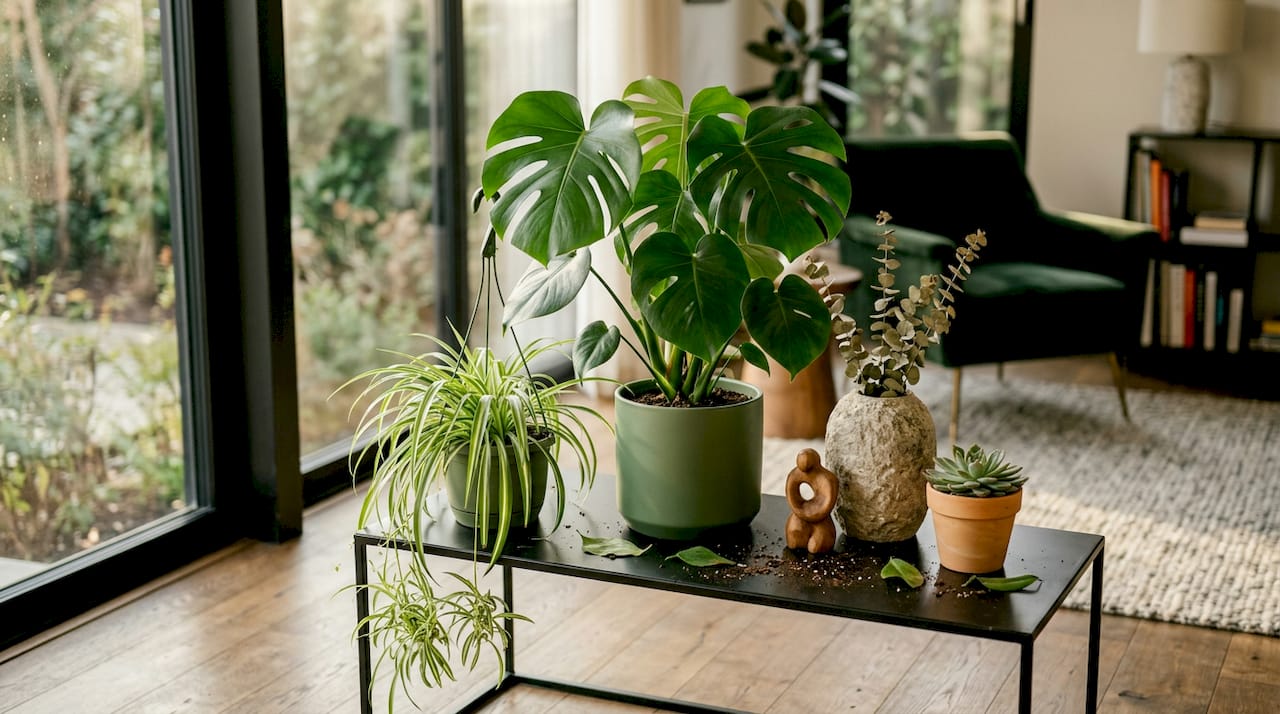
Odd numbers work best. Groups of three or five tend to look more natural than even pairs, which can feel too symmetrical and stiff.
3. Use containers as design elements
The best pots for houseplants are the ones that look like they belong in your room. Containers are not just vessels. They are part of the display. A terracotta pot reads warm and organic. A matte black ceramic reads modern and sharp. A woven basket softens a room with lots of hard surfaces.
Mixing plant shapes, scales, and textures is vital to avoiding monotonous styling. Apply that same logic to your pots. Combine a smooth glazed ceramic with a rough concrete pot and a natural rattan basket. You get visual texture without changing a single plant.
Pro Tip: Buy inexpensive cachepots and drop your plastic nursery containers inside. You get the aesthetic you want without repotting, which stresses plants unnecessarily.
4. Use trailing plants for vertical movement
Vertical space is one of the most underused styling tools in any home. Trailing plants on high shelves or in hanging baskets create movement and soften the hard lines of walls, shelves, and furniture edges. A pothos draping down from a high bookshelf does more visual work than ten small plants lined up at eye level.
Vertical use of plants also becomes critical in smaller homes, where surface space is limited. Wall-mounted planters, hanging baskets from ceiling hooks, or high shelves with trailing varieties let you add significant greenery without sacrificing counter or floor space.
For rooms with low ceilings, keep hanging plants light and airy. Choose wispy vines rather than large-leafed plants that can make a low ceiling feel even more compressed.
5. Make a statement with one large plant
One large, well-placed plant often does more for a room than a dozen small ones. Large plants add immediate impact and anchor spaces in a way that nothing else can, but they need room to breathe. Pushing a large monstera into a tight corner where it competes with furniture undermines the effect entirely.
Think of a statement plant the way a designer thinks of a sofa. It sets the scale and tone for everything around it. Place it where natural light supports it, leave space on at least two sides, and let it be the focal point. Resist the urge to crowd it with other plants.
When decorating with indoor plants this way, the surrounding decor should complement the plant rather than compete. Neutral walls, clean furniture lines, and simple accessories let a statement plant own the room.
6. Try DIY hanging displays for creative plant staging
You do not need expensive shelving systems or custom installations to create a great hanging plant display. A DIY vertical plant display can be built with a heavy-duty closet rod for around $35, installed in about 30 minutes, and supports up to 120 pounds of hanging planters. That is a lot of visual impact for a small investment.
Curtain rods mounted between walls, wooden dowels suspended with rope, or a simple tension rod inside a window frame all create opportunities to hang multiple plants at staggered heights. The DIY approach also lets you customize spacing, height, and pot selection in ways that pre-built systems do not.
This works especially well in kitchens and bathrooms, where wall and counter space tends to be tight but ceiling height is available.
7. Mix plant textures and shapes intentionally
A room full of similarly sized, round-leafed plants reads as flat and repetitive. Pairing plants with contrasting forms adds the kind of depth that makes a display look professionally designed. Broad, waxy monstera leaves alongside airy maidenhair fern fronds. Spiky snake plants next to soft, round-leafed peperomia. The contrast is what makes each plant read clearly.
Combining broad leaves with airy vines and different textures enriches the visual interest of any display. This principle applies at every scale, from a single bookshelf grouping to an entire room of plants.
Shape contrast also helps guide the eye. Tall, vertical plants draw the gaze upward. Wide, spreading plants anchor the eye at their level. Trailing plants create movement. Use all three in a single scene and you have a display that keeps the eye moving in a satisfying way.
8. Match styling style to your space and lifestyle
There are two broad ways to approach decorating with plants: minimalist or layered. Neither is better. The right choice depends on your room size, light levels, and honestly, how much time you want to spend on maintenance.
| Style | Best for | Visual effect | Maintenance level |
|---|---|---|---|
| Minimalist (1-2 statement plants) | Small rooms, low-light spaces, busy lifestyles | Bold, clean, architectural | Low |
| Layered groupings (multiple plants) | Larger rooms, bright spaces, dedicated plant people | Lush, warm, complex | Higher |
| Mixed approach | Most homes | Balanced, flexible | Moderate |
A minimalist approach lets one or two great plants do all the work. It is easier to maintain, easier to keep healthy, and creates a bold impression without the complexity of managing many species. The layered approach rewards people who genuinely enjoy tending plants regularly and have the light conditions to support a larger collection.
You can also mix both. Keep a large statement plant in the living room and build a small grouped vignette in the kitchen. Each room gets styled for its own character rather than one rule applied everywhere.

9. Tailor plant styling to each room
Different rooms call for different approaches, and generic advice that treats your bathroom the same as your living room will fail you. Here is how to think room by room:
- Living room: Use large floor plants to anchor corners. Build accent table groupings with three plants and complementary objects. This is the space for your most dramatic displays.
- Home office: Hanging planters or vertical wall displays keep the desk clear while adding greenery that actually supports focus. Plants near eye level work well here.
- Bathroom: Humidity-loving plants like pothos, peace lilies, and ferns thrive here. Dress up plain nursery pots with decorative cachepots to create a spa-like feel.
- Small apartment: Prioritize vertical layering. Wall-mounted planters, high shelves, and hanging baskets add greenery without consuming floor space.
- Seasonal styling: Cool-to-the-touch LED lights and natural-fiber ornaments can dress plants for holidays without stressing them. Avoid traditional lights that generate heat.
The through-line across all rooms is intention. Every plant should be placed where it works both practically and visually, where it gets the light it needs and contributes to the room’s overall feel.
My honest take on styling houseplants
I spent years adding plants to rooms without a real system, and the result was exactly what you would expect: a collection that felt chaotic rather than considered. What changed things for me was treating plants the way a designer treats any design element, as something that influences scale, balance, and mood, not just fills empty corners.
The most liberating shift was giving myself permission to edit. I had accumulated more plants than my space could handle well, and thinning the collection made every remaining plant look better. Fewer plants, placed with care, almost always outperform more plants placed without thought.
I also learned the hard way that aesthetics and plant care cannot be separated. A beautiful display that puts a low-light plant in a dark corner or a moisture-sensitive one in a steamy bathroom will not stay beautiful for long. The best creative plant display ideas are the ones where the plant is thriving, because a healthy plant is always more beautiful than a struggling one dressed up in a pretty pot.
The indoor plant care guide at Lushygardens helped me build care routines that actually kept my styled plants looking good month after month. Styling gets you the initial impact. Care keeps it.
— Povilas
Keep your styled plants thriving with Lushygardens
Great styling is only as good as the plants behind it. If your plants are yellowing, dropping leaves, or just struggling to grow, no amount of good pot selection will save the display. Lushygardens has everything you need to back up your styling decisions with solid plant care knowledge.
Start with the beginner gardening guide to get your fundamentals right, then follow the daily plant care checklist to keep each plant in your display looking its best. If you want more creative ideas for how to arrange your home garden spaces beyond what is covered here, the home garden inspiration guide is worth bookmarking. Healthy, well-styled plants are what the whole approach is built on.
FAQ
What are the best ways to style houseplants in a small room?
In small spaces, prioritize vertical layering using hanging planters, wall-mounted options, and high shelves with trailing plants. One well-chosen statement plant often works better than several competing ones.
How do you arrange houseplants without making a room look cluttered?
Group plants in twos or threes at a single location rather than scattering them across the room. Pairing plants with complementary objects like candles or books creates intentional vignettes that read as designed rather than random.
What pots work best for styling houseplants?
The best pots for houseplants match your room’s existing materials and color palette. Mix textures like terracotta, ceramic, and woven rattan for visual depth. Use cachepots over plastic nursery containers for a cleaner look without repotting stress.
Can you style houseplants on a tight budget?
Yes. A DIY hanging display using a closet rod costs around $35 and takes about 30 minutes to install. Inexpensive cachepots and thrifted containers can dramatically upgrade any display without spending much.
Which plants work best as statement pieces for decorating?
Large-leafed plants like fiddle-leaf figs, monsteras, and bird of paradise work well as statement plants. They anchor spaces visually, add scale, and create impact on their own without needing supporting plants around them.
Recommended
- 8 Essential Tips for Decorating with Houseplants – Lushy Gardens
- 7 Essential Tips for Decorating With Plants at Home – Lushy Gardens
- Best Plants for Small Spaces to Brighten Your Home – Lushy Gardens
- Understanding the History of Houseplants Through Time – Lushy Gardens

I’m Eleanor, a seasoned gardener with over three decades of experience tending to Mother Nature’s creations. Through Lushy Gardens, I aim to share my wealth of knowledge and help fellow plant enthusiasts uncover the wonders of gardening. Let’s dive into this journey together, one leaf at a time.


