
Table of Contents
TL;DR:
- Keyhole gardening is a circular raised bed system with a central compost basket that continuously feeds and hydrates the soil, improving yield in small or dry spaces. Its design enhances nutrient cycling, water retention, and ergonomic access, making it ideal for beginners and those with limited physical strength or water resources. Successful implementation relies on proper setup, active maintenance, and strategic plant placement based on moisture needs.
If you’ve been struggling to grow food in a small yard, dry climate, or aging body, keyhole gardening might be the most practical shift you can make. What is keyhole gardening, exactly? It’s a circular raised bed system built around a central compost basket that continuously feeds and hydrates your soil from the inside out. This design combines composting, water conservation, and space-efficient planting in one compact structure, letting you grow more food with fewer inputs and less physical strain than traditional garden beds.
Table of Contents
- Key takeaways
- What is keyhole gardening: design, structure, and origins
- Keyhole garden benefits that go beyond convenience
- How to build a keyhole garden step by step
- Keyhole gardening vs. other raised bed styles
- What to plant in a keyhole garden
- My take on keyhole gardening after years of practice
- Start your keyhole garden with Lushygardens
- FAQ
Key takeaways
| Point | Details |
|---|---|
| Circular, compact design | A keyhole garden is a 6 to 10 foot raised bed with a wedge-shaped access path and central compost basket. |
| Built-in nutrient cycling | The compost basket feeds surrounding soil continuously, reducing the need for purchased fertilizers. |
| Water-saving structure | The compost core improves water retention by 30 to 50 percent compared to flat garden beds. |
| Plant placement matters | Moisture-loving crops go near the center; drought-tolerant plants thrive at the outer edges. |
| Maintenance is non-negotiable | Regular feeding of the basket and consistent watering are what make this system actually work. |
What is keyhole gardening: design, structure, and origins
A keyhole garden is a raised circular bed typically measuring 6 to 10 feet in diameter and standing 2 to 3 feet tall. What makes it distinct from a standard raised bed is two things: the wedge-shaped access path that cuts into the circle like a keyhole from above, and the central basket made of wire mesh or similar open material that functions as a living compost column.
The dimensions aren’t arbitrary. A diameter of 6 to 10 feet means you can reach the center of the bed from any point along the outer edge without stepping inside. The keyhole path is typically 1.5 to 2 feet wide, wide enough to kneel or stand comfortably while reaching across to tend plants. The compost basket sits roughly 1 foot in diameter at the center.
The structure of the bed itself varies based on your materials and budget. Common choices include stacked stone, reclaimed brick, dry-stacked timber, or even woven branches for a more rustic look. The retaining wall just needs to be sturdy enough to hold the soil layers in place and tall enough to give you the ergonomic advantage the design promises.
Where keyhole gardening came from
The concept has deep roots in practical necessity. Keyhole gardens originated in Lesotho as a food security solution designed specifically for people with limited physical strength, including the elderly and those living with illness. The goal was to create a highly productive garden that required minimal bending, no tilling, and could thrive in dry, resource-scarce conditions. That origin story matters because it explains why the design is so well thought out. Every feature serves a specific function.
Keyhole garden benefits that go beyond convenience
The advantages of keyhole gardening stack up fast, and they’re not just about looking good in your backyard. This is a system built around closed-loop thinking.
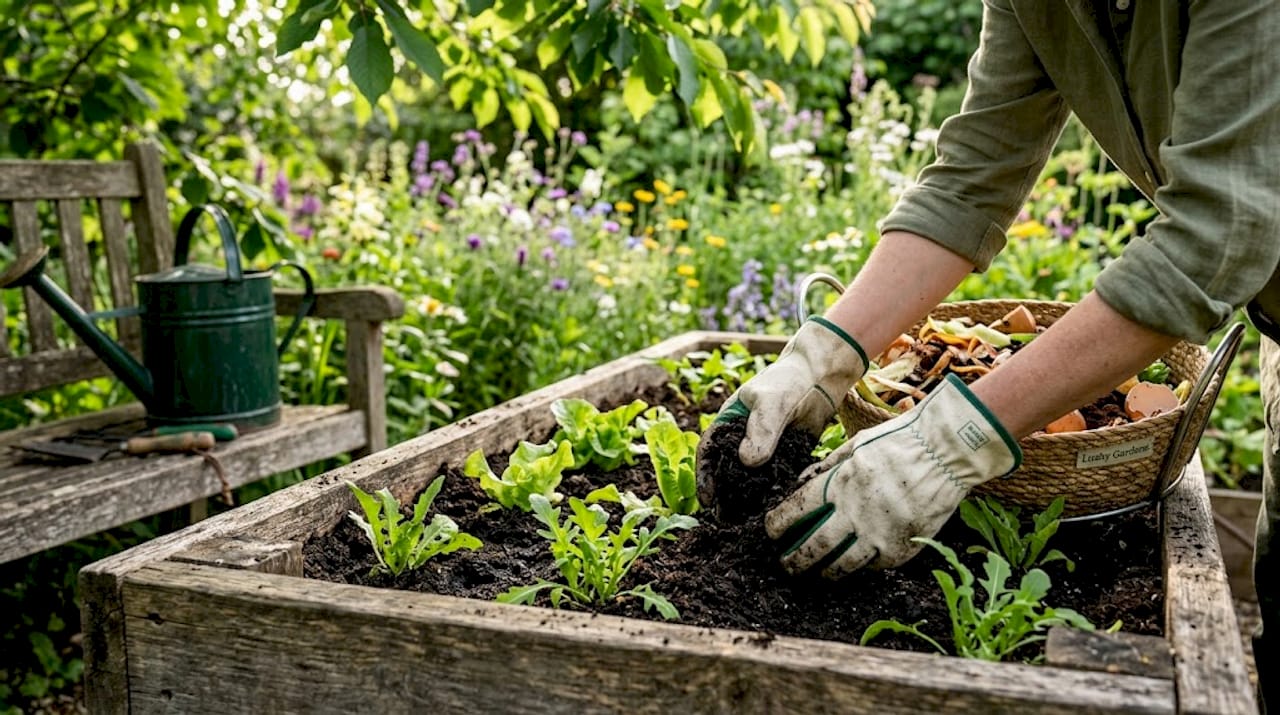
Nutrient cycling without the fertilizer bill. The central compost basket converts kitchen scraps, coffee grounds, and garden trimmings into nutrients that filter directly into the surrounding soil. Nutrients move from the basket into surrounding soil, supporting plants even during dry spells and reducing your dependence on store-bought fertilizers significantly.
Serious water savings. The compost core acts as a moisture reservoir. Research shows the compost basket improves water retention by 30 to 50 percent compared to flat garden beds. In a dry summer, that difference can be what keeps your crops alive.
Ergonomics that actually make a difference. Raised beds built 20 to 32 inches high improve drainage and soil warmth while saving your back and knees. The keyhole access path means you’re never stretching awkwardly across a wide flat bed. You step in, reach comfortably, and step out.
Intensive planting and higher yields. Because you never walk on the soil, it stays loose and aerated. The keyhole shape supports dense planting without any wasted internal pathways, which means every square foot inside the bed is productive growing space.
Improved soil biology over time. The layered organic filling mimics natural soil-building processes, and the continuous addition of compost feeds microbial life rather than depleting it. Your soil gets better every season, not worse.
Pro Tip: If you garden in a dry or drought-prone area, keyhole gardening is one of the smartest moves you can make. Explore more strategies at Lushygardens’ guide to dry climate vegetable gardening to pair with your keyhole setup.
One limitation worth naming honestly: this system requires more hands-on management than a simple raised bed. Plants with extremely aggressive or large root systems, like full-sized pumpkins or zucchini, may not suit keyhole gardens well because they can overcrowd the confined space and compete with the nutrient zone.
How to build a keyhole garden step by step
Construction is more accessible than most people expect. You don’t need professional tools or an engineering background. You need a clear plan and a weekend.
- Choose your location. Pick a spot that gets at least 6 hours of direct sunlight. Avoid low-lying areas where water pools, since you want the raised structure to drain freely.
- Mark and prep the site. Use a stake and string to mark a circle 6 to 10 feet in diameter. Clear the grass or weeds inside. You don’t need to dig, since the raised walls will contain your growing medium.
- Build the retaining wall. Stack your chosen material (stone, brick, timber blocks) in a circle, leaving a 1.5 to 2 foot gap for the keyhole path. Build the wall 2 to 3 feet high. Taper the keyhole opening slightly wider at the outside edge for easy access.
- Construct the central compost basket. Use wire mesh or hardware cloth to form a cylinder roughly 1 foot in diameter and tall enough to reach above the soil surface by 6 to 8 inches. This extension above soil level is what lets you add scraps easily. Start the basket with a 3-inch coarse woody debris base layer to create drainage and prevent the compost core from becoming waterlogged and foul-smelling.
- Fill using the lasagna layering technique. Alternate layers of coarse organic material, leaves, manure, and soil around the basket. Each layer adds texture, drainage, and nutrients. Start with rougher materials at the bottom and finish with a good garden soil or compost blend at the top.
- Plant your first crops. Space plants intentionally based on moisture needs (more on this in the next section). Water in through the central basket for your first watering.
- Establish a feeding routine. Drop kitchen scraps, spent plants, and coffee grounds into the basket regularly. Water through the basket once or twice a week during dry periods.
Pro Tip: Keep a small container near your kitchen door for daily scrap collection. Consistency with feeding the basket is what separates a thriving keyhole garden from a mediocre one. Check out Lushygardens’ best compost guide to understand what to add and what to leave out.
Maintenance caution: balancing green and brown materials in your compost basket is critical. Too many greens without enough carbon-rich browns and you’ll get odors and attract pests. Aim for roughly equal parts and turn the basket contents occasionally with a stick if you notice it compacting.
Keyhole gardening vs. other raised bed styles
If you already grow in raised beds, it helps to understand what keyhole gardening actually adds rather than just reinventing something you already do.
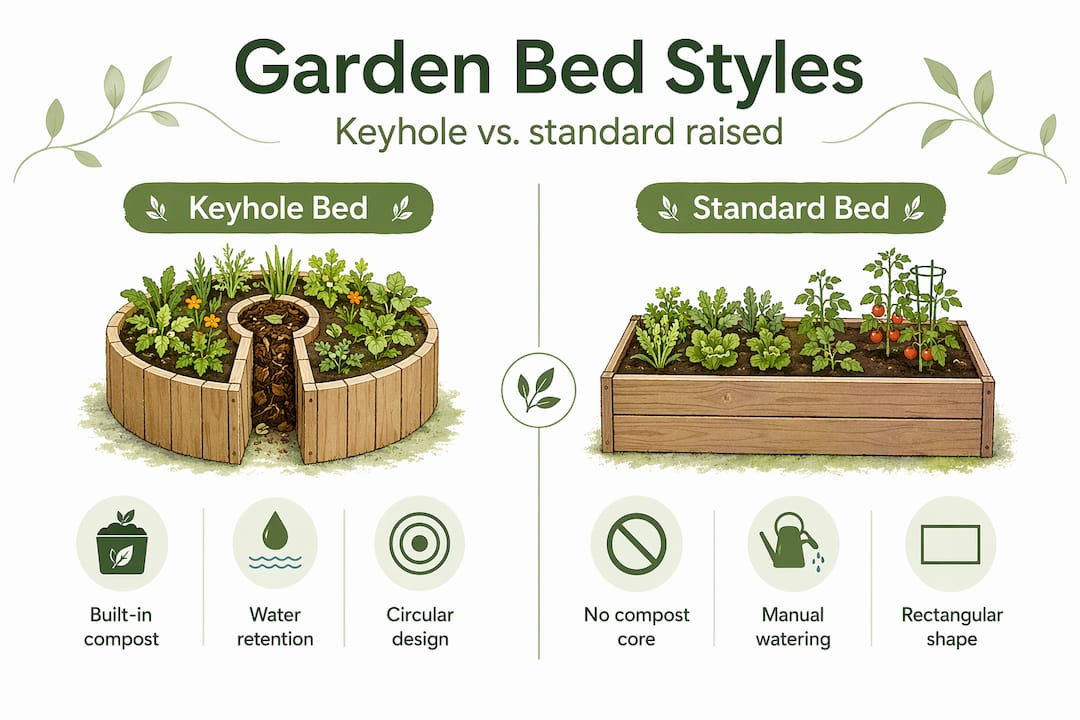
| Feature | Keyhole garden | Standard raised bed | Flat in-ground bed |
|---|---|---|---|
| Built-in composting | Yes, central basket | No | Optional |
| Water retention | High (30 to 50% better) | Moderate | Low to moderate |
| Ergonomic access | Excellent (no internal paths) | Good | Poor |
| Space efficiency | Very high | High | Moderate |
| Soil improvement over time | Continuous | Requires amendments | Requires tilling |
| Initial setup effort | Moderate to high | Low to moderate | Low |
| Best for | Small spaces, dry climates | General use | Large plots |
The keyhole design outperforms standard raised beds in drought resistance and nutrient cycling, but it asks more of you upfront. A traditional raised bed takes less thought to maintain, especially for someone just starting raised bed gardening for the first time.
Permaculture-style banana circles follow a similar logic but are designed around a pit rather than a raised bed, which suits tropical or high-rainfall climates better. Keyhole gardens are particularly well suited to dry or semi-arid regions where water management is the primary constraint.
What to plant in a keyhole garden
Plant selection and placement make or break this system. Because the moisture and nutrients radiate outward from the central basket, where you put something matters as much as what you plant.
Best plants for the inner ring (closest to the basket):
- Leafy greens: lettuce, spinach, kale, Swiss chard
- Herbs: basil, parsley, cilantro
- Moisture-loving vegetables: celery, leeks
Mid-zone plants (moderate moisture):
- Tomatoes (compact varieties)
- Peppers
- Beans
- Radishes
- Beets
Outer edge plants (more drought-tolerant):
- Onions and garlic
- Thyme, rosemary, oregano
- Carrots (avoid if soil is too rocky)
Positioning plants by moisture need within the garden optimizes your water use and yields. Plants that need consistent moisture sit where they naturally get it. Plants that tolerate drier conditions claim the outer ring where moisture is lower.
Succession planting works beautifully in keyhole gardens. Once a fast-maturing crop like radishes or lettuce finishes, pull it and replant with something new. The continuous compost input means the soil stays fertile enough to support back-to-back planting without a long recovery period.
Plants with aggressive large root systems like zucchini and pumpkins are worth avoiding unless you’re willing to train them hard. They’ll compete with everything else and quickly overwhelm the bed. Stick with compact, productive varieties and you’ll get far more from your space.
Pro Tip: Pair your keyhole garden with companion planting strategies. Basil near tomatoes, for instance, repels certain pests and improves flavor. For deeper plant nutrition insight, Lushygardens’ guide to plant nutrition basics covers what your crops actually need to thrive.
My take on keyhole gardening after years of practice
I’ll be honest with you: when I first built a keyhole garden, I underestimated the maintenance side completely. I thought the “self-feeding” concept meant set it and forget it. It doesn’t. The system works extraordinarily well, but only when you actively feed the basket. I went two weeks without adding scraps during a busy stretch and my plants showed it immediately. Growth slowed and the outer edge plants looked stressed.
What I’ve found most useful that other guides rarely mention: the compost basket needs to stay moist, not just the soil. On dry weeks, I water directly into the basket first, then do a light top watering on the soil. That inside-out approach makes a noticeable difference in how the nutrients actually move through the bed.
I also think gardeners overlook how much this design rewards avoiding common garden planning mistakes from the start. If you put the wrong plants in the wrong zones, or build the wall too low, the ergonomic and nutrient benefits largely disappear. Getting the setup right in the first week saves months of frustration.
What I’m most convinced of after using keyhole beds alongside traditional raised beds: the keyhole system produces noticeably better yields per square foot in hot, dry summers. Not marginally better. Noticeably. For anyone dealing with water restrictions or poor native soil, it’s not even a close comparison.
— Povilas
Start your keyhole garden with Lushygardens
Keyhole gardening is one of the most rewarding systems to set up once you understand the logic behind it. If you’re just getting started, Lushygardens has you covered with practical, beginner-friendly resources that remove the guesswork. The gardening basics guide walks you through foundational concepts including soil prep, watering, and plant selection that apply directly to your keyhole setup. For season-long care, the seasonal garden maintenance guide gives you a clear roadmap for keeping your garden productive from spring through fall. You can also get better at watering technique with Lushygardens’ optimal watering tips, which pairs perfectly with the keyhole basket watering approach.
FAQ
What is a keyhole garden and how does it work?
A keyhole garden is a circular raised bed with a central compost basket and a wedge-shaped access path. Kitchen scraps added to the basket decompose and feed surrounding soil directly, while the compost core also acts as a water reservoir.
How big should a keyhole garden be?
Most keyhole gardens are 6 to 10 feet in diameter and 2 to 3 feet tall, with a keyhole path 1.5 to 2 feet wide for access. This sizing lets you reach the center comfortably without stepping on growing soil.
What are the main keyhole garden benefits?
The biggest benefits are built-in nutrient cycling through the compost basket, water retention improvements of 30 to 50 percent, ergonomic access without internal pathways, and continuous soil improvement over time.
What should I not plant in a keyhole garden?
Avoid plants with large, aggressive root systems like pumpkins and full-sized zucchini. They can crowd out other crops and disrupt the moisture gradient that makes the keyhole system work.
Is keyhole gardening good for beginners?
Yes, with the right guidance. The setup requires more planning than a basic raised bed, but once built correctly, the system is forgiving and highly productive. Starting with the beginner vegetable garden setup guide at Lushygardens will help you avoid the most common early mistakes.
Recommended
- Gardening Basics for Beginners: Complete Guide – Lushy Gardens
- Essential Sustainable Gardening Practices for Every Home – Lushy Gardens
- No Dig Gardening Explained: Principles and Benefits – Lushy Gardens
- Sustainable flower garden: practical steps for eco-friendly blooms – Lushy Gardens

I’m Eleanor, a seasoned gardener with over three decades of experience tending to Mother Nature’s creations. Through Lushy Gardens, I aim to share my wealth of knowledge and help fellow plant enthusiasts uncover the wonders of gardening. Let’s dive into this journey together, one leaf at a time.


