
Table of Contents
TL;DR:
- Quarantining new plants for at least two to four weeks is essential to detect hidden pests and prevent infestations. Even healthy-looking plants with no visible issues can carry eggs or larvae that surface after integration. Proper quarantine involves a separate space, thorough inspections, and cautious reintroduction to ensure long-term plant health and security.
You bring home a gorgeous new plant, it looks healthy, and you set it right next to your favorite monstera. Two weeks later, your entire shelf is crawling with spider mites. This scenario plays out constantly, and understanding why quarantine new plants matters could have prevented the whole disaster. The truth is that a healthy appearance means almost nothing when it comes to hidden pests and pathogens. This guide walks you through the real science behind plant quarantine, exactly how to do it, how long to wait, and what comes next.
Table of Contents
- Key takeaways
- Why quarantine new plants: the science behind hidden threats
- How to quarantine plants the right way
- Quarantine duration and pest life cycles
- Common quarantine challenges and how to solve them
- After quarantine: integrating plants safely
- My take on plant quarantine: lessons learned the hard way
- Keep your plant collection protected with Lushygardens
- FAQ
Key takeaways
| Point | Details |
|---|---|
| Looks can deceive | Even thriving plants can carry invisible pests or dormant eggs that surface days after arrival. |
| Isolate completely | Place new plants in a fully separate room, not just a different shelf, for effective quarantine. |
| Two to four weeks minimum | Quarantine duration should match pest life cycles, with slower pests requiring the full four weeks. |
| Inspect foliage and soil | Checking only leaves misses soil-borne pests like fungus gnat larvae hiding in the potting media. |
| Quarantine reduces risk, not eliminates it | Treat quarantine as a probability-reducing practice, then stay alert after integration. |
Why quarantine new plants: the science behind hidden threats
Most gardeners operate on a simple visual check. Green leaves, firm stems, no obvious bugs. Safe, right? Not even close. Transported plants can carry hidden pests or pathogens that are completely invisible to the naked eye. A plant can look picture-perfect at the nursery while harboring eggs tucked into the undersides of leaves or larvae buried two inches deep in the soil.
This is the core reason the importance of quarantining plants cannot be overstated. Your existing collection has no defense against a new arrival carrying spider mites, mealybugs, thrips, or fungus gnats. These pests do not stay put. They move, fly, crawl, and reproduce fast.
Here is how each common pest spreads once it enters your home:
- Spider mites: These tiny arachnids reproduce rapidly in warm, dry conditions. They crawl between plants on contact or short distances through the air.
- Mealybugs: Slow-moving but persistent, they spread through direct plant contact and contaminated tools.
- Fungus gnats: Adults fly freely, making them one of the most mobile threats in any indoor plant collection.
- Thrips: They fly and spread easily, often hitchhiking on clothing or airflow between plants.
- Scale insects: They move slowly but their waxy coating makes them notoriously hard to spot early.
The USDA APHIS advises quarantining transported plants separately for at least a couple of weeks specifically to monitor for pests before they reach your established collection. This is not casual advice. It is biosecurity applied at the home garden level.
Even plants from reputable nurseries carry risk. Commercial growing environments are dense, high-traffic, and sometimes share irrigation systems. A pest outbreak in one section of a greenhouse can spread to plants that look completely clean by the time they reach the sales floor.
Pro Tip: Before you even bring a new plant inside, do a quick outdoor inspection under natural light. You will spot issues more easily in bright sunlight than under indoor lighting.
How to quarantine plants the right way
Knowing you should quarantine is one thing. Doing it correctly is another. Many gardeners “quarantine” a new plant by placing it on the opposite end of the same shelf. That does not work. Spider mites and thrips can move short distances on their own, and fungus gnats fly broadly enough to reach any plant in the same room.
Here is a step-by-step quarantine process that actually protects your collection:
- Choose a true isolation space. A spare bathroom, a laundry room, or a dedicated shelf behind a closed door. No shared airflow with your main plant area if possible.
- Set up appropriate light. A grow light works well here since quarantine spaces are often less naturally lit. The plant’s health still matters during this period.
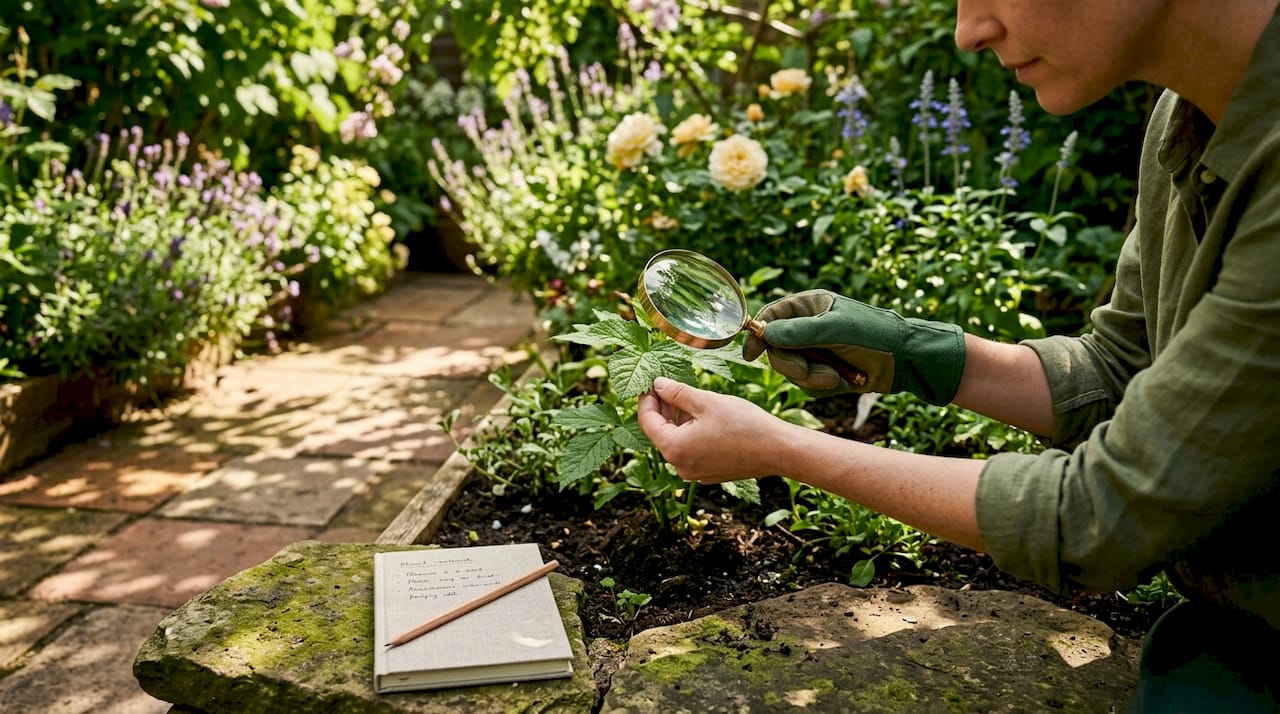
- Do a full inspection on day one. Check the tops and undersides of every leaf, the stems at nodes and joints, and the soil surface. Look for webbing, sticky residue, white powder, or tiny moving dots.
- Check the soil separately. Stick your finger into the top inch. Look for larvae, white eggs, or excessive moisture that encourages fungus gnats. Inspecting potting media surface and moisture content is something most gardeners skip entirely, and it is where infestations hide.
- Repeat inspection weekly. Do not inspect once and forget. Week two and three inspections often catch what day one missed.
- Treat proactively if risk is high. Some gardeners apply insecticidal soap or neem oil during quarantine as a precaution, especially with plants sourced from unknown origins or shipped long distances.
- Hold off on repotting. Wait 7 to 14 days before repotting to let the plant stabilize metabolically. Repotting too soon adds stress and can spread soil-borne pests before you have had a chance to assess the original potting media.
Pro Tip: Use a magnifying glass or your phone camera zoomed in for inspections. Many pest eggs and early-stage insects are impossible to see clearly with the naked eye.
For a deeper look at identifying and treating common invaders, the indoor pest control guide at Lushygardens covers evidence-based methods in detail.
Quarantine duration and pest life cycles
The question every gardener asks is: how long is long enough? The answer depends on what you are trying to catch.
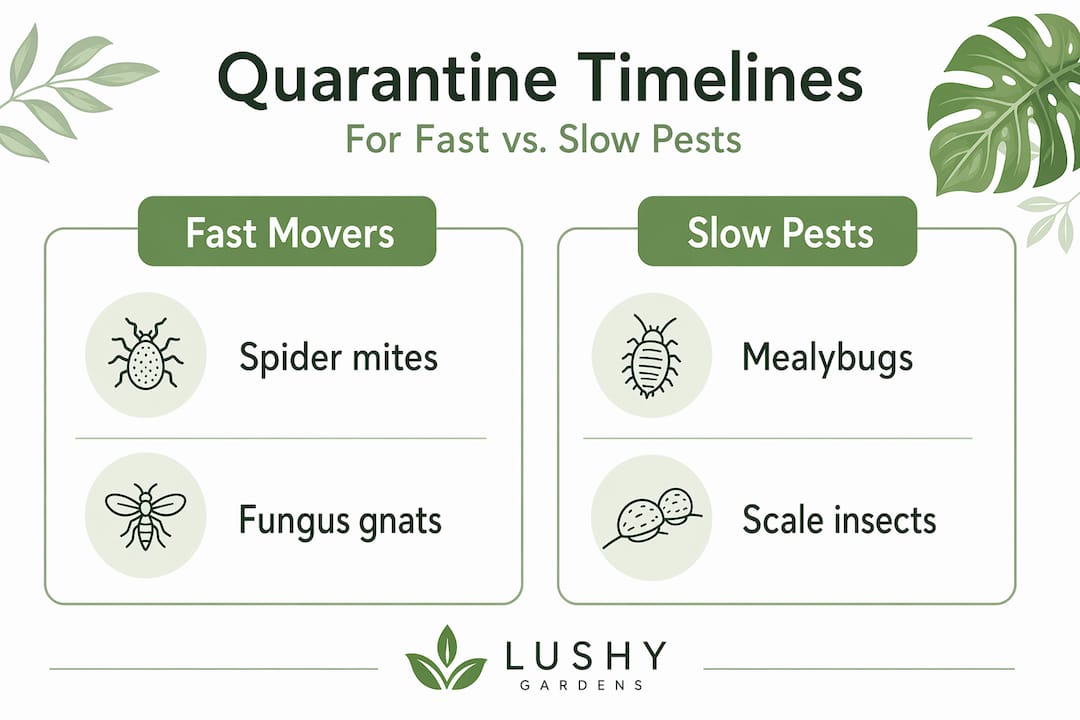
Quarantine duration works as probability reduction, not a guaranteed elimination. The longer you wait, the more likely any hidden eggs will hatch and become visible before the plant joins your collection. Fast-hatching pests set the minimum threshold. Slower pests push the window out.
| Pest | Egg-to-adult timeline | Recommended quarantine |
|---|---|---|
| Spider mites | 5 to 7 days | 2 weeks minimum |
| Fungus gnats | 4 to 6 days (egg to larva) | 2 to 3 weeks |
| Thrips | 5 to 10 days | 2 to 3 weeks |
| Mealybugs | 10 to 14 days | 3 to 4 weeks |
| Scale insects | 1 to 3 weeks depending on species | 4 weeks |
A two-week quarantine catches fast movers like spider mites. But mealybugs and scale have longer life cycles, making a four-week quarantine far more reliable when you suspect higher risk. Plants sourced online, from trades, or from international origins should always get the full four weeks.
One factor many gardeners miss: local climate affects timing. Warmer indoor environments speed up hatching times, which means a plant brought home in summer may reveal its pest problem sooner than one quarantined in winter. Adjust your inspection frequency accordingly during warmer months.
The source matters too. A reputable local nursery with clean practices represents lower risk than a rare plant swap or an overseas cutting. Match your quarantine length to the risk profile of where the plant came from.
Common quarantine challenges and how to solve them
Even with the best intentions, plant quarantine hits real-world obstacles. Small apartments, impatient plant parents, and subtle pest signs all work against you.
Here is what to watch for and how to handle each situation:
- Limited space: A bathroom counter, a closet with a grow light, or even a large plastic bin with ventilation holes can serve as a quarantine zone. You do not need a dedicated room. You need separation.
- Missing subtle signs: Beginners often overlook sticky residue on leaves (scale or aphids), tiny yellowing spots (spider mites), or soil that stays wet too long after watering (fungus gnats). If something looks off but you cannot identify it, photograph it and compare to a pest guide before clearing the plant.
- Plant stress during quarantine: New environments cause some leaf drop and drooping regardless of pests. Do not rush a plant out of quarantine just because it looks stressed. Stress and infestation can look similar in early stages.
- Treating during quarantine: If you find pests, treat the plant in isolation. Do not move it to your main collection to “see if it recovers.” Treat with appropriate products like neem oil or insecticidal soaps, wait a full week after treatment, and re-inspect before extending the quarantine period.
- Acclimation versus isolation conflict: Yes, plants need light and humidity to thrive. Set up your quarantine space to meet basic care needs. A plant that declines sharply in quarantine due to poor conditions tells you nothing useful about whether it had pests.
Pro Tip: Sticky yellow traps placed near the soil surface of quarantined plants will catch fungus gnats almost immediately if they are present. It is one of the fastest detection methods available.
The plant troubleshooting guide at Lushygardens is a good resource when you find something during quarantine that you cannot identify.
After quarantine: integrating plants safely
When your quarantine period ends cleanly, no pests spotted, no suspicious signs, a plant is ready to join your collection. But the transition still deserves care.
Do not just slide the new plant onto the shelf and walk away. Here is a smarter approach:
- Final inspection before integration. Go over leaves, stems, and soil one more time the day you plan to move the plant. Make this a habit, not an afterthought.
- Introduce gradually. Place the new plant near existing plants for a few days before mixing it in fully. This gives you a short additional observation window.
- Monitor the surrounding plants. For two weeks after integration, pay slightly more attention to the plants nearest the newcomer. Early catch is always easier than dealing with a full outbreak.
- Maintain routine prevention. Wiping leaves monthly, avoiding overwatering, and spacing plants for airflow all make your collection less hospitable to pests long term.
The benefits of plant quarantine extend beyond just pest prevention. Plants that go through proper quarantine tend to be better acclimated and healthier at integration because you have had weeks to observe their specific light and water needs. For a solid ongoing care framework, the daily plant care routine at Lushygardens lays out what sustainable plant maintenance looks like after quarantine.
My take on plant quarantine: lessons learned the hard way
I will be honest with you. The first time I lost a significant portion of my collection to mealybugs, I had skipped quarantine on a single plant. One plant. It looked healthy, it came from a well-reviewed seller, and I told myself a quick visual check was enough.
In my experience, the biggest misconception among gardeners is not that quarantine is unnecessary. Most people intellectually accept that it matters. The real problem is that quarantine feels like a delay. You buy a plant because you want to see it with your other plants. Sticking it in a bathroom for three weeks feels like punishment.
What shifted my thinking was understanding that pests spreading through collections lead to stunted growth, fungal infections, and extended setbacks that cost far more time and money than any quarantine period. Three weeks of isolation versus three months of treatment is not a close comparison.
I also think gardeners underestimate how much they learn during quarantine. You get to study a plant’s individual behavior without environmental interference. You learn how fast it dries out, how it responds to your humidity, whether it shows any weird quirks. By the time it joins your collection, you know it.
Quarantine is not a chore. It is one of the most useful habits you can build as a plant owner. Once it becomes automatic, you will never second-guess it again.
— Povilas
Keep your plant collection protected with Lushygardens
Quarantine is your first line of defense, but it works best as part of a larger plant care routine. At Lushygardens, you will find guides built specifically to help you go from bringing a new plant home to keeping your entire collection thriving long term. If you are newer to plant ownership, the beginner gardening guide covers the foundational habits that make quarantine fit naturally into your workflow. For day-to-day care after integration, the plant care daily checklist at Lushygardens gives you a repeatable system for maintaining plant health through every season. Good quarantine practices combined with consistent post-integration care are what separate thriving plant collections from ones that constantly fight outbreaks.
FAQ
Why should I quarantine new plants before adding them to my collection?
New plants can carry hidden pests or dormant eggs that are invisible to the naked eye, even when they look completely healthy. Quarantine gives you time to detect and address any issues before they spread to your existing plants.
How long should I quarantine new houseplants?
A minimum of two weeks catches fast-hatching pests like spider mites, but four weeks is more reliable for slower pests like mealybugs and scale insects. Match the duration to the risk level of the plant’s source.
Should I quarantine plants from reputable nurseries?
Yes. Even plants from trusted nurseries can carry pests picked up in dense commercial growing environments. A healthy appearance is not a reliable indicator of pest-free status.
What do I do if I find pests during quarantine?
Treat the plant in isolation with neem oil or insecticidal soap, wait at least a week after treatment, and re-inspect before resetting the quarantine timer. Never move a plant with active pests to your main collection.
Does quarantine guarantee my plants will be pest-free?
No. Quarantine reduces pest probability rather than guaranteeing elimination. It is a preventive practice that significantly lowers your risk, which is why ongoing monitoring after integration still matters.
Recommended
- Natural pest control: eco-friendly solutions for healthy gardens – Lushy Gardens
- Defeat Indoor Plant Pests: Evidence-Based Control – Lushy Gardens
- Master Natural Pest Control for a Thriving Garden – Lushy Gardens
- Organic Pest Control Methods for Healthier Gardens – Lushy Gardens

I’m Eleanor, a seasoned gardener with over three decades of experience tending to Mother Nature’s creations. Through Lushy Gardens, I aim to share my wealth of knowledge and help fellow plant enthusiasts uncover the wonders of gardening. Let’s dive into this journey together, one leaf at a time.


