
Table of Contents
TL;DR:
- Nitrogen is essential for plant growth, forming chlorophyll and supporting protein synthesis. Proper management involves understanding its soil behavior, sources, and timing to optimize plant health and minimize environmental impact. Using split applications and maintaining soil pH enhances nitrogen efficiency and crop yield.
Nitrogen is the single most important macronutrient for plant growth, directly responsible for chlorophyll production, amino acid synthesis, and the proteins that drive every stage of plant development. Without adequate nitrogen, your garden stalls. Leaves turn pale yellow, growth slows, and yields drop well before you realize something is wrong. The role of nitrogen in gardening extends beyond a simple fertilizer number on a bag. It connects soil biology, microbial activity, organic matter, and your watering habits into one system. This guide breaks down how nitrogen works, where it comes from, how much to apply, and how to manage it without wasting it or harming the environment.
How does nitrogen function in plants and soil?
Nitrogen is the backbone of chlorophyll, the molecule that captures sunlight and powers photosynthesis. Every green leaf in your garden owes its color to nitrogen. Beyond color, nitrogen forms the amino acids that build plant proteins, which means it directly controls how fast and how strong your plants grow. When nitrogen is abundant and well-timed, plants produce dense foliage, strong stems, and vigorous root systems.
Plants absorb nitrogen in two primary forms: nitrate (NO₃⁻) and ammonium (NH₄⁺). Nitrate moves freely through soil water and reaches roots quickly, making it the dominant form in most garden soils. Ammonium binds to soil particles and releases more slowly. Soil microbes are the engine behind this process. They convert organic nitrogen from compost, manure, and crop residues into these plant-available forms through a process called mineralization. Without healthy microbial populations, even a nitrogen-rich soil can leave plants starved.
Nitrogen is also highly mobile in soil, which is both useful and problematic. Nitrate travels with water, so heavy rain or overwatering can push it below the root zone before plants use it. This process, called leaching, is one reason only 30 to 50% of applied nitrogen fertilizer actually reaches the crop. The rest escapes through leaching, volatilization, or denitrification, with some converting to nitrous oxide, a greenhouse gas with roughly 300 times the warming potential of CO₂.
Key nitrogen behaviors every gardener should understand:
- Nitrate moves with soil water and is immediately available but easily lost to leaching
- Ammonium binds to clay and organic matter, releasing more slowly and staying in the root zone longer
- Mineralization by soil bacteria and fungi converts organic nitrogen into plant-available forms, peaking in warm, moist conditions
- Volatilization occurs when surface-applied urea or ammonium fertilizers lose nitrogen as ammonia gas, especially in warm weather
Pro Tip: Water nitrogen fertilizers into the soil within 24 hours of application. Surface nitrogen left dry in warm weather can lose a significant portion to the atmosphere before plants ever access it.
What are the primary sources of nitrogen for a garden?
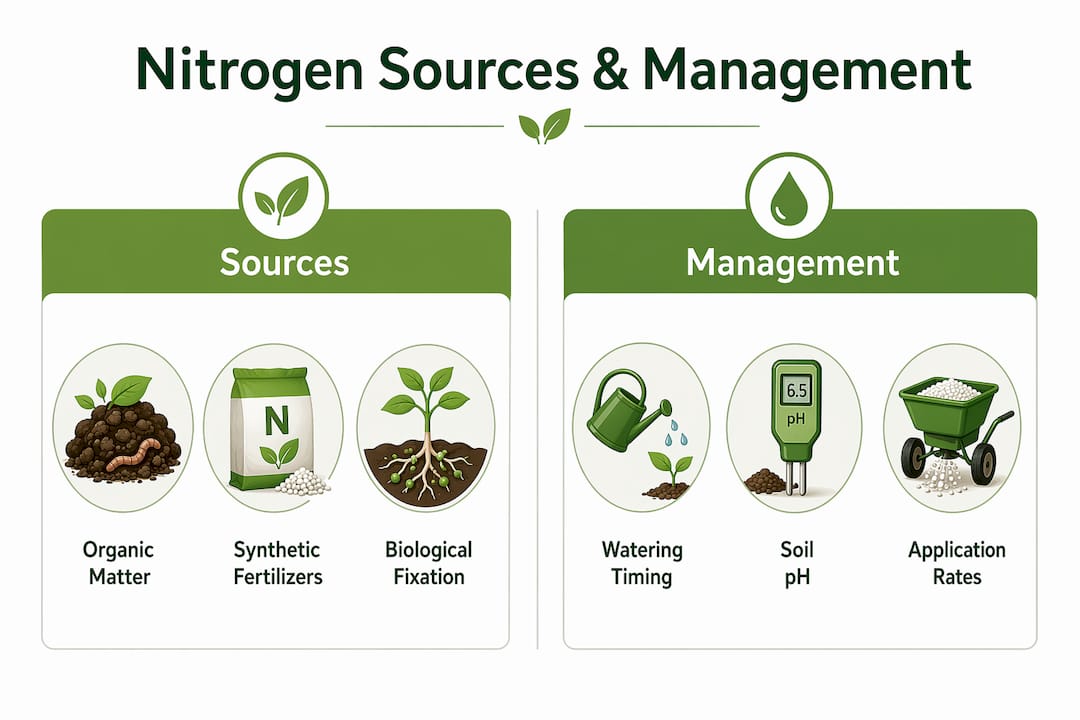
Nitrogen reaches your garden through three main pathways: organic matter decomposition, synthetic fertilizers, and biological nitrogen fixation. Each source behaves differently in soil, releases nitrogen at a different rate, and carries different risks.
Soil organic matter is the most underrated nitrogen reservoir in any garden. A soil with 5% organic matter, typical of a well-managed vegetable bed, releases approximately 2 lbs of nitrogen per 1,000 square feet over a growing season. That release peaks in mid-summer when soil temperatures are highest and microbial activity is strongest. Gardeners who build organic matter through compost, aged manure, and cover crops reduce their dependence on purchased fertilizers over time.
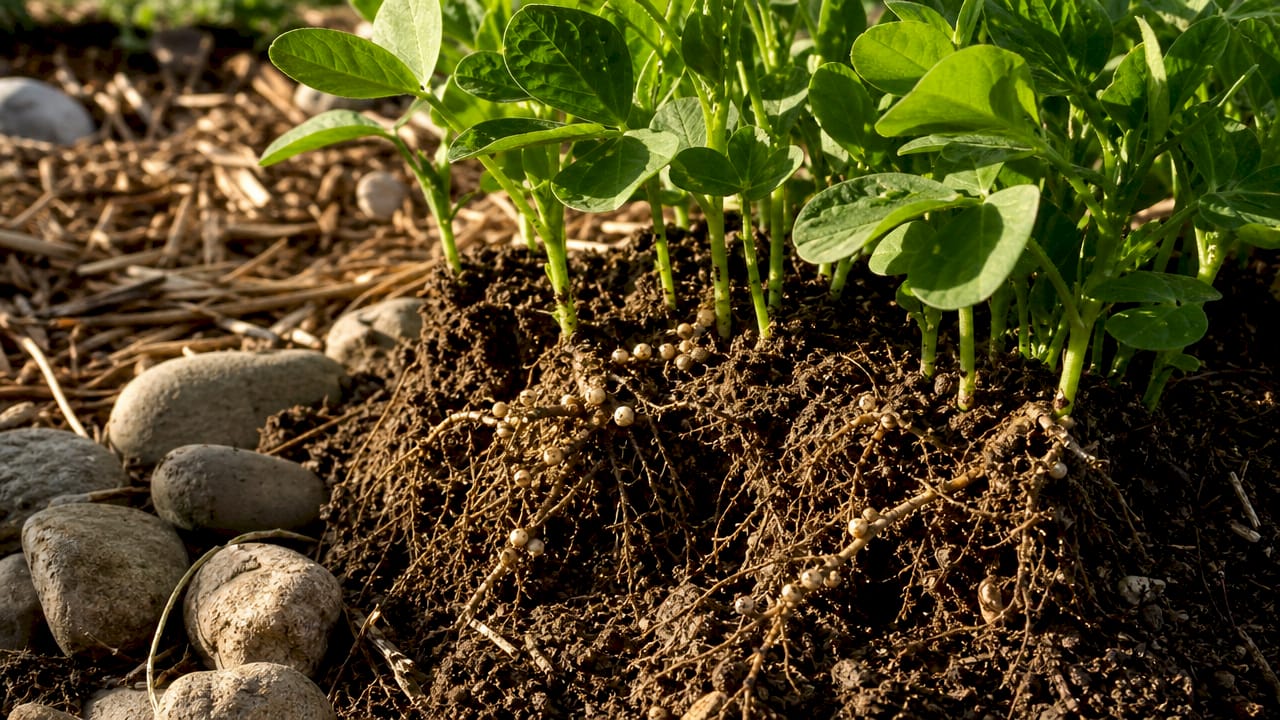
Biological nitrogen fixation is one of the most powerful free tools available to gardeners. Legumes like beans, peas, clover, and vetch host Rhizobium bacteria in root nodules that pull nitrogen directly from the atmosphere and convert it into plant-available forms. After the season, incorporating those roots and residues returns fixed nitrogen to the soil. This is why crop rotation with legumes is a cornerstone of sustainable nitrogen management.
| Source | Release speed | Nitrogen content | Key risk |
|---|---|---|---|
| Compost | Slow (weeks to months) | 1 to 3% | Low; minimal burn risk |
| Blood meal | Fast (days) | 12 to 13% | Burn risk if over-applied |
| Urea (synthetic) | Fast once converted | 46% | Volatilization risk when surface-applied |
| Legume cover crops | Slow (after incorporation) | Variable | Minimal; improves soil structure |
| Slow-release granules | Gradual (weeks) | 15 to 40% | Low; cost is higher |
Synthetic fertilizers like urea and ammonium nitrate deliver concentrated nitrogen quickly, but they require careful handling. Urea contains 46% nitrogen but loses significant amounts to volatilization when left on the soil surface, particularly when soil temperature exceeds 50°F and pH rises above 6.5. Incorporating urea into the soil or watering it in immediately after application dramatically reduces those losses.
Pro Tip: If you use blood meal or fast-release synthetic nitrogen, apply it in the early morning and water it in immediately. This reduces volatilization and lowers the risk of leaf burn on contact.
How much nitrogen should gardeners apply and when?
Getting the rate and timing right is where most home gardeners either over-apply or under-deliver. The University of Maryland Extension recommends 2 lbs of nitrogen per 1,000 sq ft for most vegetable gardens, with heavy feeders like corn, tomatoes, and leafy greens requiring up to 3 lbs per 1,000 square feet. These numbers assume average soil organic matter. For every 1% of organic matter your soil contains, subtract approximately 0.4 lbs of nitrogen from your fertilizer budget, since that organic matter will mineralize and supply nitrogen on its own.
Timing matters as much as rate. Nitrogen applied before plants have the root mass to absorb it is nitrogen wasted. A practical sequence for vegetable gardens looks like this:
- Pre-plant: Incorporate compost or slow-release fertilizer two weeks before planting to build a baseline supply
- At transplant: Apply a dilute liquid nitrogen source (fish emulsion or a balanced starter fertilizer) to support early root establishment
- Rapid growth phase: Side-dress with a nitrogen source when plants enter their fastest vegetative growth, typically four to six weeks after transplanting
- Mid-season: For long-season crops like corn or tomatoes, apply a second side-dressing when flowering begins, but reduce the rate to avoid pushing excessive foliage at the expense of fruit
Soil temperature controls how fast organic nitrogen becomes available. Below 50°F, microbial activity slows sharply and mineralization nearly stops. Applying fertilizer to cold soil in early spring means much of it sits unused until temperatures rise. Waiting until soil reaches 55°F or above before fertilizing aligns your application with actual plant and microbial demand.
Excessive nitrogen causes lush, dark green foliage but suppresses flowering and fruiting by disrupting the plant’s internal nutrient balance. Tomatoes that produce abundant leaves but few fruits are a classic sign of nitrogen excess. More nitrogen does not mean better performance. Balanced nutrition, including potassium and sulfur alongside nitrogen, is what drives both yield and quality.
What are best practices to manage nitrogen efficiently?
Efficient nitrogen management means matching supply to demand as closely as possible, at every stage of the growing season. The single most effective change most gardeners can make is switching from one large application to split applications spread across the season. Smaller, more frequent doses keep nitrogen in the root zone when plants need it and reduce the amount lost to leaching between applications.
Soil pH is a lever that most gardeners overlook. Maintaining pH between 6.5 and 7.0 optimizes microbial nitrogen cycling and increases the efficiency of both organic and synthetic nitrogen sources. Outside that range, key bacteria that drive mineralization and nitrification slow down, and plants absorb nitrogen less efficiently even when it is present. A simple soil test from your local cooperative extension service costs very little and tells you exactly where your pH stands. You can read more about managing soil pH for vegetables on Lushygardens.
Controlled-release fertilizers, such as polymer-coated urea or sulfur-coated urea, release nitrogen gradually over weeks or months based on soil temperature and moisture. They cost more per pound than conventional fertilizers, but they reduce the frequency of applications and cut losses significantly. For busy gardeners or those with sandy soils prone to leaching, the investment pays off in both plant performance and reduced waste.
Best practices that protect both your plants and the environment:
- Add organic residues like straw, shredded leaves, or cover crop biomass to feed soil microbes and build long-term nitrogen reserves
- Avoid applying nitrogen within 48 hours of heavy rain, since saturated soils accelerate leaching and denitrification
- Rotate crops annually, placing legumes in beds where heavy feeders grew the previous season to naturally replenish nitrogen
- Test soil every two to three years to track organic matter trends and adjust fertilizer rates accordingly
Pro Tip: For container gardens and raised beds, where leaching is faster than in ground soil, use a slow-release granular fertilizer as your base and supplement with liquid fish emulsion every three to four weeks during peak growth. This combination covers both immediate and sustained nitrogen needs.
Key takeaways
Nitrogen drives plant growth through chlorophyll and protein synthesis, and managing it well requires matching the right source, rate, and timing to your soil’s organic matter level and your plants’ growth stage.
| Point | Details |
|---|---|
| Nitrogen forms in soil | Plants absorb nitrate and ammonium; microbes convert organic nitrogen into these forms through mineralization. |
| Application rate baseline | Apply 2 lbs of nitrogen per 1,000 sq ft for most vegetables; reduce by 0.4 lbs for each 1% of soil organic matter. |
| Split applications win | Smaller, frequent doses match plant demand and reduce losses compared to one large application per season. |
| Soil pH controls availability | Keeping pH between 6.5 and 7.0 maximizes microbial activity and nitrogen uptake efficiency. |
| More is not better | Excess nitrogen suppresses flowering and fruiting; balanced nutrition with potassium and sulfur is required for full yield. |

Why nitrogen is the nutrient I respect most in the garden
After years of working with vegetable beds, container gardens, and everything in between, nitrogen is the nutrient I find most humbling. It is the one element where both too little and too much cause visible, fast damage. I have watched gardeners dump extra fertilizer on tomatoes in July, convinced they were helping, only to harvest a jungle of leaves and almost no fruit by September.
The misconception I see most often is treating nitrogen as a simple input. You add more, plants grow more. That logic breaks down the moment you realize that nitrogen assimilation is a bottleneck. Plants can only process so much nitrogen at a time. What they cannot use does not sit waiting. It leaves the soil, often as a pollutant.
What changed my approach was thinking about nitrogen as part of a cycle rather than a product. When I started incorporating cover crops, tracking my soil organic matter, and splitting my fertilizer applications, my plants performed better on less fertilizer. The soil did more of the work. That shift, from adding nitrogen to managing nitrogen, is the difference between a garden that needs constant inputs and one that builds fertility over time.
The 2026 research on nitrogen use efficiency reinforces what experienced gardeners have known for decades. Soil health and nitrogen management are the same conversation. You cannot separate them. If you want to go deeper on plant nutrition basics, that foundation will make every fertilization decision easier and more precise.
— Povilas
Grow smarter with Lushygardens
Lushygardens covers the full spectrum of plant nutrition, soil health, and fertilization strategy for gardeners at every level. If you are just getting started, the gardening basics for beginners guide walks you through soil preparation, nutrient fundamentals, and how to set up your garden for long-term success. For gardeners who want to plan fertilization across the entire growing year, the seasonal garden maintenance guide breaks down exactly when and how to feed your plants from spring through fall. You can also explore natural fertilization methods in detail through the guide on fertilizing plants naturally, which covers organic nitrogen sources from compost to cover crops.
FAQ
What is the role of nitrogen in plant growth?
Nitrogen is the primary driver of vegetative growth in plants. It forms chlorophyll, amino acids, and proteins, all of which are required for photosynthesis, cell division, and overall plant development.
What are the signs of nitrogen deficiency in plants?
The most visible sign is yellowing of older, lower leaves first, since plants pull nitrogen from older tissue to support new growth. Stunted growth and pale green color across the whole plant follow if the deficiency is severe.
How often should I apply nitrogen fertilizer to my vegetable garden?
Split applications across the season outperform a single large dose. Apply at planting, again during rapid vegetative growth, and once more at flowering for long-season crops, adjusting rates based on your soil’s organic matter content.
Can too much nitrogen harm my garden?
Yes. Excessive nitrogen produces excessive foliage at the expense of flowers and fruit, and it can cause leaf burn when fast-release fertilizers contact plant tissue directly.
What organic sources of nitrogen work best for home gardens?
Compost, aged manure, blood meal, and legume cover crops are the most practical organic nitrogen sources for home gardeners. Legumes fix atmospheric nitrogen through Rhizobium bacteria, making them both a crop and a soil amendment in one.
Recommended
- Understanding the Importance of Soil Testing for Gardens – Lushy Gardens
- How to Fertilize Plants Naturally for Healthy Growth – Lushy Gardens
- Gardening Basics for Beginners: Complete Guide – Lushy Gardens
- Plant Problems in 2026: 65% Soil pH Imbalance Hinders Growth – Lushy Gardens

I’m Eleanor, a seasoned gardener with over three decades of experience tending to Mother Nature’s creations. Through Lushy Gardens, I aim to share my wealth of knowledge and help fellow plant enthusiasts uncover the wonders of gardening. Let’s dive into this journey together, one leaf at a time.


